
 Joko Widodo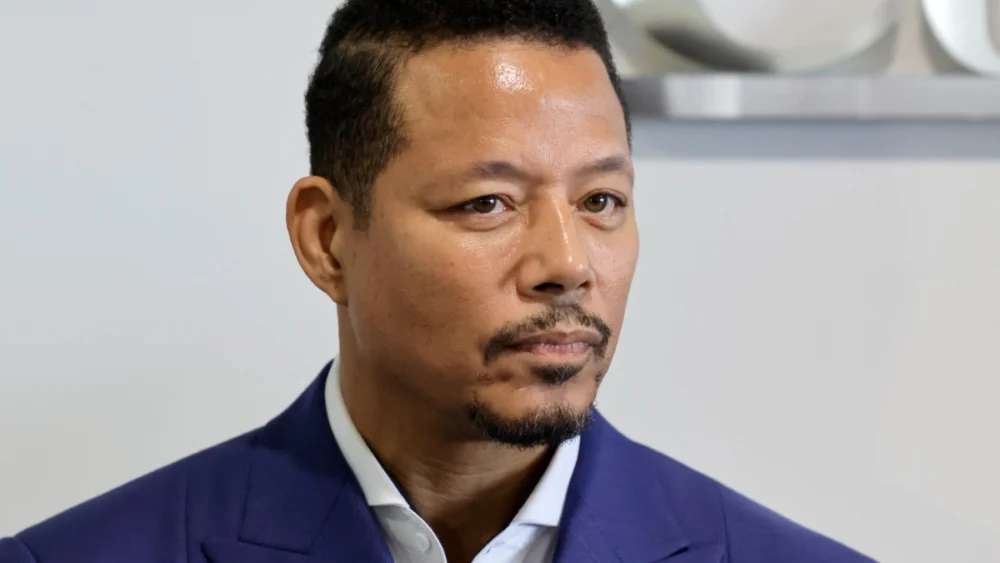
In a candid revelation that has sent ripples through the entertainment world, acclaimed actor Terrence Howard, best known for his iconic portrayal of Tony Stark’s business rival in the Iron Man franchise, has confessed to passing up a chance to date global superstar Beyoncé Knowles-Carter early in her career. Instead, the 57-year-old actor claims he pursued a romantic connection with a different member of the chart-topping R&B group Destiny’s Child, a decision he shared during a recent appearance on Patrick Bet-David’s PBD podcast. The disclosure sheds new light on the intricate early days of Beyoncé’s rise to fame, long before her enduring partnership with hip-hop mogul Jay-Z.
Howard’s Unveiling on the PBD Podcast
During his guest spot on the PBD podcast, a platform known for its in-depth interviews with prominent figures, Terrence Howard was engaged in a discussion about influential power couples within the Hollywood landscape. As Bet-David subtly referenced the formidable pairing of Beyoncé and Jay-Z, Howard interjected with a surprising admission. "You know, I had a chance to date Beyoncé early on," he stated casually, sparking immediate intrigue.
Howard elaborated on the specific moment, admitting there was a period where he found himself "attracted" to and "felt something" for the singer, who was then a burgeoning artist on the cusp of global superstardom. This attraction, he clarified, predated her romantic involvement with her now-husband. The Empire star then revealed the pivotal fork in the road of his romantic pursuits: "We had a conversation, you know, and I ended up talking to the other girl inside of, you know, Destiny’s Child. The girl with the blue eyes. That was very, very long ago."
Identifying the "Other Girl" and Destiny’s Child’s Shifting Lineup
While Howard deliberately omitted the name of the Destiny’s Child member he chose to pursue, the context provided by the podcast discussion and subsequent visual cues strongly suggest he was referring to Farrah Franklin. During the segment, an image of Franklin appeared on screen with a question mark, prompting viewers to connect the dots.
To understand the significance of this detail, a brief look at Destiny’s Child’s history is pertinent. The group, which achieved monumental success, initially comprised Beyoncé, Kelly Rowland, LeToya Luckett, and LaTavia Roberson. However, the lineup underwent significant changes in the early 2000s. Luckett and Roberson departed in 2000, leading to the inclusion of Farrah Franklin and Michelle Williams. Franklin’s tenure with the group was notably brief, and she eventually parted ways with Destiny’s Child shortly after her entry. This period of flux within the group’s formation makes Howard’s recollection particularly noteworthy, placing his potential romantic dalliance within a specific, albeit tumultuous, chapter of the group’s evolution.
A Memorable Performance and a Missed Opportunity?
Howard’s recollection extends beyond a simple confession of a missed romantic opportunity; he connected his past interaction with Beyoncé to a significant public performance. He vividly recalled Destiny’s Child’s memorable appearance at the 2005 BET Awards, where the group performed their hit song "Cater 2 U." During this performance, Beyoncé, along with Michelle Williams and Kelly Rowland, selected three prominent male audience members to join them on stage for an interactive segment.
Howard revealed that Beyoncé chose him to participate in this segment, which involved a "kind of striptease dance." He interpreted this gesture in his interview, stating, "I remember Beyoncé looking over at me, and I think that’s why she picked me to do that dance, when she did the kind of striptease dance that we did at BET or whatever, to show me what I had lost." This interpretation suggests that, in Howard’s view, Beyoncé’s performance was a subtle, public acknowledgment of their past connection and perhaps a demonstration of what he could have had.
Background Context: The Rise of Beyoncé and Destiny’s Child
The early 2000s were a pivotal time for both Beyoncé and Destiny’s Child. Following their initial success, the group released Survivor in 2001, which solidified their global dominance. Simultaneously, Beyoncé began laying the groundwork for her solo career, releasing her critically acclaimed debut album Dangerously in Love in 2003, featuring iconic hits like "Crazy in Love" and "Baby Boy." It was during this period of intense professional growth and public scrutiny that relationships within the music industry often intertwined with personal lives.
Terrence Howard, meanwhile, was also experiencing a significant career upswing. While he had a burgeoning career in film prior to this era, his role in the 2005 film Hustle & Flow, for which he received an Academy Award nomination for Best Actor, marked a critical turning point, elevating his profile considerably. It is plausible that Howard and Beyoncé, both prominent figures in the entertainment sphere during the same period, could have crossed paths and developed a mutual attraction.
Supporting Data and Industry Dynamics
The music industry, particularly the R&B and hip-hop genres, has a well-documented history of intertwined romantic relationships between artists, producers, and industry executives. These connections often fuel creative collaborations and generate significant public interest, as seen with the enduring partnership of Beyoncé and Jay-Z. The revelation by Howard adds another layer to the complex web of relationships that shaped the careers of artists during this era.
The fact that Howard chose to disclose this information years later on a podcast suggests a reflective perspective on past choices. His interpretation of Beyoncé’s BET performance further underscores the narrative he is constructing, hinting at a potentially significant moment that might have altered the trajectory of his personal life, and by extension, perhaps even influenced the narratives surrounding these artists.
Potential Reactions and Implications
While no direct statements from Beyoncé, Jay-Z, or Farrah Franklin have emerged regarding Terrence Howard’s claims, the nature of such confessions often prompts speculation and commentary from fans and media alike.
- Beyoncé’s Public Persona: Beyoncé is renowned for her carefully curated public image and has largely maintained a private stance on her personal relationships, especially regarding her early dating life. Her focus has consistently been on her artistry and professional achievements.
- Jay-Z’s Perspective: As a central figure in the narrative, Jay-Z’s involvement, though indirect, is significant. The enduring strength of his and Beyoncé’s partnership is a cornerstone of their public image.
- Farrah Franklin’s Position: Franklin’s brief stint in Destiny’s Child often places her in a position of public curiosity regarding her experiences within the group and her interactions with other celebrities. Her perspective on Howard’s claims, if she chooses to share it, could offer further insight.
The implications of Howard’s confession are largely within the realm of celebrity gossip and historical trivia. It offers a glimpse into the personal lives of stars at a formative stage of their careers and highlights the "what ifs" that often fascinate the public. From a broader perspective, it underscores the intense scrutiny that celebrities face and the enduring interest in their romantic histories.
Broader Impact and Analysis
Terrence Howard’s admission serves as a reminder of the human element behind the larger-than-life personas of Hollywood and music icons. It underscores that even the most successful individuals navigate complex personal decisions and potential romantic entanglements. The narrative also subtly highlights the power dynamics and social circles within which these artists operate. The fact that Howard felt Beyoncé’s performance was a deliberate message to him suggests a lingering connection or perhaps a desire to acknowledge a past interaction in a public forum.
Furthermore, the longevity of Destiny’s Child and the subsequent solo success of its members, particularly Beyoncé, mean that even seemingly minor interactions from their early careers can become points of interest for a global audience. Howard’s candor, while perhaps intended to be a lighthearted anecdote, inadvertently opens a window into a less-discussed aspect of pop culture history. The story, while not directly impacting current industry trends or artistic endeavors, contributes to the rich tapestry of narratives surrounding some of the most influential figures in contemporary entertainment. It allows fans to connect with these stars on a more personal, albeit speculative, level, exploring the choices that may have shaped their paths.




 Yuyun Lusiyani
 Eva Lovia
 Jia Lissa
 Pevita Pearce
 admin
admin