
 Yuyun Lusiyani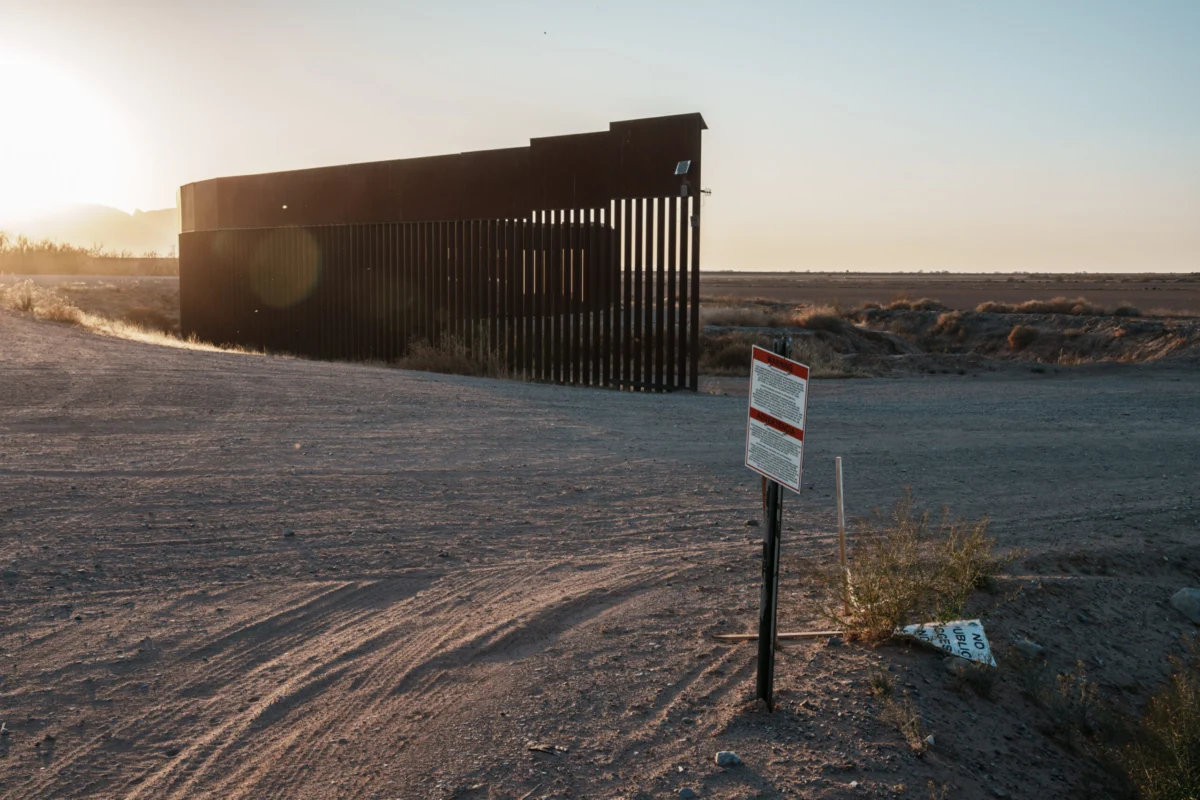
In a significant and contentious shift in U.S. border enforcement, federal courts along the U.S.-Mexico frontier have become embroiled in a surge of novel misdemeanor prosecutions, charging migrants who have crossed the border illegally with trespassing on military property. This aggressive legal strategy, initiated under the previous administration, has not only overwhelmed judicial dockets but also sparked widespread concern among legal experts and judges, who question its efficacy, legality, and the ethical implications for the U.S. justice system.
The case of Jose Omar Flores-Penaloza stands as a stark illustration of this evolving legal landscape. Last spring, Flores-Penaloza, having willingly admitted to illegal entry into the United States and ready for deportation, found himself ensnared in an unexpected legal battle. Federal prosecutors, rather than proceeding with his immediate deportation, leveled an additional charge against him: trespassing on military property, a crime he had reportedly never heard of. His alleged transgression stemmed from his crossing through a stretch of borderland in New Mexico that, weeks prior, President Donald Trump had designated a "national defense area." This transfer of land to military control, enacted to address what Trump termed a "national emergency," aimed to empower troops to assist in apprehending unauthorized migrants. Flores-Penaloza was charged under statutes, including an archaic 1909 law originally designed to deter spies from military arsenals. Despite the added misdemeanors being unlikely to extend his overall sentence—typically resulting in time served and deportation—Flores-Penaloza vehemently denied the trespass allegation, unwilling to be branded a national security threat. Consequently, he endured over a month of detention in a New Mexico jail, awaiting a trial that would highlight the profound flaws in this new prosecutorial approach.

The Genesis of the "National Defense Areas"
The roots of these unusual charges trace back to an executive order issued by then-President Trump in April of the prior year. Citing a "national emergency" at the southern border, the administration sought to circumvent federal laws that generally prohibit the military from detaining civilians on domestic soil. The ingenious "workaround" involved transferring over 200 miles of diverse border terrain, encompassing riverbanks and desert scrub in West Texas and New Mexico, from federal agencies like the Department of the Interior to the armed forces. These newly designated "national defense areas" effectively transformed vast stretches of public land into extensions of existing Army installations. The stated objective was to allow active-duty troops to apprehend individuals found on these military-controlled zones.
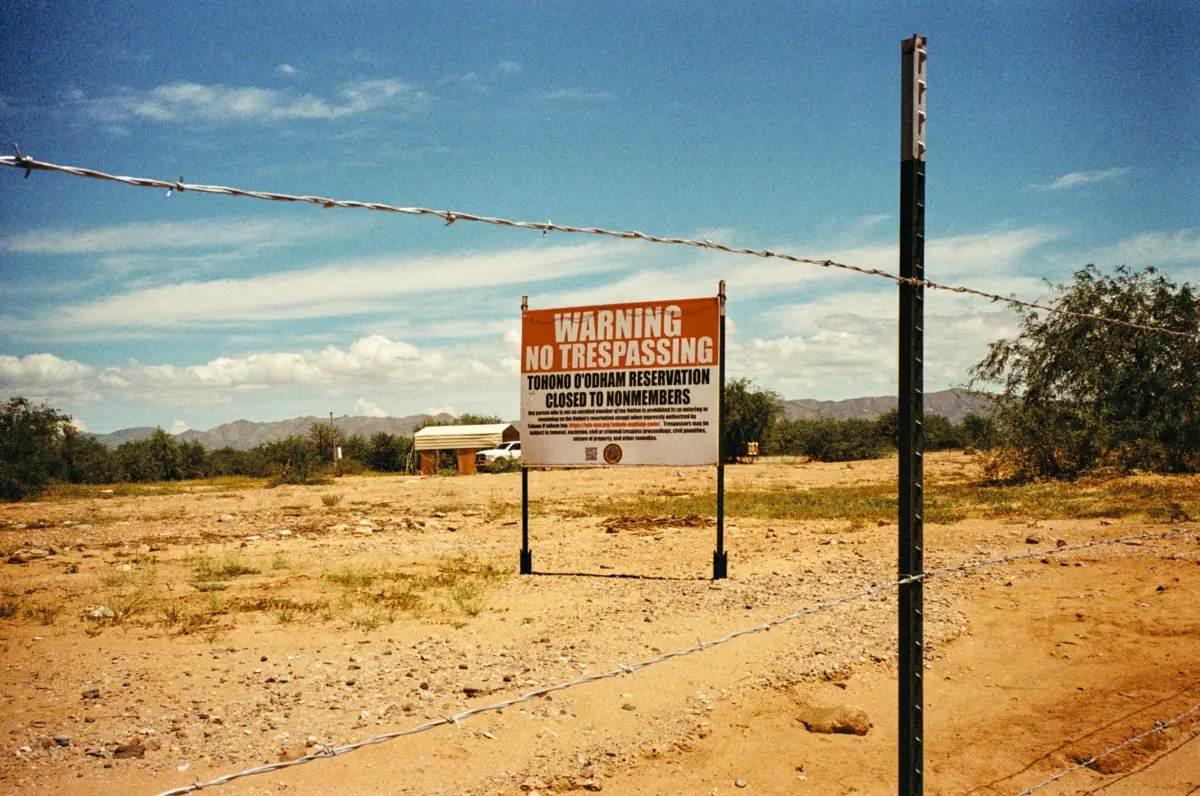
Defense Secretary Pete Hegseth, addressing troops deployed to one such area, asserted that anyone entering these zones would be "on notice," pointing to signs posted "all across the border wall facing into Mexico," in both "clear English, clear Spanish." This assertion formed the bedrock of the government’s legal theory: that migrants, by crossing these marked areas, knowingly committed criminal trespass.

A System Under Strain: Judicial Pushback and Procedural Anomalies
The implementation of these new charges swiftly met significant resistance within the federal judiciary. One year into the second Trump administration, federal courts are grappling with an unprecedented surge of immigration-related litigation, including a record number of habeas petitions from detainees challenging the legality of their confinement. The strain is palpable, with court dockets becoming increasingly crowded.
In Minnesota, a frustrated judge, questioning why defendants he had ordered released remained in custody, heard a government attorney blurt out, "What do you want me to do? The system sucks. This job sucks." This candid admission reflects a broader systemic pressure observed across border districts, where prosecutors operate under a directive from Attorney General Pam Bondi mandating "zealous advocacy" of the administration’s priorities, with implicit warnings of disciplinary action or termination for non-compliance.

A four-month investigation by ProPublica and The Texas Tribune revealed the scope of this pressure. Since last April, at least 4,700 immigrants already facing charges for illegal entry have been hit with additional misdemeanor counts of trespassing on military property. While over 90% of these cases have been resolved, a significant majority—approximately 60%—did not result in convictions on the trespass charges; they were either dropped or dismissed.
The primary legal hurdle for prosecutors has been the fundamental requirement of mens rea, or "a guilty mind"—the principle that a defendant must have known they were committing a crime. At least nine judges in West Texas and New Mexico have found these prosecutions legally deficient on this very point. Migrants consistently testified they had not seen signs or had any knowledge they were entering military land. Prosecutors, in turn, frequently struggled to provide concrete evidence to the contrary. ProPublica and the Tribune’s analysis of 1,300 New Mexico district court records showed that some migrants were apprehended more than 20 miles from a warning sign, and most were not within 1,000 feet of any posting. In one Texas case, defense attorneys even demonstrated the difficulty of reading a 12-by-18-inch sign from just ten feet away.
During Flores-Penaloza’s June 17 bench trial, Chief Magistrate Judge Gregory Wormuth, who had previously dismissed dozens of similar charges, expressed deep frustration. Assistant U.S. Attorney Randy Castellano, representing the government, conceded that they "don’t meet the mens rea requirement the court has indicated in a prior opinion." Judge Wormuth, noting Flores-Penaloza’s 40-day detention largely due to the unproven allegation, declared, "The United States has come in here and put not a single bit of evidence that would allow me to find that he even entered the national defense area. It is very, very disturbing." He acquitted Flores-Penaloza on the trespass counts, convicting him only of illegal entry, leading to his deportation.

The Data Speaks: Low Conviction Rates and Questionable Efficacy
Despite these judicial rebukes and the high dismissal rates, prosecutors have stubbornly continued filing the charges and appealing adverse rulings. They argue that knowingly crossing the international border should suffice to prove criminal intent for the military trespass charge, a position challenged by over 20 legal scholars and former prosecutors who cannot identify a conventional law-enforcement or military objective that justifies such persistence.
The "Military Trespass Cases Under Trump Administration Skyrocket" chart (though not provided in text, implied from context) would undoubtedly show a dramatic spike in these charges, indicating a policy-driven directive rather than an organic response to security threats. However, the effectiveness of this policy in achieving its stated goals remains highly dubious. According to a spokesperson for Joint Task Force-Southern Border, approximately 1,500 deployed troops made a mere 68 apprehensions as of a recent count. This minimal impact suggests that the Border Patrol continues to bear the vast majority of detention responsibilities, undermining the premise that active-duty troops significantly bolster border security through these "national defense areas."

The Justice Department spokesperson claimed these prosecutions "proven to be a significant deterrent to both illegal crossings and cartel activity along the border," but provided no supporting documentation for this assertion. The evidence from court records, showing widespread dismissals, tells a different story about the policy’s practical success.
Voices from Within and Without: Legal Experts and Former Prosecutors React
The prosecutorial persistence has led to extraordinary legal maneuvers. In New Mexico, after judges began dismissing trespass charges for lack of probable cause, prosecutors resorted to refiling them using "informations"—a charging document typically used for misdemeanors, but rarely, if ever, deployed to revive cases already deemed unsupported by judges. ProPublica and The Texas Tribune found that prosecutors used informations to resurrect over 1,600 military trespass cases, creating what one defense attorney termed a "ridiculous dance." Judges would separate charges, accept illegal entry pleas, and reiterate lack of probable cause for military counts. Only then, with deportation imminent, would prosecutors dismiss the trespass charges.

Meghan Skelton, a former assistant federal public defender and prosecutor, criticized this tactic, stating, "If there is no probable cause, the case is supposed to end. They are trying to circumvent that in a way that has not been done in the 30 years I’ve been practicing law."
This aggressive stance has caused internal dissent within the U.S. Attorney’s offices. Prosecutors who left in the early months of the second Trump administration expressed alarm at the lengths their former colleagues were going. Marisa Ong, a former assistant U.S. attorney in Las Cruces, warned, "You’re just losing credibility with the court, and on a bigger picture, credibility with the public." Matilda "Tilli" Villalobos, a decorated former sex crimes prosecutor, resigned from her position in the U.S. attorney’s office in Las Cruces last February after seeing the "zealous advocacy" mandate. "I don’t want to be the one standing up in court in front of a judge advocating for something that I don’t believe is even legal," she stated, now defending immigrants.
Alex Uballez, who served as U.S. attorney in New Mexico before being fired by Trump, characterized the prosecutions as a "flustering attempt to create fear and chaos by whatever means necessary." He added, "It would be laughable if it wasn’t so cruel and chaotic and dangerous, both for the people involved and for the justice system as a whole." Ryan Goodman, a national security law professor at New York University, called the government’s persistence "jaw-dropping," describing it as "prosecutorial abuse by continuing to bring fatally flawed cases," with "very significant repercussions for the ability of our democracy to survive."

Ongoing Legal Battles and Future Implications
Despite the mounting criticism and judicial dismissals, the administration has continued to expand these "national defense areas" from California to Texas. Prosecutors began filing military trespass charges in South Texas recently, even in areas like the Rio Grande, where warnings are blared in Spanish from loudspeakers and written across floating buoys. Border Patrol agents now ask detained migrants in these zones to sign forms acknowledging illegal entry, with the intent of establishing "notice" for future crossings. In New Mexico, this strategy has led to 20 guilty pleas from re-entering defendants, yet nearly every initial trespassing charge in the state has ultimately been dismissed or dropped.
The Justice Department continues to press its legal theory in appellate court. In May, trespass charges were filed against Komiljon Toirov, an Uzbek national detained in New Mexico who speaks neither English nor Spanish. Prosecutors argued that his lack of understanding of posted warnings was irrelevant, seeking to hold him for trial. A judge released him, but prosecutors have persistently fought that decision through multiple appeals. U.S. District Judge Sarah Davenport, noting the unanimous opposition of the defense bar and judges in Las Cruces, openly bristled at the government’s stance. A three-judge appellate panel in December found prosecutors had produced "little to no evidence" to justify jailing Toirov. Undeterred, the government has filed notice to appeal again, seeking a higher court ruling to validate its argument that knowledge of the military zone is not a prerequisite for trespassing.

Meanwhile, the federal courthouse in El Paso has settled into a troubling routine. Many mornings see shackled migrants pleading guilty to military trespass charges, choosing this path over prolonged detention while awaiting trial for a charge that is often baseless. Occasionally, however, this routine is disrupted. On November 3, Brandon David Munoz-Luna spoke up during his plea hearing, stating through an interpreter, "In my case, I did not know that I was entering a military reservation." Federal Magistrate Judge Robert Castañeda directly asked Assistant U.S. Attorney Adrian Gallegos, "Does the government insist on making this a charge you’re pursuing?" Gallegos’s unwavering reply, "Yes, Judge, pursuant to DOJ policy," underscored the systemic pressure driving these controversial prosecutions. Moments later, Munoz-Luna pleaded no contest, and the court moved on, leaving an unsettling question mark over the integrity of the process and the true purpose of justice at the border.



 Joko Widodo
 Eva Lovia
 Pevita Pearce
 admin
admin
 Lina Irawan