
 Yuyun Lusiyani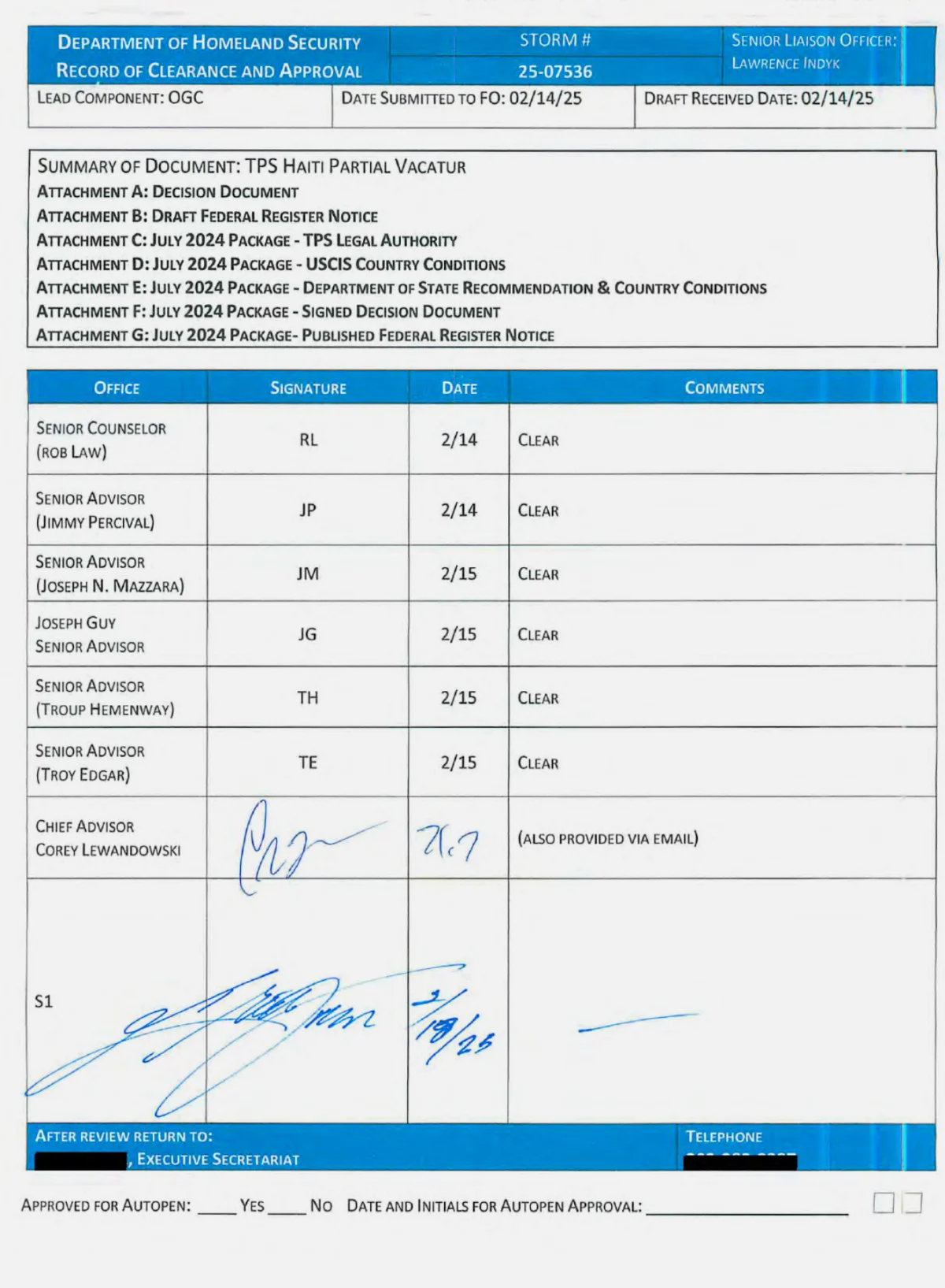
Homeland Security Secretary Kristi Noem stands accused of providing misleading testimony to Congress regarding the authority and role of her controversial top aide, Corey Lewandowski. Records meticulously reviewed by ProPublica, corroborated by insights from four current and former Department of Homeland Security (DHS) officials, directly contradict Noem’s Tuesday statement to the Senate Judiciary Committee. The revelations have ignited a fierce debate over transparency, accountability, and the ethical boundaries of political appointments within federal agencies.
The Senate Hearing and a Direct Contradiction
The controversy unfolded during a Senate Judiciary Committee hearing on Tuesday, where Secretary Noem was testifying on agency oversight. During the proceedings, Senator Richard Blumenthal (D-Conn.) directly challenged Noem on Lewandowski’s involvement in the agency’s financial operations. Specifically, Sen. Blumenthal inquired, "Does Mr. Lewandowski have a role in approving contracts at DHS?" Secretary Noem’s response was an unequivocal, "No." This categorical denial, delivered under oath to a congressional committee, is now at the heart of a burgeoning scandal.
However, internal DHS records subsequently obtained and reviewed by ProPublica paint a starkly different picture. These documents definitively show that Lewandowski personally approved a multimillion-dollar equipment contract for the agency last summer. This was not an isolated incident; multiple current and former department employees have affirmed that Lewandowski has been instrumental in approving numerous contracts, often serving as a critical gatekeeper for substantial expenditures before they reach the Secretary’s desk. This direct contradiction between sworn testimony and documented evidence raises significant questions about the Secretary’s candor and the operational integrity of one of the nation’s most vital security apparatuses.
The Enigmatic Role of Corey Lewandowski: An Unpaid Power Broker
Corey Lewandowski’s presence at DHS has been a subject of scrutiny since his initial engagement. He operates in an unusual capacity: he is not a paid government employee, nor does he receive federal benefits, yet he functions as a top official, deeply embedded in the agency’s decision-making processes and assisting Secretary Noem in the administration of the sprawling department. This arrangement, wherein an unpaid individual wields considerable influence over government operations and finances, has long been a point of contention among members of Congress and ethics watchdogs. For months, lawmakers have pressed DHS for clarity on the precise scope of Lewandowski’s responsibilities and the extent of his authority, concerns that appear to have been dismissed or obscured until ProPublica’s latest findings.
Lewandowski’s position is officially categorized as a "special government employee" (SGE). This designation is typically reserved for experts who serve the government for limited periods, allowing them to retain their outside employment and income while contributing specialized knowledge. Historically, SGEs have included figures like Elon Musk at the beginning of the Trump administration, usually for roles that are clearly defined and temporary. However, Lewandowski’s sustained and deep involvement in core agency functions, particularly financial approvals, stretches the conventional interpretation and application of the SGE status. Critics argue that this classification, while technically legal, allows individuals to exert significant governmental power without being subject to the full spectrum of ethics regulations and public disclosures that apply to salaried federal employees. For instance, Lewandowski has consistently declined to disclose whether he receives payment from outside companies, or the identities of any such entities, leaving potential conflicts of interest opaque to public and congressional oversight.
Noem’s Contract Approval Overhaul and its Dual Impact
The expanded role of Lewandowski, particularly in contracting, is directly linked to a sweeping policy change implemented by Secretary Noem herself last year. In an effort to consolidate control and, according to DHS, enhance fiscal responsibility, Noem imposed a new directive requiring her and her immediate top aides to personally review and approve all contracts exceeding $100,000. This centralized approval process was touted by DHS as a major success, with the agency asserting in August 2025 that the review process had already saved American taxpayers billions of dollars, specifically claiming $1.2 billion in savings within 200 days.
While the stated goal was to achieve significant cost savings and improve accountability, the policy has simultaneously drawn widespread criticism for causing substantial operational delays across the department. DHS, with its vast and critical responsibilities encompassing immigration enforcement, disaster relief, cybersecurity, and airport security, relies heavily on a timely and efficient contracting process to procure essential equipment, services, and technology. Reports from various news outlets, including The New York Times, have detailed widespread disruptions and bottlenecks stemming from the new review process. These delays, critics argue, compromise the agency’s ability to respond effectively to national security threats, manage border operations, and provide timely disaster assistance, potentially undermining the very mission it is tasked to uphold.

The internal mechanism for these approvals involves a "routing sheet" or checklist, which contracts must traverse before reaching the Secretary. Typically, this document passes through a series of political appointees, each required to sign or initial off on the expenditure. According to DHS officials, Lewandowski’s signature frequently appears as the penultimate approval, just before Secretary Noem’s. This consistent placement on high-value contract approvals directly contradicts Noem’s assertion to Congress that Lewandowski has no role in the process. It suggests a structured and integral function within the agency’s financial decision-making framework, far beyond that of a casual advisor.
Legal and Ethical Quandaries: False Statements to Congress
Secretary Noem’s denial under oath carries significant legal weight. Under federal law (specifically 18 U.S. Code § 1001), it is a crime to "knowingly and willfully" make a false statement or representation in any matter within the jurisdiction of the executive, legislative, or judicial branch of the United States government. The maximum penalty for such an offense can include substantial fines and imprisonment. While the statute is clear, prosecution for false statements to Congress, especially against high-ranking officials, is historically rare. This infrequency often leads to political rather than criminal repercussions, though the potential for a criminal investigation remains.
Beyond the legal ramifications, the ethical implications of an unpaid aide exercising such significant authority are profound. The lack of transparency regarding Lewandowski’s outside income creates a fertile ground for potential conflicts of interest. Without knowing who might be compensating him, it becomes impossible for the public or oversight bodies to ascertain whether his recommendations or approvals are truly in the best interest of the American people, or if they are influenced by external financial considerations. This situation undermines public trust in government processes and raises fundamental questions about the accountability of those who wield power without traditional governmental checks and balances.
Broader Context and Prior Reporting
The scrutiny surrounding Corey Lewandowski’s role and influence at DHS is not new. Several prominent news organizations have previously reported on various aspects of his involvement in the department’s operations and contracting processes. The Wall Street Journal, Politico, and The New York Times have all published articles detailing his unconventional position and the concerns it has raised. These earlier reports laid the groundwork for the current ProPublica investigation, highlighting a persistent pattern of questions surrounding transparency and governance within DHS under Secretary Noem’s leadership. The current revelations serve to escalate these long-standing concerns, transforming them from speculative reports into direct accusations of misleading Congress.
This pattern of influence extends beyond financial contracts. Evidence suggests Lewandowski’s sway reaches into critical policy decisions as well. A policy document that emerged during litigation last year concerning the rollback of protections for Haitians in the U.S. further illustrated his integral role. This internal checklist featured the signatures of several top DHS advisors, with Lewandowski’s signature prominently placed before Secretary Noem’s. This demonstrates that his role is not merely administrative or advisory on contracts, but extends to significant policy shifts with humanitarian and geopolitical implications, solidifying his position as a key decision-maker within the agency.
Implications and Future Outlook
The allegations against Secretary Noem have immediate and far-reaching implications. For Noem personally, she faces increased congressional scrutiny, potential calls for her resignation, or even an impeachment inquiry depending on the outcome of further investigations. Her credibility as a cabinet secretary has been severely undermined, which could hamper her ability to effectively lead DHS and work with Congress.
For the Department of Homeland Security, the situation risks further destabilizing an agency already grappling with numerous complex challenges, from border security and immigration policy to cybersecurity and disaster preparedness. Questions about internal governance, ethical standards, and operational efficiency will undoubtedly intensify, potentially impacting morale among career civil servants and trust from external partners. The reported delays in contracting due to the centralized approval process, now compounded by allegations of a misleading congressional testimony, suggest a deeper systemic issue that could hinder the agency’s ability to fulfill its critical mission.
The broader implications touch upon the role of special government employees and the increasing trend of political operatives assuming powerful, yet opaque, roles within federal agencies. This case highlights the need for clearer guidelines, stricter ethics enforcement, and enhanced transparency requirements for all individuals, paid or unpaid, who exert significant influence over governmental operations. It underscores the vital role of investigative journalism in uncovering inconsistencies and holding power accountable, ensuring that the public has an accurate understanding of how their government functions and where their tax dollars are being spent. As the controversy unfolds, the focus will remain on Congress’s response, the potential for further investigations, and the ultimate accountability for statements made under oath. The incident serves as a stark reminder of the delicate balance between political appointments and the imperative of ethical, transparent governance in a democratic society.


 Jia Lissa
 Joko Widodo
 Eva Lovia

 Pevita Pearce