
 Eva Lovia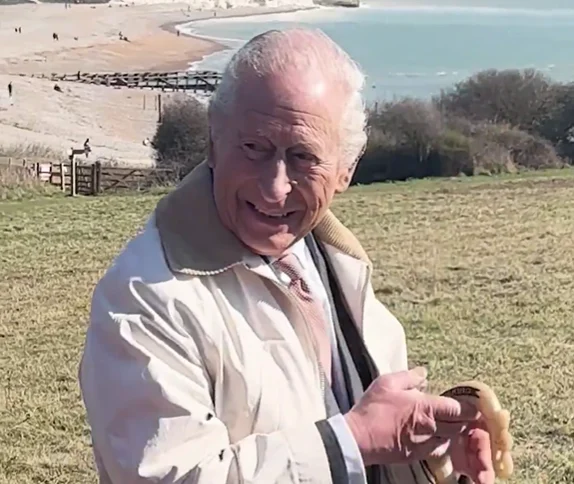
King Charles III embarked on a significant coastal excursion on a beautifully sunny spring day, officially inaugurating the King Charles III England Coast Path and opening the Seven Sisters National Nature Reserve. The monarch’s visit to the iconic East Sussex coastline was marked by a moment of characteristic wit when he encountered cyclists on the newly established path. His lighthearted critique of electric bicycles as "cheating" echoed the independent spirit often displayed by his late father, Prince Philip, and provided a memorable human touch to the formal proceedings.
The King’s engagement at the Seven Sisters, a landmark renowned for its dramatic white chalk cliffs, was a cornerstone of his day. This visit served a dual purpose: celebrating the launch of a monumental national project and commemorating his Coronation, which took place on May 6, 2023. The opening of the Seven Sisters National Nature Reserve is part of a broader initiative that will see 25 such spaces dedicated in honour of the King’s accession to the throne.
The King Charles III England Coast Path, a project of immense scale, is set to become the longest continuous and managed coastal walk in the world. Upon its completion, it will span an impressive 2,700 miles, encircling England’s entire coastline. This ambitious undertaking aims to enhance public access to the nation’s natural beauty, promote coastal conservation, and foster a deeper connection between people and the marine environment. The initiative represents a substantial investment in the nation’s heritage and recreational infrastructure, promising long-term benefits for tourism, well-being, and ecological preservation.
A Royal Stroll and a Humorous Exchange
During his inspection of one of the initial sections of the King Charles III England Coast Path ready for public access, His Majesty engaged with various individuals enjoying the coastal scenery. Among them were cyclists, who provided the King with an opportunity for a lighthearted observation. When asked if they possessed the latest cycling technology, the cyclists revealed they were using electric bicycles. King Charles’s immediate, albeit jocular, response was a single, emphatic word: "Cheating."
This brief exchange, delivered with a “wry smile,” has been noted as reminiscent of the late Prince Philip’s penchant for offering candid and often humorous opinions during public engagements. Prince Philip was well-known for his directness and ability to inject a sense of informality into royal duties, a trait that endeared him to many. King Charles’s remark, therefore, can be seen not only as a personal quip but also as a subtle nod to his father’s memorable public persona. The incident highlights the evolving nature of recreational pursuits and the King’s engagement with contemporary trends, even if met with a touch of traditional skepticism.
The Significance of the King Charles III England Coast Path
The King Charles III England Coast Path is a visionary project born from a desire to unlock and celebrate England’s extensive coastline for the public. The initiative is a collaboration between Natural England, local authorities, and various environmental and heritage organisations. The planning and development of such a comprehensive path have been a multi-year undertaking, involving intricate route planning, land access negotiations, and the establishment of a robust management framework.
The path’s ultimate length of 2,700 miles surpasses existing coastal routes globally, positioning England as a leader in accessible coastal exploration. The project’s phased rollout ensures that sections are opened as they are developed and deemed safe and suitable for public use. This approach allows for immediate public benefit while the full network is meticulously constructed. The path is designed to offer a diverse range of experiences, from rugged cliff-top walks to gentle strolls through seaside villages, catering to walkers of all abilities and interests. Furthermore, the project incorporates plans for improved signage, public facilities, and educational materials, enhancing the visitor experience and promoting responsible access.
Commemorating the Coronation: Seven Sisters National Nature Reserve
The opening of the Seven Sisters National Nature Reserve by King Charles is a poignant addition to the Coronation celebrations. National Nature Reserves are designated areas of exceptional ecological or geological importance, protected for their biodiversity and natural heritage. The Seven Sisters, with its iconic chalk cliffs formed over millions of years, is a significant geological and ecological site. The reserve designation aims to safeguard its unique flora and fauna, including rare seabirds and chalk grassland species, and to preserve its dramatic natural beauty for future generations.
The decision to mark the Coronation with the opening of these reserves underscores the King’s commitment to environmental stewardship and the importance of preserving the nation’s natural landscapes. This initiative aligns with the broader goals of conservation and sustainable development, encouraging greater public appreciation and understanding of these vital ecosystems. The Coronation year, therefore, is not only a moment of national celebration but also a catalyst for long-term environmental action.
A Busy Royal Schedule: State Visit and Royal Engagements
King Charles’s visit to the East Sussex coast occurred amidst a period of significant royal activity. Only recently, His Majesty, alongside Queen Camilla, formally bid farewell to the President of Nigeria, Bola Ahmed Tinubu, following a highly successful State Visit. The President’s visit, which spanned several days, was a testament to the strong diplomatic ties between the United Kingdom and Nigeria.
The State Visit commenced with a grand ceremonial welcome at Windsor Castle, featuring a traditional carriage procession through the historic town. The highlight of the visit was a spectacular State Banquet, where King Charles delivered a speech praising the enduring strength and multifaceted nature of the relationship between the two nations. Such visits are crucial for fostering international cooperation, promoting trade, and strengthening cultural exchanges.
A Royal Affinity for Cycling?
The King’s humorous remark about electric bicycles also draws a parallel with another recent royal cycling-related anecdote. Earlier in the week, the Prince of Wales, William, participated in a segment of the BBC Radio 1 DJ Greg James’s epic charity cycle ride for Comic Relief. As Prince William joined Mr. James on the back of a tandem bicycle for a portion of the over 1,000-mile journey across England, Wales, and Scotland, the DJ playfully introduced the future king to onlookers. Prince William’s witty retort, suggesting Mr. James was “hallucinating,” provided another instance of a senior royal engaging with the public in an informal and amusing manner, often related to sporting or recreational activities. These moments, while seemingly minor, contribute to a modern and accessible image of the Royal Family.
Broader Implications and Analysis
The inauguration of the King Charles III England Coast Path signifies a landmark achievement in public access and environmental conservation. The sheer scale of the project—2,700 miles—positions it as a global exemplar. Its successful implementation will likely inspire similar initiatives in other countries and reinforce the United Kingdom’s commitment to preserving its natural heritage.
The economic implications of such a project are also significant. The path is expected to boost domestic and international tourism, supporting coastal communities through increased visitor numbers, hospitality services, and local businesses. Furthermore, the emphasis on managed access and conservation within the path’s development promotes sustainable tourism practices, ensuring that the environmental impact is minimized.
The opening of the Seven Sisters National Nature Reserve as part of the Coronation celebrations highlights the ongoing importance of environmental themes in the King’s reign. His Majesty has long been a vocal advocate for conservation and sustainability. This initiative reinforces his commitment to these causes and aims to foster a greater sense of public responsibility towards the natural world. The designation of these 25 National Nature Reserves signifies a lasting legacy of his Coronation year, encouraging the protection and appreciation of the United Kingdom’s most precious natural assets.
The royal family’s engagement with contemporary activities, such as cycling, even with a touch of lighthearted critique, demonstrates an effort to remain relatable and connected to modern life. These instances, alongside formal diplomatic duties and significant environmental projects, paint a picture of a monarchy actively participating in and contributing to national life in diverse ways. The King Charles III England Coast Path and the expanded network of National Nature Reserves represent tangible and enduring contributions to the nation’s landscape, well-being, and environmental future.



 Yuyun Lusiyani
 Joko Widodo
 Pevita Pearce
 admin
admin
 Lina Irawan