
 Jia Lissa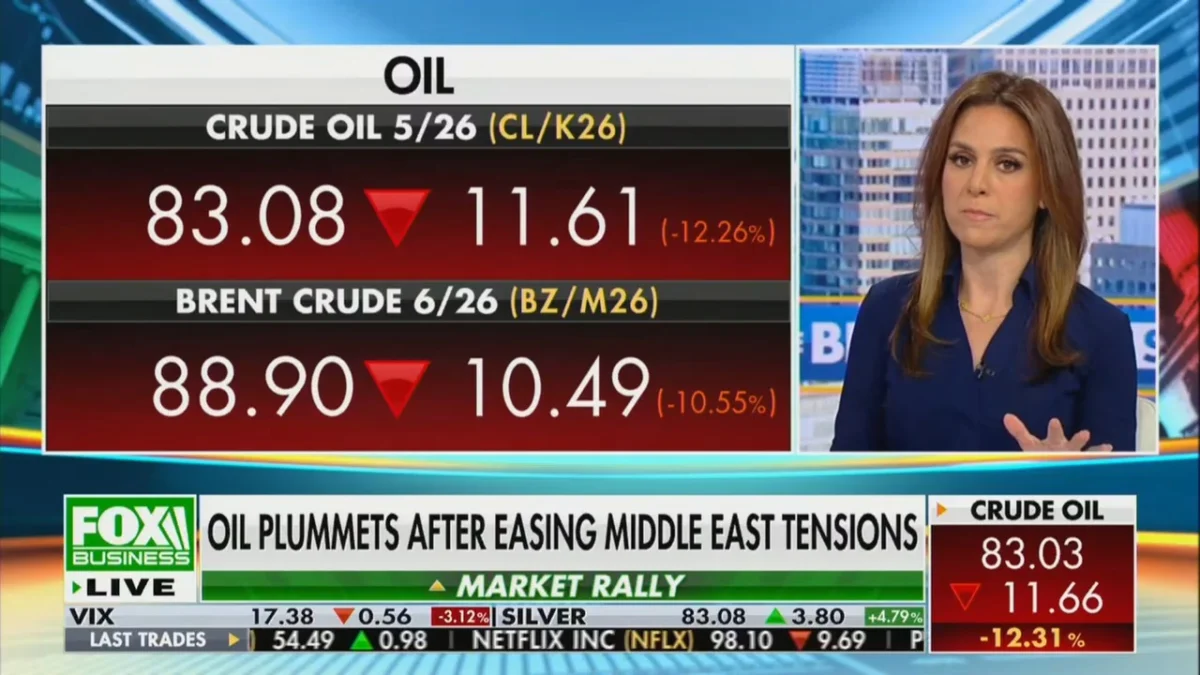
The global energy landscape and international financial markets experienced a significant shift on Friday following President Donald Trump’s announcement that Iran would reopen the Strait of Hormuz, a critical maritime chokepoint that had been the center of intense geopolitical friction. The news triggered an immediate and substantial rally across major stock indices, with several reaching record highs, while crude oil prices plummeted from a peak of over $100 per barrel to approximately $82 per barrel. This development was characterized by Fox Business Network co-host Jackie DeAngelis as the culmination of a sophisticated "3-D chess" strategy employed by the administration to de-escalate regional tensions while maintaining economic pressure.
DeAngelis, speaking on Fox Business, attributed the stabilization of the energy markets to the President’s multi-faceted approach toward Tehran. This strategy, which reportedly includes a second round of high-level peace negotiations scheduled for the upcoming weekend, appears to have successfully mitigated a conflict that had previously sent oil prices surging. During the height of the standoff, Iranian forces had managed to disrupt traffic through the Strait of Hormuz, leading to fears of a prolonged global energy crisis. However, the Friday announcement suggested a breakthrough in diplomatic and military maneuvering that reassured investors and lowered the geopolitical risk premium that had been baked into energy costs.
The Economic Impact: Oil Prices and Market Volatility
The volatility in the energy sector over the past several weeks has been closely tied to the security of the Strait of Hormuz, through which approximately one-fifth of the world’s total oil consumption passes. When tensions escalated and the threat of a closure became a reality, Brent Crude and West Texas Intermediate (WTI) surged past the $100 threshold, raising concerns about inflationary pressures on the global economy.
The subsequent drop to $82 a barrel represents a nearly 20% decline from the recent highs. Market analysts suggest that this correction is a direct response to the perceived reduction in supply-side risk. As the Strait reopens, the logistical bottlenecks that had hindered the flow of crude from the Persian Gulf to international markets are expected to dissolve. On Wall Street, the Dow Jones Industrial Average and the S&P 500 responded with vigorous gains, reflecting investor optimism that a broader regional war has been averted.
DeAngelis noted that the market’s reaction was a testament to the clarity provided by the administration’s actions. "He has definitely reassured the market that this is not getting worse, it’s going to get better," she observed. The cooling of oil prices is expected to provide immediate relief to transport sectors and consumers, potentially lowering gasoline prices and easing the burden on manufacturing supply chains.
Strategic Maneuvering and the "3-D Chess" Narrative
Central to the analysis provided by DeAngelis was the notion that the President had successfully "boxed in" both Iran and its primary economic partners, most notably China. The Fox Business host expressed surprise at the speed and nature of the resolution, admitting that while she anticipated a strategic victory, the specific outcome regarding the Strait of Hormuz exceeded her expectations.
According to DeAngelis, the deployment of U.S. forces into the region served as a decisive turning point. "When he closed the strait, when our forces went in there, Iran realized they were totally boxed in," she stated. This military posture, combined with economic sanctions, created a scenario where the Iranian leadership faced diminishing options. Furthermore, DeAngelis argued that China, which relies heavily on Iranian oil imports, found itself in a precarious position, forced to reconcile its energy needs with the reality of U.S. naval dominance in the region.
The "3-D chess" metaphor refers to the ability to operate on multiple levels—diplomatic, economic, and military—simultaneously. DeAngelis highlighted the President’s public presence, specifically citing his recent appearance in Las Vegas and his informal briefings on the White House lawn, as evidence of a leader who viewed these complex international crises as "all in a day’s work." She praised his ability to multitask, handling domestic political commitments while managing a high-stakes international standoff.
A Chronology of the Conflict
The path to the current de-escalation was marked by several weeks of heightened military readiness and diplomatic brinkmanship. To understand the significance of Friday’s reopening, it is necessary to examine the timeline of events that led to the crisis:
- Initial Escalation: Tensions began to rise following a series of maritime incidents in the Persian Gulf, leading to increased rhetoric from Tehran regarding the potential closure of the Strait of Hormuz in response to tightening U.S. sanctions.
- Market Surge: As threats against shipping lanes became more credible, oil prices began their ascent toward $100 a barrel. Global shipping insurance rates spiked, and several international tankers diverted their routes.
- U.S. Military Deployment: The United States increased its naval presence in the region, including the deployment of carrier strike groups and additional surveillance assets to ensure "freedom of navigation."
- The "Boxed In" Phase: With U.S. forces effectively monitoring and controlling key entry points, Iran’s ability to project power without triggering a full-scale military response was severely limited.
- The Reopening Announcement: Following back-channel communications and the announcement of a new round of peace talks, President Trump confirmed that the Strait would return to normal operations, signaling a pivot toward a diplomatic resolution.
The Nuclear Element: Uranium and Future Negotiations
Despite the optimism surrounding the reopening of the shipping lanes, significant hurdles remain, particularly concerning Iran’s nuclear program. During her commentary, DeAngelis touched upon reports that Iran might voluntarily hand over "uranium dust"—likely referring to enriched uranium or nuclear precursors—as a gesture of good faith ahead of the weekend’s talks.
This potential concession is viewed by some as a major victory for the administration’s "maximum pressure" campaign. However, skepticism remains high among national security experts and media commentators alike. DeAngelis herself expressed a degree of caution, noting that while the current situation is an improvement, she maintains a deep-seated distrust of the Iranian regime.
"I still think there are gonna be next steps here," she added, emphasizing that the "uranium dust" is only one component of a much larger and more complex security framework. The upcoming peace talks are expected to address not only the maritime security of the Persian Gulf but also the long-term status of Iran’s nuclear enrichment capabilities, its ballistic missile program, and its influence in regional proxy conflicts.
Geopolitical Implications for China and Global Trade
The resolution of the Strait of Hormuz crisis carries profound implications for China, the world’s largest importer of crude oil. Beijing has long sought to maintain a delicate balance between its energy partnership with Iran and its broader trade relationship with the United States. By demonstrating the ability to restrict or facilitate the flow of oil through the Strait, the U.S. has effectively asserted its role as the primary guarantor of global maritime security.
Analysts suggest that China’s realization that it was "boxed in" may have pressured Beijing to encourage Tehran to return to the negotiating table. For the global community, the reopening of the Strait serves as a reminder of the fragility of energy supply chains and the continued importance of the Middle East in the global economy.
Broader Impact and Market Outlook
As the weekend approaches, the focus of the international community remains on the scheduled peace talks. If these negotiations yield a formal agreement, the "risk premium" currently affecting oil prices could dissipate further, potentially stabilizing crude in the $70 to $80 range. This would be a significant boon for the global economy, which has been grappling with the twin challenges of post-pandemic recovery and inflationary spikes.
For the Trump administration, the reopening of the Strait and the subsequent market rally provide a potent narrative of "peace through strength" and economic stewardship. Jackie DeAngelis’s analysis reflects a broader sentiment among supporters that the administration’s unconventional approach to foreign policy—characterized by a blend of aggressive rhetoric and tactical flexibility—is yielding tangible results.
However, the "next steps" DeAngelis referred to will be critical. The history of U.S.-Iran relations is defined by cycles of escalation and temporary detente. Whether this current breakthrough leads to a lasting regional framework or merely serves as a brief respite in a long-standing conflict remains to be seen. For now, the reopening of the Strait of Hormuz stands as a pivotal moment in the current geopolitical landscape, offering a rare instance of rapid de-escalation in one of the world’s most volatile regions.
The coming days will likely provide more clarity on the specifics of the "uranium dust" handover and the broader terms of the proposed peace deal. Until then, the financial markets appear content to celebrate the return of stability to the Persian Gulf, as reflected in the record-breaking performance of the stock exchanges and the welcome retreat of energy prices.

 Yuyun Lusiyani
 Joko Widodo
 Pevita Pearce
 admin
admin
