
 Yuyun Lusiyani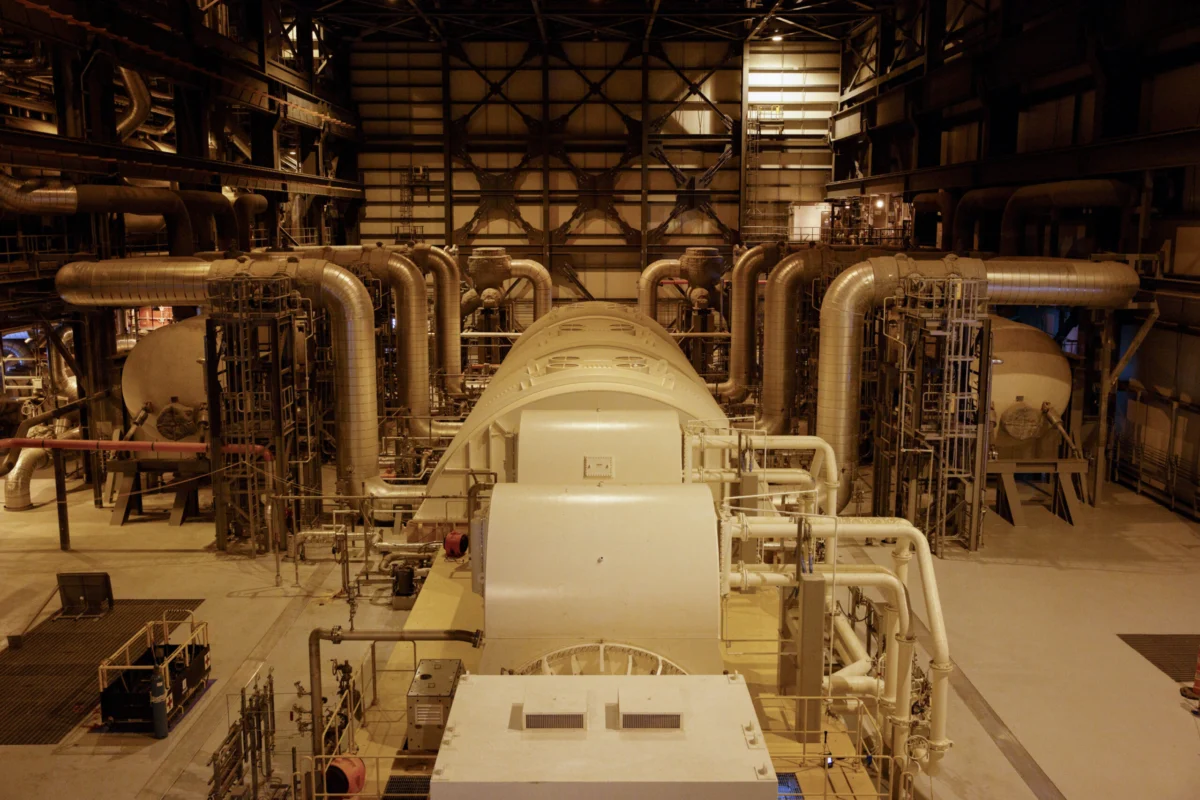
Last summer, a pivotal meeting at the Idaho National Laboratory (INL), a vast 890-square-mile complex in the eastern Idaho desert renowned for pioneering nuclear technology since the U.S. government built its first rudimentary nuclear power plant there in 1951, signaled a dramatic reorientation of American nuclear energy policy. Officials from the Department of Energy (DOE) convened to discuss the future of nuclear power in the Trump era, under the unexpected leadership of 31-year-old lawyer Seth Cohen. Just five years out of law school, Cohen, who had joined the government through Elon Musk’s Department of Government Efficiency (DOGE) team, possessed no significant prior experience in nuclear law or policy. His rapid ascent and the controversial nature of the meeting, details of which were later reviewed by ProPublica, exposed a radical shift in one of the most sensitive domains of public policy.
A New Era of Nuclear Ambition and Regulatory Overhaul
The Trump administration’s drive to dramatically increase nuclear energy output, primarily to power the burgeoning demands of artificial intelligence, has initiated an unprecedented period of deregulation. This "move fast and break things" ethos, imported directly from Silicon Valley, is now being applied to an industry historically defined by caution and rigorous oversight. Career experts are being displaced, and thousands of pages of safety regulations are being rewritten at an accelerated pace. A new generation of nuclear energy companies, backed by significant Silicon Valley capital and boasting robust political connections, are wielding increasing influence over policy, pushing for a streamlined, less restrictive regulatory environment.
During the Idaho meeting, as Cohen guided a technical discussion on licensing nuclear reactor designs, he repeatedly downplayed critical health and safety concerns. When staffers raised the sensitive issue of radiation exposure from nuclear test sites, Cohen’s response was dismissive. "They are testing in Utah. … I don’t know, like 70 people live there," he remarked, trivializing the potential impact on communities. A staffer pushed back, highlighting the heightened susceptibility of vulnerable groups like babies and pregnant women to low-level radiation exposure. The exchange, punctuated by a dark joke about previous "downwinders" and a quip about AI transcription failures, underscored a profound disconnect between the new leadership’s approach and established safety protocols.
Undermining the Nuclear Regulatory Commission’s Independence
Central to this transformation is the aggressive targeting of the Nuclear Regulatory Commission (NRC), the bipartisan independent regulator responsible for approving commercial nuclear power plants and monitoring their safety. The NRC, while not a household name, is widely regarded as the international gold standard, often setting benchmarks for safety rules globally. Critics, particularly from Silicon Valley, have long portrayed the commission’s cautious approach as an impediment to innovation. This sentiment escalated into direct action when President Donald Trump fired NRC Commissioner Christopher Hanson in June, a move unprecedented in the agency’s history, after Hanson voiced concerns about regulatory independence.
Cohen further solidified the administration’s stance during the Idaho meeting, stating, "Assume the NRC is going to do whatever we tell the NRC to do." This declaration, documented in records reviewed by ProPublica, revealed a clear intention to exert direct political control over an agency traditionally insulated from such pressures. By November, Cohen’s influence had grown, as he was appointed chief counsel for nuclear policy at the Department of Energy, overseeing a vast nuclear portfolio.
Staffing Exodus and the Erosion of Expertise
The aggressive moves have sent shockwaves through the nuclear energy sector. Allison Macfarlane, who chaired the NRC during the Obama administration, warned, "The regulator is no longer an independent regulator — we do not know whose interests it is serving. The safety culture is under threat."
A comprehensive ProPublica analysis of staffing data from the NRC and the Office of Personnel Management reveals a significant exodus of experienced personnel. Over 400 individuals have left the agency since the Trump administration took office. The departures are particularly pronounced within teams responsible for reactor and nuclear materials safety, and among veteran staffers with a decade or more of experience. Concurrently, new hiring has proceeded at a glacial pace, with approximately 60 new arrivals in the first year of the Trump administration, a stark contrast to nearly 350 during the final year of the Biden administration. This dramatic loss of institutional knowledge and expertise raises serious questions about the NRC’s capacity to maintain its rigorous safety standards amidst a rapid push for new reactor designs and relaxed regulations.
The White House, while referring most questions to the Department of Energy, affirmed its commitment to nuclear energy. DOE spokesperson Olivia Tinari stated, "Thanks to President Trump’s leadership, America’s nuclear industry is entering a new era that will provide reliable, abundant power for generations to come." She added that the DOE remains "committed to the highest standards of safety for American workers and communities." However, both Cohen and the NRC declined to comment on specific allegations.
Historical Precedents and the Dangers of Regulatory Capture
The U.S. boasts an impressive safety record, having avoided a serious nuclear incident since the Three Mile Island partial meltdown in 1979. This track record is widely attributed to a stringent regulatory environment and a deeply ingrained safety culture. Major international nuclear incidents, such as Japan’s Fukushima accident and the Chernobyl disaster, have historically reinforced the resolve of regulators worldwide to maintain independence from industry and political influence. Investigators found that a key contributing factor to Fukushima was the overly cozy relationship between Japan’s nuclear industry and its oversight body, which led to inadequate safety assessments and a dangerous disregard for potential tsunami impacts. "We knew regulatory capture led directly to Fukushima and to Chernobyl," noted Kathryn Huff, former assistant secretary for the Office of Nuclear Energy during the Biden administration, highlighting the profound risks of compromising regulatory autonomy.

For decades, the U.S. has seen minimal new nuclear power plant construction, with only three new reactors completed in the last 25 years and negligible net new nuclear electricity added to the grid since 1990. While approximately 20% of U.S. energy is nuclear-sourced, the existing fleet is aging. The slow build-out has been attributed to challenging economics, high financing costs, and uncertainties surrounding nuclear fuel access and waste disposal. However, a growing chorus of industry voices and deregulation advocates, particularly those connected to Silicon Valley, have increasingly blamed "overly cautious and inefficient regulators" for stifling innovation.
Silicon Valley’s Ascent and the "DOGE Cuts"
The influence of tech billionaires like Peter Thiel and Marc Andreessen, both venture capitalists with investments in the nuclear energy sector and influential Trump supporters, has been instrumental in shaping this new policy direction. Andreessen reportedly spent time at Mar-a-Lago after Trump’s 2024 election victory, assisting in staff selections for the new administration. Thiel personally vetted at least one candidate for a senior role in the Office of Nuclear Energy in late 2024.
Four months into his second term, President Trump signed a series of executive orders designed to "supercharge" nuclear power development. Flanked by nuclear energy CEOs in the Oval Office, Trump declared, "It’s a hot industry, it’s a brilliant industry… And it’s become very safe." These orders directed the NRC to reduce its workforce, accelerate reactor approval timelines, and rewrite numerous safety rules. The DOE, with its vast nuclear portfolio, was tasked with creating pathways for "advanced nuclear companies" to test their designs. The overarching goal, as articulated by Trump, was to quadruple nuclear energy output to meet the surging power demands of AI data centers.
As DOGE initiatives swept through federal agencies, the nuclear sector experienced significant turmoil. Career experts in nuclear regulations and safety either departed or were forced out. The firing of Commissioner Hanson was explained by Trump’s team as ensuring that "All organizations are more effective when leaders are rowing in the same direction." In August, the NRC’s top attorney resigned and was replaced by oil and gas lawyer David Taggart, who had been involved in DOGE-led cost-cutting efforts at the DOE. By January 2026, the nuclear office at the DOE had lost approximately a third of its staff, according to a count by the Federation of American Scientists.
A Culture Clash at the NRC
That summer, Cohen, accompanied by a team of DOGE operatives including investor Adam Blake and software executive Ankur Bansal, arrived at the NRC offices. Many career officials expressed dismay, noting the new arrivals’ apparent lack of experience in nuclear energy policy or law. One NRC lawyer resigned after briefing the new team, stating, "They were talking about quickly approving all these new reactors, and they didn’t seem to care that much about the rules — they wanted to carry out the wishes of the White House."
A particularly telling incident involved Cohen distributing hats from Valar Atomics, a nuclear energy startup vying to build a new reactor. NRC staffers were reportedly shocked, as their role was to monitor such companies for safety, not endorse them. NRC ethics officials cautioned Cohen, noting a likely conflict of interest. A former official familiar with the exchange highlighted the fundamental misunderstanding this demonstrated: "Imagine you live near a nuclear power plant, and you find out a supposedly independent safety regulator — the watchdog — is going around wearing the power plant’s branded hats. Would that make you feel safe?"
Valar Atomics, backed by Trump’s Silicon Valley allies like Palmer Luckey and Shyam Sankar, was one of three nuclear reactor companies that sued the NRC last year, seeking to strip it of its authority and replace it with a state-level regulator. While legal observers initially expected a swift dismissal of the suit, new Trump appointees at the NRC pushed for a compromise settlement, which remains under negotiation. The career NRC lawyer assigned to the case quietly left the agency.
The Deregulatory Sprint: "Going So Fast"
The current deregulatory push represents the culmination of mounting pressure to ease nuclear power construction in the U.S. A bipartisan coalition has long advocated for nuclear expansion, uniting environmentalists seeking zero-carbon power with defense hawks focused on domestic energy independence. Even the Biden administration, in 2024, signed the ADVANCE Act, which modified the NRC’s mission statement to ensure it "does not unnecessarily limit" nuclear energy development.
Some nuclear power supporters contend that the Trump administration is merely accelerating necessary reforms. They argue that existing NRC regulations, designed for massive "large light-water reactors," are ill-suited for the smaller, advanced reactor designs favored by Silicon Valley-backed firms. Rules concerning fence heights or operator-to-reactor ratios, for example, may not apply to new, buried reactors or clusters of smaller units with modern controls. Advocates also point to advances in sensors, modeling, and safety technologies that should inform updated regulations. The NRC anticipates over two dozen new license requests from small modular and advanced reactor companies in the coming years, many from these new, tech-driven firms.
However, the rapid pace of change raises significant concerns. "It’s hard to know if they are getting rid of unnecessary processes or if it’s actually reducing public safety," remarked an official working on reactor licensing, speaking anonymously for fear of retaliation. "And that’s just the problem with going so fast — everything just kind of gets lost in a mush."
Further raising alarms about the NRC’s independence, lawyers from the Executive Office of the President, including Nicholas Gallagher and Sydney Volanski, both identified as DOGE operatives with conservative backgrounds, have been inserted into conversations about overhauling environmental rules and appear on NRC rulemaking calendars. The White House, however, denies that "zero lawyers from the Executive Office of the President have been dispatched to work on rulemaking." The administration is also routing new rules through an office overseen by Trump’s cost-cutting guru Russell Vought, a process previously unheard of for an independent regulator but now mandated by a recent executive order for all agencies.

Scott Morris, a 32-year NRC veteran and former No. 2 career operations official, a two-time Trump voter who supports nuclear expansion, has publicly expressed concern over political operatives being "inserted into the senior leadership team to the point where they could significantly influence decision-making." Morris retired in May 2025 amidst a wave of departures.
The chilling effect of this environment is palpable. At a recent hearing before the Atomic Safety and Licensing Board, an independent body adjudicating nuclear licensing, NRC lawyers withdrew from proceedings citing "limited resources," a move the judge noted was unprecedented in over two decades. Inside the NRC, staff members reportedly fear voicing dissenting opinions. One official described the erosion of independence as "being a lobster in a slowly boiling pot," a sentiment echoed by two others. "If somebody is raising something that they think that the industry or the White House would have a problem with, they think twice."
The internal steering committee overseeing these changes includes Cohen, Taggart, and Mike King, the newly installed executive director for operations. The former director, Mirela Gavrilas, a 21-year agency veteran, reportedly retired after being sidelined from decision-making. In September, the two Democratic NRC commissioners warned a Senate committee that they could be fired at any time if they crossed the Trump administration, especially concerning safety rule revisions. Draft rules circulating within the NRC reportedly propose drastic rollbacks of security and safety inspections, including a proposed 56% cut in emergency preparedness inspection time.
The Radiation Debate: Lowering Standards for Cost Savings
Even some pro-nuclear groups are troubled by the emerging order, attempting to convey to Trump administration contacts the vital importance of an independent regulator for maintaining public support. Judi Greenwald, president and CEO of the Nuclear Innovation Alliance, while supporting faster reactor approval, worries about the agency’s undermined independence. "You have to make sure you don’t throw out the baby with the bathwater," she cautioned.
A key priority for the Trump administration has been facilitating the regulatory process for advanced reactor companies, particularly those designing smaller, factory-producible reactors. These "nuke bros" in Silicon Valley, as former NRC chair Macfarlane termed them, are eager to move forward. Thiel’s calls to prospective DOE appointees, and investor summits held at Mar-a-Lago by firms like Balerion Space Ventures, highlight the deep access and influence these companies have. Drafts of Trump’s executive orders were shared with nuclear company leaders for suggested edits. These orders established a new program for testing experimental reactor designs, addressing industry complaints about past licensing and site availability constraints. Approximately a dozen advanced reactor companies are expected to participate, each with a "concierge team" within the DOE to navigate bureaucracy. Secretary of Energy Chris Wright, who previously served on the board of one such company, Oklo, has publicly stated his priority for fast nuclear build-out.
The administration aims for some reactors to "go critical" by July 2026, with the NRC then expected to quickly approve them for market. Nuclear energy startup CEOs have reportedly recruited potential members of the DOGE nuclear team. Cohen, perceived as a key avatar of the White House’s nuclear agenda, has indicated he reports to Emily Underwood, a top aide to Stephen Miller for economic policy, although the White House denies any direct reporting line, stating Cohen is a DOE employee supporting "American Energy Dominance."
Cohen has actively pushed to raise the legal limit of radiation emissions from nuclear facilities. Industry insiders reveal that many firms are focused on changing these radiation rules because their business models, which involve moving reactors across the country, necessitate cutting costs on expensive shielding walls. Valar CEO Isaiah Taylor has publicly cited radiation exposure limits as a top barrier to industry growth. A DOE memo seen by ProPublica directly links proposed radiation limit changes to "shielding-related cost reductions" for Valar’s reactor, estimating savings of $1-2 million per reactor.
Internal DOE documents indicate consideration of a fivefold increase to the public radiation exposure limit, potentially cutting new reactor costs by up to 5%. These relaxed standards are likely to be adopted by the NRC and applied nationwide. In February, Secretary Wright accompanied Valar’s executive team on a military plane, which airlifted a non-working reactor from Los Angeles to Utah, an event many industry sources viewed as a PR exercise justified by "national security interests." Cohen posted smiling pictures from the cargo bay.
At the American Nuclear Society, Cohen framed the rapid nuclear build-out in apocalyptic terms, stating that "losing the AI war is an outcome akin to the Nazis developing the bomb before the United States." Meanwhile, the DOE has excluded its internal health experts on radiation safety and largely disregarded advice from outside experts. The department has also abandoned the long-standing "ALARA" principle ("As Low As Reasonably Achievable"), which mandates minimizing radiation exposure, even below legal thresholds. While some experts found ALARA overly strict, its complete abandonment has met strong opposition.
A report used to justify changing dose rules, compiled with the help of the AI assistant Claude at the Idaho National Laboratory, has drawn criticism. Kathryn Higley, president of the National Council on Radiation Protection and Measurements, stated, "They fundamentally mistake the science." John Wagner, head of INL and the report’s lead author, acknowledged the contentious nature of the science, stating his analysis was "intended to inform debate" rather than be the final word. Historically, the U.S. has adopted a cautious approach to low-dose radiation, and raising limits could isolate the U.S. from international standards.
Cohen, for his part, has explicitly told the nuclear industry that his role is to ensure the government "is no longer a barrier" to their operations. He has dismissed concerns about companies funding workplace accident trusts, arguing startups raising "hundreds of millions of dollars" would balk at such additional requirements. He also suggested that regulators should not overly fret about "100-year events"—catastrophic disasters with a roughly 1% chance of occurring. His comparison of nuclear reactor development to early SpaceX rockets, noting that "they sort of expected the first ones to blow up," starkly illustrates the administration’s high-risk, high-reward approach to nuclear energy. The profound implications of these policy shifts for public safety, environmental protection, and international nuclear governance remain a subject of intense debate and concern.



 Joko Widodo
 Eva Lovia
 Pevita Pearce
 admin
admin
 Lina Irawan