
 Yuyun Lusiyani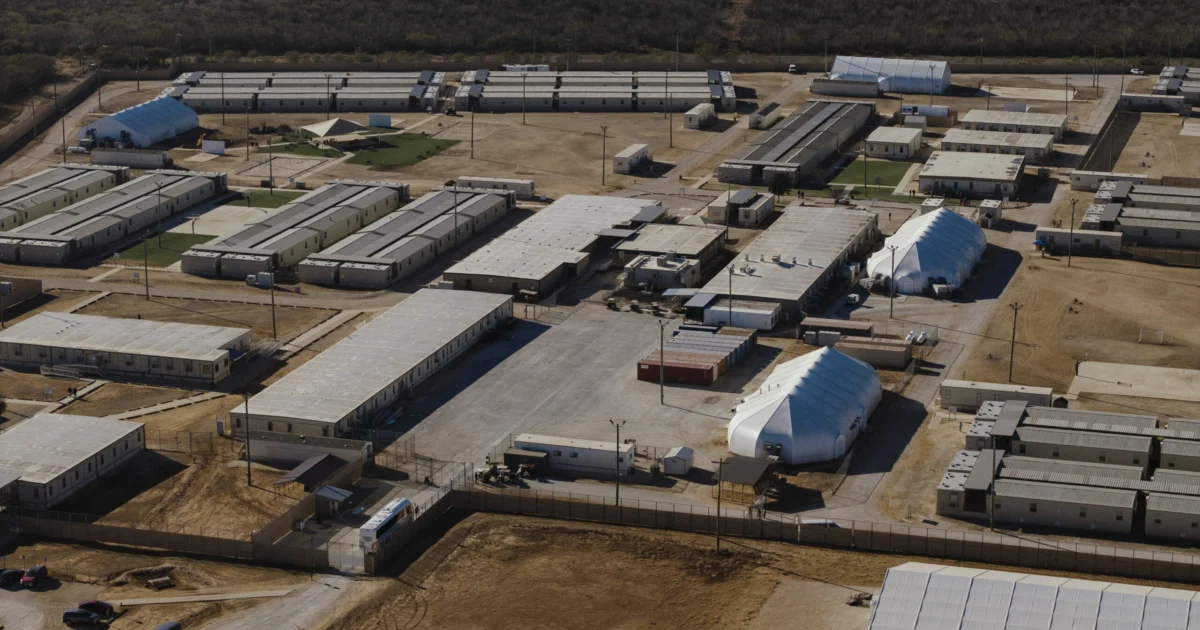
The population of the South Texas Family Residential Center in Dilley, Texas, the nation’s sole dedicated immigrant family detention facility, experienced a dramatic decline in February, with bookings plummeting by over 75% compared to the previous month. Data from U.S. Immigration and Customs Enforcement (ICE), obtained by ProPublica, reveals a significant shift in the facility’s operational status and raises questions about the confluence of public advocacy, policy, and operational decisions within the Department of Homeland Security (DHS).
The Precipitous Drop in Detainee Numbers
Historically, since President Donald Trump resumed sending families to the Dilley facility in April 2025, the monthly average for new admissions – or "book-ins" – hovered around 600 individuals. However, February 2026 saw a sharp reduction to just 133 book-ins. This downward trend continued into March, with only 54 new admissions recorded by mid-month. Concurrently, the overall daily population within the facility mirrored this decline. By the third week of March, only approximately 100 people were held at Dilley, a stark contrast to the average daily population of over 900 reported in January. This constitutes a nearly 90% reduction in the detainee population within a span of roughly two months, marking a profound change in the facility’s occupancy.
The magnitude of this reduction has puzzled both current and former ICE officials, as well as lawyers representing clients at Dilley, all of whom have indicated an inability to fully explain the sudden and drastic decrease. This official ambiguity, however, stands against a backdrop of intensifying public scrutiny and advocacy efforts that gained considerable momentum in the weeks preceding the population drop.
A Surge of Public Outcry: The Catalytic Events
The period leading up to February’s significant decline was characterized by a groundswell of public pressure, largely ignited by media reports and the personal narratives of detained children. The chronology of these events underscores the potential influence of public sentiment on immigration policy and enforcement practices.
The initial spark of widespread public attention was ignited on January 20, with the detention of Liam Conejo Ramos, a 5-year-old boy, and his father in Minnesota. Liam, photographed wearing a distinctive blue bunny hat at the time of his apprehension, quickly became a symbol of the human cost of family detention. The image of the child, seemingly innocent and vulnerable, resonated deeply with the public, leading to his photograph going viral across social media platforms and news outlets.
This initial wave of attention created an opening for deeper investigations into the conditions at Dilley. In mid-January, ProPublica journalists visited the facility, located about an hour south of San Antonio, gathering firsthand accounts and critical documentation. On February 9, ProPublica published several deeply affecting letters written by detained children, detailing their experiences inside Dilley. These letters articulated profound despair, the trauma of separation from their homes and schools, and descriptions of their living conditions. The immediate aftermath was a "storm of outrage" that swept through Washington D.C. and across the nation.
The Power of Children’s Voices and Congressional Response
The children’s letters transcended mere news items, becoming powerful instruments of advocacy. They were prominently displayed on posters during anti-ICE demonstrations and were even raised during congressional hearings. The direct, unvarnished expressions of the children brought an undeniable human element to a complex policy debate.
On February 10, just a day after the letters’ publication, Representative James Walkinshaw, a Democrat from Virginia, read excerpts of these letters aloud during a congressional hearing. Facing Todd Lyons, ICE’s acting director, Rep. Walkinshaw pressed for answers regarding the potential adverse psychological effects of detention on children. He highlighted a poignant drawing by Luisanney Toloza, a 5-year-old Venezuelan girl, depicting her family. Walkinshaw noted the absence of smiles on the family’s faces in the drawing, drawing a parallel to his own 5-year-old son’s ability to communicate through art, emphasizing the profound, unspoken sadness conveyed by the children. "My son’s 5. He can’t write many words, but he can communicate through drawings like this," Walkinshaw stated, underscoring the universal language of childhood expression.
Widespread Advocacy and Calls for Change
The public outcry extended beyond legislative chambers. Detainees at Dilley, emboldened by the growing external attention, organized a protest within the facility’s yard. An aerial photograph of this demonstration, widely circulated on social media, further amplified the calls for scrutiny. Lawmakers demanded multiple visits to the facility, specifically advocating for the release of Liam Conejo Ramos and others.
The professional medical community also weighed in forcefully. Nearly 4,000 doctors, nurses, and health professionals collectively sent a letter to the Trump administration, demanding the immediate release of all children held in immigration detention. Their professional assessment underscored the well-documented detrimental effects of detention on children’s physical and mental health.
Adding another powerful voice to the chorus of concern, social media personality Rachel Accurso, widely known as "Ms. Rachel" for her popular children’s educational programming, posted a video conversation with one of the children detained at Dilley. Shared with her 4.9 million Instagram followers, the video garnered over 3,700 comments, bringing the issue to a massive and often politically engaged audience. This cross-sectoral engagement—from traditional media to legislative bodies, medical professionals, and social media influencers—created an unprecedented level of pressure on the administration regarding family detention practices.
Official Responses and Institutional Perspectives
In response to the plummeting numbers and the intense public scrutiny, official statements from the Department of Homeland Security (DHS) and CoreCivic, the private company operating the Dilley facility, maintained their standard positions. DHS stated that custody decisions are made "daily, on a case-by-case basis," and asserted that the "administration does not make immigration decisions based on public opinion. We follow the rule of law." This statement attempts to decouple policy from public pressure, though the timing of the decline raises questions about this assertion. In past statements, DHS has characterized Dilley as a safe environment offering access to educational materials, childcare, and round-the-clock medical and mental health care, aiming to portray the facility as humane and compliant with standards.
CoreCivic, for its part, reiterated its limited role, stating it does not have "any say whatsoever" in whether detainees are deported or released. The company has consistently maintained that the health and safety of detainees remain its "top priority." These statements reflect an institutional defensiveness, adhering to established narratives amidst accusations of human rights violations and operational deficiencies.
Representative Joaquin Castro, a Texas Democrat who has been a vocal advocate for shutting down Dilley and finding alternatives to family detention, expressed cautious optimism regarding the decline. "That trailer prison is no place for children, and I’m glad to hear that the numbers continue to decline," Castro remarked. His comments implicitly acknowledged the role of public and legislative pressure, adding, "It’s a reminder that people can make a difference by speaking up."
A Brief History of Family Detention in the U.S.
The practice of detaining families at Dilley has a complex and contentious history, reflecting shifting immigration policies across administrations. The South Texas Family Residential Center first opened in 2014 under former President Barack Obama, primarily to accommodate an influx of recent border crossers, particularly from Central America. The Trump administration continued to operate the facility during its first term. However, President Joe Biden, upon taking office in 2021, halted family detentions, declaring that the United States "shouldn’t be in the business of detaining children." This policy reversal by Biden was a significant departure, signaling a move towards more humanitarian alternatives.
Yet, following his second inauguration, President Trump resumed family detentions at Dilley. This decision aligned with a more stringent approach to border enforcement. Interestingly, as overall border crossings have reportedly dropped to record lows, a notable trend emerged: more of the families being held at Dilley were arrested inside the United States, rather than immediately at the border. These families often had already established roots, built networks of relatives and friends, and resided in the country for a longer duration. The children detained at Dilley have spanned all ages, from newborns to older teenagers, and the vast majority of adults held there reportedly had no U.S. criminal record, challenging the narrative of detention as a measure against dangerous individuals.
The Flores Settlement Agreement and Its Persistent Challenges
Underpinning the legal debate surrounding child and family detention is the Flores Settlement Agreement. This landmark legal settlement, in place since 1997, stipulates that children should generally not be detained for more than 20 days. It also sets out specific standards for the care and treatment of all minors in immigration custody. Despite this long-standing agreement, the data obtained by ProPublica consistently showed that the average length of stay in custody at Dilley exceeded 20 days every month since family detentions resumed. In fact, for each month between November and February, the average stay was over 50 days, more than double the Flores limit.
DHS has, in the past, argued that the Flores agreement is outdated and should be terminated. The agency contends that newer regulations adequately address the needs of children in detention, suggesting that the existing framework is too restrictive for contemporary immigration enforcement challenges. This ongoing tension between the legal protections afforded by Flores and the operational practices of immigration enforcement agencies remains a central point of contention for advocates and policymakers alike.
Allegations of Retaliation and Information Control
In the wake of the protests and the widespread publication of the children’s letters, disturbing reports emerged from inside Dilley. Detainees and attorneys interviewed by ProPublica alleged that guards confiscated crayons, colored pencils, and drawing paper during recent room searches. This action was widely perceived as a punitive measure or an attempt to suppress further expressions of distress through art.
Further, ProPublica learned that the facility had cut off access to video calls in common areas. These measures, perceived by many as retaliatory, sparked additional criticism. The Trump administration, in a recent court filing, denied that personal property had been destroyed at Dilley, stating that confiscated items were "limited to materials identified as protest-related and not authorized under facility rules." CoreCivic "vehemently" denied that staff confiscated or destroyed children’s personal artwork or supplies. DHS explained the restrictions on video calls by citing concerns about the livestreaming of recorded calls online, which it claimed "resulted in the unauthorized dissemination of law enforcement sensitive information." The agency maintained that video calls remain available in private rooms, alongside access to in-person visitation and traditional phones, attempting to mitigate concerns about communication restrictions.
Individual Stories: The Human Element of Detention
Beyond the statistics and policy debates, individual stories illuminate the profound impact of detention. The El Gamal family, an Egyptian family consisting of Hayam El Gamal and her five children aged 5-year-old twins to 18, has been held at Dilley for nine months. Their detention followed the arrest of the father, Mohamed Soliman, on charges related to an alleged antisemitic attack in Boulder, Colorado. The family asserts they had no knowledge of his plans, and DHS states it is still investigating their case, highlighting the complex and often prolonged legal processes individuals face.
Another poignant story is that of Edison, a 13-year-old Guatemalan boy, who was released from Dilley with his mother this week after a 92-day detention. During his time at the facility, Edison had reportedly cried during video calls to his father in Chicago, expressing feelings of being treated like a criminal. In the early hours of a recent Wednesday morning, a guard instructed Edison and his mother to pack their belongings. By that night, they were on a plane to Chicago, reuniting with Edison’s father. His father, who requested his son’s last name not be used, expressed both bewilderment and immense relief: "We don’t understand why they were released. All I can tell you is it was a miracle from God." Upon landing, the family immediately went home to enjoy a seafood dinner, one of Edison’s favorite meals, symbolizing a return to normalcy and the simple joys of freedom.
Broader Implications and the Path Forward
The dramatic decline in population at the Dilley facility, while officially unexplained, strongly suggests that sustained public pressure and intensive advocacy can indeed influence the operational realities of immigration enforcement. While DHS maintains that decisions are made on a case-by-case basis and not due to public opinion, the timing and scale of the reduction align too closely with the surge of public and legislative scrutiny to be entirely coincidental.
This event underscores the ongoing tension between immigration enforcement priorities and humanitarian concerns, particularly regarding the detention of children. It also highlights the critical role of independent journalism in uncovering conditions within such facilities and the power of individual stories to galvanize public action. The future of family detention in the United States remains a subject of intense debate, with advocates continuing to push for alternatives that prioritize the well-being of children and families. The Dilley experience serves as a stark reminder of the ethical complexities inherent in immigration policy and the enduring capacity of collective voices to demand accountability and compassion. Whether this decline signifies a lasting shift in policy or merely a temporary operational adjustment remains to be seen, but for the families no longer detained, and for those advocating on their behalf, it represents a significant, if partial, victory.



 Joko Widodo
 Eva Lovia
 Pevita Pearce
 admin
admin
 Lina Irawan