
 Jia Lissa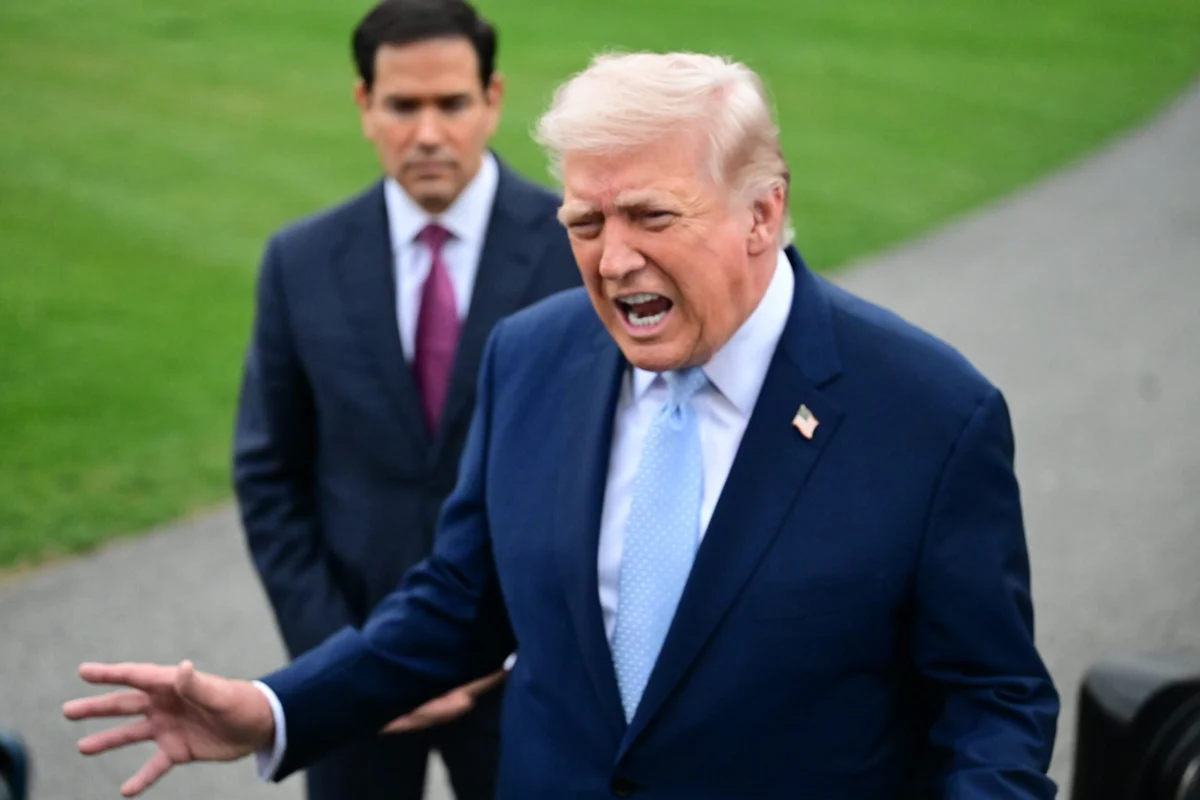
President Donald J. Trump has issued a formal and direct military ultimatum to the Islamic Republic of Iran, demanding the immediate and unconditional reopening of the Strait of Hormuz. In a high-stakes communication delivered via Truth Social on Saturday, March 21, 2026, the President stipulated a 48-hour window for Iran to ensure the "full opening" of the vital waterway "without threat." Failure to comply with this directive, according to the President, will result in a systematic military campaign by the United States to "obliterate" Iran’s national power grid, beginning with its largest energy facilities.
The ultimatum, timestamped at 7:44 p.m. ET, marks a significant escalation in the ongoing conflict known as Operation Epic Fury. President Trump’s post was explicit in its targeting parameters: "If Iran doesn’t FULLY OPEN, WITHOUT THREAT, the Strait of Hormuz, within 48 HOURS from this exact point in time, the United States of America will hit and obliterate their various POWER PLANTS, STARTING WITH THE BIGGEST ONE FIRST! Thank you for your attention to this matter. President DONALD J. TRUMP." This development comes at a critical juncture in the three-week-old war, as the U.S. military moves from leadership decapitation strikes toward the systematic destruction of Iranian national infrastructure.
The Context of Operation Epic Fury and the Death of Ali Khamenei
The current hostilities reached a fever pitch three weeks ago when a combined U.S. and Israeli precision strike operation resulted in the death of Iran’s Supreme Leader, Ali Khamenei. The elimination of Khamenei was the centerpiece of Operation Epic Fury, a military campaign designed to dismantle the theocratic regime’s command and control structure. Since the Supreme Leader’s death, the Pentagon has confirmed that dozens of other high-ranking officials within the Iranian Revolutionary Guard Corps (IRGC) and the Supreme National Security Council have been neutralized.
Reports from intelligence circles suggest that the Iranian government is currently in a state of fractured paralysis. Following the strike on Khamenei, Israeli forces reportedly conducted follow-up sorties against the Supreme Council as it attempted to convene to select a successor. This "active decapitation" strategy has left the country’s central authority in a vacuum, leading to decentralized military responses from local IRGC units, which have intensified their efforts to disrupt global energy markets by mining or harassing traffic in the Strait of Hormuz.
The Strategic Importance and Current Status of the Strait of Hormuz
The Strait of Hormuz is widely considered the world’s most sensitive oil chokepoint. Located between Oman and Iran, it connects the Persian Gulf with the Gulf of Oman and the Arabian Sea. In a standard economic climate, the Strait facilitates the passage of approximately 21 million barrels of oil per day, representing roughly 21% of global petroleum liquid consumption.
The impact of the current conflict on maritime commerce has been catastrophic. Data provided by the BBC indicates that maritime traffic through the Strait has plummeted by 95% throughout the month of March. Under normal circumstances, an average of 138 commercial vessels—including Ultra Large Crude Carriers (ULCCs) and Liquefied Natural Gas (LNG) tankers—pass through the waterway daily. Since the onset of Operation Epic Fury and the subsequent Iranian attempts to block the passage, that number has dwindled to a total of approximately 100 ships across the entire duration of the conflict.
The near-total cessation of traffic is attributed not only to the physical threats posed by Iranian naval assets and sea mines but also to the skyrocketing cost of maritime insurance. War-risk premiums for tankers traversing the region have reached levels that make commercial shipping prohibitively expensive, effectively creating a de facto blockade that the United States is now determined to break by force.
Economic Fallout: Oil Prices and Global Market Instability
The volatility in the Persian Gulf has sent shockwaves through the global energy markets. As of the market close on Friday, March 20, the price of a barrel of crude oil stood at $98.09. This represents a staggering 47% increase from the price recorded the day before Operation Epic Fury commenced.
Market analysts warn that if the 48-hour deadline passes without a resolution, and the U.S. proceeds with the destruction of Iran’s power infrastructure, the price of oil could easily exceed the $150-per-barrel mark. The global supply chain, already strained by the reduction in Middle Eastern exports, is facing its most significant crisis since the 1973 oil embargo. Retail gasoline prices in the United States have already begun to reflect this surge, with the national average rising by nearly $1.20 in less than a month.
Timeline of Recent Escalations
The road to the current 48-hour ultimatum has been marked by rapid military developments and a total breakdown in diplomatic channels:
- March 1, 2026: Operation Epic Fury is launched. A joint U.S.-Israeli air operation strikes multiple high-value targets in Tehran, confirming the death of Supreme Leader Ali Khamenei.
- March 5, 2026: Iran’s Supreme National Security Council attempts to meet in a secure facility; a secondary strike by Israeli forces results in the deaths of several high-ranking generals and council members.
- March 10, 2026: Remaining IRGC naval elements begin deploying sea mines in the Strait of Hormuz. International shipping companies begin rerouting vessels around the Cape of Good Hope.
- March 15, 2026: Oil prices cross the $90 threshold as the BBC reports a 95% drop in Strait traffic.
- March 20, 2026: Market closes with oil at $98.09. President Trump prepares the ultimatum.
- March 21, 2026 (7:44 p.m. ET): President Trump issues the 48-hour deadline for Iran to open the Strait or face the destruction of its power plants.
Domestic Political Friction and Media Disputes
The President’s handling of the war has been a point of intense domestic debate. On Saturday, shortly before issuing the ultimatum, President Trump used his social media platform to criticize David Sanger, a veteran national security reporter for The New York Times. Sanger had recently published an analysis suggesting that despite the high-profile assassinations, many of the U.S. military’s primary strategic goals—specifically the stabilization of the energy market and the total surrender of the IRGC—remained unaccomplished.
Trump rejected this assessment, asserting that the campaign is ahead of schedule. "The United States has blown Iran off of the map, and yet their lightweight analyst, David Sanger, says that I haven’t met my own goals. Yes I have, and weeks ahead of schedule!" Trump posted. The friction between the administration and the press highlights the divide in Washington over the long-term "endgame" of the conflict and whether the current strategy will lead to a protracted regional insurgency or a swift victory.
Potential Impact of Targeting Iran’s Power Grid
Military analysts suggest that the threat to "obliterate" power plants is a strategic move to force a total collapse of what remains of the Iranian state’s domestic control. By targeting the energy sector, the U.S. would effectively disable the country’s industrial capacity, telecommunications, and water treatment facilities, which rely on the electrical grid.
The mention of starting with the "biggest one first" likely refers to the Bushehr Nuclear Power Plant or the major hydroelectric and thermal plants in the Khuzestan province. Attacking such facilities would not only have immediate military implications but would also result in a severe humanitarian crisis for the Iranian civilian population. Critics of the plan argue that such strikes could be classified as targeting dual-use infrastructure, which carries significant weight under international law, while proponents argue that it is a necessary measure to end the blockade of the Strait of Hormuz without a full-scale ground invasion.
International Reactions and Geopolitical Risks
The international community remains on high alert as the 48-hour clock ticks down. European allies have expressed concern over the potential for a total regional collapse, while major oil importers in Asia, specifically China and India, have called for "restraint" to prevent further economic damage.
China, which relies heavily on Iranian oil and the stability of the Persian Gulf, has not yet issued a formal condemnation of the ultimatum but has increased its naval presence in the Indian Ocean. There are growing concerns among geopolitical experts that the destruction of Iran’s power grid could lead to a permanent vacuum of power, potentially allowing for the rise of radical non-state actors or forcing a massive refugee crisis into neighboring Turkey and Iraq.
As the deadline of Monday evening approaches, the world remains focused on the Strait of Hormuz. The next 48 hours will determine whether the conflict moves toward a conclusion or enters a new, more destructive phase of "infrastructure warfare" that could redefine the Middle East for decades to come.




 admin
admin
 Lina Irawan
 Yuyun Lusiyani
 Joko Widodo
 Eva Lovia