
 Jia Lissa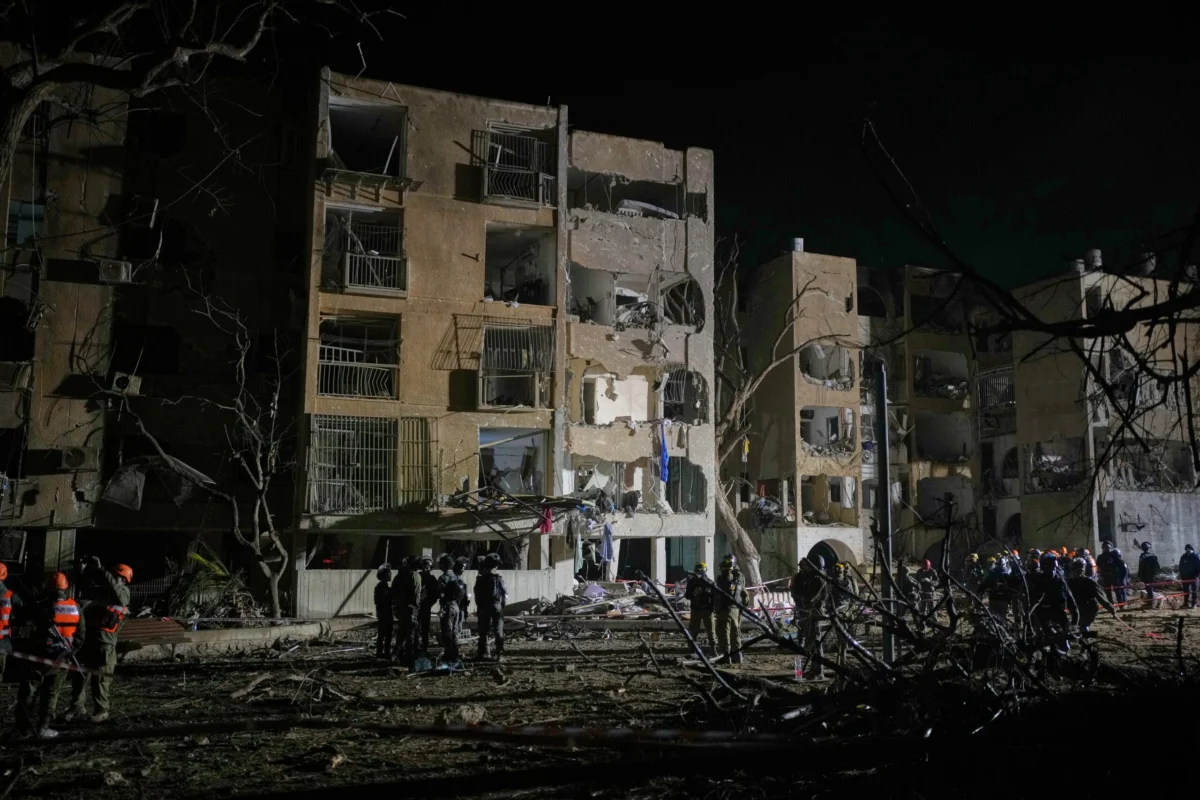
Israeli Prime Minister Benjamin Netanyahu addressed the nation on Saturday evening following a significant escalation in regional hostilities, offering prayers for the victims of Iranian ballistic missile strikes that successfully bypassed the country’s multi-layered aerial defense systems. The strikes, which targeted the southern municipalities of Arad and Dimona, resulted in dozens of injuries and substantial property damage, marking one of the most direct and damaging confrontations between the two regional powers in recent history. Taking to the social media platform X, Netanyahu characterized the situation as a "very difficult evening in the campaign for our future," signaling a potential shift in the intensity of Israel’s military posture toward Tehran.
The Prime Minister confirmed that he had been in direct communication with the Mayor of Arad, Yair Maayan, to express solidarity with the residents and to ensure that the full weight of the national government was being deployed to assist the affected areas. According to the Prime Minister’s statement, the Director General of the Prime Minister’s Office has been instructed to coordinate with all relevant government ministries to provide immediate humanitarian and logistical aid. Netanyahu also praised the efforts of emergency responders and search-and-rescue teams who are currently operating in the debris of impacted residential zones, while urging the public to strictly adhere to the safety protocols issued by the Home Front Command.
Details of the Aerial Incursion and Defense Breach
The strikes involved at least two large-scale Iranian ballistic missiles, each reportedly carrying warheads weighing approximately 1,000 pounds. These munitions struck populated areas in the southern district, specifically the towns of Arad and Dimona, located near the Dead Sea and in proximity to the Negev Nuclear Research Center. While Israel’s Iron Dome and Arrow defense systems have historically maintained a high interception rate, the sheer velocity and payload of these specific ballistic missiles allowed them to penetrate the defensive umbrella.
Military analysts suggest that the use of 1,000-pound warheads indicates a deliberate intent to cause significant structural damage and civilian psychological distress. Reports from the ground in Dimona indicate that at least 20 residential buildings sustained major damage. In Arad, the situation remains critical as search-and-rescue teams sift through the rubble of collapsed structures to locate survivors. The geographic location of the strikes is particularly sensitive, as both towns serve as residential hubs for personnel and families associated with Israel’s strategic infrastructure in the Negev desert.
Casualty Reports and Emergency Response
The human toll of the Saturday evening strikes has been significant. In Arad, medical officials have reported more than 60 injuries, ranging from minor shrapnel wounds to critical trauma caused by structural collapses. Among the most severely injured is a five-year-old girl, whose condition has drawn national attention and underscored the civilian impact of the bombardment. In the neighboring town of Dimona, upwards of 40 people have been treated for injuries, including a young boy suffering from shrapnel wounds.
The Magen David Adom (MDA) and the Home Front Command have established triage centers in both municipalities to manage the influx of casualties. Hospitals in the southern region, including Soroka Medical Center in Beersheba, have been placed on high alert to receive the wounded. The search-and-rescue operations in Arad are being described as a race against time, as emergency crews utilize heavy machinery and acoustic sensors to detect any individuals who may be trapped beneath the remains of residential apartment blocks.
The Strategic Significance of the Negev Nuclear Research Center
One of the most alarming aspects of the strike was the proximity of the impact sites to the Negev Nuclear Research Center, a facility that is central to Israel’s strategic capabilities. Following the explosions, international observers and nuclear watchdogs closely monitored the status of the facility. The International Atomic Energy Agency (IAEA) issued a preliminary statement shortly after the strikes, confirming that they had seen no immediate indication of damage to the nuclear research center itself.
Despite the lack of direct damage to the facility, the choice of targets appears to be a calculated signal from Tehran. Iranian state-aligned media outlets have already begun framing the strikes as a direct act of "reciprocal deterrence." According to these reports, the bombardment was a retaliatory response to a previous strike attributed to the United States and its allies against Iran’s Natanz nuclear enrichment facility. Natanz is Iran’s primary enrichment site, and while parts of it are located deep underground, newer sections are considered more vulnerable to high-yield airstrikes. By targeting the areas surrounding Dimona, Iran appears to be demonstrating its ability to hold Israel’s most sensitive strategic assets at risk.
Chronology of Escalation: From Natanz to Arad
The current crisis is the culmination of a rapidly deteriorating security situation that began with an operation against the Natanz facility in central Iran. That facility, which has been the site of multiple "industrial accidents" and cyberattacks over the last decade, recently suffered significant damage to its centrifuge halls. Tehran blamed a coalition of Western and regional intelligence services for the breach, vowing a "harsh and proportional" response.
The timeline of the current escalation can be summarized as follows:
- Initial Incident: A major explosion at the Natanz enrichment facility disrupts Iran’s uranium enrichment capabilities.
- Tehran’s Vow: Iranian military leadership issues a formal warning that "Zionist infrastructure" would be held accountable for the Natanz incident.
- The Saturday Strike: Late Saturday evening, long-range ballistic missiles are launched from western Iran.
- The Breach: Despite the activation of Israeli air defense sirens, two missiles impact Arad and Dimona.
- The Response: Prime Minister Netanyahu issues an emergency address, confirming the injuries and promising a counter-strike "on all fronts."
Domestic and International Reactions
The strikes have elicited a flurry of reactions from the international community. The United States State Department issued a statement condemning the Iranian attack on civilian population centers and reaffirmed its "ironclad" commitment to Israel’s security. However, diplomatic sources suggest that Washington is also urging restraint to prevent the situation from spiraling into a full-scale regional war that could draw in multiple neighboring states.
Within Israel, the political landscape has rallied around the security apparatus, though questions are being raised regarding the technical failure of the air defense systems to intercept the incoming warheads. Opposition leaders have expressed their support for the victims while demanding a comprehensive review of why the "Iron Dome" and "Arrow" systems were bypassed in this instance. The Home Front Command has extended its emergency instructions, advising residents in the south to remain near fortified shelters and cancelling large public gatherings for the foreseeable future.
Fact-Based Analysis of Future Implications
The success of these Iranian strikes represents a pivotal moment in the "shadow war" between Israel and Iran. For years, the conflict has been defined by cyberwarfare, maritime skirmishes, and targeted assassinations. The transition to direct ballistic missile strikes on residential areas near a nuclear facility suggests that the "rules of engagement" have fundamentally changed.
There are several key implications to consider moving forward:
- Defense Re-evaluation: Israel will likely need to re-evaluate the saturation limits of its aerial defense systems. If 1,000-pound warheads can penetrate the current shield, the military may seek to accelerate the deployment of laser-based defense systems or increase the density of its missile interceptor batteries.
- Deterrence Strategy: Netanyahu’s comment about being "determined to continue to strike our enemies on all fronts" suggests that an Israeli kinetic response is imminent. This could involve strikes on Iranian launch sites, command and control centers, or further operations against Iran’s nuclear infrastructure.
- Regional Stability: The proximity of the strikes to the Dead Sea and the Jordanian border raises concerns for neighboring countries. An expanded conflict could disrupt regional energy markets and lead to a significant humanitarian crisis if civilian centers continue to be targeted.
- Nuclear Diplomacy: The IAEA’s involvement highlights the high stakes of the situation. Any perceived threat to a nuclear facility—whether in Natanz or Dimona—elevates the conflict from a regional border dispute to a matter of global security and non-proliferation.
As search-and-rescue operations continue in Arad and Dimona, the Israeli government faces the dual challenge of managing a domestic humanitarian emergency while formulating a military response that restores its deterrence without triggering an uncontrollable escalation. The "campaign for our future," as Netanyahu described it, has entered a new and significantly more dangerous phase.



 Yuyun Lusiyani
 Joko Widodo
 Eva Lovia
 Pevita Pearce