
 Eva Lovia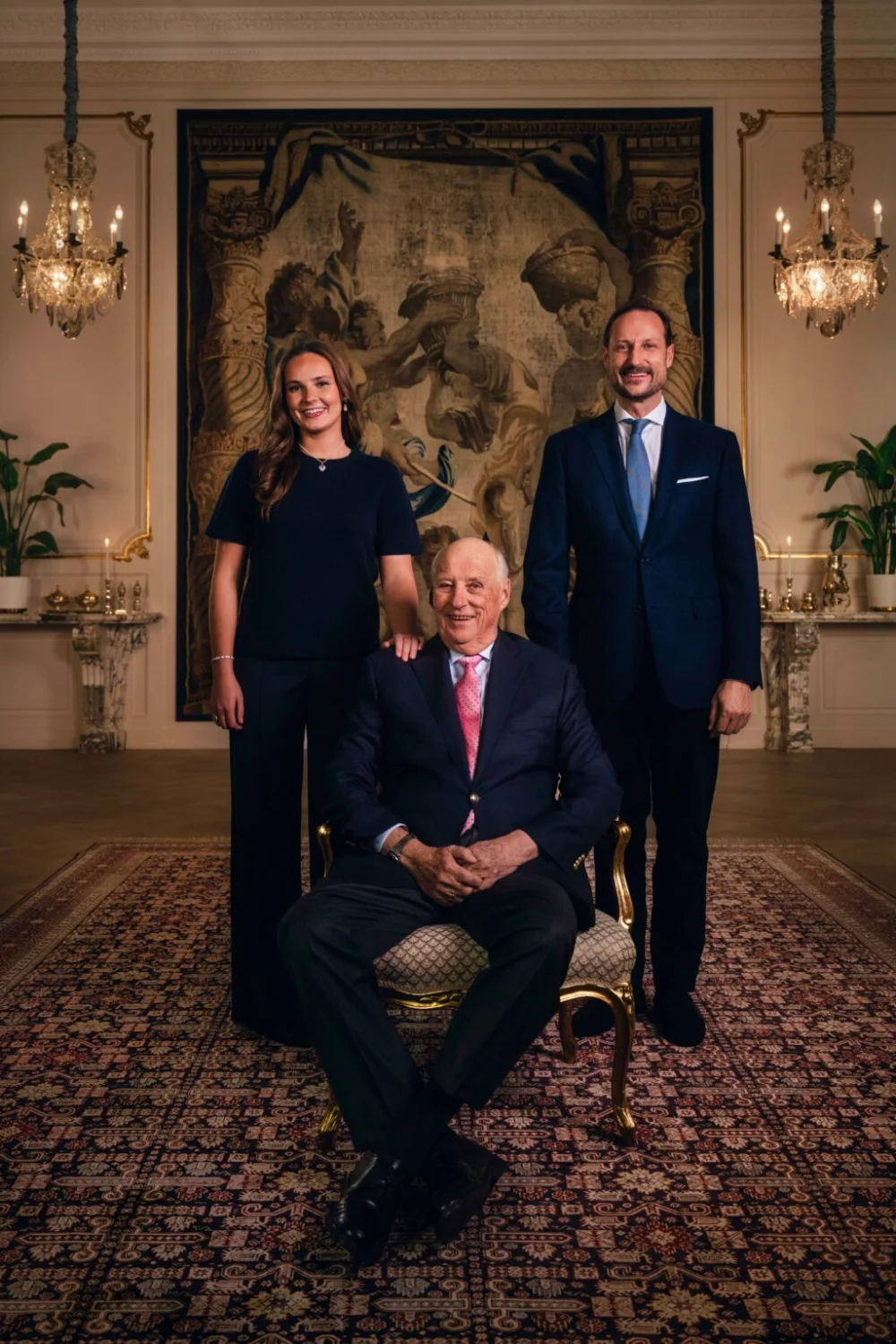
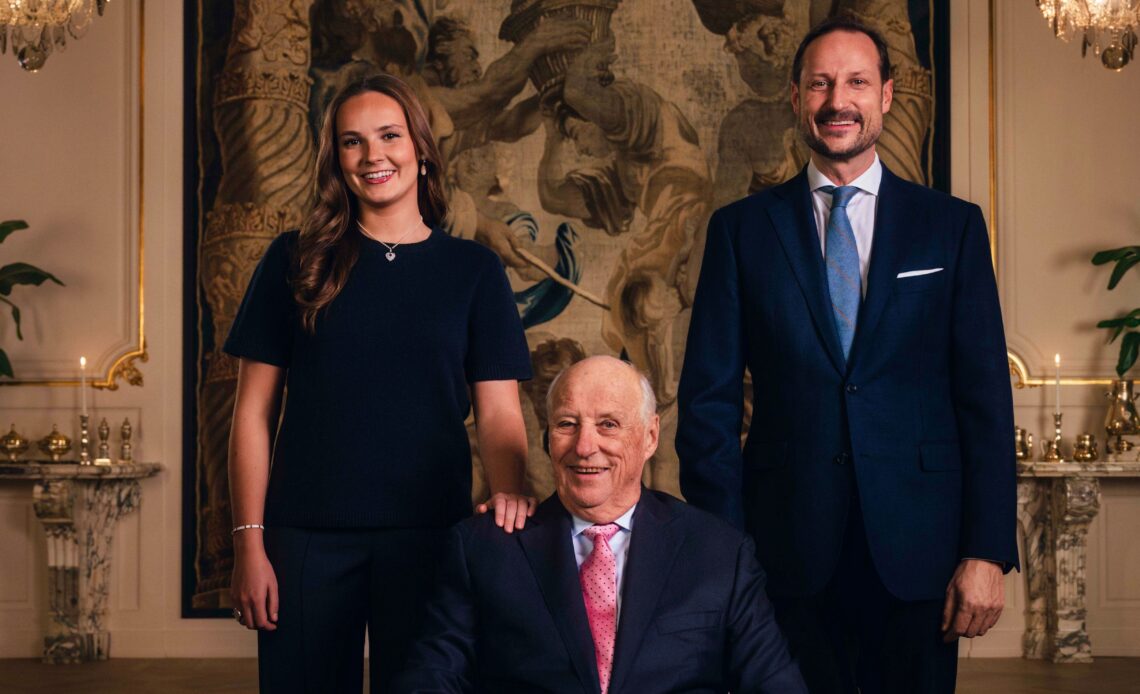
King Harald of Norway marked his 89th birthday over the weekend, a milestone occasion underscored by the release of a new official portrait. The photograph, featuring three generations of the Norwegian Royal Family, was shared by the Royal Court amidst what is being described as the monarchy’s most significant crisis in recent history. The portrait, taken earlier this year during a session for Crown Princess Ingrid Alexandra’s 22nd birthday, showcases King Harald alongside his son and heir, Crown Prince Haakon, and his granddaughter, Princess Ingrid Alexandra. Princess Ingrid Alexandra is slated to become Norway’s first queen regnant in modern times, a future that now appears to be unfolding against a backdrop of considerable public scrutiny and declining support for the institution she is destined to lead.
The timing of the birthday celebration, coupled with the release of the new portrait, serves as a poignant visual representation of continuity and the future of the Norwegian monarchy. However, this symbolic gesture is overshadowed by concerning public opinion data. A recent poll conducted by Norstat for NRK, Norway’s national broadcaster, revealed a significant drop in public support for the monarchy, with approval ratings now standing at 60 percent. This represents a substantial 10 percent decline from a similar poll conducted just earlier this month, indicating a rapid erosion of public confidence in the royal institution.
A Glimpse into Royal Approval Ratings: Declining Fortunes
While King Harald himself continues to command considerable personal respect, receiving an impressive 9.2 out of 10 in the latest poll, and Queen Sonja also maintains strong approval with an 8.6 rating, the figures for the younger generation of royals paint a less optimistic picture. Crown Prince Haakon’s personal approval rating has dipped to 7.9 out of 10, a notable decrease from the 8.8 he achieved approximately eighteen months ago. This decline suggests a growing disconnect between the heir apparent and the public, a trend that could have long-term implications for the monarchy’s stability.
The most dramatic fall in public perception is attributed to Crown Princess Mette-Marit. Her approval rating has plummeted from a respectable 7.4 out of 10 to a concerning 3.2 out of 10. This precipitous decline directly correlates with the unfolding scandals that have embroiled the Crown Princess and, by extension, the entire Royal Family. Princess Ingrid Alexandra, though not directly implicated in the recent controversies, also registered a public grade of 7.3 out of 10. While this is not alarmingly low, it suggests that even the future queen is not entirely insulated from the broader negative sentiment surrounding the monarchy.
The Shadow of Scandal: Epstein Links and Legal Troubles
The Norwegian Royal Family finds itself at the epicenter of a multifaceted crisis, with two primary issues dominating public discourse and significantly impacting royal approval. The most prominent concern revolves around Crown Princess Mette-Marit’s alleged connection to the late financier Jeffrey Epstein. The recent release of unredacted files by the U.S. Department of Justice has brought renewed attention to communications between the Crown Princess and Epstein, casting a long shadow over her public image and raising serious questions about her judgment and associations. This scandal has intensified pressure on the Royal Family at a time when they are already grappling with significant legal challenges involving the Crown Princess’s son, Marius Borg Høyby.
Marius Borg Høyby, the Crown Princess’s eldest son from a previous relationship, is currently facing serious criminal charges. His trial, which has garnered considerable media attention, includes allegations of rape, domestic violence, drug possession, speeding, and violating a restraining order. The legal proceedings against Høyby have placed the Royal Family in an uncomfortable and highly public spotlight, further eroding public trust and confidence in the institution. The confluence of these two major scandals has created a perfect storm, significantly damaging the monarchy’s standing and reputation both domestically and internationally.
A Royal Apology and a Family in Crisis
In response to the mounting pressure and public outcry, Crown Princess Mette-Marit issued a personal statement earlier this month. Published on the official Royal Court website, the statement represented a significant moment for the Norwegian monarchy, as a senior royal publicly addressed deeply troubling allegations. In her statement, the Crown Princess acknowledged her past relationship with Epstein and expressed remorse for the situation. She stated, “some of the contents of the messages between Epstein and me does not represent the person I want to be.” Furthermore, she directly apologized to King Harald and Queen Sonja, acknowledging the difficult position she has placed the royal family in. This apology, while a necessary step, comes at a critical juncture for the monarchy, attempting to stem the tide of negative public sentiment.
The current absence of King Harald and Queen Sonja from Norway, as they are reportedly abroad, further emphasizes the reliance on the next generation to navigate this challenging period. Crown Prince Haakon is currently serving as Regent, assuming royal duties in their stead until early March. His role as regent during this crisis is crucial, as he will be expected to project stability and leadership while the King and Queen are away and the family faces unprecedented scrutiny.
Broader Implications for the Norwegian Monarchy
The current crisis facing the Norwegian Royal Family is not merely a temporary blip in public opinion; it represents a fundamental challenge to the institution’s future viability. A consistent decline in public support, particularly among younger demographics, poses a significant long-term threat. The monarchy, traditionally a symbol of national unity and tradition, is increasingly being judged by contemporary standards of transparency, accountability, and ethical conduct.
The scandals involving Crown Princess Mette-Marit and her son have highlighted the complexities of a modern monarchy that operates within the public eye. The blurred lines between private lives and public duties, especially in an era of social media and instant information, create vulnerabilities that can be exploited. The public’s expectation for royals to be beyond reproach is amplified when they are associated with serious criminal allegations or controversial figures.
The Norwegian monarchy, like many other European royal houses, must adapt to evolving societal norms and expectations. The release of the new portrait, while intended to project strength and continuity, serves as a stark reminder of the generational shift underway. The future of the monarchy will largely depend on the ability of Crown Prince Haakon and Princess Ingrid Alexandra to navigate these turbulent waters, rebuild public trust, and demonstrate their commitment to the values the institution is meant to uphold. The coming months will be critical in determining whether the Norwegian monarchy can weather this storm and emerge with its legitimacy and public standing intact. The enduring question remains: can the royal family, through its actions and public engagement, restore the faith of a nation that has historically held its monarchy in high regard? The current trajectory suggests a difficult path ahead, demanding significant efforts in transparency, accountability, and a clear demonstration of commitment to public service.


 Jia Lissa
 Yuyun Lusiyani
 Joko Widodo

 Pevita Pearce