
 Pevita Pearce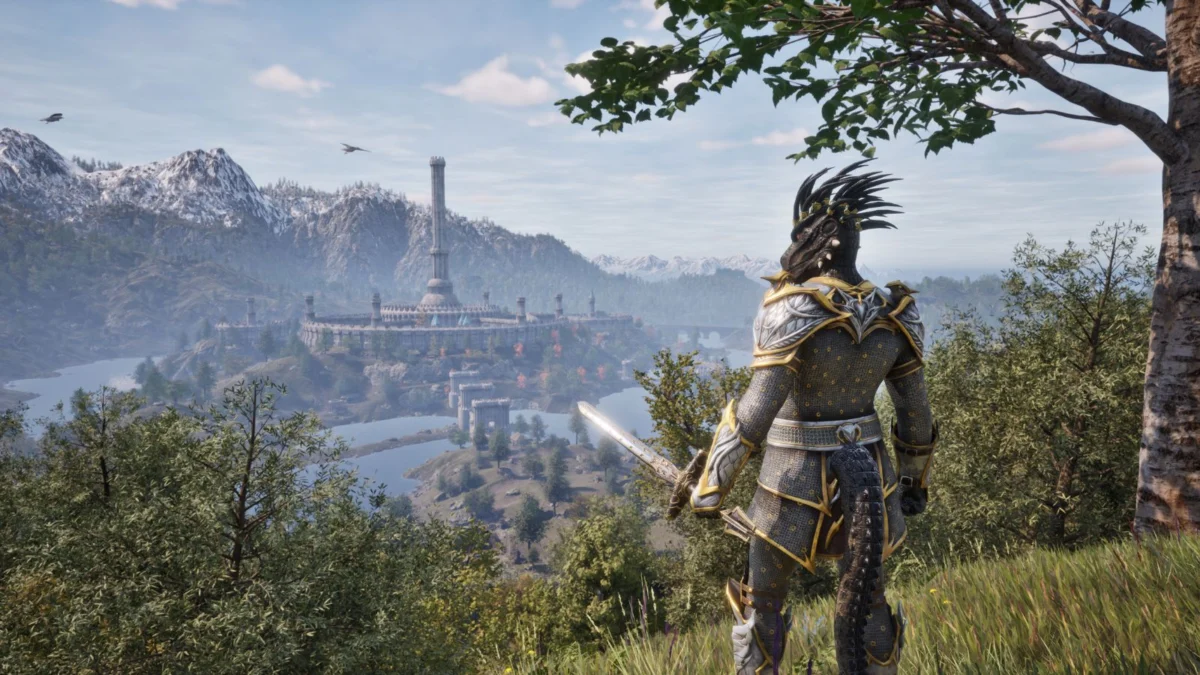
Nearly one year following the unexpected stealth release of The Elder Scrolls IV: Oblivion Remastered, Bethesda Game Studios Director Todd Howard has provided new insights into the development philosophy that guided the project. Specifically, Howard addressed the conscious decision to leave several of the original game’s most notorious bugs and technical oversight intact, including a legendary voice-acting mistake that has become a staple of gaming culture. The remaster, which has been hailed by both critics and long-term fans as a premier example of how to modernize a classic title without stripping away its soul, intentionally balances high-definition visual upgrades with the preservation of what Howard describes as the game’s "character."
The Elder Scrolls IV: Oblivion was originally released in 2006 for the PC and Xbox 360, serving as a landmark title for the seventh generation of consoles. It introduced the "Radiant AI" system and a level of world-interaction that was unprecedented at the time. However, the complexity of its systems also led to a variety of humorous and immersion-breaking glitches. When the remaster was launched last year, players were surprised to find that many of these quirks remained, leading to a broader discussion regarding the ethics and methodology of video game preservation and the role of "jank" in a title’s legacy.
The Infamous Tandilwe Voice Flub and Legacy Errors
Perhaps the most prominent "bug" preserved in the remaster is the infamous voice line associated with the NPC Tandilwe, an Altmer priestess found in the Temple of the One within the Imperial City. During one of her dialogue sequences, the voice actress, Anne Ballantyne, makes a mistake, pauses, and says, "Wait a minute, let me do that one again," before restarting the line from the beginning. In the original 2006 release, this was an editing error where the outtake was accidentally left in the final master files.
While modern quality assurance (QA) standards would typically flag such an error for immediate removal in a remaster, Bethesda chose to leave it in. Speaking in a recent industry roundtable interview, Todd Howard defended this choice, noting that the error has transcended its status as a mistake to become a beloved piece of Elder Scrolls history. "I love the VO line flub," Howard remarked during the session. "Stuff like that? Yeah, just leave it. It’s fine. It’s part of the game’s character."
This philosophy suggests a shift in how developers view their older works. Rather than viewing a remaster as a chance to achieve a "perfected" version of the original vision, Howard and his team viewed it as a museum piece that should reflect the era in which it was created. For many players, hearing Tandilwe’s accidental outtake is a nostalgic touchstone that evokes the specific experience of playing the game in the mid-2000s.
Technical Complexity and the "Fuzzy Judgment Calls" of Development
Beyond the voice acting errors, Howard touched upon the more technical glitches that survived the transition to the remastered engine. One such issue involves a persistent bug where the player’s first-person camera can become stuck in an elevated position after standing on certain environmental objects. This results in a "tall POV" that makes the player character appear significantly larger than the NPCs around them.
Howard explained that the decision to leave these bugs was not merely a matter of sentimentality, but also one of technical pragmatism. He described the process of deciding what to fix as a series of "fuzzy judgment calls." In the case of the camera glitch, Howard noted that the underlying code is deeply intertwined with the game’s physics and collision systems.
"Take that one where you can stand on things; fixing that is so complicated," Howard admitted. In the world of game development, particularly within the complex Gamebryo engine (and its subsequent iterations), fixing a minor cosmetic or perspective bug can often trigger a "butterfly effect" of game-breaking issues elsewhere. By attempting to smooth out every minor physics quirk, the developers risked destabilizing the entire ecosystem of the game, which is known for its highly reactive—if sometimes unpredictable—environment.

Chronology of a Classic: From 2006 to the Remaster
To understand the significance of these preserved bugs, one must look at the timeline of Oblivion’s release and its subsequent impact on the industry:
- March 2006: The Elder Scrolls IV: Oblivion releases to critical acclaim, winning numerous Game of the Year awards. It sets the standard for open-world RPGs on the then-new Xbox 360 and PlayStation 3 hardware.
- 2006–2010: The game develops a massive modding community. This community begins fixing thousands of bugs via the "Unofficial Oblivion Patch," but many fans choose to play the "vanilla" version for its unique quirks.
- 2023: After years of rumors and leaks, Bethesda stealth-releases Oblivion Remastered. The project features 4K resolution support, updated textures, improved draw distances, and modernized controller layouts, but retains the original AI and physics logic.
- 2024: On the anniversary of the remaster, Todd Howard’s comments reaffirm Bethesda’s stance on "intentional imperfection," sparking a debate among developers about the nature of remakes versus remasters.
The decision to keep the core of the game "intact" meant that the team had to resist the urge to overhaul the AI. The Radiant AI system, which gives NPCs daily schedules and the ability to make choices, was revolutionary in 2006 but is also the source of many of the game’s most famous "glitchy" behaviors, such as NPCs engaging in nonsensical conversations or getting into fights over stolen pieces of bread.
Public Reaction and the "Golden Standard" of Remasters
The gaming public’s reaction to Howard’s revelations has been largely positive, though it remains a point of contention among some purists. Many fans have dubbed Oblivion Remastered the "golden standard" for how to handle aging intellectual property. This praise often comes in contrast to other recent industry remasters, such as the Grand Theft Auto: The Trilogy – The Definitive Edition, which was criticized for losing the "feel" and aesthetic of the original games by over-polishing or using AI-driven upscaling that introduced new, less charming errors.
Industry analysts suggest that Bethesda’s approach respects the "institutional memory" of the player base. In an era where games are frequently updated and patched until they are unrecognizable from their launch states, there is a growing demand for "authentic" experiences. Data from community forums and player surveys indicate that a significant portion of the Elder Scrolls fan base views the game’s technical imperfections as part of its identity, similar to how a vinyl record’s crackle is valued by audiophiles.
However, a vocal minority of players argues that a remaster should be the definitive, bug-free version of a game. These critics point out that while a voice line flub is harmless, camera glitches and physics errors can occasionally hinder gameplay. Despite this, the commercial success of the remaster suggests that Howard’s "character-first" approach has resonated with the broader market.
Broader Implications for Game Preservation and Future Bethesda Titles
The discourse surrounding Oblivion Remastered has broader implications for how Bethesda—and the industry at large—might handle future projects. With rumors of a Fallout 3 remaster or even an eventual Skyrim "Super" Special Edition always circulating, the "Oblivion Model" provides a blueprint.
The preservation of bugs as "character" raises interesting questions about the nature of software as art. If a bug was present during the formative experiences of millions of players, does it become a part of the art itself? For Todd Howard, the answer appears to be a resounding yes. This philosophy aligns with Bethesda’s general approach to game design, which often prioritizes player freedom and systemic complexity over sterile, "perfect" code.
Furthermore, this approach acknowledges the role of the modding community. By leaving the base game largely as it was, Bethesda ensures that the decades of work done by modders remains largely compatible or easily adaptable to the remastered version. This symbiotic relationship between the developer and the community is a cornerstone of the Elder Scrolls franchise’s longevity.
As the industry moves forward, the "fuzzy judgment calls" Howard mentioned will continue to be a central challenge for developers. The balance between modernization and preservation is delicate. In the case of Oblivion Remastered, Bethesda chose to embrace the "flubs" and the "jank," betting that the game’s soul was found not in its technical perfection, but in its endearing, sometimes clumsy, ambition. As the remaster enters its second year on the market, the enduring popularity of Tandilwe’s botched line and the "tall POV" glitch suggests that, for the fans of Cyrodiil, Howard made the right call.



 Yuyun Lusiyani
 Joko Widodo
 Jia Lissa
 admin
admin
