
 Eva Lovia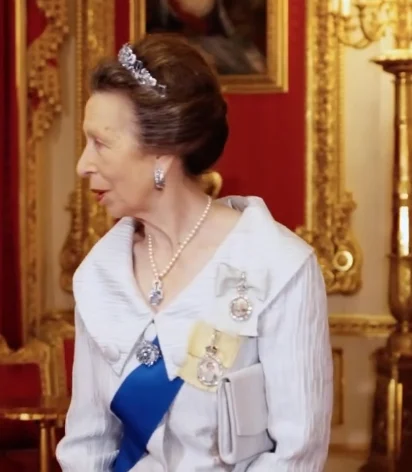
The United Kingdom and the wider Commonwealth are set to commemorate a significant milestone on April 21, 2026: the 100th anniversary of the birth of Her late Majesty Queen Elizabeth II. This momentous occasion will be marked by a series of poignant and fitting tributes, with Her Royal Highness The Princess Royal playing a central role in officially opening a new garden dedicated to her mother’s memory. The Queen Elizabeth II Garden, nestled in the heart of London’s Regent’s Park, will serve as a lasting tribute to the late monarch’s extraordinary life and enduring legacy.
The Princess Royal’s duty to inaugurate the garden underscores the deep familial connection to the project, designed as a serene sanctuary for public reflection. HTA Design, the firm responsible for bringing the vision to life, has crafted a space intended to embody the Queen’s profound connection to nature and her unwavering dedication to public service. The garden’s opening on the centenary itself, with the Princess Royal officiating, will precede its official welcoming of visitors just a few days later, allowing for a period of quiet contemplation and appreciation. This initiative is one of several high-profile events scheduled to honour the Queen’s centenary, a period that promises to be rich with historical reflection and royal engagement.
A Spectrum of Centenary Tributes
Beyond the opening of the Queen Elizabeth II Garden, the centenary of Queen Elizabeth II’s birth will be observed through a variety of significant royal engagements. Their Majesties King Charles III and Queen Camilla are expected to lead by example, attending a brand-new exhibition at The King’s Gallery in London. This exhibition, focusing on Queen Elizabeth II’s distinctive style, will delve into the narrative of her life and reign through the lens of her wardrobe and personal image. Featuring an extensive collection of thousands of items, the exhibition promises to offer an intimate glimpse into the Queen’s personal presentation, ranging from her iconic headscarves and ballet shoes to the magnificent aquamarine and diamond tiara, a piece uniquely commissioned and exclusively worn by the late monarch. This curated display is anticipated to draw considerable public interest, offering a unique educational and commemorative experience.
Furthermore, the King and Queen will be joined by other members of the Royal Family for a crucial presentation of the designs for the national memorial to Queen Elizabeth II. This significant undertaking, entrusted to the renowned architect Lord Norman Foster, will involve a collaborative effort by a diverse group of artists. The planned meeting with the royals signifies the importance of this project, aiming to create a fitting and enduring monument that encapsulates the Queen’s unparalleled service. The selection of Lord Foster, known for his groundbreaking architectural achievements, suggests an ambition for a memorial that is both visually striking and deeply meaningful. The involvement of multiple artists further indicates a desire for a multi-faceted tribute that reflects the breadth of the Queen’s influence.
The culmination of the day’s commemorative events will see the Royal Family gather for a special reception at Buckingham Palace, hosted by King Charles and Queen Camilla. This gathering on the anniversary of the Queen’s birth will also extend a unique invitation to a select group of centenarians from across the nation. This thoughtful gesture serves to connect the enduring spirit of the Queen’s remarkable lifespan with those who have also reached a significant personal milestone, fostering a sense of shared experience and national celebration. The tradition of sending a telegram from the monarch to centenarians is a long-standing one, and this reception offers a modern and personal extension of that recognition, allowing these individuals to share in the national moment of remembrance.
The Life and Legacy of Queen Elizabeth II
Born on April 21, 1926, at 17 Bruton Street, Mayfair, London, Elizabeth Alexandra Mary Windsor entered the world at the residence of her maternal grandparents, the Earl and Countess of Strathmore and Kinghorne. Her birth placed her third in line to the throne. However, the course of her life, and indeed the history of the British monarchy, was irrevocably altered by the abdication of her uncle, Edward VIII, in 1936. This event propelled her father, Prince Albert, Duke of York, to ascend the throne as King George VI, with Elizabeth becoming his heir presumptive.
The Second World War profoundly shaped her formative years, and at the age of 18, she made her first public address during the BBC’s Children’s Hour. In 1947, she married Prince Philip of Greece and Denmark, later naturalised as Prince Philip, Duke of Edinburgh. Their union, which endured for over seven decades, produced four children: King Charles III, Her Royal Highness The Princess Royal, His Royal Highness Prince Andrew, Duke of York, and His Royal Highness Prince Edward, Duke of Edinburgh.
Queen Elizabeth II ascended to the throne upon the death of her father on February 6, 1952. Her coronation, a globally televised event, took place on June 2, 1953, at Westminster Abbey, marking the beginning of a reign that would redefine the role of the monarchy in the 20th and 21st centuries. Over her 70-year tenure, she navigated immense social, political, and technological changes, serving as a constant symbol of stability and continuity for the United Kingdom and the Commonwealth Realms. Her reign witnessed the decolonisation of numerous nations, the advent of the digital age, and a profound evolution in societal norms.
Her Majesty’s reign was characterised by an unwavering commitment to duty, a deep sense of public service, and a remarkable ability to connect with people from all walks of life. She undertook thousands of official engagements, both domestically and internationally, consistently representing the United Kingdom with grace and dignity. Her personal popularity remained remarkably high throughout her reign, a testament to her enduring appeal and the respect she commanded.
Queen Elizabeth II passed away peacefully at Balmoral Castle on September 8, 2022, at the age of 96, concluding the longest reign in British history. She was succeeded by her eldest son, Charles, who now reigns as King Charles III. Her death marked the end of an era and prompted a period of national mourning, underscoring the profound impact of her life and service.
The Significance of the Centenary and its Implied Impact
The 100th anniversary of Queen Elizabeth II’s birth presents a unique opportunity for national reflection and a celebration of her unparalleled contribution. The chosen events, from the serene garden to the insightful exhibition and the prospective memorial, are designed to appeal to a broad audience and offer diverse ways to engage with her legacy.
The opening of the Queen Elizabeth II Garden by Princess Anne holds particular significance. As the Queen’s only daughter and a dedicated working royal herself, Princess Anne embodies a direct connection to her mother’s dedication to duty and public service. Her involvement ensures a personal and heartfelt inauguration of a space that aims to foster peace and remembrance. The garden’s location in Regent’s Park, a well-loved and accessible public space, further amplifies its potential to become a cherished site for citizens and visitors alike. This initiative aligns with a growing trend of creating public spaces that commemorate significant figures and events, offering tangible points of connection for the public.
The exhibition at The King’s Gallery promises to be a major draw, offering a novel perspective on the Queen’s life. By focusing on her sartorial choices, the exhibition moves beyond traditional historical accounts to explore her personal presentation as a deliberate and meaningful aspect of her public role. The inclusion of the aquamarine tiara, a piece of personal significance and exclusivity, adds an element of unique intrigue. Such exhibitions can play a vital role in demystifying royal life and offering a more relatable understanding of the individuals who occupy these roles. The potential for thousands of items to be displayed suggests a comprehensive and in-depth exploration that could captivate both royal enthusiasts and those with a general interest in history and culture.
The development of the national memorial, led by Lord Norman Foster, represents a substantial undertaking that will shape the physical landscape of remembrance. The involvement of multiple artists suggests a desire for a memorial that is not monolithic but rather multifaceted, potentially incorporating various artistic interpretations of the Queen’s legacy. The meeting with the Royal Family to discuss these plans highlights the collaborative and considered approach being taken to ensure the memorial is a fitting tribute to a figure of such national and international importance. The scale and ambition of such a project imply a long-term commitment to honouring the Queen’s memory, creating a landmark that will endure for generations.
Finally, the reception at Buckingham Palace, bringing together the Royal Family and a group of centenarians, offers a touching and personal element to the commemorations. This event acknowledges not only the Queen’s remarkable longevity but also celebrates the lives of those who have shared in the same span of history. The symbolic act of meeting with fellow centenarians, on what would have been her own birthday, creates a powerful sense of shared experience and national unity. It reinforces the idea that while the Queen was a unique figure, her life’s journey is interwoven with the experiences of many.
The collective impact of these events is likely to be a period of significant national introspection, a reaffirmation of shared values, and a renewed appreciation for the historical figure of Queen Elizabeth II. The centenary celebrations will provide an opportunity to reflect on her enduring influence on British society and her role on the world stage, ensuring her legacy continues to inspire future generations. The careful planning and diverse nature of these tributes suggest a concerted effort to commemorate her life in a manner that is both respectful and engaging, solidifying her place in history.


 Jia Lissa
 Yuyun Lusiyani
 Joko Widodo

 Pevita Pearce