
 Joko Widodo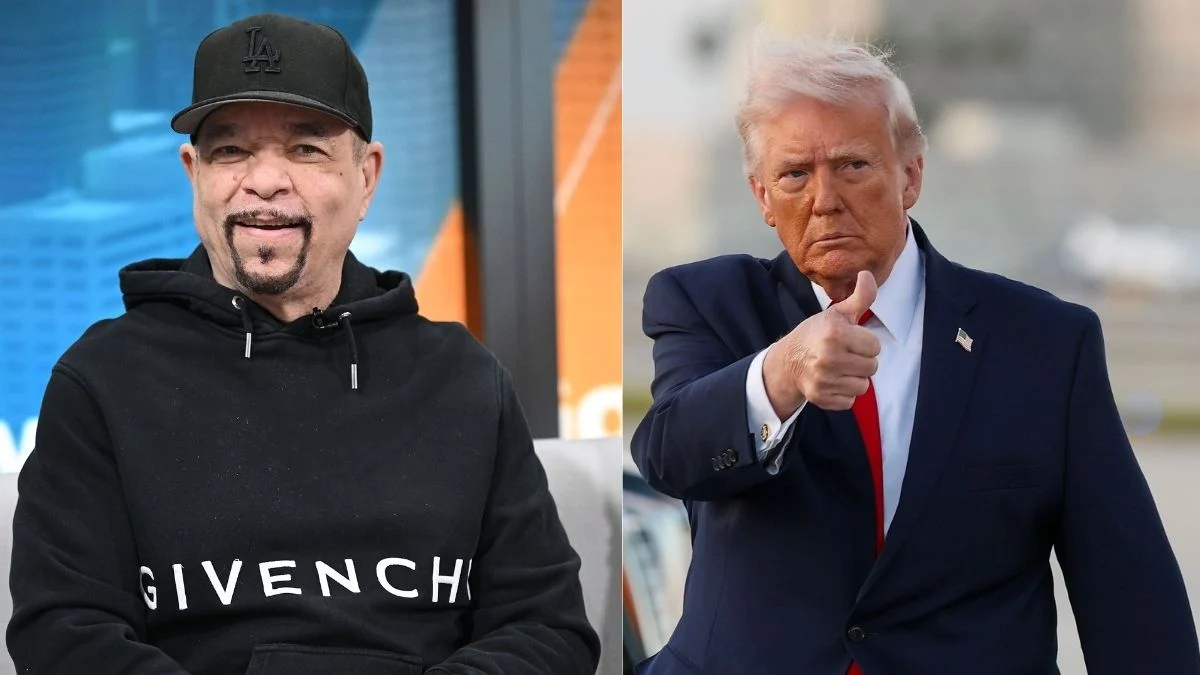
The world of political discourse and celebrity commentary was set abuzz this past week as rapper and actor Ice-T seemingly drew a provocative parallel between former President Donald Trump and the Devil, following a heated exchange between Trump and Pope Leo XIV. The controversy erupted after Trump launched a scathing critique of the Pontiff on his social media platform, Truth Social, accusing him of being "weak on crime" and asserting that the Pope’s position in the Vatican was contingent upon Trump’s presidency.
Escalation of the Papal-Presidential Divide
The friction between Donald Trump and Pope Leo XIV, a fictional pontiff in this scenario, escalated significantly after the Pope indicated he would not visit the United States during Trump’s hypothetical presidency. This announcement seemed to trigger a strong reaction from Trump, who subsequently unleashed a torrent of criticism on Truth Social. His posts characterized Pope Leo XIV as "weak on crime" and "very liberal," venturing into uncharted territory for papal-presidential interactions. Trump’s accusations extended to a bold claim that the Pope’s tenure in the Vatican was a direct consequence of Trump’s own time in the White House.
Ice-T’s Cryptic Commentary
In response to this unusual and high-profile dispute, Ice-T, known for his candid and often sharp observations on social and political issues, took to the social media platform X (formerly Twitter). His post, delivered with characteristic brevity and impact, offered a veiled but potent commentary. "Thought the Devil would be the Only one to start a Beef with the Pope… Oh yeah.. Smh," Ice-T wrote, accompanied by a link to the exchange. While the artist refrained from explicitly naming Donald Trump, the timing and context of his post strongly suggested it was a direct reaction to Trump’s extensive criticisms of the Pope. The implication was clear: only a figure akin to the Devil would engage in such a public and contentious dispute with the head of the Catholic Church.
Trump’s Accusations Against the Pontiff
The core of Trump’s public grievances against Pope Leo XIV, as articulated on Truth Social, centered on perceived policy weaknesses and ideological differences. Trump declared, "Pope Leo is WEAK on Crime, and terrible for Foreign Policy. He talks about ‘fear’ of the Trump Administration, but doesn’t mention the FEAR that the Catholic Church, and all other Christian Organizations, had during COVID when they were arresting priests, ministers, and everybody else, for holding Church Services, even when going outside, and being ten and even twenty feet apart." This statement juxtaposed Trump’s interpretation of religious freedom during the pandemic with his critique of the Pope’s current stance, implying a hypocrisy or selective outrage on the part of the Pontiff.
Furthermore, Trump articulated a sense of entitlement and personal connection to the Papacy, stating, "I don’t want a Pope who criticizes the President of the United States because I’m doing exactly what I was elected, IN A LANDSLIDE, to do… If I wasn’t in the White House, Leo wouldn’t be in the Vatican. Leo should get his act together as Pope, use Common Sense, stop catering to the Radical Left, and focus on being a Great Pope, not a Politician." This assertion positioned Trump as a kingmaker for the Pope and accused the Pontiff of engaging in political activism rather than fulfilling his spiritual duties.
The Pope’s Stance and Response
In the face of Trump’s barrage of criticism, Pope Leo XIV maintained a dignified and resolute posture. His response, as reported, indicated a clear lack of intimidation and a commitment to his principles. The Pope stated that he harbored "no fear of the Trump administration" and pledged to "continue to speak out loudly against war." This stance underscored the Pope’s role as a moral authority, willing to challenge political power when it conflicted with his ethical convictions, particularly concerning global peace.
Background and Context of Presidential-Papal Relations
Historically, relations between the U.S. presidency and the Papacy have often been characterized by a degree of diplomatic nuance and mutual respect, even amidst differing political ideologies. While presidents and popes have certainly engaged in debates and expressed divergent views on policy matters, direct, public confrontations of this nature, especially with personal accusations of the kind made by Trump, are exceptionally rare. The Papacy, as the spiritual leader of over 1.3 billion Catholics worldwide, typically engages with political leaders through established diplomatic channels. Critiques, when they occur, are often framed within the broader context of social justice, peace, and human rights.
Donald Trump’s presidency, however, was marked by a departure from many traditional diplomatic norms. His approach to international relations and his rhetoric often challenged established protocols. His critiques of Pope Leo XIV, therefore, can be seen as an extension of this unconventional style, directly confronting a figure of immense global religious significance with personal and political attacks.
Analysis of Implications
Ice-T’s commentary, by invoking the imagery of the Devil, taps into a deeply ingrained cultural and religious understanding of good versus evil. His post suggests that a public feud with the Pope, the Vicar of Christ on Earth, is an act of profound transgression, aligning the instigator with a force antithetical to religious and moral order. This metaphorical comparison serves to highlight the perceived audacity and impropriety of Trump’s actions.
The implications of such a public spat are multifaceted. For Trump’s supporters, his strong stance might be perceived as a defense of his policies and a rejection of perceived liberal influences within religious institutions. For critics, it reinforces concerns about his temperament, his respect for established institutions, and his willingness to engage in divisive rhetoric.
For the Papacy, maintaining a stance of moral authority and independence is crucial. Pope Leo XIV’s response demonstrates a commitment to speaking truth to power, even when faced with personal attacks from a prominent political figure. This upholds the Church’s traditional role as a moral compass in global affairs.
The involvement of a public figure like Ice-T, who commands a significant following, amplifies the public discourse surrounding the event. His commentary, though informal, carries weight due to his cultural influence and his history of engaging with social and political issues. It demonstrates how such political exchanges can transcend the immediate participants and become subjects of broader cultural commentary.
Broader Impact and Future Considerations
The exchange between Donald Trump and Pope Leo XIV, as filtered through the lens of Ice-T’s commentary, raises questions about the evolving nature of political discourse in the digital age. Social media platforms have become arenas for direct and often unfiltered communication, allowing for rapid dissemination of opinions and reactions. This can lead to both greater public engagement and increased polarization.
The event also underscores the enduring power of religious institutions and figures in shaping public opinion and moral discourse. Despite the secularizing trends in many societies, the Papacy continues to hold significant symbolic and ethical weight, capable of influencing global conversations.
As political figures increasingly utilize social media to engage directly with the public and to critique opponents, the boundaries of acceptable discourse are continuously being tested. The comparison drawn by Ice-T, while metaphorical, highlights the potential for deeply held religious and moral sensibilities to be invoked in the interpretation of political actions, especially when those actions are perceived as transgressing established norms. The incident serves as a reminder that even in the realm of politics, certain actions can carry significant symbolic weight, resonating with deeper cultural and spiritual understandings. The continued interactions between political leaders and religious authorities, particularly in the public sphere, will likely remain a focal point of observation and commentary in the years to come.


 Yuyun Lusiyani
 Jia Lissa
 Pevita Pearce
 admin
admin
