
 Yuyun Lusiyani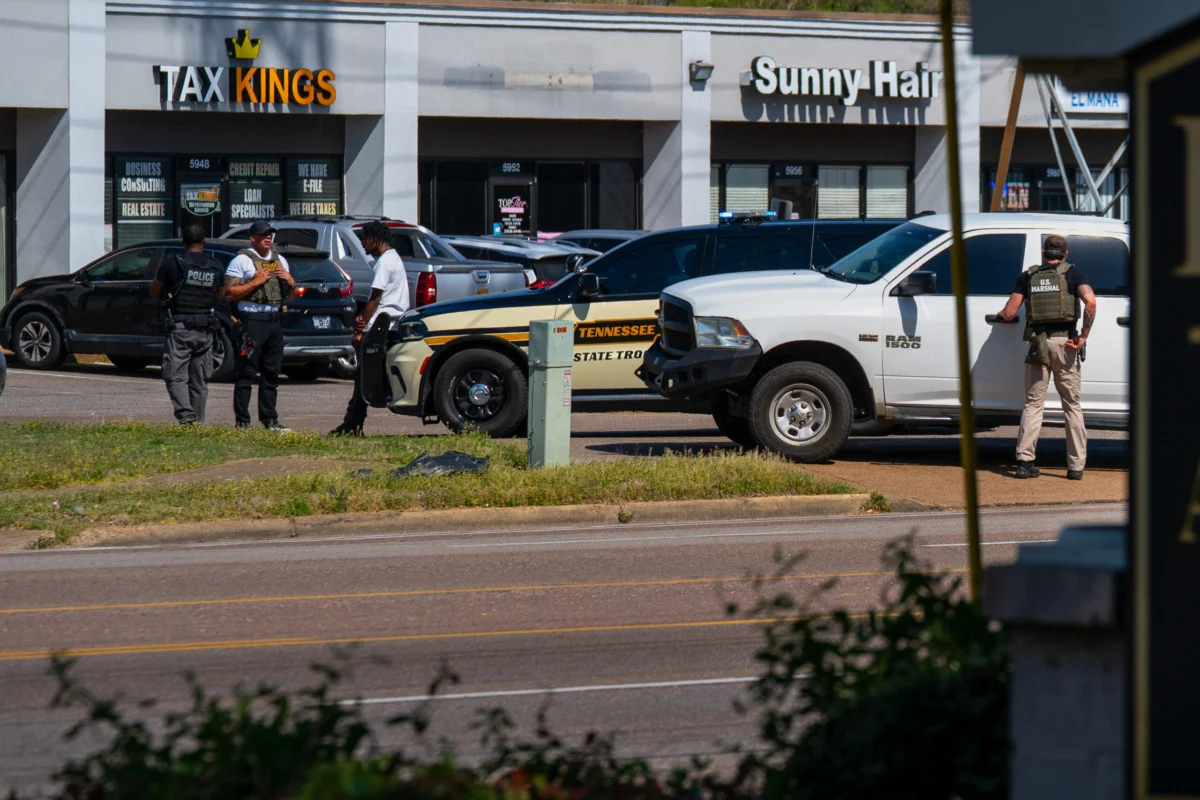
On an overcast Saturday in February, the air in Memphis, Tennessee, hung heavy with both humidity and a palpable tension. Elmer, a 44-year-old father from Honduras, meticulously arranged dozens of worn but impeccably cleaned tennis shoes on tables beside a bustling convenience store in Parkway Village. His head was on a constant swivel, his gaze darting between the handful of potential customers approaching his makeshift shoe stand and the busy thoroughfare behind him. This vigilance was not merely for sales; it was for survival. Elmer, like many in his community, lived in a perpetual state of readiness – ready to serve his customers, or to run.
This heightened sense of alert was a direct consequence of President Donald Trump’s September order, which deployed over two dozen state, local, and federal law enforcement agencies, including the National Guard, to Memphis neighborhoods. Dubbed the "Memphis Safe Task Force," its stated mission was unequivocal: "to end street and violent crime in Memphis to the greatest possible extent." However, an in-depth investigation by MLK50: Justice Through Journalism and ProPublica reveals a stark divergence between this declared objective and the actual outcomes, particularly for the city’s burgeoning immigrant population.

Elmer’s personal experience is a microcosm of this broader pattern. Last fall, as he and his son were setting up their shoe stand, agents in Homeland Security vests arrested two Guatemalan men nearby. Hours later, the Mexican owner of a taco truck across the street was also detained. In December, Elmer’s 19-year-old nephew was apprehended following a traffic stop and remains incarcerated in a Tennessee detention center. These incidents, deeply unsettling for Elmer, are compounded by the gnawing fear that he and his son, who fled gang violence in Honduras seven years ago and lack legal authorization to be in the United States, could be next. Speaking on condition of anonymity, Elmer painted a picture of a community living under siege, where the promise of safety has translated into widespread apprehension.
The Data Unveiled: A Misaligned Mission?
The joint analysis by MLK50 and ProPublica of nearly four months of daily arrest reports, spanning from October through early February, exposes a significant imbalance in the task force’s operations. Out of more than 5,200 arrests made by the task force in and around Memphis, just over a quarter were for violent crimes, with the vast majority of these stemming from outstanding warrants rather than direct apprehension during violent acts.

More strikingly, despite the stated focus on violent criminals, the operation swept up over 800 immigrants deemed unlawfully present in the United States. A critical finding reveals that only 2% — a mere 17 individuals — of these immigrant arrests were also for violent crimes. This statistic underscores a profound disconnect, as being unlawfully present in the U.S. is a civil, not a criminal, offense. The task force, ostensibly targeting serious criminal threats, appeared to be heavily engaged in immigration enforcement, a function that falls outside its publicly declared scope.
Parkway Village, the vibrant, predominantly Black community on the outskirts of Memphis where Elmer operates his shoe stand, has borne the brunt of this immigration enforcement. This neighborhood, one of Memphis’s fastest-growing Hispanic areas, is a hub of immigrant-owned businesses, from barber shops to grocery stores, catering to a largely Spanish-speaking clientele. The analysis found that Parkway Village recorded more immigration arrests than any other part of Memphis. Overall, an overwhelming 81% of the task force’s arrests in this neighborhood were for nonviolent offenses, encompassing immigration violations, minor drug offenses, theft, and illegal possession of weapons.
Official Narratives vs. Local Realities

President Trump has consistently lauded the Memphis Safe Task Force as a resounding success, publicly crediting it for a reported decline of over 30% in homicides, aggravated assaults, and sexual assaults compared to the previous year. During a visit to Memphis last month, he declared victory from a stage adorned with seized weapons and boxes marked "DEA EVIDENCE," telling an assembly of National Guard troops and law enforcement officers that Memphis had developed a reputation for "coming back stronger than any city in the country." Abigail Jackson, a White House spokesperson, echoed these sentiments, attributing ongoing crime rate drops to "the great work of President Trump’s task force" and suggesting that "every local leader should want to mimic this success."
However, when pressed on the significant disparity between the task force’s stated mission to combat violent crime and the low incidence of violent crime among arrested immigrants, Jackson offered no direct explanation. Similarly, Brady McCarron, a spokesperson for the U.S. Marshals Service, which spearheads the task force, reiterated Trump’s claims, asserting that "All Memphians are safer today than they were seven months ago because of the Memphis Safe Task Force." He cited an 18% decrease in calls for service as evidence of fewer crimes being committed. While acknowledging "concerns raised by community advocates," McCarron did not address the specific issue of immigration arrests for non-violent offenses.
This narrative of success is further complicated by Memphis Police Department data. City records indicate that crime rates in Memphis had already been on a steady decline since 2023, reaching a 25-year low before the task force commenced operations last fall. Criminologists caution that more in-depth analysis is required to definitively ascertain the extent of the task force’s impact on the city’s overall crime rates. The pre-existing downward trend suggests that the administration’s claims of sole credit might be overstated, or at the very least, lack crucial contextualization.

Political Crosscurrents and Local Discomfort
The federal operation has thrust Memphis Mayor Paul Young, a Democrat in a deeply Republican-controlled state, into a complex political tightrope walk. Following Trump’s visit, which he notably did not attend, Mayor Young acknowledged that the task force had "amplified" the Memphis police’s existing efforts to reduce crime, particularly in executing outstanding warrants, which account for roughly half of all task force arrests. Yet, he explicitly distanced himself from the task force’s immigration enforcement activities, stating, "That’s not a part of those efforts that I am supportive of." Young emphasized the vital role immigrants have played in Memphis’s growth over the past decade and a half, underscoring his desire for them to "feel welcome in our community." His statements reflect a broader tension between federal directives and local community values, particularly in cities with significant immigrant populations.
The modus operandi of the task force, especially regarding immigrant arrests, has become a significant point of contention. The MLK50/ProPublica analysis reveals that approximately 4 out of 5 immigration arrests originated from traffic stops. These stops are often initiated by the Tennessee Highway Patrol for minor infractions, such as a broken taillight or overly tinted windows. Immigration officers, frequently trailing state troopers or riding alongside them, then interrogate drivers and passengers. Those unable to produce proper documentation face arrest. Vecindarios 901, a local immigration rapid-response organization, has documented dozens of such stops, witnessing firsthand the pattern of minor traffic violations serving as pretexts for immigration enforcement. The task force has declined to comment on this specific tactic.

Community Under Duress: Social, Economic, and Psychological Impacts
The pervasive fear ignited by the task force has cast a long shadow over Parkway Village and other immigrant communities. Church attendance has plummeted, with one pastor of a primarily indigenous Guatemalan congregation reporting a 50% drop. Parishioners, too scared to leave their homes, resorted to submitting prayer requests through online services. The chilling effect is profound, leading pastors to agree to serve as legal guardians for their members’ U.S.-born children, anticipating potential deportations.
The economic fabric of these neighborhoods is also fraying. Business owners and grocery store workers report sharp declines in sales, forcing some to reduce staffing. Elmer, who once sold 100 pairs of shoes a week, now struggles to sell 20, seeing his monthly income drop from $2,400 to a mere $500. This drastic reduction impacts his ability to support himself and his son, adding another layer of stress to their already precarious existence.

The educational environment has also suffered. At one neighborhood school, Hispanic student attendance fell by half in the initial weeks of the task force’s operations. Paola, a 21-year-old Venezuelan communications coordinator at another school, now begins her day by shuttling two siblings to school. Their father was detained at immigration court in October, and their mother is too afraid to drive. Paola, despite being authorized to work, initially worried about her own detention. "Our role is not political," she stated, "We are here to care for students and their families." Yet, the task force’s actions have undeniably politicized the daily lives of these families.
Resilience and Resistance in the Face of Intimidation
Amidst the fear, there are acts of resilience. The Rev. Rolando Rostro, pastor of Iglesia Nueva Vida, the largest Hispanic church in the Memphis area, has seen Sunday attendance gradually rebound from its low of 500 (down from 800). "We have to go to church," he asserted. Rostro actively responds to alerts from Vecindarios 901, arriving at traffic stop scenes to bear witness and advocate for his parishioners. He confronts law enforcement officers, challenging the Trump administration’s "worst of the worst" rhetoric, often stating, "Hey, that’s not ‘the worst of the worst.’ I know him. He goes to my church. He’s a good man." While he recalls a parishioner’s release during Trump’s first administration after his intervention, such outcomes have been elusive this time.

Rostro’s pastoral care extends to checking on detained church members, where he hears accounts of cold, rat-infested conditions and intense pressure to self-deport. A Department of Homeland Security spokesperson claimed ICE detention standards are higher than most U.S. prisons but did not specifically address conditions in the facilities holding Rostro’s parishioners. "This is a family community," Rostro lamented, "so the breakup of that is very detrimental to the children and to the whole family structure."
The economic heart of Parkway Village, El Mercadito, a sprawling indoor shopping center opened in 2005 by Mexican immigrant Juan Hernandez, also reflects the pervasive fear. Once a bustling hub of immigrant-run booths selling everything from construction gear to traditional dresses, it now sees few customers. Event bookings for quinceañeras and lucha libre matches have dwindled. Two Guatemalan booth owners, paralyzed by fear, have shuttered their clothing stands entirely. Hernandez’s restaurant sales have plummeted by 40%. He recounts the ironic sight of federal agents, vests emblazoned with "HSI: Homeland Security Investigations," dining at his restaurant multiple times a week. While he served them, he refused his usual 10% police discount. "I decided I don’t give discounts to them because of the harm they are doing in our community," he stated through an interpreter. Hernandez, who received amnesty under President Ronald Reagan over four decades ago, now contemplates the unthinkable: returning to Mexico. "I have never had the thought of coming back to my country," he shared, "Now I do — because of the government."
Broader Implications and a Troubling Precedent

The Memphis Safe Task Force’s operations extend beyond local enforcement, reflecting broader national policy debates. White House Deputy Chief of Staff Stephen Miller, a key architect of Trump’s immigration policies, has closely collaborated with Tennessee Republicans on proposed legislation that would compel state courts, public health clinics, and law enforcement agencies to cooperate with U.S. Immigration and Customs Enforcement (ICE). The Trump administration has openly praised both this proposed legislation and the Memphis task force as potential models for nationwide implementation, signaling a future where local law enforcement could be further entwined with federal immigration enforcement.
The implications of the Memphis Safe Task Force are far-reaching. Beyond the immediate social isolation, economic instability, and trauma inflicted on immigrant families, there is the long-term damage to trust between these communities and law enforcement. When individuals fear deportation for minor traffic infractions, they are less likely to report crimes, cooperate with investigations, or seek help from authorities, thereby potentially undermining public safety for all residents. The stated mission of ending violent crime appears to be overshadowed by a de facto immigration crackdown, raising critical questions about transparency, accountability, and the true objectives of such federal deployments. As Memphis grapples with the immediate consequences, the unresolved tension between federal mandates and local community well-being leaves a chilling precedent for other cities across the nation.


 Joko Widodo
 Jia Lissa
 Pevita Pearce
 admin
admin