Jia Lissa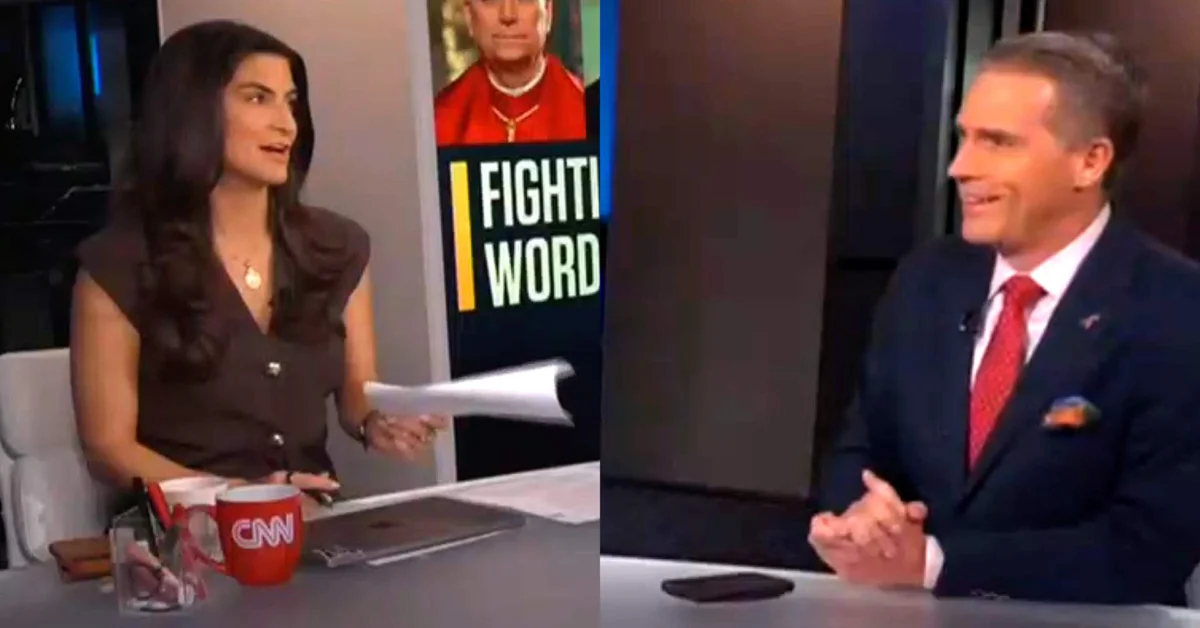
The intersection of domestic fiscal policy and escalating global tensions took center stage during a heated broadcast of CNN’s The Source with Kaitlan Collins, as a debate over the Trump administration’s economic efficacy devolved into a clash over regional gas prices and the realities of the American consumer experience. The segment, which featured Republican strategist Scott Jennings and Democratic adviser Ashley Etienne, highlighted the growing friction between the White House’s messaging on tax relief and the tangible costs of living that threaten to overshadow those initiatives. As the discussion pivoted from foreign diplomacy to the price of fuel, anchor Kaitlan Collins provided a critical factual correction that challenged the partisan framing of the current energy market.
The confrontation began during a broader analysis of President Donald Trump’s recent campaign-style efforts in Nevada, where he has been aggressively promoting a "No Tax on Tips" policy aimed at service industry workers. However, the optimism of the rally was met with skepticism on the CNN panel, as Etienne pointed to the surging cost of gasoline as a primary factor eroding the purchasing power of the middle class. When Etienne noted that she had paid approximately six dollars per gallon for fuel in the Washington D.C. and Virginia area, Jennings dismissed the complaint by characterizing the high prices as a localized issue inherent to "blue areas." Collins immediately countered this assertion by noting that fuel prices in Nevada—a state where the President was currently campaigning and which often leans as a swing state—were hovering around five dollars per gallon, suggesting that the energy crisis transcends partisan geographic boundaries.
The Economic Context of the Nevada Visit
President Trump’s visit to Nevada on Thursday was designed to solidify support among a key demographic: service workers in Las Vegas and the surrounding areas. The "No Tax on Tips" proposal has become a cornerstone of his economic platform, intended to provide immediate financial relief to millions of hospitality employees. By eliminating federal income tax on gratuities, the administration argues it can stimulate local economies and provide a necessary boost to workers struggling with post-pandemic inflation.
However, the timing of the promotion has coincided with a volatile period in the global energy market. Economic analysts have pointed out a burgeoning "substitution effect," where the savings garnered from tax policies like the one proposed in Nevada are being rapidly consumed by the rising cost of essential goods, most notably gasoline. A recent analysis indicates that surging fuel prices could potentially erase the benefits of increased tax refunds for many American families. For a worker in Nevada, a state with historically high fuel costs due to its reliance on West Coast supply chains, the five-dollar-per-gallon price tag mentioned by Collins represents a significant portion of their daily take-home pay, regardless of their tax bracket.
A Chronology of the Debate and the Iran Crisis
The exchange on The Source did not begin with gas prices but rather with a tense discussion regarding the administration’s handling of the escalating conflict with Iran. The geopolitical situation has placed immense pressure on the global oil market, as threats to shipping lanes and potential disruptions in Middle Eastern production have sent Brent Crude and West Texas Intermediate prices upward.
Ashley Etienne argued that the administration’s foreign policy has left the United States in a precarious "global energy crisis," asserting that the lack of clarity in the President’s strategy has created distrust among international allies. She characterized the current situation as an "unknown" with "incredible implications" for the domestic economy. Scott Jennings, representing the Republican perspective, pushed back against the "crisis" label, insisting that the administration’s tactics—including a naval blockade and targeted economic sanctions—were successfully costing the Iranian regime hundreds of millions of dollars daily.
The debate reached its peak when Etienne shifted the focus from the cost to Iran to the cost to the American public. "We’re also costing the American people hundreds of millions of dollars every day," Etienne claimed, citing her recent experience at the pump. Jennings’ attempt to categorize these high prices as a phenomenon exclusive to Democratic-leaning regions like California or the District of Columbia was the catalyst for Collins’ intervention. By pointing out that Nevada—a state where the President was actively promising relief—was also suffering from high fuel costs, Collins grounded the debate in a broader national reality rather than a localized political talking point.
Supporting Data: The Reality of the Fuel Market
To understand the weight of the "receipt" dropped by Collins, it is necessary to examine the broader data regarding current fuel prices across the United States. While it is statistically true that "blue" states like California, Washington, and the Northeast often have higher gas taxes and stricter environmental regulations that contribute to higher prices at the pump, the current spike is largely driven by global factors that do not respect state lines.
As of the date of the broadcast, the national average for a gallon of regular unleaded gasoline has shown significant volatility. In Nevada, prices are frequently among the highest in the nation, often trailing only California and Hawaii. This is due to a combination of high state fuel taxes and the logistical costs of transporting fuel into the Great Basin. In Virginia and the D.C. metro area, prices are generally closer to the national average, but "premium" locations and urban centers can see spikes that reach the six-dollar mark mentioned by Etienne.
The implications of these prices are profound. For the average American driver, an increase of one dollar per gallon can result in an additional $50 to $75 in monthly expenses. When compared to the projected savings from the "No Tax on Tips" policy—which some economists estimate could save the average tipped worker between $1,000 and $2,500 annually—it becomes clear that sustained high energy costs could negate a substantial portion of the administration’s promised fiscal relief.
Foreign Policy and the JD Vance Mission
The CNN segment also touched upon the diplomatic efforts of Vice President JD Vance, who recently traveled to Pakistan. Jennings used the trip as evidence that the administration is "actively engaged in diplomacy," countering Etienne’s narrative of a disorganized foreign policy. The Vice President’s mission was reportedly centered on securing regional cooperation to prevent Iran from acquiring nuclear weapons and to stabilize energy corridors.
Etienne, however, remained skeptical, stating that Vance "walked away with nothing in hand." This critique reflects a broader debate within Washington regarding the effectiveness of the Trump administration’s "maximum pressure" campaign. While the administration points to the economic strain placed on adversaries, critics argue that the domestic fallout—namely inflation and energy insecurity—is a price that the American electorate may not be willing to pay.
The mention of Pakistan is particularly relevant to the energy discussion. As a nuclear-armed nation with close ties to both China and the Middle East, Pakistan plays a pivotal role in the geopolitical stability of the region. Any instability there, or a failure in diplomatic outreach, could further rattle energy markets, leading to the very price hikes that Etienne and Collins highlighted during the broadcast.
Official Responses and Political Strategy
In response to the criticisms leveled during the CNN segment and similar media appearances, the White House and the Trump campaign have maintained a consistent message: the current economic pain is a residual effect of previous administrations’ energy policies and global instability that only "strong leadership" can rectify.
The Trump campaign has frequently blamed the "Green New Deal" and various environmental regulations for stifling domestic oil production, although current data shows that U.S. crude oil production has reached record highs in recent years. The administration’s strategy involves a "drill, baby, drill" approach to lower costs, paired with targeted tax cuts to provide immediate relief.
Conversely, Democratic strategists like Etienne argue that the administration’s focus on tax cuts for specific groups, such as tipped workers, is a "distraction" from the larger structural issues of inflation and a volatile foreign policy that triggers energy spikes. They contend that without a stable global environment and a transition to more diversified energy sources, the American consumer will remain vulnerable to the "six-dollar gas" reality described on The Source.
Broader Impact and Implications for the 2024 Cycle
The exchange between Jennings and Etienne, moderated by Collins, serves as a microcosm of the 2024 electoral struggle. The central question for voters remains whether the administration’s fiscal policies can outpace the rising cost of living. In battleground states like Nevada, this question is not theoretical; it is a daily calculation made at the gas station and the grocery store.
If gas prices remain high through the election cycle, the "No Tax on Tips" policy may lose its luster as a persuasive campaign tool. Voters in the service industry may find that while their tips are no longer taxed, the cost of commuting to their jobs has doubled, resulting in a net-zero gain or even a loss in disposable income.
Furthermore, the "blue area" versus "red area" rhetoric employed by Jennings highlights the deepening geographic and cultural divide in American politics. However, as Collins demonstrated, economic realities like fuel costs are increasingly universal. When a Republican president stands in a swing state promising tax relief while the local gas stations display prices that rival those in "blue" urban centers, the partisan narrative faces a significant challenge.
As the 2024 campaign intensifies, the ability of both parties to address the energy crisis will likely be a deciding factor for undecided voters. For now, the "receipts" provided by journalists and the lived experiences of citizens continue to provide a sobering counterpoint to the optimistic projections of political campaigns. The clash on CNN underscores a vital truth in modern American politics: regardless of the policy being promoted on the stage, the price on the sign at the corner gas station often tells the more compelling story to the electorate.

 admin
admin
 Yuyun Lusiyani
 Joko Widodo
 Eva Lovia
 Pevita Pearce