
 Jia Lissa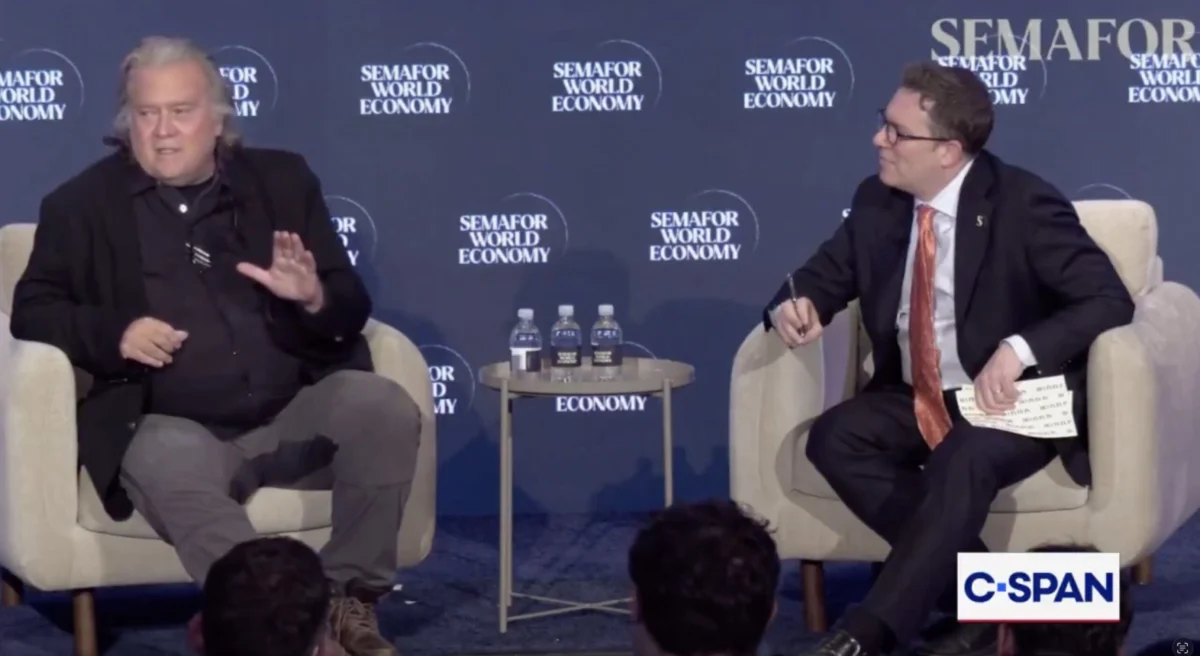
Steve Bannon, the former White House Chief Strategist and a primary architect of the "Make America Great Again" (MAGA) movement, faced a skeptical audience on Thursday during an appearance at the Semafor World Economy Summit in Washington, D.C. The event, which brings together global financial leaders, policymakers, and journalists, became a theater for the deepening divide between the American populist right and the institutional establishment. During a wide-ranging interview with Semafor co-founder Ben Smith, Bannon’s assertions regarding a proposed ban on Sharia law in Texas and his characterization of progressive movements as "jihadism" drew audible laughter from the crowd, prompting a sharp rebuke from the former advisor who warned that the "global elite" are dangerously out of touch with the American working class.
The exchange served as a microcosm of the current political climate, highlighting Bannon’s continued influence over a specific segment of the Republican base and his strategy of using provocative cultural and legal propositions to galvanize voters. Bannon’s appearance follows his recent return to the political forefront after serving a prison sentence for contempt of Congress, a period during which he has doubled down on his rhetoric regarding national sovereignty, economic protectionism, and the systematic dismantling of the "administrative state."
The Texas Ballot Proposition and the Conflict Within the GOP
Central to the discussion was Bannon’s involvement in Texas state politics, specifically his support for a controversial non-binding proposition included in the Republican primary ballots. Bannon detailed his efforts alongside high-profile figures such as Dutch politician Geert Wilders and media personality Glenn Beck to mobilize Texas voters around a platform that included a formal prohibition of Sharia law within the state.
When Bannon mentioned the proposition to the summit audience, the room erupted in laughter. Bannon paused, visibly reacting to the dismissal. "That’s funny? Is that funny? Okay, fine. You’re going to see how funny it is," Bannon retorted. He argued that while the D.C. audience might view such measures as performative or unnecessary, they serve as a critical tool for "galvanizing" a base that feels culturally and legally threatened.
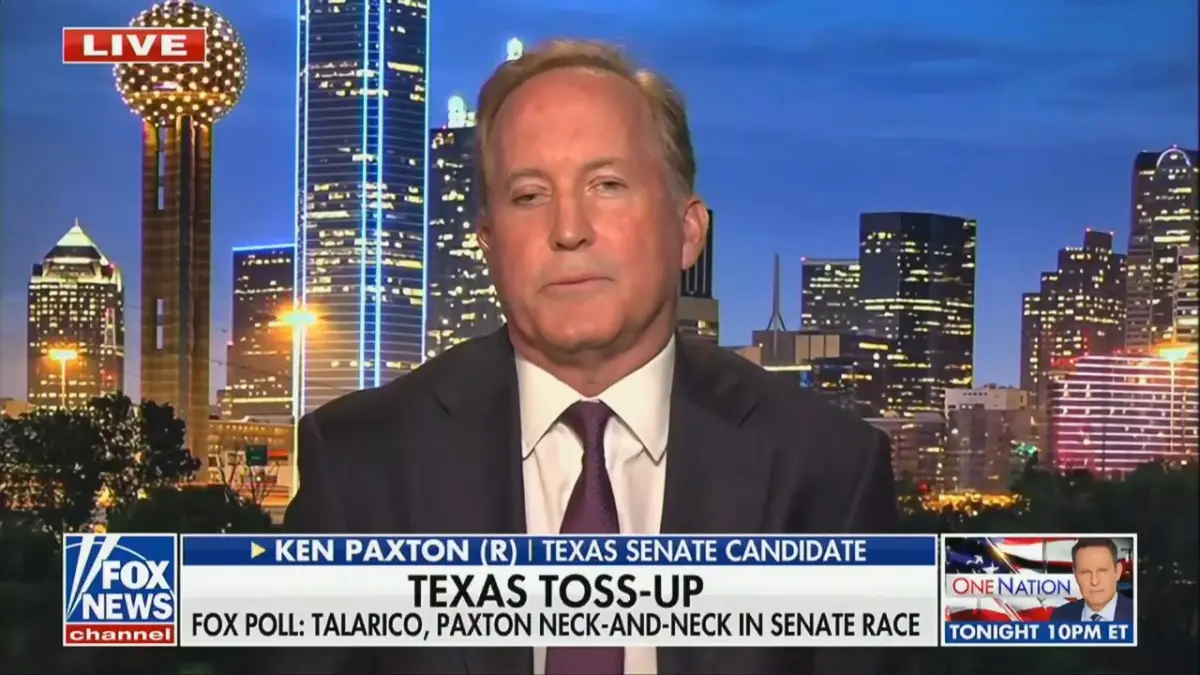
According to Bannon, the proposition was not merely about religious law but was a strategic maneuver to support Texas Attorney General Ken Paxton in his ongoing political feud with Senator John Cornyn and other "establishment" Republicans. Bannon claimed that despite Cornyn’s significant campaign spending—which Bannon estimated at $80 million to $100 million—the populist wing’s focus on "red meat" issues has allowed Paxton to lead in internal polling. This internal GOP struggle reflects a broader national trend where the party’s traditional wing is increasingly at odds with a grassroots movement that prioritizes cultural identity and aggressive nationalism over traditional corporate-friendly conservatism.
Chronology of the MAGA Movement’s Institutional Strategy
The friction at the Semafor summit is part of a calculated timeline of activities Bannon has overseen since his release from federal custody. His strategy has shifted from mere media commentary to direct involvement in state-level legislative and electoral mechanics.
- January 2024: Bannon, Beck, and Wilders convene in Texas to promote a series of ballot propositions aimed at testing the waters for hard-right policy shifts, including the Sharia law ban and stricter immigration controls.
- March 2024: The Texas primary results show overwhelming support for these non-binding propositions among Republican voters, providing Bannon with the "data" he uses to claim a mandate for more radical policies.
- Late 2024 – Early 2025: Bannon intensifies his focus on the "replacement" of establishment figures like Senator John Cornyn and Senator Lindsey Graham, labeling them "globalists" who prioritize international stability over "American citizens first."
- April 2025: The Semafor World Economy Summit appearance marks Bannon’s attempt to confront the financial and political "elite" directly in their own space, using the platform to warn of a "latent political power" that is currently being organized.
The Mangione-Mamdani Comparison and the "Neo-Marxist" Label
The interview also touched upon Bannon’s previous comments comparing Luigi Mangione—the suspect recently arrested in connection with the shooting of UnitedHealthcare CEO Brian Thompson—to Zohran Mamdani, a New York City Assemblyman and democratic socialist currently running for mayor.
Bannon argued that the American public is being presented with two distinct forms of populism. On the left, he characterized Mamdani’s platform as a blend of "neo-Marxism and jihadism," a description that initially triggered the audience’s laughter. Bannon defended his terminology by suggesting that the organizational tactics of the progressive left have successfully emulated the "get out the vote" strategies of the MAGA movement.
On the right, Bannon positioned figures like Mangione—who has become a symbol for some online "anti-corporate" accelerationists—as a symptom of a system that has failed to provide economic security for the working class. While Bannon did not explicitly endorse Mangione’s alleged actions, he used the figure to illustrate a "seething anger" that he believes will eventually boil over if the current economic and political order remains unchanged.
Supporting Data: The Rise of Anti-Foreign Law Legislation
While the audience at the World Economy Summit mocked the idea of a Sharia law ban, Bannon’s efforts are grounded in a decade-long trend in American state legislatures. Since 2010, at least 15 states have passed versions of "foreign law" bans, often referred to as "American Laws for American Courts" (ALAC).
- Legal Precedent: In 2010, Oklahoma voters approved a constitutional amendment specifically naming Sharia law, though it was later struck down by federal courts as a violation of the Establishment Clause.
- Strategic Evolution: Proponents of these bans, including the American Public Policy Alliance, shifted their strategy to use neutral language—prohibiting the use of any "foreign law" that violates U.S. constitutional rights—to bypass legal challenges while still targeting the same perceived threats.
- Texas Context: In 2017, Texas Governor Greg Abbott signed House Bill 45, which limited the application of foreign laws in family law cases. Bannon’s current push represents an escalation of this existing legislative framework, designed to maximize political turnout rather than address a specific, documented legal crisis.
Bannon’s claim that "two million votes" were cast for such propositions in Texas highlights the efficacy of these issues as turnout drivers, regardless of their immediate legal applicability or the skepticism they face from constitutional scholars.
Economic Nationalism and the H-1B Visa Debate
Beyond cultural issues, Bannon utilized the summit to advocate for a drastic shift in U.S. labor policy, specifically targeting the H-1B visa program. This program, which allows U.S. employers to temporarily employ foreign workers in specialty occupations, is a cornerstone of the tech industry and a primary interest of the "global elites" attending the summit.
"The next thing we’re going to shut down is the H-1B visas," Bannon declared. He argued that the program suppresses wages and displaces American citizens, particularly in the STEM fields. This stance aligns with Bannon’s "American Citizens First" doctrine, which posits that the legal and economic system should provide a "better deal" for citizens than for any foreign national, regardless of their legal status or professional skill set.
This policy proposal directly challenges the consensus among many economists and corporate leaders who argue that H-1B visas are essential for maintaining American competitiveness in the global technology sector. Bannon’s rejection of this consensus is a fundamental part of his broader critique of "globalism," which he defines as a system that prioritizes the movement of capital and labor across borders at the expense of national sovereignty and the domestic working class.
Reactions and Broader Political Implications
The reaction from the Semafor audience—comprised of journalists, tech executives, and international financiers—underscores the profound cultural and intellectual disconnect between the MAGA movement and the professional managerial class. To the summit attendees, Bannon’s focus on Sharia law and his labeling of a New York Assemblyman as a "jihadist" appeared as anachronistic or absurd. To Bannon, their laughter was proof of their "arrogance" and "mockery" of the very people who form the "backbone of the country."
Official responses from civil rights organizations have been predictably critical. The Council on American-Islamic Relations (CAIR), which Bannon mentioned had been designated as a "terrorist organization" in certain Texas-led initiatives, has consistently argued that such rhetoric is Islamophobic and serves to marginalize American Muslims. Legal experts have also pointed out that Bannon’s claims regarding the "designation" of such groups are often based on non-binding political statements rather than formal federal designations by the U.S. Department of State or Department of Justice.
However, the political implications of Bannon’s strategy cannot be dismissed by laughter alone. By successfully integrating these high-conflict issues into the GOP primary process, Bannon and his allies are effectively reshaping the party’s platform and its leadership. The pressure on figures like Lindsey Graham and John Cornyn suggests that the "populist movement," as Bannon calls it, is no longer an outsider force but is actively attempting to take over the institutional machinery of the Republican Party.
Conclusion: The "He Who Laughs Last" Doctrine
Steve Bannon’s appearance at the World Economy Summit was less about persuasion and more about a declaration of ideological war. By confronting the "global elites" in their own forum, he sought to demonstrate that the MAGA movement is organized, data-driven, and undeterred by social or intellectual ostracization.
The laughter from the D.C. crowd may reflect a genuine belief that Bannon’s rhetoric is fringe or illogical, but Bannon’s closing remarks suggested he views that dismissal as his greatest advantage. "Laugh all you want, but he who laughs last laughs best," he said. As the 2026 midterm elections and the next presidential cycle approach, the success of Bannon’s "American Citizens First" agenda will likely depend on whether the "latent political power" he describes can be converted into sustained electoral victories, or whether the establishment he critiques can find a way to bridge the gap with the voters Bannon claims to represent. For now, the divide remains a chasm, characterized by mutual distrust and a fundamental disagreement over the very definition of American sovereignty.


 Yuyun Lusiyani
 Joko Widodo
 Pevita Pearce
 admin
admin
