
 Jia Lissa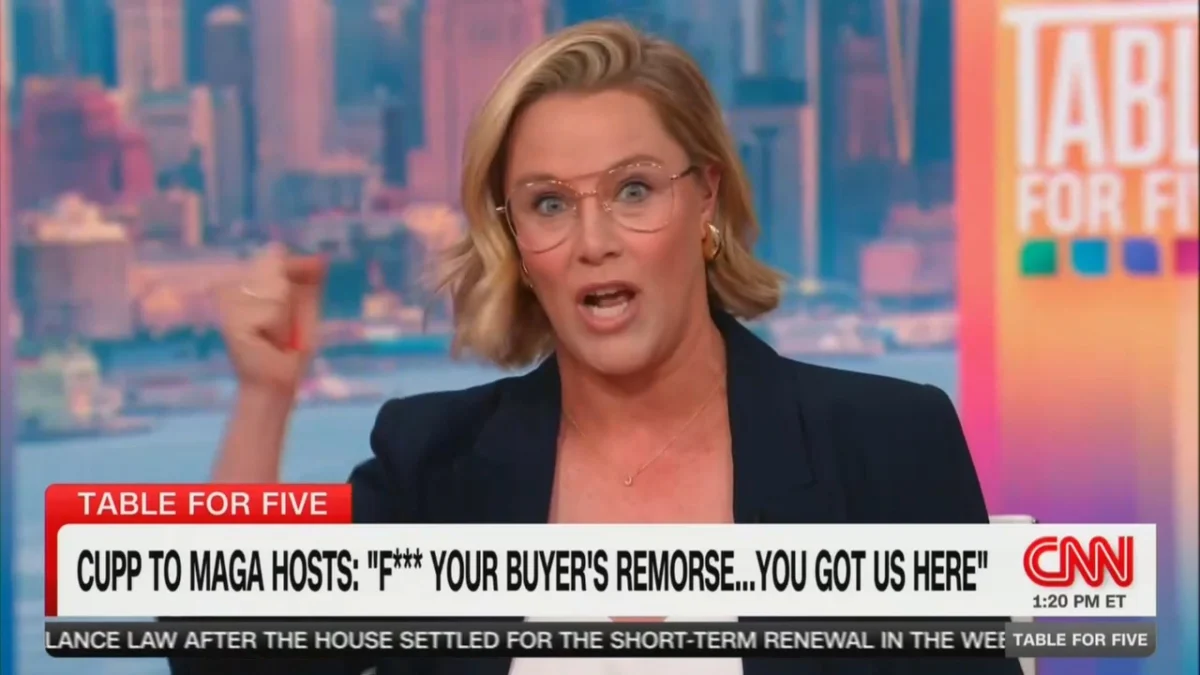
The political landscape of the United States, particularly within the context of the 2024 election cycle, is witnessing a complex realignment as former stalwarts of the MAGA movement begin to distance themselves from former President Donald Trump. This shift has ignited a fierce debate among Democrats and "Never Trump" Republicans regarding the degree of acceptance and "credit" these late-stage converts should receive. During a recent episode of CNN’s Table for Five, political commentator S.E. Cupp voiced a strenuous objection to the notion that the anti-Trump coalition should warmly embrace individuals who spent years bolstering the former president’s agenda, only to pivot as his political influence shows signs of waning.
Cupp’s remarks were prompted by a series of high-profile comments from across the political spectrum. CNN highlighted a clip of Secretary of Transportation Pete Buttigieg, who suggested that the Democratic Party should adopt a "big tent" approach, welcoming Republicans who have turned against Trump without resorting to "I told you so" rhetoric. Similarly, Representative Ilhan Omar (D-MN) surprised many observers during an appearance on the Pod Save America podcast by suggesting that Representative Marjorie Taylor Greene (R-GA) deserved some degree of credit for her public break with the former president. Cupp, a long-time conservative critic of Trump, rejected these overtures, arguing that the timing and motivation of such shifts render them suspect and unworthy of political or moral validation.
The Ideological Divide Over Political Realignment
The tension highlighted by Cupp underscores a broader strategic and ethical dilemma facing the American electorate. On one side, pragmatists like Buttigieg argue that defeating a common political opponent requires a broad coalition, even if that coalition includes former adversaries. From this perspective, the priority is the immediate electoral outcome, and welcoming defectors is a necessary component of weakening the opposition’s base.
On the other side, figures like Cupp argue for a standard of accountability. She characterized the sudden departure of figures like Marjorie Taylor Greene as an "11th-hour" conversion, occurring only when Trump’s status as a "lame duck" or his legal and political vulnerabilities have become apparent. Cupp’s argument rests on the premise that political "converts" are not all created equal; those who opposed the Trump movement from its inception in 2015, often at great personal and professional cost, view latecomers as opportunistic rather than principled.
"I don’t like this conversation where it’s like, well, ‘shouldn’t we give them credit?’ No! No credit!" Cupp stated during the broadcast. She emphasized that many of the individuals now seeking distance from Trump spent years defending rhetoric she described as "un-American" and "anti-democratic" for the purposes of financial gain, social media engagement, and political power.
The Evolution of the Trump-Greene Conflict
The specific case of Representative Marjorie Taylor Greene serves as a primary case study for this debate. For much of her early career in Congress, Greene was one of Trump’s most vociferous defenders, aligning herself closely with the MAGA base and frequently echoing the former president’s claims regarding the 2020 election. However, the relationship began to fracture significantly in 2023.
The initial public split occurred when Greene expressed dissatisfaction with the Trump administration’s handling of files related to Jeffrey Epstein, the convicted sex offender. Greene publicly complained that the former president had not done enough to ensure the release of sensitive documents, a move that signaled a rare departure from her usual lockstep support. The situation escalated when Trump, known for demanding absolute loyalty, retaliated by branding Greene a "traitor" and publicly disparaging her intelligence, calling her a "very dumb person."
In the months following this fallout, Greene’s rhetoric has shifted from internal criticism to outright opposition. Earlier this month, she made headlines by calling for the invocation of the 25th Amendment to remove Trump from office, a move that would have been unthinkable for her just two years prior. This dramatic pivot is what prompted Rep. Ilhan Omar to suggest Greene deserves credit for being "done" with the former president—a sentiment Cupp vehemently disputes.
Chronology of the Realignment: 2015 to Present
To understand the weight of Cupp’s argument, it is necessary to examine the timeline of the "Never Trump" movement versus the recent wave of GOP defections:
- 2015–2016: The "Never Trump" movement is born among conservative intellectuals and pundits (including Cupp and her co-panelist John Avlon) who argue that Trump’s populism is antithetical to traditional conservatism and democratic norms.
- 2017–2020: During the Trump presidency, the majority of the Republican establishment aligns with the White House. Figures like Greene rise to prominence by leaning into the MAGA brand. Dissent within the party is largely marginalized.
- 2021 (Post-January 6): A brief window of GOP criticism opens following the Capitol riot, but most party leaders, including Greene, eventually return to supporting Trump.
- 2023: Internal fissures begin to show as the 2024 primary season approaches. Legal challenges against Trump mount, and some allies begin to weigh the risks of continued association. The Greene-Trump feud begins over the Epstein files.
- 2024: As the general election nears, a subset of the GOP begins to publicly break away. This includes former cabinet members, staffers, and lawmakers like Greene, leading to the current debate over whether they should be welcomed into the anti-Trump fold.
Supporting Data: The Impact of Defections on the Electorate
While the media focuses on high-profile figures like Greene, data suggests that the broader Republican electorate remains somewhat divided. According to recent polling from the Pew Research Center and Gallup, while Trump maintains a firm grip on the "base" of the Republican Party, there is a consistent 15% to 20% of "soft" Republican voters who express openness to alternative leadership.
The strategic value of welcoming "converts" lies in these margins. In battleground states, a shift of even 1% or 2% of traditional Republican voters away from the top of the ticket can decide an election. This is the mathematical reality that informs the "no ‘I told you so’" approach advocated by Buttigieg. However, Cupp’s counter-argument suggests that by embracing "grifters and liars," the anti-Trump movement risks diluting its own moral authority and alienating the core Democratic and independent voters who have consistently opposed the MAGA movement on principle.
Official Responses and Political Implications
The debate over "converts" has reached the highest levels of political strategizing. Democratic National Committee (DNC) insiders have reportedly debated how to handle "Republicans for Biden/Harris" initiatives. While some favor high-profile endorsements from former Trump officials, others worry that highlighting these figures may depress turnout among the progressive wing of the Democratic Party, which views many of these Republicans as equally problematic on policy issues unrelated to Trump.
John Avlon, Cupp’s co-panelist and a fellow veteran of the anti-Trump conservative movement, echoed her sentiments during the CNN segment. Avlon noted that for those who have been "in the streets since 2015" opposing what they characterize as "fascistic garbage," the sudden pivot of people who previously "defended it for fun, for money, for clicks, [and] for fame" feels less like a realization of truth and more like a calculated career move.
Broader Impact: The Future of the Republican Party
The long-term implications of this dispute extend beyond the 2024 election. It raises fundamental questions about the future of the Republican Party and the nature of political accountability in the United States. If the "Never Trump" wing and the "Late-Stage Defector" wing cannot find common ground, the post-Trump GOP may remain fractured for a generation.
Cupp argued that aligning with "losers, liars, and grifters" who only "see the light" when it is "politically expedient or profitable" is a recipe for future instability. She suggested that a healthy political system requires a foundation of consistency and integrity, rather than a revolving door of alliances based purely on the current political climate.
Furthermore, the "Marjorie Taylor Greene" phenomenon suggests a new era of "independent MAGA," where figures who were birthed by the movement now seek to survive its potential collapse by attacking its creator. This creates a volatile environment where traditional political labels no longer apply, and where the motivations of every actor are viewed through a lens of extreme skepticism.
Conclusion: A Moral vs. Strategic Dilemma
The clash between S.E. Cupp and the proponents of a broader anti-Trump coalition represents the fundamental tension of modern American politics: the conflict between moral purity and strategic pragmatism. For Cupp, the refusal to grant "credit" to late-arriving critics is a matter of defending the integrity of political discourse. For strategists like Buttigieg, the goal is a functional majority that can govern, regardless of the past baggage of its members.
As the 2024 election draws closer, the frequency of these political shifts is likely to increase. Whether the electorate chooses to view these defectors as courageous truth-tellers or as opportunistic survivors will likely play a significant role in determining not just the outcome of the presidential race, but the very nature of the coalitions that will govern the country in the years to follow. For now, the "Never Trump" originals like Cupp remain a vocal guardrail, reminding the public that while the tent may be getting bigger, the history of those entering it should not be so easily forgotten.


 Yuyun Lusiyani
 Joko Widodo
 Pevita Pearce
 admin
admin
