
 Lina Irawan
The unveiling of the IWC Pilot’s Venturer Vertical Drive (Ref. IW328601) at the Watches & Wonders 2026 exhibition in Geneva marks a significant shift in the trajectory of aviation-inspired horology. While traditional pilot watches have long served as stylistic tributes to the golden age of flight, IWC Schaffhausen has pivoted toward the emerging sector of commercial space exploration. Developed in strategic partnership with the aerospace company Vast, the Venturer Vertical Drive is not merely a commemorative edition but a mission-certified instrument designed for the rigors of Low Earth Orbit (LEO). This timepiece has been engineered to serve as a primary timekeeping tool for occupants of Haven-1, which is slated to become the world’s first commercial space station.
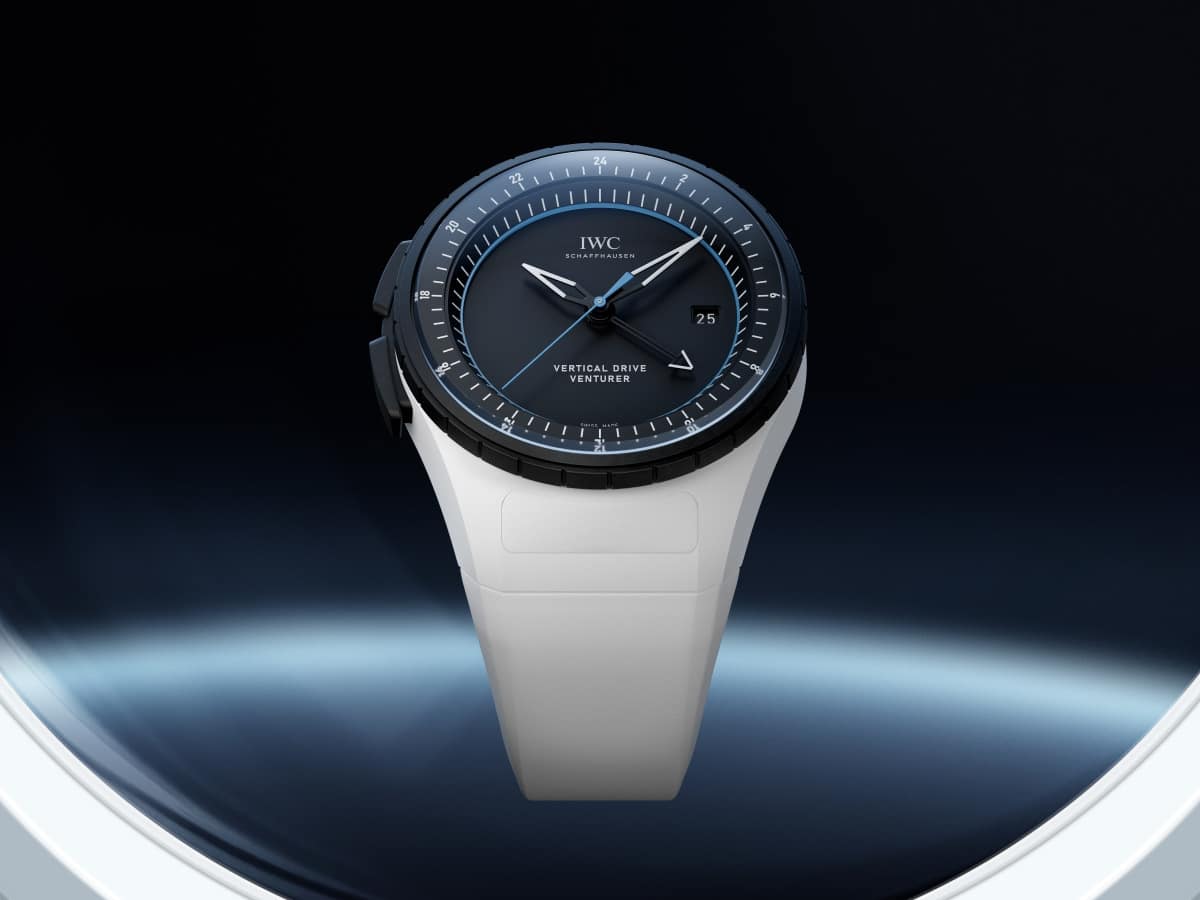
The Ref. IW328601 represents a radical departure from the established aesthetics of the IWC Pilot’s collection. By eliminating the traditional winding crown—a component that has defined mechanical watches for centuries—IWC has addressed a specific ergonomic challenge faced by astronauts: the difficulty of manipulating small interfaces while wearing pressurized extravehicular activity (EVA) or flight gloves. Instead, the watch utilizes a proprietary "Vertical Drive" system, where all adjustments are managed through a combination of a bidirectional rotating bezel and a robust rocker switch integrated into the side of the case. This design ensures that time-setting and GMT functions remain accessible under the physical constraints of a space suit, prioritizing functional utility over conventional form.
The Evolution of the Space Watch: A Chronology of Development
The development of the Pilot’s Venturer Vertical Drive follows a multi-year research and development phase characterized by rigorous environmental testing. The timeline of its creation reflects the accelerating pace of the private space sector.

- Initial Concept (2023–2024): Following the announcement of the Haven-1 mission by Vast Space, IWC began conceptualizing a timepiece that could withstand the specific stressors of commercial spaceflight, which differ from the government-led missions of the 20th century.
- Engineering and Prototyping (2024–2025): IWC engineers focused on the "crownless" architecture. The challenge was to maintain water and air resistance while introducing a mechanical rocker switch capable of interacting with the movement’s setting gears.
- Vibration and G-Force Testing (Late 2025): Prototypes were subjected to simulated launch conditions at Vast’s testing facilities. This included exposure to sustained forces of 4g and intense acoustic vibrations equivalent to those experienced during a Falcon 9 rocket ascent.
- Thermal and Vacuum Certification (Early 2026): The final Ref. IW328601 underwent testing in thermal vacuum chambers, simulating the rapid temperature fluctuations of orbit—ranging from 100°C in direct solar radiation to -100°C in the Earth’s shadow.
- Public Debut (April 2026): The watch was officially presented to the global market as the first IWC timepiece certified for use on a commercial space station.
Material Science and Orbital Resilience
The environmental demands of orbit necessitated the use of high-performance materials that go beyond the requirements of terrestrial luxury watches. The case of the Ref. IW328601 is constructed from white zirconium oxide ceramic. This material was selected for its exceptional Vickers hardness and its thermal stability. Unlike metals, which can expand or contract significantly during rapid temperature swings, technical ceramics maintain their structural integrity, ensuring that the internal mechanical tolerances of the movement remain unaffected.
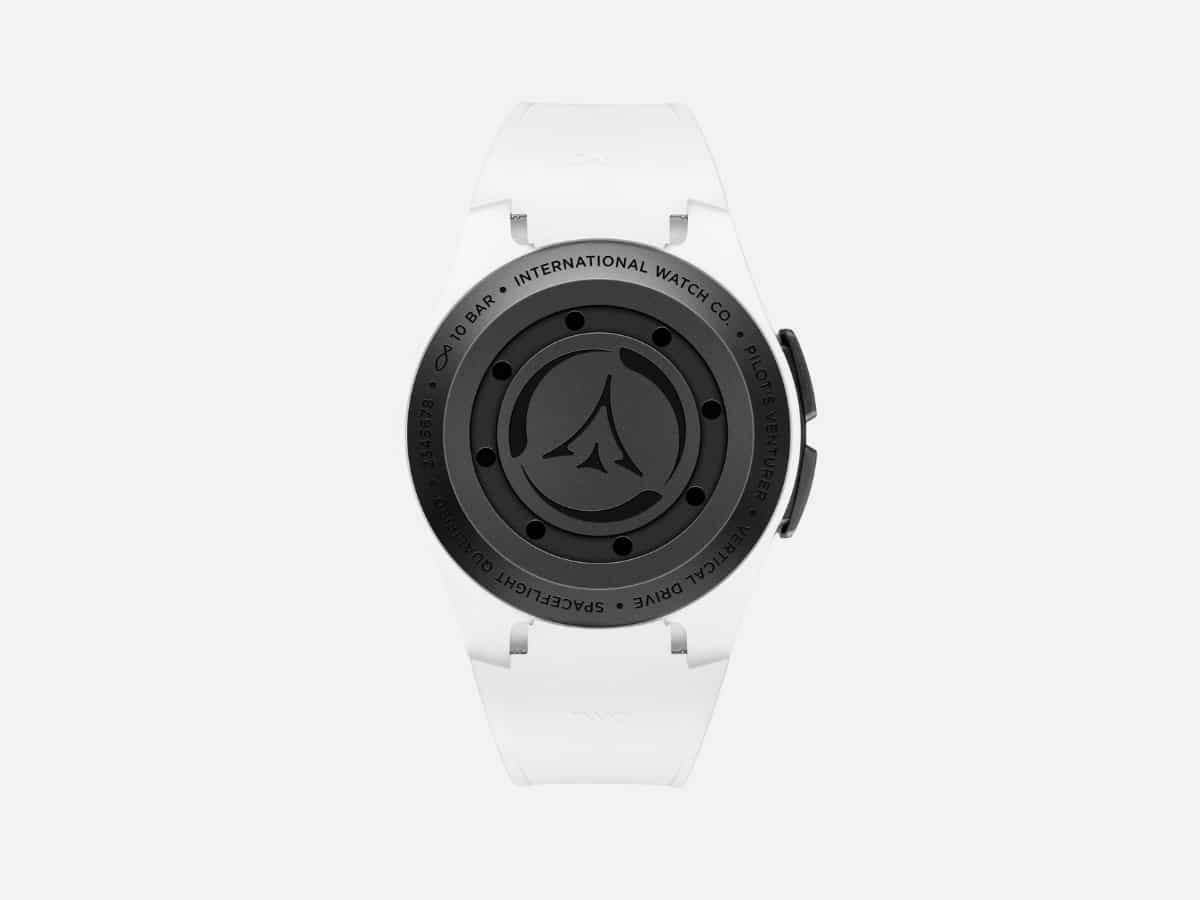
Complementing the ceramic case are components made from Ceratanium, IWC’s patented alloy that fuses the lightweight properties of titanium with the scratch resistance of ceramic. The bezel and case back utilize this material to provide a matte, non-reflective finish, which is critical in the high-glare environment of space. Furthermore, the watch is fitted with an FKM (fluoroelastomer) rubber strap. FKM was chosen for its chemical stability and resistance to ultraviolet (UV) radiation and ozone, preventing the material degradation that typically affects standard rubber or leather when exposed to the harsh conditions of the upper atmosphere and vacuum.
Technical Specifications and the Calibre 32722
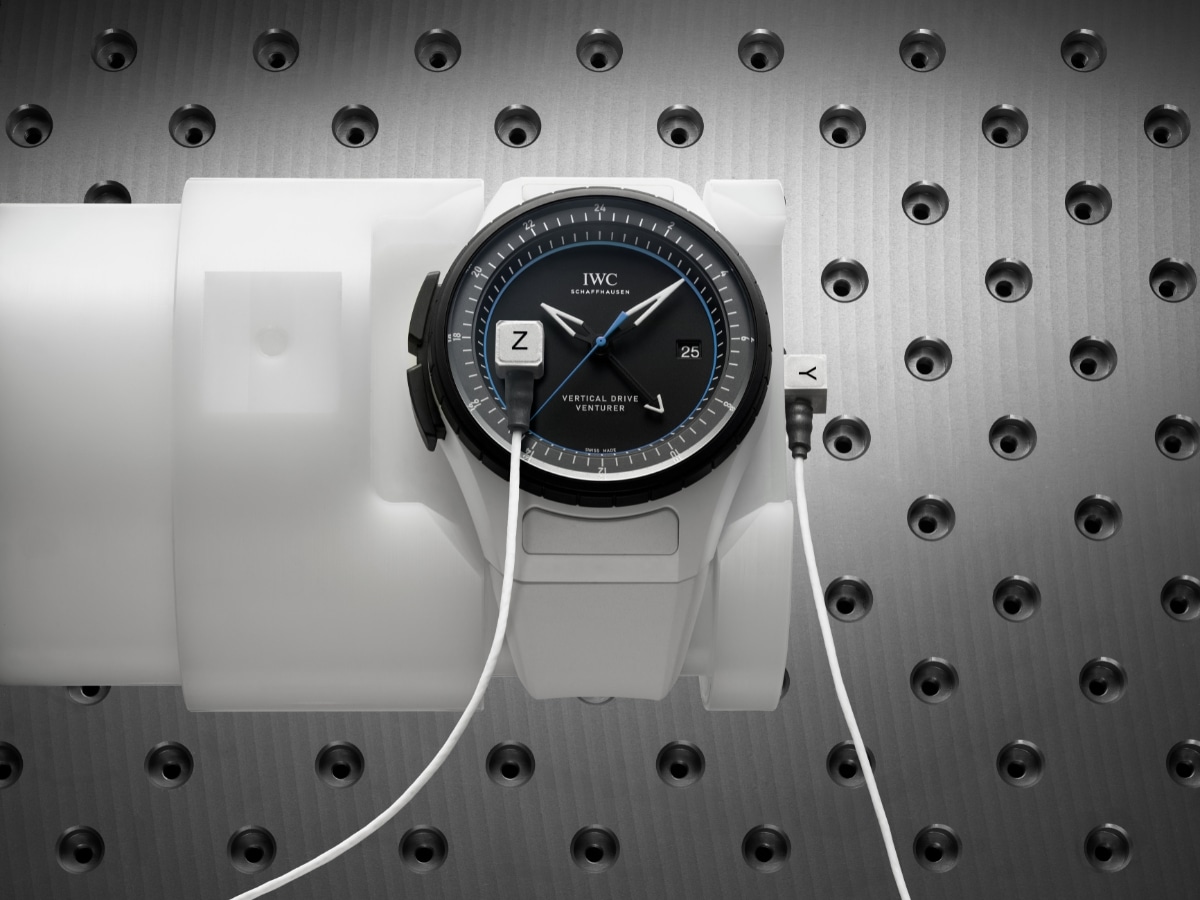
At the heart of the Venturer Vertical Drive is the newly developed IWC-manufactured Calibre 32722. This automatic movement was designed with an integrated GMT module to facilitate the tracking of multiple time zones—a necessity for astronauts who must coordinate with mission control on Earth while living in an environment where the sun rises and sets every 90 minutes.
- Power Reserve: 120 hours (5 days), provided by a high-efficiency Pellaton winding system.
- Frequency: 28,800 vibrations per hour (4 Hz).
- Display: A specialized 24-hour dial. In orbit, the standard 12-hour cycle is less intuitive due to the absence of a natural day-night cycle. The 24-hour display allows astronauts to maintain a consistent circadian rhythm based on Coordinated Universal Time (UTC).
- Complications: Central hacking seconds, date display at 3 o’clock, and an independent GMT hand.
- Protection: The movement is housed within a soft-iron inner case to shield it from the magnetic fields often encountered in spacecraft electronics.
Official Responses and Strategic Vision
The launch of the Ref. IW328601 has been framed by IWC leadership as a return to the brand’s roots as a maker of professional instruments. Chris Grainger-Herr, CEO of IWC Schaffhausen, emphasized that the project was driven by necessity rather than nostalgia. "Every single detail of this watch has been single-mindedly optimized for the unique requirements of human spaceflight and timekeeping in space," Grainger-Herr stated during the keynote address. He noted that the collaboration with Vast allowed IWC to test horological limits in a way that terrestrial environments do not permit.
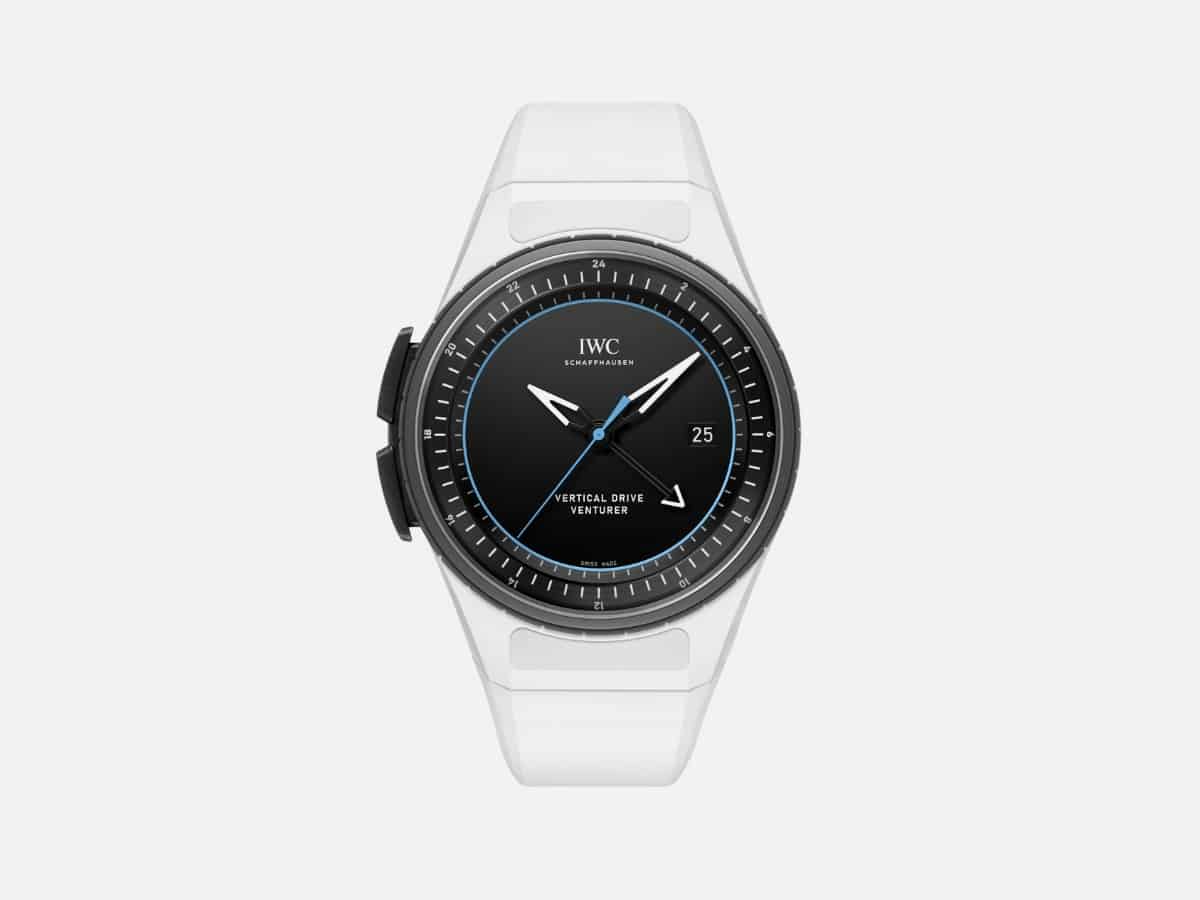
Christian Knoop, Creative Director at IWC, echoed this sentiment, highlighting the shift in design philosophy. "The new space age is shaped by companies pushing the boundaries of science and technology. For us, this meant rethinking the interface between the wearer and the watch. The removal of the crown is not a stylistic choice; it is a functional evolution necessitated by the environment of the Haven-1 station."
Industry analysts have reacted positively to the release, noting that IWC is positioning itself as a key player in the "New Space" economy. By partnering with a private entity like Vast rather than a traditional national space agency, IWC is aligning its brand with the future of privatized orbital travel and space tourism.
Broader Impact and Industry Implications
The introduction of the Pilot’s Venturer Vertical Drive has broader implications for the watchmaking industry. First, it signals a move away from "desk divers" and "lifestyle pilot watches" toward a new category: the Orbital Tool Watch. As commercial spaceflight becomes more accessible to private citizens and researchers, the demand for specialized equipment that can function outside of Earth’s atmosphere is expected to grow.
Furthermore, the "Vertical Drive" system may influence future terrestrial designs. The ergonomic benefits of a crownless watch—such as improved comfort on the wrist and better resistance to snagging—could see this technology trickling down into IWC’s standard civilian collections. The use of advanced materials like Ceratanium and high-grade FKM rubber also reinforces the trend of material transparency and durability in high-end horology.
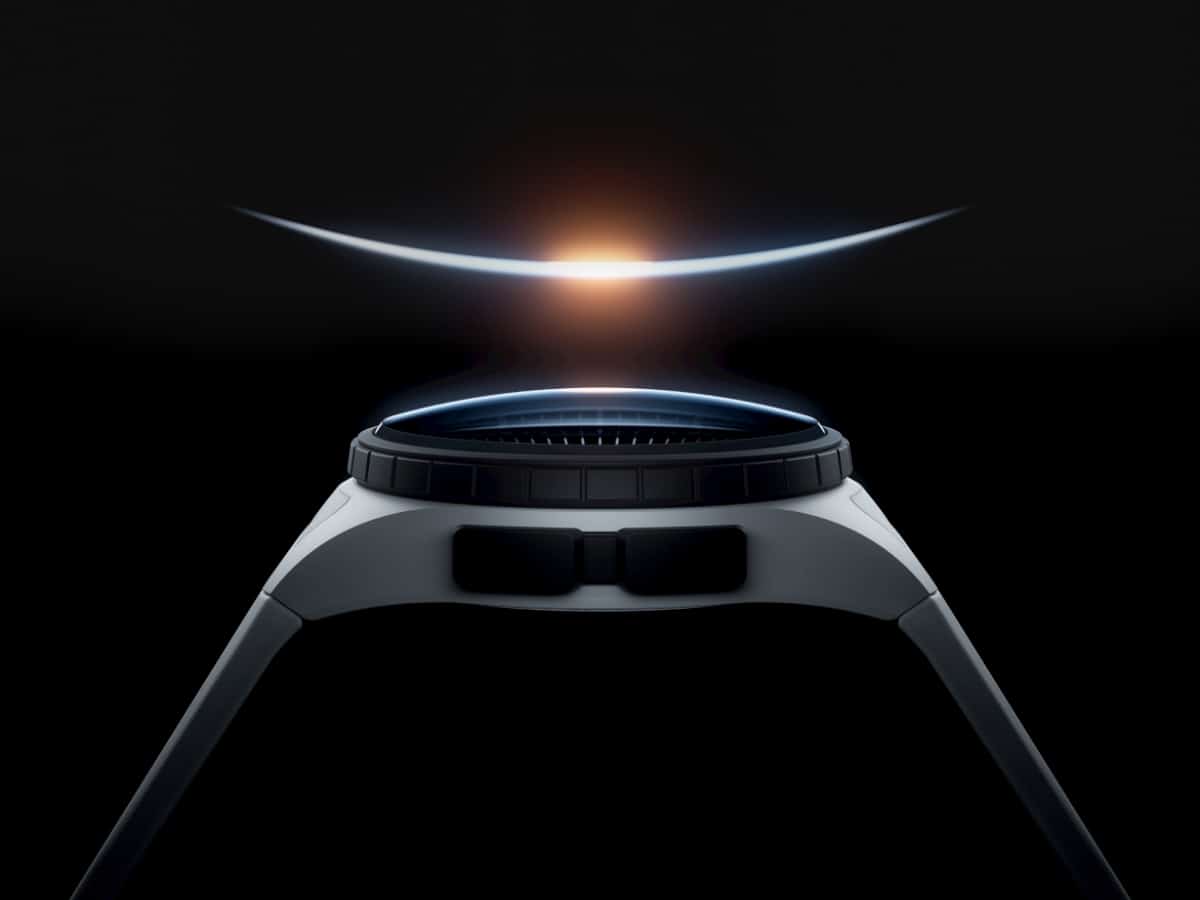
From a historical perspective, the Ref. IW328601 places IWC in an exclusive group of manufacturers whose products have been flight-qualified for space. While the mid-20th century was dominated by the "Space Race" between superpowers, the 21st-century equivalent is being fought by private corporations and their technical partners. By securing a place on Haven-1, IWC has ensured its relevance in a world where the "cruising altitude" of a pilot’s watch is no longer measured in thousands of feet, but in hundreds of miles above the Earth’s surface.
As the ISS nears its decommissioning and private stations like Haven-1, Orbital Reef, and Starlab prepare for deployment, the IWC Pilot’s Venturer Vertical Drive stands as a testament to the enduring necessity of mechanical timekeeping in the digital age. It serves as a reminder that even in the most technologically advanced environments, the human need for a reliable, tactile, and autonomous reference of time remains constant.



 Yuyun Lusiyani
 Joko Widodo
 Jia Lissa
 Pevita Pearce
 admin
admin
