
 Lina Irawan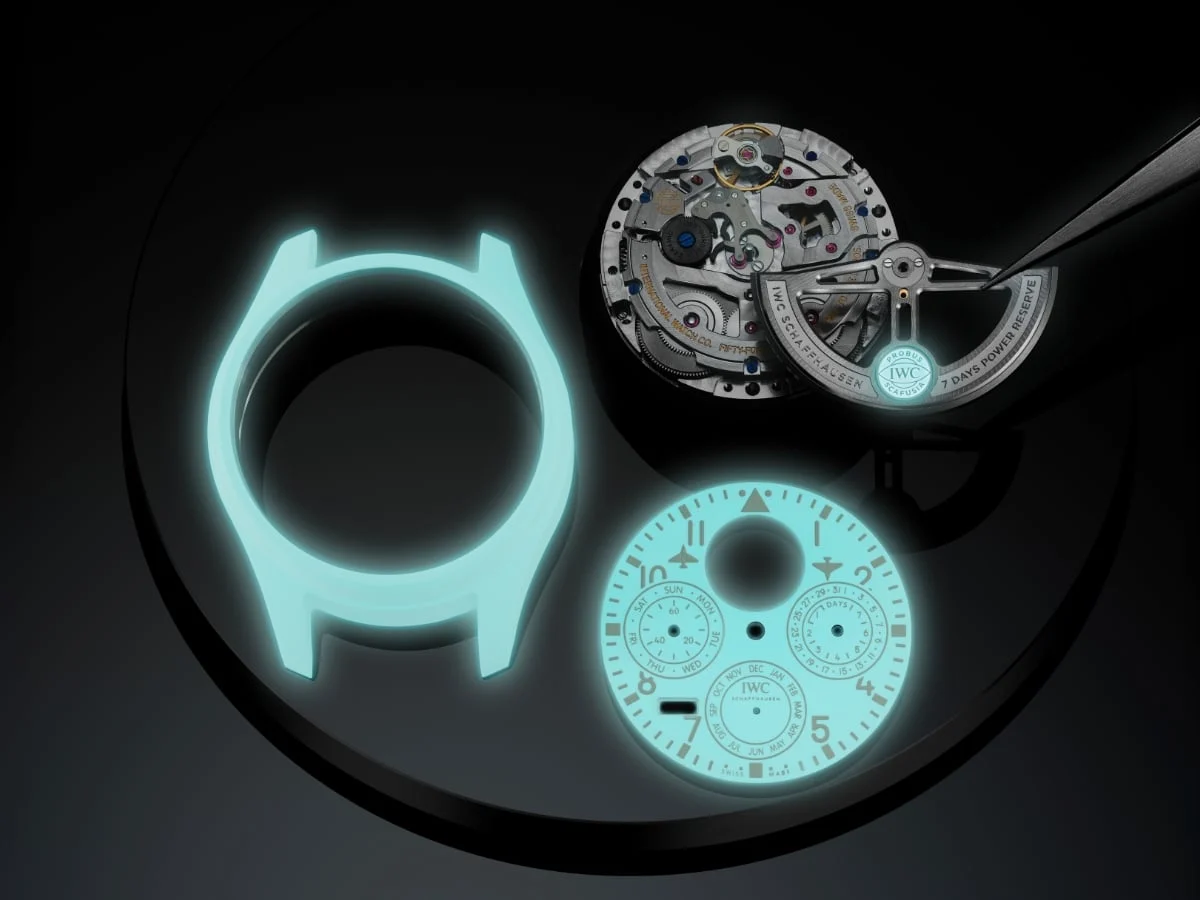
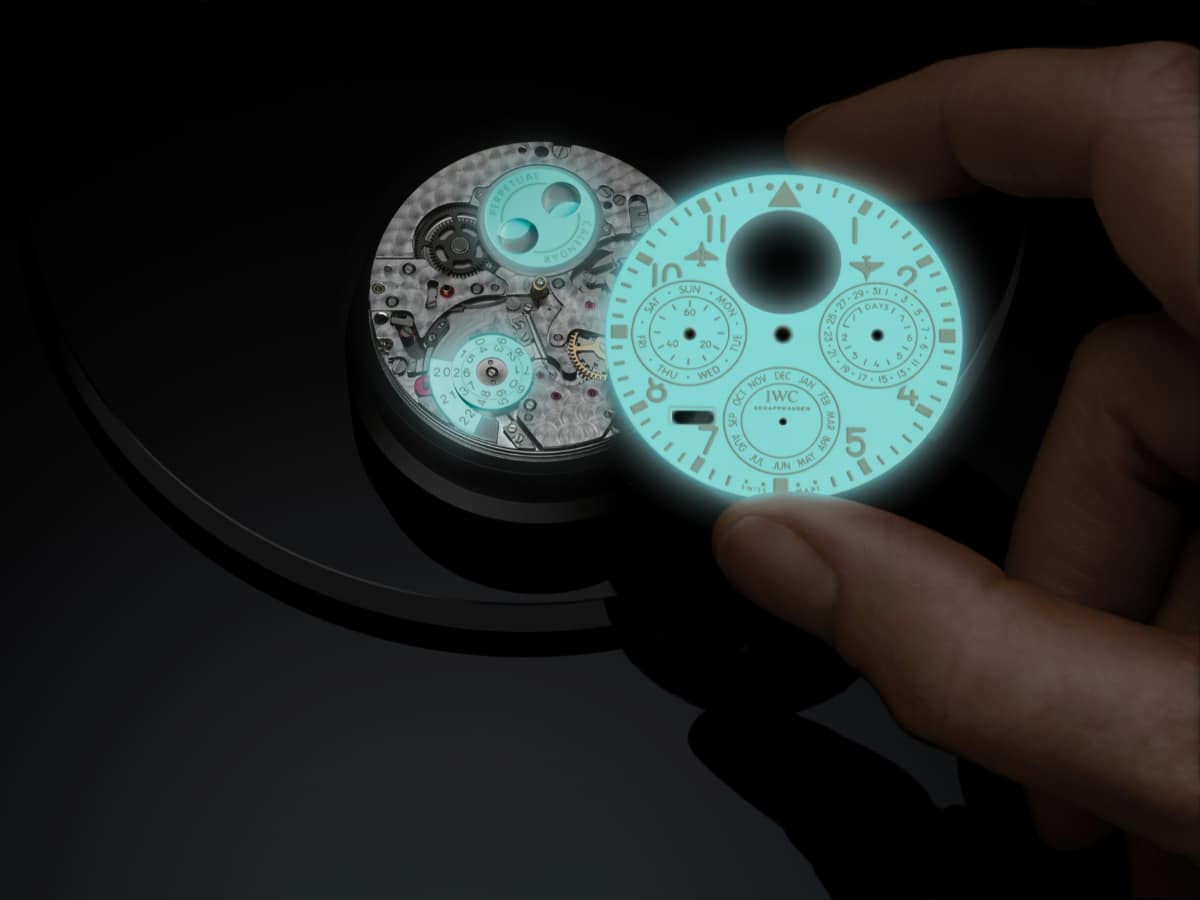
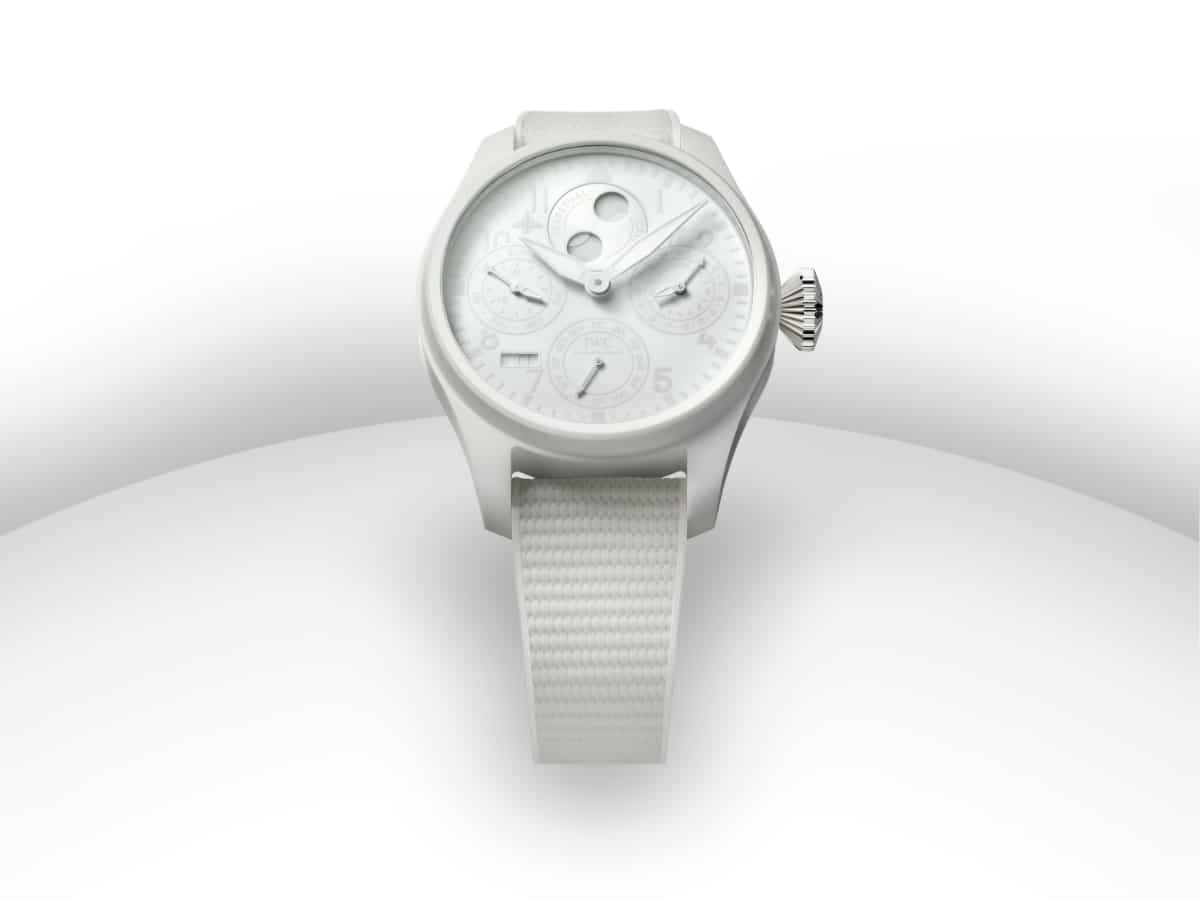
The Swiss luxury watchmaker IWC Schaffhausen has unveiled a significant technological breakthrough in material science with the introduction of the Big Pilot’s Watch Perpetual Calendar Ceralume. This timepiece represents the first instance of a fully luminous ceramic case, a feat achieved through a patent-pending manufacturing process that integrates high-performance ceramic with high-grade Super-LumiNova pigments. While traditional horology has long utilized phosphorescent materials for hands and indices, the Ceralume technology extends this functionality to the entire architecture of the watch, including the case, the dial, and even the fabric strap. The result is a timepiece that maintains a stark, monochromatic white appearance in daylight but transforms into a vivid, self-illuminating blue object in low-light conditions, capable of emitting a visible glow for more than 24 hours.
The Engineering of Ceralume Technology
The development of Ceralume is the result of several years of research and development by IWC’s engineering division, "XPL." The primary challenge in creating a luminous ceramic lies in the volatile nature of the sintering process. Traditional ceramic watch cases are manufactured by mixing zirconium oxide with other metallic oxides and then firing them at temperatures exceeding 1,000 degrees Celsius. However, standard phosphorescent pigments often degrade or lose their luminosity when subjected to such extreme heat.
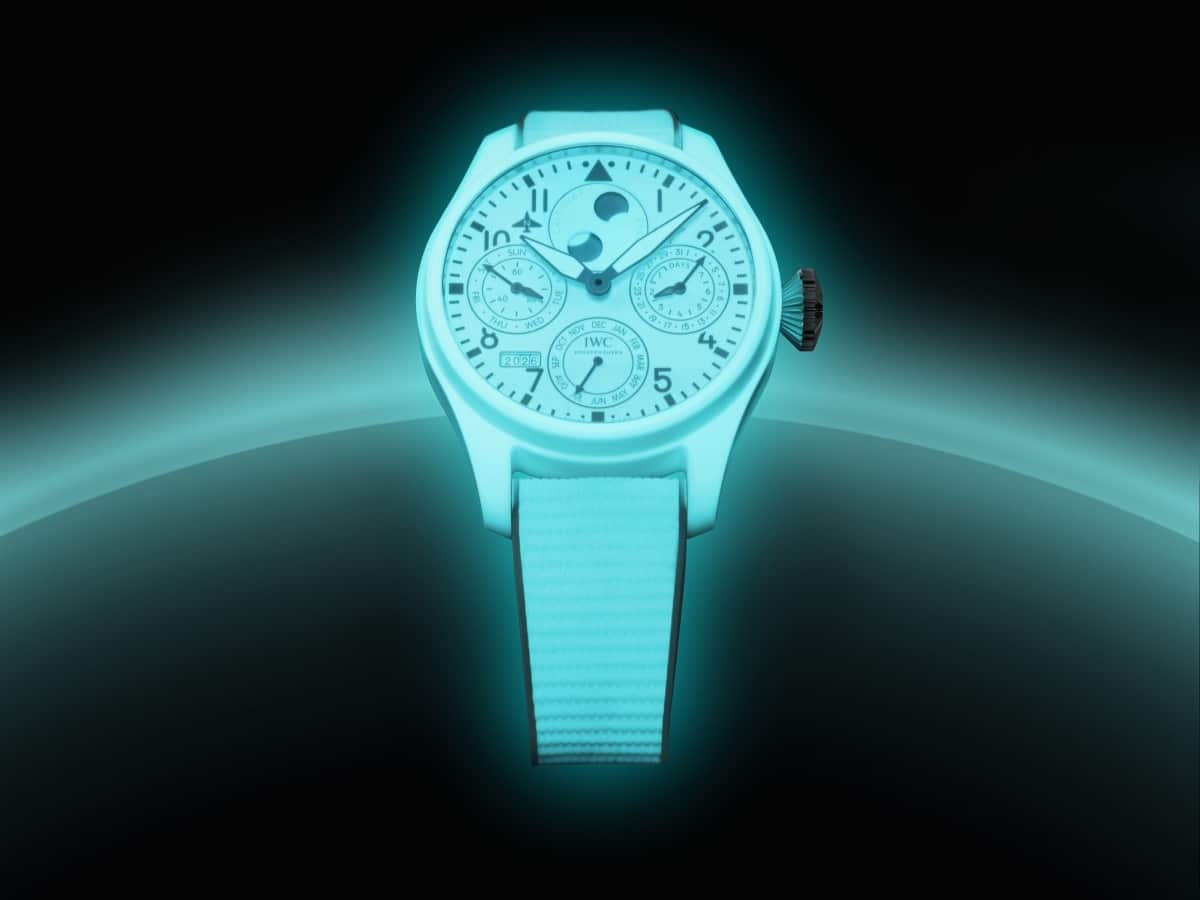
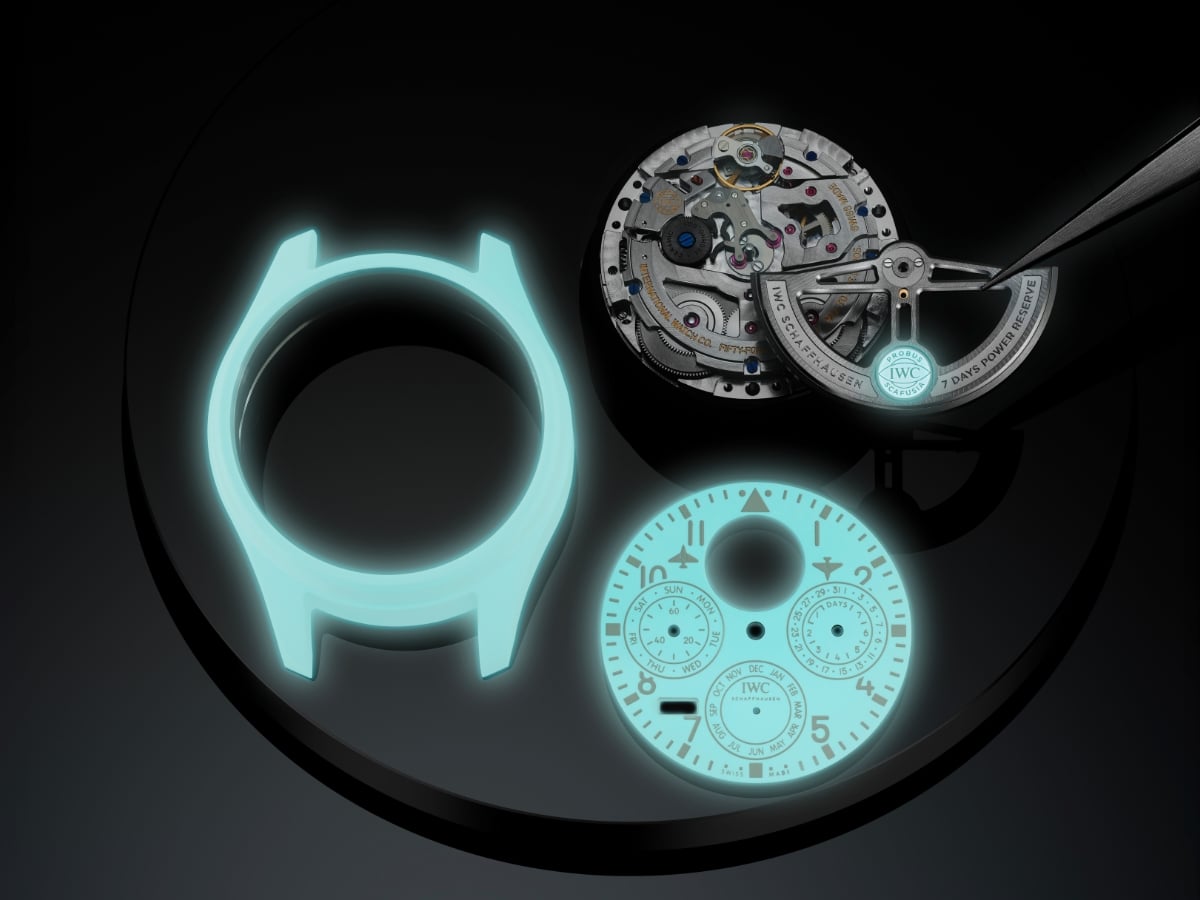
To overcome this, IWC developed a proprietary mixture that blends zirconium oxide powders with dedicated Super-LumiNova pigments. Super-LumiNova operates as a light storage battery; it absorbs photons from sunlight or artificial light and re-emits them as visible light through a process of phosphorescence. By using a specialized "beading" process to ensure a homogenous distribution of the pigments within the ceramic raw material, IWC engineers have ensured that the luminosity is not merely a surface coating but is integrated into the very molecular structure of the case.
The manufacturing process requires a precision-engineered sintering cycle tailored to the specific chemical requirements of the luminous pigments. This ensures that the final product retains the hardness and scratch resistance associated with high-tech ceramics while maximizing the light-emission duration. Laboratory tests indicate that the Ceralume material can maintain a readable glow for a full 24-hour cycle after a sufficient charge, setting a new benchmark for luminescent duration in the luxury watch industry.
The Mechanical Heart: The Perpetual Calendar Complication
Beneath the avant-garde exterior of the Ref. IW505801 lies one of the most respected mechanical complications in the history of horology: the IWC perpetual calendar. Developed in the 1980s by IWC’s former head watchmaker, Kurt Klaus, this system is renowned for its mechanical elegance and ease of use. Unlike many perpetual calendars that require individual adjusters for each display, the Klaus system allows the date, day, month, and moon phase to be synchronized and adjusted via a single crown.
The perpetual calendar is mechanically programmed to recognize the different lengths of the months and even the leap year cycle. It will require no manual adjustment until the year 2100, a year that would normally be a leap year but is skipped in the Gregorian calendar to maintain solar accuracy. The movement powering this timepiece is the IWC-manufactured 52615 caliber, a high-performance engine featuring a Pellaton automatic winding system. This system, reinforced with ceramic components to minimize wear, builds up a substantial seven-day power reserve (168 hours) across two barrels.
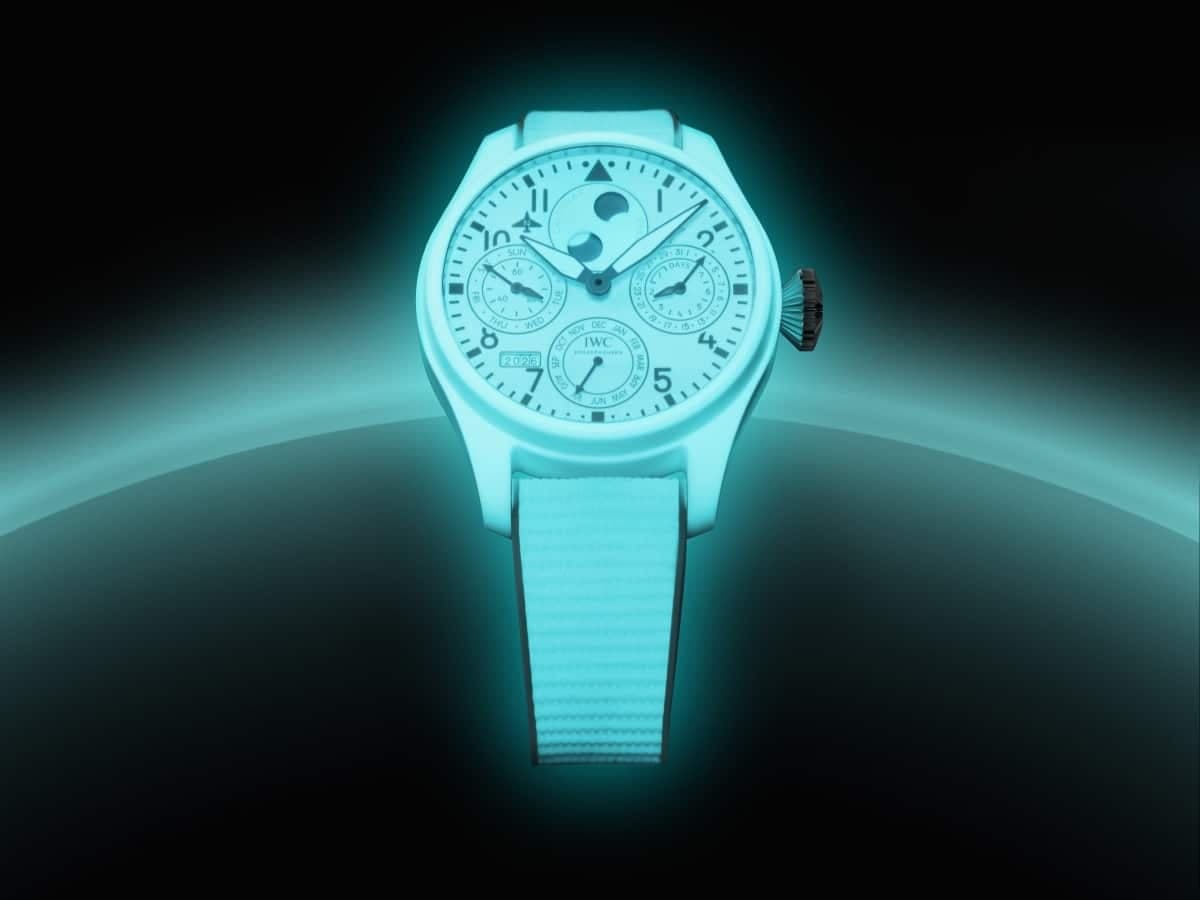
The dial layout remains faithful to the Big Pilot’s Perpetual Calendar heritage, featuring four sub-dials. The date and power reserve are located at 3 o’clock, the month at 6 o’clock, the day and small seconds at 9 o’clock, and the iconic double moon phase at 12 o’clock. The double moon phase display shows the moon’s position for both the Northern and Southern Hemispheres with such precision that it will only deviate by one day after 577.5 years.
Design Philosophy and Visual Transformation
In daylight, the Big Pilot’s Watch Perpetual Calendar Ceralume adopts a "White-Out" aesthetic that aligns with contemporary trends in minimalist design. The 46.2mm case is finished in a matte white, complemented by a white dial and a white textured rubber strap with a Ceralume inlay. The indices and hands are rendered in a dark grey or black, providing high contrast against the stark white background to ensure legibility.

However, the design philosophy shifts entirely in the dark. While the numerals and hands remain dark to provide a silhouette effect, the entirety of the case, the dial base, and the strap elements emit a bright blue light. This inversion of traditional lume application—where the background glows rather than the indicators—creates a "negative" visibility effect. Even the rotor of the movement, visible through the sapphire crystal case back, features a luminous medallion, ensuring the theme is consistent from every angle.
The choice of blue for the glow is both aesthetic and functional. Blue light (often associated with Super-LumiNova Grade X1) is known for its longevity and is often preferred in pilot and diver watches for its clarity in pitch-black environments.
Chronology of IWC’s Material Innovation
The release of the Ceralume Ref. IW505801 is the latest milestone in a long history of material experimentation at IWC Schaffhausen. To understand the significance of this release, one must look at the timeline of the brand’s innovations:
- 1980: IWC releases the world’s first titanium wristwatch, the Porsche Design Titandurchmesser.
- 1986: The brand introduces the first black zirconium oxide ceramic case in the Da Vinci Perpetual Calendar (Ref. 3755).
- 2019: IWC debuts Ceratanium, a patented material that combines the lightness and toughness of titanium with the hardness and scratch resistance of ceramic.
- 2022: The "Colors of Top Gun" collection is launched, featuring ceramics in shades like "Lake Tahoe" (white) and "Mojave Desert" (sand).
- 2026: The introduction of Ceralume marks the transition from colored ceramics to functional, light-emitting ceramics.
This chronology demonstrates a consistent trajectory toward mastering materials that were previously considered too difficult or unstable for watchmaking. The Ceralume project represents the pinnacle of this research, moving beyond color and durability into the realm of active illumination.
Industry Impact and Market Implications
The introduction of a fully luminous ceramic watch is likely to influence design trends across the luxury sector. For years, the industry has seen a "lume race," with brands like Panerai and Rolex competing for the brightest and longest-lasting phosphorescence. By making the case itself the light source, IWC has bypassed traditional limitations.
Market analysts suggest that this watch targets a specific segment of "high-concept" collectors—individuals who value technical novelty and "wrist presence" as much as traditional craftsmanship. The Big Pilot’s Watch, originally designed for aviators who required massive dials for legibility in unlit cockpits, is the natural candidate for this technology. It bridges the gap between the brand’s utilitarian military history and its future as an innovator in material science.
Furthermore, the Ceralume technology has potential applications beyond the Big Pilot line. If the material can be scaled, it may eventually appear in the Ingenieur or Aquatimer collections, where low-light visibility is a functional requirement. However, due to the complexity of the manufacturing process, it is expected that Ceralume will remain reserved for limited editions and "halo" pieces for the foreseeable future.
Fact-Based Analysis of Performance
From a technical standpoint, the Ref. IW505801 addresses a common critique of luminous watches: the rapid "drop-off" of brightness. Most Super-LumiNova applications lose 80% of their initial intensity within the first hour. By increasing the surface area of the luminous material to include the entire case and strap, IWC has effectively increased the "battery capacity" of the watch’s glow.
The use of ceramic also ensures that the watch remains hypoallergenic and impervious to the ultraviolet (UV) radiation that can cause discoloration in plastic or resin-based luminous watches. This longevity is crucial for a perpetual calendar, a watch designed to be passed down through generations. While the phosphorescent pigments may eventually require a "recharge" from a light source, the ceramic housing will not degrade, ensuring the watch remains structurally sound for centuries.
Conclusion and Future Outlook
The IWC Big Pilot’s Watch Perpetual Calendar Ceralume (Ref. IW505801) is more than a mere aesthetic exercise; it is a demonstration of how traditional complications can be recontextualized through modern engineering. By combining the mechanical permanence of a perpetual calendar with the ephemeral beauty of a fully luminous case, IWC has created a timepiece that challenges the boundaries of what a watch can be.
As the horological world gathers at events like Watches & Wonders, the focus is increasingly shifting toward these types of hybrid innovations—where the movement inside is as important as the chemistry of the case outside. While the practicality of a watch that glows like a beacon may be debated by traditionalists, its status as a landmark in material science is indisputable. For IWC, Ceralume is not just a new product; it is a patent-protected statement of intent for the next decade of watchmaking.


 Jia Lissa
 Yuyun Lusiyani
 Joko Widodo
 Eva Lovia

 Pevita Pearce