
 Jia Lissa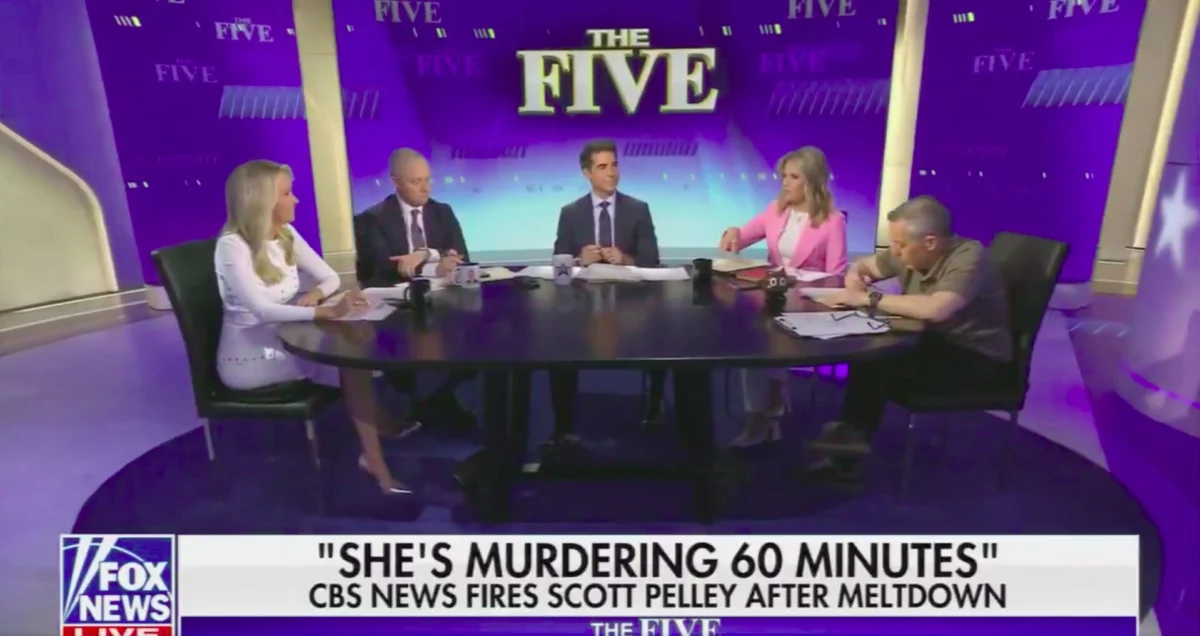
The landscape of American legacy media experienced a significant tremor this week as CBS News terminated the contract of veteran correspondent and former evening news anchor Scott Pelley. The decision, handed down by newly appointed 60 Minutes executive producer Nick Bilton, followed a contentious staff meeting in which Pelley openly challenged the program’s new editorial direction and the qualifications of its leadership. The internal strife at the storied newsmagazine has become a flashpoint for broader debates regarding the future of investigative journalism, with commentators at Fox News and other outlets offering starkly different interpretations of the upheaval.
The dismissal of Pelley marks the most high-profile departure in a series of sweeping changes at CBS News under the direction of Bari Weiss, who was recently appointed as a senior editor at the network. The reorganization has already seen the removal of longtime Executive Editor Draggan Mihailovich and correspondent Cecilia Vega, signaling a fundamental shift in the culture and personnel of a program that has long been considered the gold standard of television journalism.
A Chronology of the 60 Minutes Leadership Transition
The friction within the 60 Minutes offices began in earnest on Thursday, May 28, 2026, when CBS announced a major executive shakeup. Bari Weiss, a former New York Times columnist and founder of The Free Press, was brought in to oversee a strategic pivot for the news division. Her first significant move involved the termination of Tanya Simon, the program’s executive producer, and the appointment of Nick Bilton to the role. Bilton, a veteran journalist known for his work at The New York Times and Vanity Fair, was tasked with modernizing the program’s approach to investigative reporting.
On Monday, June 1, Bilton held his inaugural meeting with the 60 Minutes staff to outline his vision for the show’s future. However, the meeting was reportedly derailed by Pelley, who had been with the program for nearly four decades. According to internal reports, Pelley used the forum to demand transparency regarding the recent firings of Mihailovich and Vega. Witnesses described the exchange as "fiery," with Pelley reportedly accusing Weiss of "murdering 60 Minutes" and claiming she lacked the necessary qualifications for her executive role.
Pelley’s criticism extended directly to Bilton as well. He reportedly informed the new executive producer that he "would never be welcomed" by the established team and characterized Bilton’s journalistic credentials as "slender." The confrontation concluded without resolution, but the repercussions were immediate. By Tuesday evening, Bilton issued a formal letter of termination to Pelley, citing "misconduct" and a demonstrable "antipathy to the future of the show."
Analysis of the Internal Conflict and Termination
The termination letter, which was subsequently leaked to the media, characterized Pelley’s behavior as an intentional effort to hijack a professional transition. Bilton wrote that Pelley’s actions during the staff meeting were inconsistent with the standards of the network and suggested that the veteran anchor was fundamentally opposed to the necessary evolution of the 60 Minutes brand.
The reaction from the broader media community was swift and divided. On MSNBC, host Rachel Maddow characterized the events at CBS as a "Hungarian, oligarchic-style takeover," suggesting that the changes were being orchestrated to align the network’s coverage with the political interests of President Donald Trump. Maddow’s critique focused on the idea that legacy institutions are being systematically dismantled to make way for more ideologically sympathetic leadership.
Conversely, the hosts of Fox News’ popular afternoon program The Five presented a different perspective during their Wednesday broadcast. The panel, consisting of Greg Gutfeld, Jesse Watters, Kayleigh McEnany, and Martha MacCallum, largely celebrated Pelley’s exit, framing it as a necessary pruning of a "bloated" and "pompous" media establishment that had lost touch with its audience.
The Fox News Perspective: Critiques of Legacy Media Standards
During the discussion on The Five, Greg Gutfeld was particularly vocal in his criticism of Pelley’s conduct and his career at CBS. Gutfeld argued that Pelley’s public defiance was an attempt to cast himself as a martyr for traditional journalism, a narrative Gutfeld rejected. "This guy throws a tantrum in a public view. Then he leaks it to everyone to amplify his appearance as some kind of hero," Gutfeld said. "He just looks like a cartoon because he is a cartoon."
Gutfeld further argued that the rise of independent investigative journalists and specialized reporters has exposed the deficiencies of traditional outlets like 60 Minutes. He cited the work of figures such as Nick Shirley, Chris Rufo, and Michael Shellenberger, as well as Fox News’ Bill Melugin, as examples of modern reporting that has outpaced legacy newsmagazines. Gutfeld specifically pointed to past 60 Minutes segments—such as Lesley Stahl’s 2020 interview regarding the Hunter Biden laptop and Pelley’s own reporting on President Biden’s cognitive health—as evidence of a decline in investigative rigor.
Kayleigh McEnany echoed these sentiments, suggesting that 60 Minutes had "murdered itself" through biased reporting long before the current leadership change. She referenced Pelley’s past interviews, specifically one involving attorney Marc Elias, as examples of what she perceived as a lack of neutrality. Jesse Watters added that the program, while still a financial "juggernaut," had become "woke" and "stuck in the past."
Financial Data and the Economic Reality of 60 Minutes
Despite the internal turmoil, 60 Minutes remains one of the most profitable entities in the television industry. According to data discussed by the Fox News panel and corroborated by industry analysts, the program generates approximately $11 million in revenue per episode. CBS as a whole is estimated to generate between $3 billion and $4 billion in annual profit, with 60 Minutes serving as a cornerstone of its Sunday night lineup.
However, the high cost of production and the aging demographic of its viewership have created pressure for reform. The "well-oiled machine" described by Watters is also an expensive one, and the new leadership under Weiss and Bilton appears focused on streamlining operations while attempting to capture a younger, more digitally-engaged audience. The "house cleaning" mentioned by McEnany reflects a belief among some media executives that legacy programs must undergo radical cultural shifts to survive in a landscape increasingly dominated by streaming and independent content creators.
Broader Implications for the Media Industry
The ouster of Scott Pelley is more than a personnel dispute; it is emblematic of the ideological and generational war currently being waged within American newsrooms. Pelley, who joined CBS News in 1989, represents the "old guard" of broadcast journalism—an era defined by centralized editorial control and a specific, often criticized, "voice of God" delivery. His departure signifies the end of an era for CBS News and the beginning of an experimental phase under Bari Weiss.
The implications for 60 Minutes are multifaceted:
- Editorial Direction: The appointment of Bilton and the influence of Weiss suggest a move toward "heterodox" journalism, focusing on stories that the new leadership feels have been ignored or mishandled by the traditional mainstream media.
- Staff Stability: Reports indicate that more staff departures may be imminent. If a significant portion of the veteran production team leaves in solidarity with Pelley or Mihailovich, the program risks losing the institutional knowledge that has sustained its quality for decades.
- Brand Identity: For viewers, the 60 Minutes brand is synonymous with the faces of its correspondents. With Pelley gone and others fired, the network must quickly establish new "anchor" personalities that can command the same level of authority and trust.
- Political Polarization: The divergent reactions from MSNBC and Fox News highlight how media management has become a partisan issue. Changes in newsroom leadership are now frequently viewed through the lens of political alignment, which may further erode the public’s perception of journalistic objectivity.
As 60 Minutes moves forward, the industry will be watching closely to see if the "reinvention" mentioned by Jesse Watters results in a revitalized investigative powerhouse or a fragmented version of its former self. Martha MacCallum’s observation that Pelley "knew he was going to get fired" suggests that the confrontation was a calculated final stand against a shift that many in the legacy media find deeply unsettling. Whether this shift will save the "juggernaut" or accelerate its decline remains the central question facing CBS News in the coming months.


 Yuyun Lusiyani
 Joko Widodo
 Pevita Pearce
 admin
admin
