
 Jia Lissa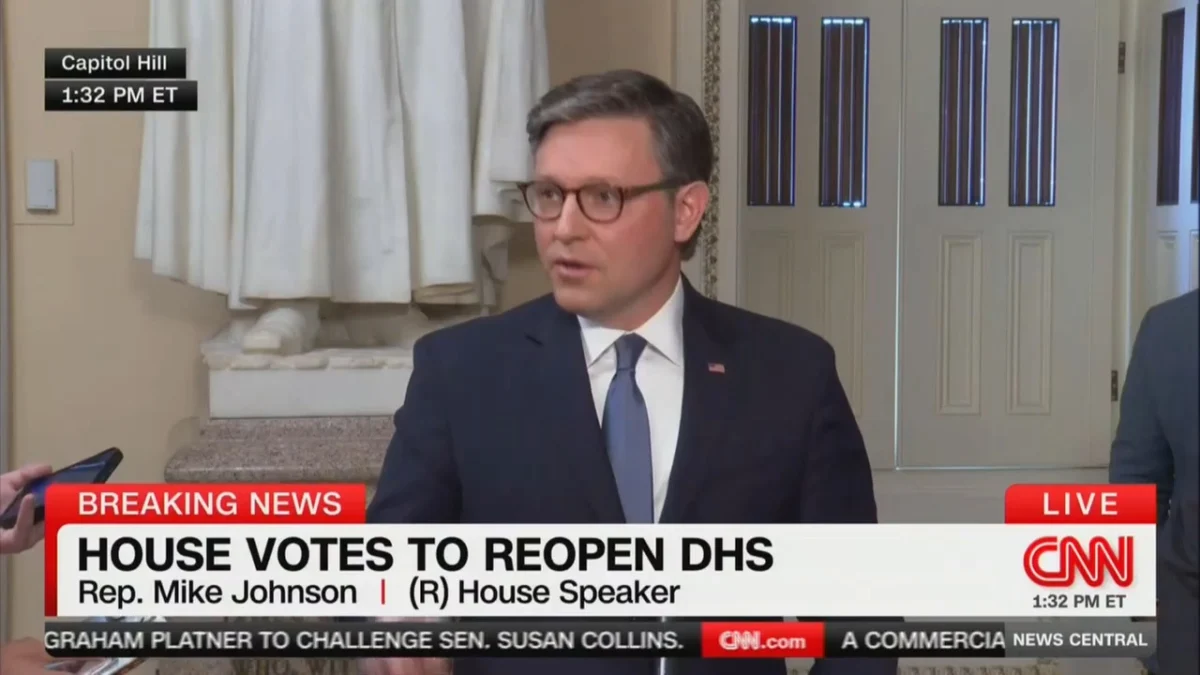
The House of Representatives on Thursday moved to conclude a historic 75-day partial government shutdown, voting to approve a funding measure that reopens the Department of Homeland Security (DHS) while pointedly excluding two of its most controversial agencies. The resolution, which arrived after weeks of intense legislative gridlock, marks a significant tactical victory for Congressional Democrats who successfully leveraged the standoff to demand oversight reforms. Conversely, the move has sparked an internal rebellion among hardline Republicans, many of whom have expressed outrage over the decision to leave immigration enforcement agencies without immediate funding.
The partial shutdown, the longest in United States history, primarily paralyzed the Department of Homeland Security, leaving tens of thousands of federal employees—including Transportation Security Administration (TSA) agents and Coast Guard personnel—working without pay for more than two months. The impasse centered on the funding for U.S. Immigration and Customs Enforcement (ICE) and U.S. Customs and Border Protection (CBP). Democrats in both the House and Senate remained steadfast in their refusal to authorize funds for these agencies until specific reforms were codified into law, citing the recent shooting deaths of two individuals in Minneapolis involving law enforcement as the catalyst for their demands.
A Timeline of the 75-Day Impasse
The path to Thursday’s vote was marked by procedural delays and a deepening rift between the House and Senate. The crisis began ten weeks ago when a standard appropriations bill failed to gain traction due to disagreements over border security rhetoric and enforcement protocols.
Approximately 35 days ago, the United States Senate reached a bipartisan consensus, passing a measure intended to end the shutdown by funding the vast majority of the DHS while isolating the more contentious immigration enforcement budgets. However, that bill languished in the House of Representatives for over a month. Speaker of the House Mike Johnson (R-LA) initially refused to bring the Senate-passed plan to the floor, arguing that any funding bill that "orphaned" the agencies responsible for border security was a non-starter for the Republican conference.
The stalemate only began to shift this week following a series of executive maneuvers by the White House. Faced with a looming crisis in national travel and security infrastructure, President Donald Trump moved to pay certain classes of federal employees through executive action. This intervention, while providing temporary relief to workers, placed immense pressure on House leadership to provide a permanent legislative fix. Under mounting scrutiny from Senate Republican leaders and a restive White House, Speaker Johnson ultimately allowed the measure to proceed to a voice vote on Thursday.
The Catalyst for Reform: The Minneapolis Incident
The primary driver behind the Democratic refusal to fund ICE was a localized tragedy in Minneapolis that took on national political significance. The shooting deaths of two individuals during a law enforcement operation prompted a fierce outcry from civil rights advocates and progressive lawmakers, who argued that ICE agents were being deployed with insufficient oversight and lack of clear engagement protocols.
Democrats argued that the DHS budget could not return to "business as usual" without a fundamental restructuring of how ICE agents are deployed across the country. This stance created a binary choice for the House: either keep the entire Department of Homeland Security shuttered or accept a "split" funding model that prioritized the reopening of essential services like the TSA while leaving the debate over immigration enforcement for a separate legislative session.
In the end, Senate Republicans brokered a deal that allowed for the funding of every aspect of the DHS—including the Coast Guard, the Federal Emergency Management Agency (FEMA), and the Secret Service—except for ICE and CBP. This strategy was designed to isolate the most politically volatile elements of the budget, allowing the government to function while the debate over the border continued.
Economic and Operational Impact of the Shutdown
The 75-day duration of the shutdown exacted a heavy toll on the federal workforce and the broader economy. With the Department of Homeland Security employing approximately 240,000 people, the lack of consistent appropriations created a ripple effect across the nation’s infrastructure.
Data from the Congressional Budget Office (CBO) suggests that previous shutdowns have cost the U.S. economy billions in lost productivity and delayed services. During this 75-day period:
- TSA Staffing: Reports of increased "call-outs" among TSA agents rose by an estimated 10% as employees struggled to cover commuting costs and childcare without incoming paychecks.
- Federal Families: Thousands of employees relied on food banks and emergency loans to bridge the gap during the three-and-a-half pay cycles missed during the shutdown.
- Border Operations: While Border Patrol agents remained on duty as "essential personnel," the lack of administrative funding led to a backlog in processing and a strain on facilities already operating at capacity.
The resolution passed on Thursday provides immediate back pay for these workers, a move that the White House characterized as a "necessary relief for those who protect our borders and our skies."
Speaker Johnson and the "Haphazard" Legislation
Following the vote, Speaker Mike Johnson faced a barrage of questions regarding his reversal and the delay in bringing the bill to the floor. Johnson, who had previously been a vocal critic of the Senate’s "carve-out" approach, defended his timing by attacking the quality of the legislation itself.
"You heard me trash the bill when it came over the first time," Johnson told reporters. "Because it literally was drafted in the middle of the night. It was about 2:00 in the morning when they came up with the final language, and it was haphazardly drafted."
Johnson emphasized that his primary objection was the exclusion of the Border Patrol and ICE, agencies he considers the "front line" of national sovereignty. He characterized the Senate’s plan as an attempt to "orphan" critical law enforcement functions. However, the Speaker acknowledged that the pressure to reopen the rest of the DHS had become insurmountable.
"We threw a fit, and we had to," Johnson said. "We held the homeland bill, the underlying funding bill, because we had to ensure that they could not isolate and eliminate those two critical agencies. We are getting those done now. We passed the resolution first, and we will fund Border Patrol and Immigration Enforcement as soon as we return for the work session."
Political Reactions and Future Implications
The passage of the bill has left the Republican party deeply divided. Hardline members of the House Freedom Caucus have characterized the vote as a "surrender" to Democratic demands. These members argue that by reopening the DHS without securing border funding, the GOP has lost its primary point of leverage in the ongoing immigration debate.
On the other side of the aisle, Democrats are viewing the outcome as a confirmation of their "oversight first" strategy. By successfully decoupling ICE funding from the rest of the DHS, they have created a precedent where law enforcement funding is contingent upon reform and accountability.
The broader implications of this shutdown suggest a shift in how budget battles may be fought in the future. The use of "partial" funding measures—where specific agencies are held back while others are funded—could become a more common tool for a divided Congress. However, the 75-day duration also highlights the fragility of the legislative process and the high human cost associated with using federal salaries as a bargaining chip.
As Congress prepares for its next work session, the focus will shift entirely to the "separate measure" Johnson promised. This upcoming debate over ICE and CBP funding is expected to be even more contentious, as it will lack the "must-pass" pressure of a broader government shutdown. For now, federal employees at the TSA and other DHS agencies can expect their pay to resume, but the political battle over the nation’s borders remains far from resolved.


 Yuyun Lusiyani
 Joko Widodo
 Pevita Pearce
 admin
admin
