
 Jia Lissa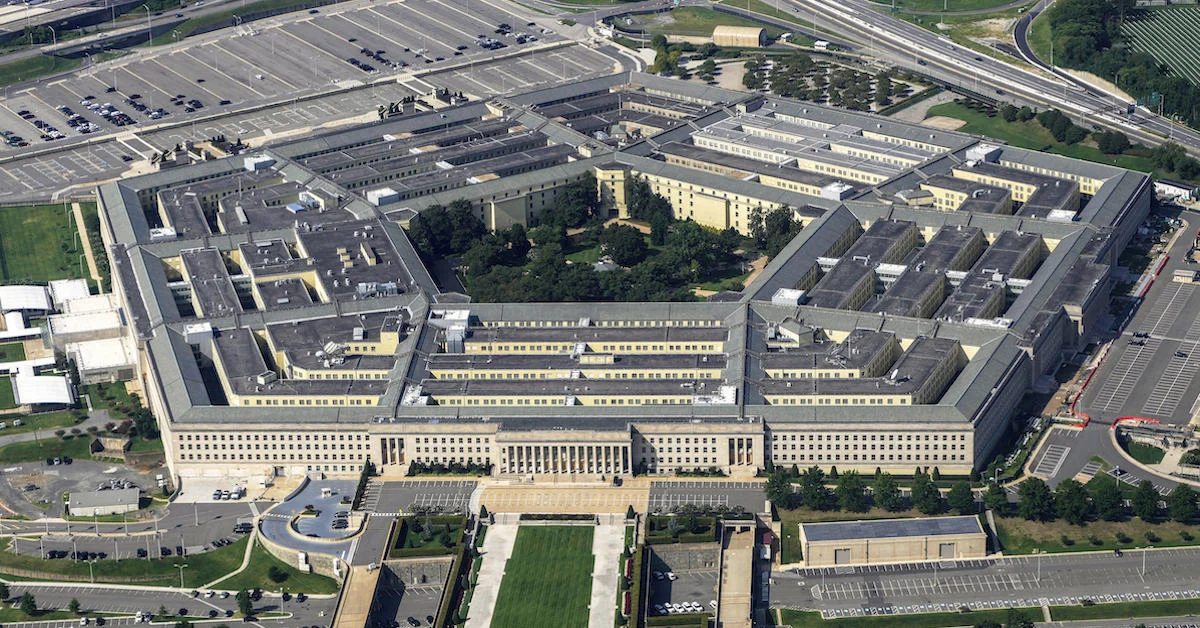
The United States Department of Defense has terminated the employment of Jacqueline Smith, the ombudsman for Stars and Stripes, the independent military news organization. The dismissal, which was announced by Smith herself in a scathing op-ed published by the newspaper on Thursday, marks a significant escalation in the ongoing tension between the Pentagon’s leadership and the editorial independence of the historic publication. Smith, who had served in the role since December 2023, alleged that her removal is a direct result of her efforts to alert Congress to "attempted control" of the newspaper by military officials. Her departure is set to take effect on April 28, 2026, ending a tenure defined by increasing friction over the publication’s mission and its relationship with the Department of Defense.
Smith’s dismissal comes at a time of broader structural and ideological shifts within the Department of Defense. In her op-ed, she described the manner of her firing as "the coldest way possible," noting that she was provided with no specific explanation for the decision and was informed that the move was "not grievable." The ombudsman position was specifically created and mandated by Congress to serve as a buffer between the newspaper’s editorial staff and the military hierarchy, ensuring that the publication remains a credible, independent source of news for service members, veterans, and their families. Smith’s removal effectively leaves the newspaper without its primary advocate for journalistic autonomy at a moment when that autonomy is being publicly questioned by Pentagon leadership.
The Role of the Ombudsman and the Mandate for Independence
To understand the gravity of Smith’s dismissal, it is necessary to examine the unique status of Stars and Stripes. Unlike other military-adjacent publications, Stars and Stripes is a First Amendment-protected entity that operates under the Defense Media Activity (DMA) but is legally required to maintain editorial independence from the Department of Defense. This independence is not merely a tradition but a requirement codified in federal law and Department of Defense instructions. The ombudsman serves as the guarantor of this independence, acting as a liaison between the paper and the public, while also reporting to the House and Senate Armed Services Committees on any attempts by military leadership to influence or censor content.
Smith noted in her farewell piece that she had been fulfilling this statutory duty by informing congressional committees of "great and growing concern about attempted control of the newspaper by the Pentagon." Her role required her to investigate complaints of bias, ensure accuracy, and, most importantly, protect the staff from the "brass" who might wish to use the paper as a tool for public relations or psychological operations. "No one should be surprised that they’re kicking out the one person charged by Congress with protecting Stars and Stripes’ editorial independence," Smith wrote.
A Chronology of Increasing Tensions
The conflict leading to Smith’s dismissal appears to have accelerated in early 2026. On January 23, chief Pentagon spokesperson Sean Parnell signaled a major shift in the administration’s approach to the publication. In a statement posted to social media, Parnell announced that the Pentagon intended to "revamp" Stars and Stripes to "refocus its content away from woke distractions that siphon morale, and adapt it to serve a new generation of service members."
This statement was viewed by many media analysts and military historians as a departure from the paper’s long-standing commitment to objective reporting. Historically, Stars and Stripes has covered difficult and sometimes controversial topics, including military scandals, leadership failures, and the personal struggles of troops, precisely because its mission is to provide an uncensored view of the military world. Parnell’s use of the term "woke distractions" suggested a move toward more curated, morale-focused content, which critics argue is a euphemism for state-sponsored messaging.
According to Smith, the rhetorical shift was accompanied by immediate administrative action. On the same day as Parnell’s announcement, the Pentagon reportedly rescinded a specific process within the Code of Federal Regulations (CFR) that provided Stars and Stripes with a layer of legal protection against interference. This regulatory change removed the procedural barriers that prevented the chain of command from dictating editorial policy, effectively making the paper more vulnerable to the whims of political appointees and senior military officers.
Historical Precedents and the Fight for Survival
This is not the first time Stars and Stripes has faced threats to its existence or its independence. Founded during the Civil War and continuously published since World War II, the paper has survived numerous attempts by various administrations to cut its funding or alter its mission. In 2020, the Trump administration proposed a complete elimination of the paper’s funding—approximately $15.5 million at the time—arguing that service members now get their news from digital sources.
However, that move was met with a rare display of bipartisan unity in Congress. Senators from both parties, including Lindsey Graham (R-SC) and Tammy Duckworth (D-IL), argued that the paper provides a vital service that cannot be replaced by commercial news outlets or internal military communications. They emphasized that the paper’s independence is what makes it trusted by the troops. Congress eventually restored the funding, reinforcing the legal protections that Smith now claims are being dismantled.

The current situation differs from 2020 in that the threat is not one of total defundment, but of editorial transformation. By removing the ombudsman and rescinding protective regulations, the Pentagon may be attempting to keep the publication’s infrastructure while changing its DNA, turning it from an independent newspaper into a "house organ" for the Department of Defense.
Data and Financial Context
Stars and Stripes operates on a "non-appropriated fund" (NAF) basis for much of its revenue, meaning it generates money through subscriptions, advertising, and sales. However, it still requires a federal subsidy to cover the costs of printing and distribution in overseas conflict zones where commercial delivery is impossible. In recent fiscal years, this subsidy has hovered between $10 million and $15 million, a relatively small fraction of the total Department of Defense budget, which exceeds $800 billion.
Advocates for the paper argue that the cost-to-benefit ratio is immense. The paper serves as a "hometown newspaper" for hundreds of thousands of troops stationed in remote locations, providing them with news that affects their careers, their benefits, and their families. For the Pentagon, however, the financial leverage provides a mechanism for control. By threatening the subsidy or changing the administrative structure of the Defense Media Activity, the Pentagon can exert pressure on the editorial board in ways that are often invisible to the public.
Broader Implications for Press Freedom
The dismissal of an ombudsman for reporting interference to Congress raises significant questions about transparency and the First Amendment within the federal government. Media watchdog groups, such as the Reporters Committee for Freedom of the Press and the Committee to Protect Journalists, have historically monitored the treatment of Stars and Stripes as a bellwether for how the U.S. government views the role of the free press.
The removal of Smith suggests a narrowing of the space for internal dissent and independent oversight. If the ombudsman—the person legally tasked with being the watchdog—can be fired without cause or grievance for performing their duties, the very concept of an independent military press is jeopardized. This could lead to a chilling effect among the newspaper’s journalists, who may fear that reporting on topics deemed "distractions" by the Pentagon could result in the loss of their jobs or the further erosion of the publication’s status.
Furthermore, the dismissal has potential implications for the relationship between the executive branch and the legislative branch. Since the ombudsman is required to report to the House and Senate Armed Services Committees, Smith’s firing could be interpreted as an attempt to obstruct congressional oversight. Lawmakers rely on the ombudsman’s reports to gauge whether the Department of Defense is adhering to the law regarding the newspaper’s independence.
Official Responses and Potential Congressional Action
As of Thursday afternoon, the Pentagon has not released a formal statement detailing the specific personnel reasons for Smith’s termination, citing policy against discussing individual personnel matters. However, the comments made by Sean Parnell in January serve as the primary public justification for the broader "refocusing" effort. Parnell’s office has consistently maintained that the military must adapt its communication strategies to focus on "readiness and lethality," suggesting that editorial independence is a secondary concern to the mission of maintaining morale.
Congressional reaction is expected to follow the publication of Smith’s op-ed. Members of the House Armed Services Committee have historically been protective of Stars and Stripes, and Smith’s claim that she was fired for communicating with them is likely to trigger inquiries. There is a possibility that Congress could respond by introducing legislation to further codify the ombudsman’s protections or by holding hearings to investigate the Pentagon’s recent changes to the Code of Federal Regulations.
Conclusion: The Future of Stars and Stripes
The departure of Jacqueline Smith marks a pivotal moment in the history of Stars and Stripes. The paper now faces a future where its primary internal advocate for independence has been removed, and its regulatory protections have been stripped away. As the Pentagon moves to "refocus" the publication, the central question remains: can a military newspaper truly serve its readers if it is no longer allowed to report on the complexities and controversies of the institution that funds it?
Smith’s final plea in her op-ed was directed not at the Pentagon leadership, but at the military community and the public. "This newspaper has a long history of commitment to the military community and to journalistic values," she wrote. "Please don’t let it be controlled by Pentagon brass." Whether that plea will result in a reversal of the current trend or if Stars and Stripes will indeed be transformed into a morale-focused mouthpiece will likely depend on the level of intervention from Congress and the resilience of the journalists who remain at the publication. For now, the "independent" status of the paper hangs in a precarious balance, as the April 28 deadline for Smith’s departure approaches.

 Yuyun Lusiyani
 Joko Widodo
 Pevita Pearce
 admin
admin
