
 Amara Maple
In 2007, Ana Malinow stood at the helm of Physicians for a National Health Program (PNHP), then and still considered the nation’s foremost public interest group advocating for a single-payer national health insurance system. A retired pediatrician, Malinow has long been a vocal champion for universal healthcare, a system she believes is fundamental to a just society. However, the landscape of the single-payer movement has shifted, and Malinow herself has become a central figure in a new, more radical articulation of this long-standing cause. A couple of years ago, Malinow co-founded National Single Payer (NSP), an organization that, while sharing PNHP’s ultimate goal, diverges significantly in its strategy, scope, and willingness to address what it perceives as moral failings within the broader progressive establishment. This emergence of NSP, and Malinow’s candid critique of established groups like PNHP and their alignment with the Democratic Party, signals a deepening ideological chasm within the American healthcare reform movement, particularly concerning the interconnectedness of domestic policy, geopolitical ethics, and the very definition of a truly universal system.
The Genesis of a New Movement: National Single Payer
The formation of National Single Payer stems from a fundamental disagreement with the approach taken by more established organizations like PNHP, particularly regarding their political affiliations and their perceived silence on critical global issues. While PNHP, founded in 1987, has historically comprised physicians and allied health professionals, focusing its advocacy on the technical and medical arguments for a single-payer system, NSP aims for a broader, more inclusive base. Malinow clarifies, "PNHP is mostly physicians and allied health professionals. National Single Payer is for everyone — whether you are a health professional or not. We are joined by the common principle that healthcare is a human right, must be free, not for profit and will be achieved through national legislation and not a state by state effort." This distinction highlights NSP’s ambition to mobilize a wider, grassroots movement, moving beyond a professional-centric approach to healthcare advocacy.
PNHP’s strategy has often involved working closely with Democratic Party politicians who introduce single-payer legislation. While Malinow acknowledges this long-standing relationship, she points out a significant drawback: "The Democrats propose single payer bills but do nothing to mobilize around that bill. That becomes problematic." This critique underscores a frustration common among many activists who feel that legislative proposals often serve more as symbolic gestures than as genuine commitments to transformative change.
Moreover, a crucial philosophical divergence between the two organizations lies in their approach to state-level single-payer initiatives. While PNHP, through its local chapters like Metro NYC and California, actively advocates for state-based single-payer systems, NSP firmly believes that "healthcare is a human right, must be free, not for profit and will be achieved through national legislation and not a state by state effort." This national-first approach reflects a belief that piecemeal state efforts are insufficient to dismantle the entrenched for-profit medical-industrial complex and achieve true universal coverage and equity. The historical challenges and ultimate failures of state-level single-payer attempts, such as Vermont’s Green Mountain Care initiative in 2014, often cited due to feasibility issues and political opposition, lend weight to NSP’s argument for a unified national strategy.
Moral Courage and Global Solidarity: The Gaza Stance
The most prominent catalyst for NSP’s distinct identity and Malinow’s public statements has been the ongoing conflict in Gaza. In a recent article, Malinow thanked Corporate Crime Reporter for "calling out organizations which have lacked the moral courage to speak out against the genocide in Gaza." She explicitly contrasted NSP’s stance with that of PNHP: "In contrast to PNHP — to which many of us still belong, if only marginally — National Single Payer strongly condemned the genocide early on." This condemnation, issued in November 2023, specifically denounced "the Israeli targeting of hospitals in Gaza and the U.S. complicity in the genocide."
Malinow further elaborated on this stance in an August 2024 article titled "Finding the Moral Courage to Recognize a Genocide," where she criticized the silence of numerous medical professional organizations, deeming them "complicit" through their inaction. This unwavering commitment to addressing geopolitical injustices as an integral part of healthcare advocacy sets NSP apart. While Malinow stated she was unaware of any national PNHP board statement on the genocide, she noted that several local chapters, including New York Metro PNHP and PNHP Bay Area, did issue strong statements. This suggests a disconnect or internal tension within PNHP itself, where local activism may exceed national organizational pronouncements on politically sensitive global issues.
NSP’s engagement extends beyond Gaza, demonstrating a broader commitment to anti-imperialist and human rights causes. The organization has published statements on Iran and Venezuela, highlighting the impact of sanctions and geopolitical maneuvering on public health. In 2024, NSP led a delegation to Cuba, not only to deliver medicine but also to study the Cuban healthcare system, renowned for its focus on primary care and public health despite economic challenges. Furthermore, NSP is a signatory to "Doctors Against Genocide" and the "Sanctions Kill" campaign. This comprehensive approach reflects a core belief articulated by Malinow: "It is important that we connect the violence of this medical industrial complex to the broader machinery of empire. The same political system willing to fund wars, sanctions, occupation and genocide, also accepts this mass suffering in the United States. Violence abroad and austerity at home are part of the same ideological structure."
This stance, while attracting strong support, also led to "backlash," with some members of National Single Payer choosing to leave the organization because they disagreed with its outspoken position on the genocide and U.S. complicity. This internal friction underscores the contentious nature of linking domestic healthcare advocacy to international human rights and foreign policy, a connection that many traditional single-payer advocates might view as a diversion from their core mission. However, for NSP, this connection is foundational: "As our government pours trillions into the military industrial complex that devastates public healthcare systems abroad, we are also destroying healthcare, dignity and life expectancy right here in the United States. As an organization that promotes healthcare as a human right and single payer, we have to connect the dots. Healthcare will never become a human right until we the people confront this profit driven system that feeds on human suffering."
Beyond Financing: Reimagining Healthcare Delivery
Perhaps the most profound philosophical contribution of National Single Payer, and Ana Malinow’s analysis, lies in its critique of current Medicare for All legislative proposals, specifically HR 3069, for failing to address the fundamental structure of healthcare delivery. Malinow acknowledges that HR 3069, currently in Congress, represents significant progress: it proposes a national health insurance program, eliminates private insurance companies, allows Medicare to negotiate with pharmaceutical companies, and promises comprehensive health benefits. However, she identifies a critical omission: "Unfortunately, it does not call for the conversion from for profit to not for profit status of the hospitals for example. It does not put the screws on not for profit health systems."
This distinction between healthcare financing (how care is paid for) and healthcare delivery (how care is provided) is central to NSP’s vision. Malinow argues that without addressing the delivery side, "the healthcare delivery part is still in private hands. And so you are still going to have Optum, which is a subsidiary of UnitedHealthcare, controlling 90,000 doctors. It will allow private equity to run our emergency rooms. It’s going to allow two for profit corporations to run almost all of our dialysis centers. Many hospice companies and nursing home facilities are investor owned. That’s the delivery part of our healthcare system that needs to be changed."
The implication, according to Malinow, is that current single-payer bills, by not mandating the conversion of for-profit delivery systems, essentially become "a public subsidy of this medical industrial complex." This perspective challenges the prevailing narrative that simply replacing private insurance with a government payer is sufficient to achieve true universal, equitable healthcare. It suggests that if hospitals, clinics, and other providers remain profit-driven entities, they will continue to prioritize financial gain over patient well-being, even when paid by a public system.
Malinow points to a historical precedent: HR 676, a bill introduced by the late Congressman John Conyers, which "did call for the conversion of the delivery system to not for profit." Such a comprehensive overhaul, she explains, "might turn it into a national health service like the UK," where "all hospitals are owned by the government. The doctors and health professionals work for the government and are paid by the government." This radical vision moves beyond the typical American understanding of "single-payer" towards a "national health service" model, similar to the National Health Service (NHS) in the United Kingdom, where both financing and a significant portion of delivery are publicly controlled.
Even the conversion to a "not-for-profit" status for all facilities might not be enough, Malinow concedes, acknowledging that many existing large "not-for-profit" hospitals in the U.S. "act just like for profit hospitals" because "they are entrenched in a system that incentivizes that kind of profiteering." This highlights the deeper systemic issues at play, where market-based incentives can corrupt even ostensibly non-profit entities. The challenge, therefore, is not just about changing ownership status but fundamentally redesigning the incentive structure of the entire healthcare ecosystem.
The Medical-Industrial Complex: A Declaration of Independence
To underscore its expansive vision for systemic change, National Single Payer has launched a campaign titled "The Declaration of Independence from the Medical-Industrial Complex." Coinciding with the nation’s 250th anniversary of the Declaration of Independence, this campaign is designed to be a powerful statement of intent. "We believe that it is time for the people to rise up, organize, take control of the healthcare system, and run it in the interest of the public instead of in the interest of profit. It’s time for comprehensive, universal, national Medicare for All, free from profit," Malinow asserts.
This campaign explicitly links the "medical industrial complex" to the "military industrial complex," both described as "profit driven machines functioning exactly as designed — enriching corporations as people suffer." The concept of the "medical-industrial complex" refers to the network of profit-driven corporations (pharmaceuticals, medical device manufacturers, insurance companies, hospital chains, private equity firms) that exert immense influence over healthcare policy and practice, often to the detriment of public health. This complex is characterized by high administrative costs, exorbitant drug prices, and a focus on lucrative procedures rather than preventive care, contributing to the staggering $4.5 trillion (2022 data) the U.S. spends annually on healthcare, significantly more per capita than any other developed nation, yet with worse health outcomes. For instance, the U.S. ranks poorly among developed nations in life expectancy and infant mortality, despite its high spending.
NSP’s "Declaration" serves as a rallying cry, not just for a new financing system, but for a fundamental paradigm shift where healthcare is decommodified and democratized, run by and for the people rather than for corporate shareholders. This aligns with broader movements advocating for economic justice and challenges the very foundations of neoliberal capitalism as it applies to essential public services.
Navigating the Political Landscape: Critique of Incrementalism
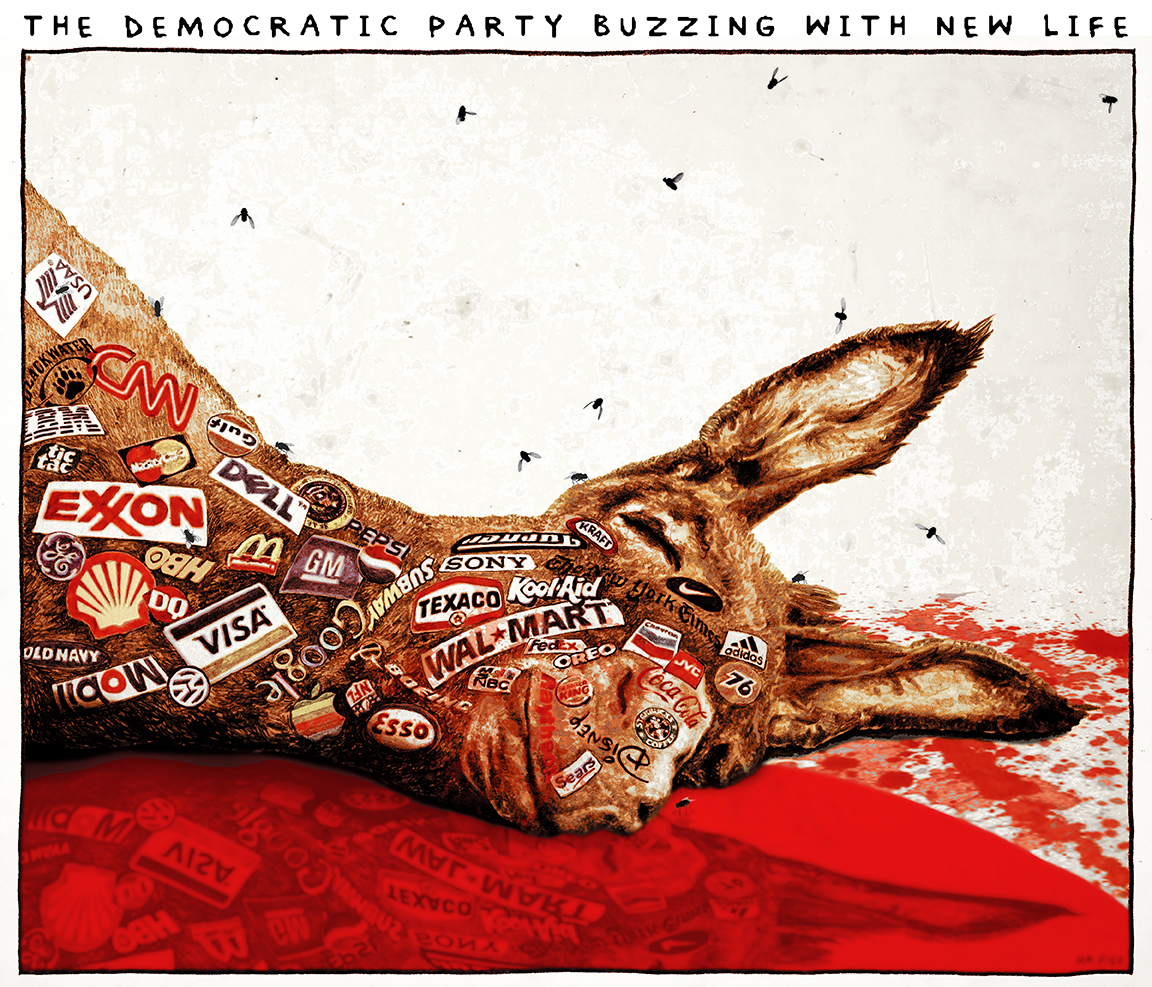
Malinow’s critique extends sharply to the Democratic Party’s incremental approach to healthcare reform, which she terms "off-ramps" designed to preserve private insurance dominance. She argues that these proposals create "the illusion of reform" while effectively derailing the movement for genuine universal healthcare. She cites examples like Senator Ron Wyden’s "dear colleague letter" proposing policies to lower health insurance costs, and Wendell Potter’s "Medicare by Choice" initiative, which suggests allowing individuals to enroll in traditional Medicare regardless of age.
"That is just a rerun of the public option," Malinow states, referring to a proposal favored by many Democrats during the Affordable Care Act debates, which would have allowed a government-run insurance plan to compete with private insurers. Single-payer advocates have historically criticized the public option, arguing that it would create a two-tiered system and that "the rules are set up to make the private option succeed and the public option fail." They contend that private insurers, with their vast resources and political influence, would lobby to ensure the public option remained underfunded, under-resourced, or subject to adverse selection, ultimately undermining its effectiveness.
Malinow warns that these "dangerous" proposals are "off ramps for candidates in 2028 who don’t want to push for Medicare for All. They are guaranteed to set the Medicare for All movement back another fifteen years, just like the Affordable Care Act did." The ACA, passed in 2010, significantly expanded health insurance coverage but maintained and even strengthened the role of private insurance companies. While a landmark achievement for many, single-payer advocates view it as a missed opportunity for true systemic reform, cementing the private insurance industry for another generation.
Malinow’s recommendations for legislative improvement go beyond current Democratic proposals. If she were in Congress, she would advocate for:
- Conversion to Non-Profits: Mandating the transition of for-profit healthcare delivery systems to non-profit status.
- Just Transition for Workers: Implementing programs for workers in the private health insurance industry who would lose their jobs under a single-payer system.
- Faster Transition Time: Rejecting proposed two-year or four-year transition periods for a quicker implementation.
- No Public Option: Excluding any form of public option that would compete with or dilute a comprehensive single-payer system.
- Progressive Tax Funding: Ensuring the system is funded through progressive taxation, placing a greater burden on higher earners.
Beyond legislative content, Malinow emphasizes the need for active advocacy from elected officials. "We would insist that when someone signs onto the bill, they need to do more than just sign and move on. They need to hold town halls about it. They need to advocate for it. They can do something called special order speeches." This highlights a demand for genuine political will and mobilization, rather than mere symbolic endorsement, from those who claim to support single-payer healthcare.
The Road Ahead: Challenges and Opportunities for Single Payer
The emergence of National Single Payer and Ana Malinow’s uncompromising stance underscore a critical juncture for the single-payer movement in the United States. While the core principle of healthcare as a human right enjoys growing public support—with polls consistently showing a significant portion of Americans favoring Medicare for All—the path to achieving it remains fraught with political, ideological, and strategic challenges.
The internal divisions, particularly the divergence on political alignment and the willingness to address broader geopolitical issues, reflect a maturation of the movement but also a potential fragmentation of advocacy efforts. PNHP’s more traditional approach, focused on educating policymakers and building medical consensus, contrasts with NSP’s call for a more radical, grassroots mobilization that connects healthcare justice with anti-imperialism and economic liberation.
The debate over the scope of "single-payer"—whether it encompasses only financing or also demands a transformation of the delivery system—is fundamental. Malinow’s arguments for converting for-profit hospitals and clinics to non-profit, community-owned entities represent a far more ambitious vision than most current legislative proposals. This vision, while more challenging to implement, aims to address the root causes of medical profiteering and ensure that healthcare truly serves the public interest.
Ultimately, the challenge for both NSP and the broader single-payer movement is to sustain momentum, build coalitions, and effectively counter the powerful financial and political forces of the medical-industrial complex. As Malinow concludes, "We should not miss this opportunity to secure national single payer. It’s time to declare independence from the U.S. medical industrial complex. We cannot be distracted and we must seize this moment to build an uncompromising movement capable of confronting the medical industrial complex directly." The coming years, particularly leading up to the 2028 general election, will reveal whether this more expansive, morally driven, and politically independent approach can galvanize enough public support to finally achieve a truly universal, equitable, and profit-free healthcare system in the United States.




 Jia Lissa
 Yuyun Lusiyani
 Joko Widodo
 Eva Lovia

 Pevita Pearce