
 Amara Maple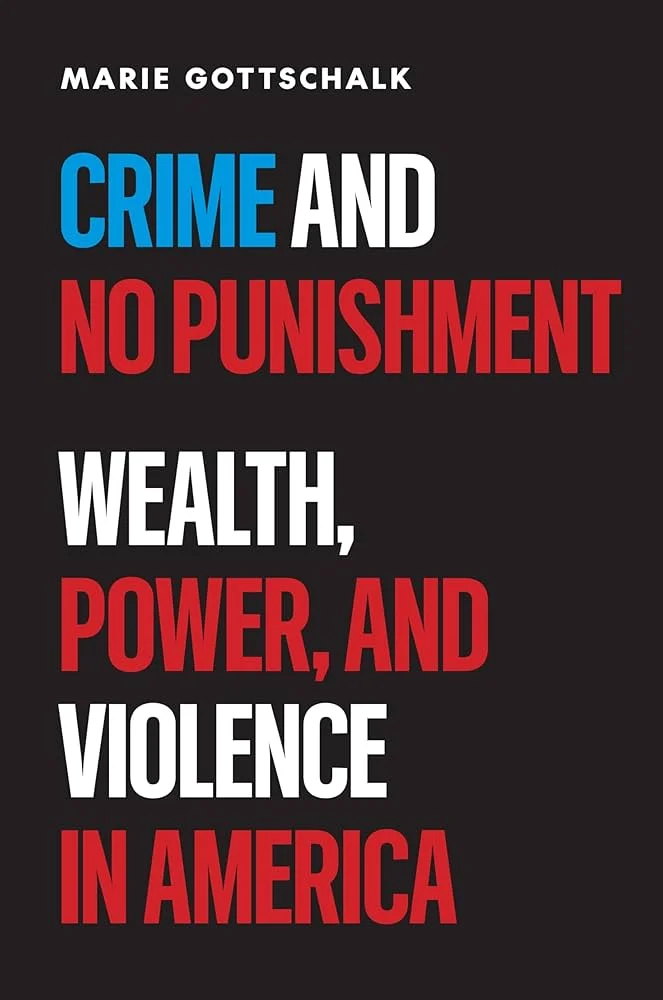
Marie Gottschalk, a distinguished Professor of Political Science at the University of Pennsylvania, has long been recognized for her profound contributions to the discourse on criminal justice, race, and health policy. Her influential 2006 work, The Prison and the Gallows: The Politics of Mass Incarceration in America, cemented her status as a leading voice in understanding the intricacies of the U.S. carceral state. However, a significant evolution in her academic trajectory has led her to confront a different, yet deeply interconnected, dimension of American injustice: corporate crime. This pivot culminates in her latest book, Crime and No Punishment: Wealth, Power, and Violence in America, released by Princeton University Press in 2025, a publication that meticulously dissects the systemic forces fostering corporate, economic, and state violence and their corrosive effect on the legitimacy of American institutions.
A Scholar’s Evolution: From Mass Incarceration to Corporate Impunity
Gottschalk’s initial academic focus was firmly rooted in understanding the unprecedented rise of mass incarceration in America, a phenomenon she explored with acute sensitivity to its racial dimensions. Her work in this area, spanning decades, positioned her as a critical observer of the U.S. penal system. Yet, as she revealed in a candid interview with Corporate Crime Reporter last week, her extensive research had a "blind spot." "Like most scholars of crime in the criminal legal system," she admitted, "I mostly ignored white collar and corporate crime in my teaching and research." This omission, she reflects, was "crazy" and her new book serves as a "mea culpa," a deliberate and comprehensive effort to integrate corporate malfeasance into the broader understanding of crime and violence in American society.
Her journey into this under-examined territory was propelled by a growing realization that the conventional explanations for societal ills, including violent street crime and the "deaths of despair" — suicides, alcoholism, drug overdoses, and chronic diseases — were incomplete without accounting for the powerful, often invisible, hand of corporate and economic forces. While the United States maintains the highest incarceration rate globally, disproportionately affecting minority communities, it simultaneously demonstrates a striking leniency, or even willful blindness, towards elite-level corporate offenses. This stark dichotomy, Gottschalk argues, is not merely coincidental but symptomatic of a deeply embedded structural problem.
The Interconnected Web of Violence: Gottschalk’s Core Arguments
In Crime and No Punishment, Gottschalk posits that a confluence of factors has converged to normalize and perpetuate corporate, economic, and state violence. These include rampant corporate impunity, the unchecked financialization of the economy, the pervasive militarization of domestic policing, the burgeoning carceral state, and the sustained commitment to "forever wars" in regions like Afghanistan and Iraq. Together, these elements, she contends, systematically siphon vital resources, prey upon the most vulnerable communities, and ultimately undermine the foundational legitimacy of American political and economic institutions.
The concentration of economic, political, and military power, according to Gottschalk, diverts attention and resources from addressing the root causes of violent street crime and from implementing effective alternatives to incarceration. Instead, a manufactured "hysteria over street crime" serves to deflect public and scholarly attention away from corporate transgressions, creating a societal panic over one while effectively ignoring the other. This dynamic has profound implications, preventing the nation from tackling endemic issues like rising inequality, which in turn fuels the very conditions that lead to both street crime and the tragic "deaths of despair."
Mass Incarceration’s Evolving Landscape
While Gottschalk’s earlier work centered on mass incarceration, her latest research reveals a significant shift in its dynamics. The overall incarceration rate has stabilized around 600 per 100,000 population. However, the geographical and demographic patterns are evolving. Incarceration rates are now increasing in suburban and rural areas, sometimes surpassing those in urban centers. Moreover, while African Americans continue to face disproportionately high incarceration rates, the gap between their rates and those of white individuals is narrowing, indicating that "mass incarceration is now affecting a wide swath of Americans." This geographical and demographic expansion of the carceral state underscores the need for a more holistic understanding of its societal impact, moving beyond solely urban and racialized narratives.
Corporate Crime’s Devastating, Yet Unacknowledged, Impact
Gottschalk emphasizes that the economic and human toll exacted by corporate and white-collar crime far exceeds that of street crime, despite the public’s ingrained perception. The opioid crisis serves as a stark example. At its peak, the crisis claimed 108,000 lives annually from drug overdoses—a figure twice the number of American fatalities during the entire Vietnam War, and more than four times the annual deaths from homicide. Gottschalk powerfully terms this a "social murder," distinguishing it from direct acts of violence but underscoring its profound, systemic lethality.
This reluctance to recognize corporate actions as acts of violence or murder is deeply ingrained. Nearly forty years ago, a Republican prosecutor in Indiana made headlines by bringing homicide charges against Ford Motor Company for the deaths of three teenage girls in a Ford Pinto, whose faulty fuel tank design led to their fiery demise after a rear-end collision. Despite internal Ford memos revealing knowledge of the design flaw, the company was acquitted. This landmark case remains one of the last instances where a major American corporation faced homicide charges for a product-related death. More recently, the Boeing 737 MAX crashes, which claimed 346 lives in two separate incidents in 2018 and 2019 due to software malfunctions and alleged corporate negligence, sparked global outrage but did not lead to corporate manslaughter charges in the U.S., highlighting a persistent legal and societal blind spot.
Gottschalk argues that using the term "violence" more broadly, encompassing "premature deaths, injuries that can be avoided," and even the structural violence of economic inequality leading to declining life expectancy, is crucial. This reframing challenges the public’s tendency to view "white-collar crime" as victimless or minor, forcing a reckoning with its devastating human cost.
Systemic Rot: The "Revolving Door" and Deferred Prosecution Agreements
The interview also delved into the systemic mechanisms that enable corporate impunity. One critical factor is the "revolving door" phenomenon, where individuals transition seamlessly between high-level government positions—particularly within regulatory bodies and the Department of Justice—and lucrative corporate roles, often as lobbyists or defense attorneys. This dynamic, Gottschalk argues, creates inherent conflicts of interest and weakens regulatory oversight.
A particularly egregious example cited in her book and the interview relates to the opioid crisis. In August 2019, The New York Times reported on a "secret opioid memo" revealing that line prosecutors in Western Virginia were poised to bring criminal charges against those responsible for the crisis, only to be blocked by political appointees within the Justice Department. This intervention, Gottschalk contends, exemplifies how corporate lawyers and industry insiders, once ensconced in government, actively work to shield corporations from accountability.
Similarly, during the 2008 financial crisis, despite widespread evidence of criminal misconduct, very few high-ranking executives faced criminal prosecution. Senator Elizabeth Warren famously raised "bloody hell" with then-FBI Director James Comey, demanding to know why criminal referrals were not being pursued more aggressively. Gottschalk links this to the strategic placement of individuals with Wall Street ties into key administration roles, effectively neutering aggressive enforcement.
Central to this issue are Deferred Prosecution Agreements (DPAs) and Non-Prosecution Agreements (NPAs), which allow corporations to avoid criminal conviction by agreeing to pay fines, implement compliance measures, and cooperate with investigations. Mary Jo White, former U.S. Attorney for the Southern District of New York and later Chair of the Securities and Exchange Commission (SEC), is credited with pioneering the modern DPA framework, notably with Prudential Securities in 1994. While proponents argue DPAs offer a flexible tool for enforcement and encourage corporate reform, critics, including Gottschalk, highlight their opacity and limited effectiveness. These agreements are often negotiated "in back rooms," with the public frequently unaware of their terms or whether corporations genuinely adhere to them. This system, she argues, perpetuates a cycle of corporate wrongdoing without meaningful accountability.
The "Epstein Class" and the Containment of Dissent
The interview also touched upon the "Epstein Files," particularly a report in The American Prospect detailing an email exchange involving Kathy Ruemmler (former Obama White House counsel) and Jeffrey Epstein. The exchange revealed discussions about a "PR strategy for MJ White v. Elizabeth Warren," with Ruemmler expressing disdain for Warren ("EW is the worst"). This incident occurred precisely when Warren had released a scathing report criticizing the SEC under Mary Jo White for its lax oversight.
Gottschalk sees this as illustrative of a broader pattern: a powerful, entrenched "Epstein class" — spanning Democrats and Republicans, academia, Hollywood, and Wall Street — that actively works to "contain" and neutralize figures like Elizabeth Warren who expose corporate wrongdoing. This class, she argues, represents an "untouchable" elite, insulated from the consequences of their actions and adept at maintaining a system that protects their interests, even if it means undermining regulatory efforts and public accountability.
Beyond Non-Reformist Reforms: Mapping a Way Out
Gottschalk’s concluding chapter in Crime and No Punishment offers a blueprint for systemic change, cautioning against "non-reformist reforms" that merely scratch the surface. She argues that simply incarcerating a few corporate executives, while perhaps satisfying public anger, will not address the "structural rot in the system."
Instead, she advocates for a comprehensive approach:
- Thinking Big and Following the Money: A critical re-evaluation of the immense spending on the military-industrial complex, currently around $1.5 trillion annually, and redirecting these resources to domestic social programs.
- Addressing Income Inequality: Implementing a progressive tax system, including a wealth tax, to combat rising income inequality and ensure that the wealthy contribute their fair share.
- Strengthening the Regulatory State: Investing substantially in regulatory bodies, equipping them with the resources and political will to effectively police corporate crime. This stands in stark contrast to the historical "defunding of regulators" under neoliberal policies.
- Reimagining Public Safety: While acknowledging the controversy around "defund the police," Gottschalk clarifies that robust policing of corporate crime is essential. The focus should be on shifting resources and priorities to ensure that the harms inflicted by the powerful are pursued with the same rigor as street crime.
- Demystifying "Violence": Broadening the societal understanding of violence to include structural, economic, and corporate forms of harm, thereby creating a more accurate and comprehensive framework for justice.
Gottschalk acknowledges the challenges inherent in her approach, particularly within academia. She notes that political science, increasingly modeling itself after economics, often favors mathematical modeling of "really small problems" over the kind of interdisciplinary, big-picture analysis she undertakes. Discussing "empire" in relation to the United States or delving into corporate crime and its systemic links can be professionally isolating, especially for scholars seeking tenure. However, she also perceives a "hunger in society" for understanding the complex realities of power and injustice, a hunger that her work aims to satisfy.
In essence, Marie Gottschalk’s Crime and No Punishment is a clarion call for a radical re-evaluation of what constitutes crime, who commits it, and how society responds. By meticulously tracing the connections between corporate impunity, economic inequality, and the carceral state, she offers a powerful framework for understanding the systemic violence that pervades American society and points towards a path for genuine, structural transformation.




 Yuyun Lusiyani
 Joko Widodo
 Eva Lovia
 Pevita Pearce
 admin
admin
 Lina Irawan