
 Jia Lissa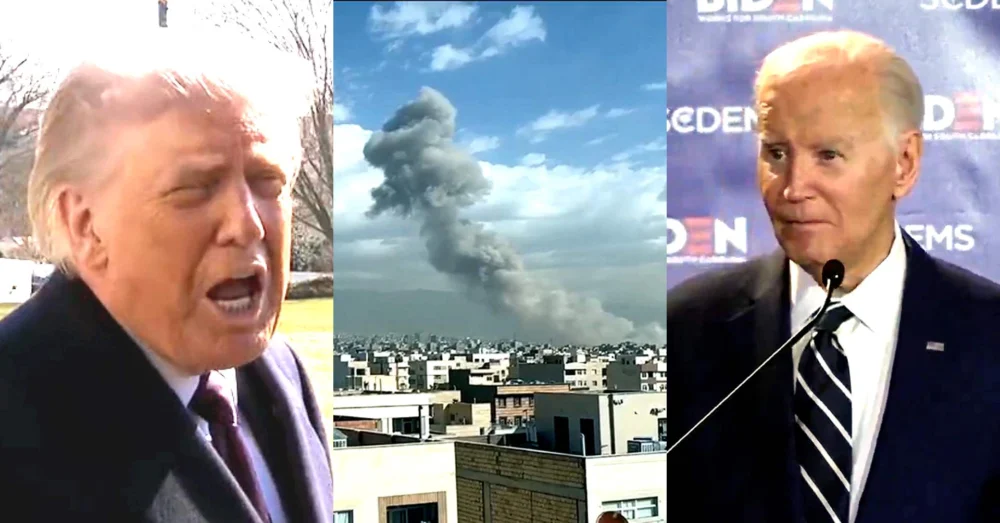
The Announcement of Major Combat Operations
At approximately 2:30 AM on Saturday, President Trump released a pre-recorded video message from his Mar-a-lago residence in Palm Beach, Florida, informing the nation that the United States military had commenced significant combat operations within the borders of Iran. The announcement marked a dramatic escalation in the long-standing tensions between Washington and Tehran, shifting from a policy of "maximum pressure" and sanctions to direct kinetic involvement.
In his address, the President characterized the military action as a defensive necessity aimed at neutralizing "imminent threats" posed by the Iranian regime. He described the leadership in Tehran as a "vicious group of very hard, terrible people" and cited a nearly five-decade history of antagonistic behavior toward American interests.
"Its menacing activities directly endanger the United States, our troops, our bases overseas, and our allies throughout the world," Trump stated. He specifically referenced the 1979 seizure of the U.S. Embassy in Tehran, where 52 Americans were held hostage for 444 days, and the 1983 bombing of the Marine barracks in Beirut, which resulted in the deaths of 241 U.S. service members. The President also linked the Iranian regime to the 2000 attack on the USS Cole and the use of improvised explosive devices (IEDs) against American forces during the Iraq War.
A Shift to Personal and Political Grievances
Despite the scale of the military engagement—which reports suggest involved precision airstrikes and naval assets—the President’s focus appeared to shift less than two hours later. At approximately 4:00 AM, President Trump utilized his Truth Social platform to share content unrelated to the unfolding military situation.
The first of these posts alleged that Iran had attempted to interfere in the 2020 and 2024 presidential elections specifically to prevent his return to office. By linking the current war to previous election cycles, the President framed the military conflict through the lens of domestic political rivalry. He shared a link to a conservative news outlet that detailed alleged Iranian cyber operations and influence campaigns aimed at his candidacy.
Minutes later, a second post addressed the ongoing legal investigations into his efforts to challenge the 2020 election results in Georgia. The President highlighted reports suggesting that the Biden administration’s Department of Justice had "invited" Georgia prosecutors to apply for federal grants, implying a coordinated effort to fund the racketeering case against him. This post reaffirmed the President’s long-standing claim that his legal challenges are politically motivated "witch hunts" orchestrated by his successor.
Chronology of the Night’s Events
The timeline of the President’s communications provides insight into the rapid transition between his roles as Commander-in-Chief and political candidate:
- 2:30 AM: President Trump releases a video statement announcing the commencement of "major combat operations" in Iran, citing decades of state-sponsored terror and imminent threats.
- 2:45 AM – 3:30 AM: Initial reports of explosions in various Iranian provinces surface via international news agencies and social media. The Pentagon confirms the involvement of U.S. Central Command (CENTCOM) assets.
- 4:00 AM: The President posts to Truth Social, linking the Iranian regime’s "menacing activities" to interference in the 2020 and 2024 U.S. elections.
- 4:15 AM: A subsequent post from the President targets the Georgia election interference investigation, alleging a financial and strategic link between the Biden DOJ and local prosecutors.
- 5:00 AM: Congressional leaders are reportedly briefed on the status of the military strikes, while the President’s social media activity continues to circulate among his followers.
Historical and Legal Context
The President’s references to historical grievances with Iran are rooted in a complex geopolitical history. The 1983 Beirut barracks bombing remains one of the deadliest days in Marine Corps history, and the U.S. has long maintained that Iran-backed Hezbollah was responsible. Similarly, the 2000 attack on the USS Cole in Yemen, which killed 17 sailors, has frequently been cited by U.S. intelligence as having ties to regional actors supported by Tehran.
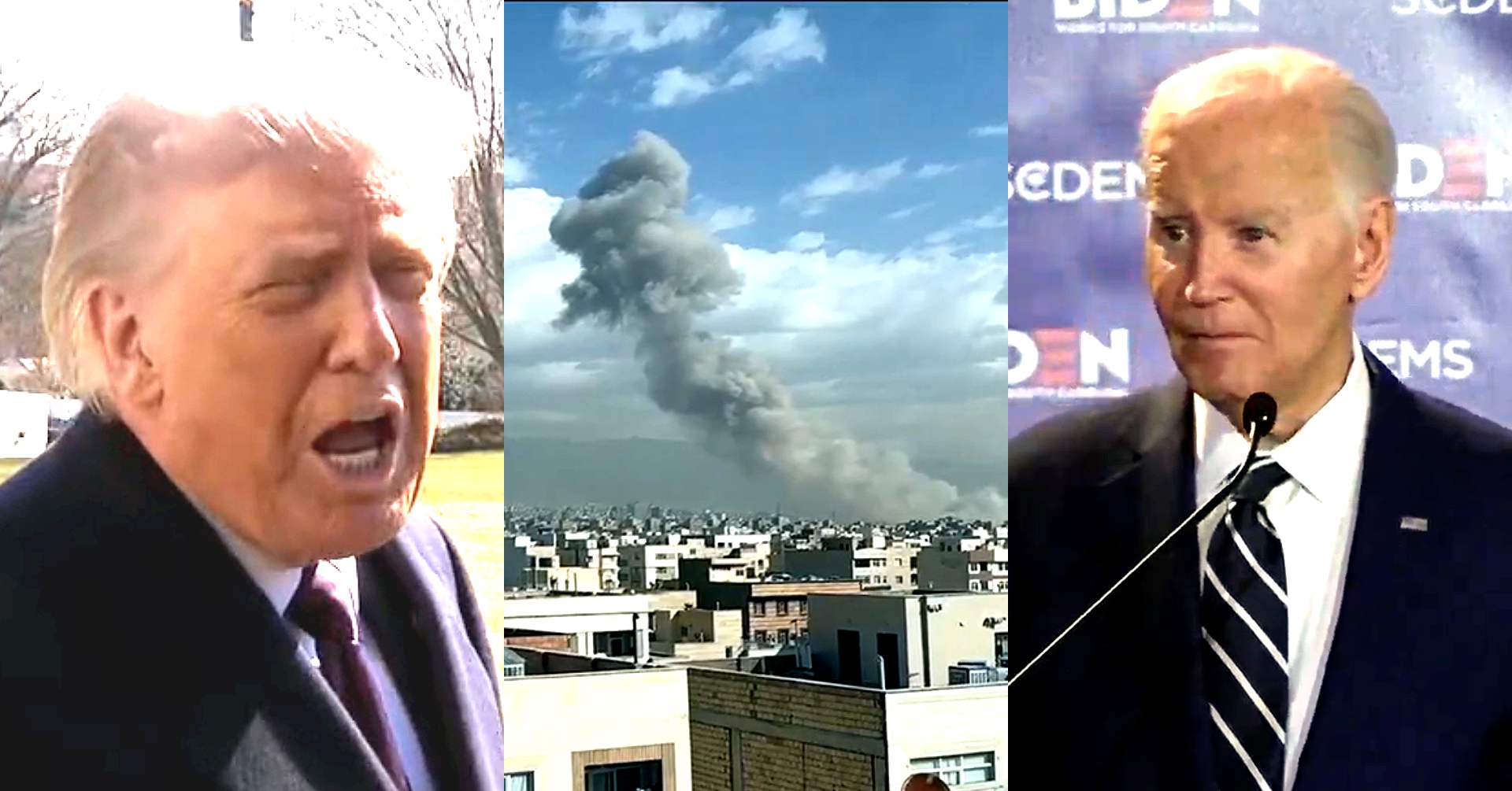
However, the President’s pivot to the Georgia investigation refers to the ongoing case led by Fulton County District Attorney Fani Willis. This case, which involves allegations of a criminal enterprise to overturn the 2020 election results, has been a central pillar of the President’s domestic legal battles. By mentioning "lucrative grants" and "memos," Trump is tapping into a broader narrative within the Republican party that federal resources are being weaponized against political opponents.
Broader Implications of the Dual Messaging
The juxtaposition of a war announcement with complaints about election loss has drawn significant attention from political analysts and national security experts. Traditionally, a President announcing military action seeks to project a unified national front, often refraining from partisan rhetoric during the initial hours of a conflict to ensure domestic stability and international clarity.
National Security Concerns
Security experts have noted that the President’s focus on election interference in the midst of a hot war could complicate diplomatic efforts. Allies and adversaries alike monitor a leader’s communications for signals of intent and resolve. By tying the war to personal political history, the administration risks framing the conflict as a personal vendetta rather than a matter of national defense.
Domestic Political Impact
Domestically, the posts serve to energize the President’s base of supporters who view the legal challenges against him and the threats from foreign adversaries as two sides of the same coin. For critics, however, the "dead of night" posts are seen as a distraction from the gravity of a new Middle Eastern conflict that could have profound consequences for global oil markets and regional stability.
Official Responses and Reactions
As news of the strikes and the President’s social media activity spread, reactions began to emerge from both sides of the aisle.
- Republican Support: Several prominent GOP lawmakers expressed support for the military action, echoing the President’s sentiment that Iran has acted with impunity for too long. Senator Lindsey Graham (R-SC) stated that the strikes were "long overdue" and that the regime in Tehran only understands the language of force.
- Democratic Criticism: Democratic leaders raised concerns regarding the lack of a formal Declaration of War or a specific Authorization for Use of Military Force (AUMF) from Congress. Representative Ro Khanna (D-CA) cautioned that "unilateral military action without Congressional approval risks an uncontrollable regional war."
- International Reaction: The Iranian Ministry of Foreign Affairs condemned the strikes as a "flagrant violation of international law" and vowed a "crushing response." Meanwhile, traditional U.S. allies in the region, including Israel and Saudi Arabia, remained in a state of high alert, with officials monitoring for potential retaliatory strikes from Iranian proxies such as Hezbollah or the Houthis.
Analysis of Potential Outcomes
The decision to engage in "major combat operations" in Iran represents one of the most significant shifts in U.S. foreign policy in decades. The immediate goals—eliminating threats and defending troops—are clear, but the long-term strategy remains opaque.
The President’s focus on the 2020 election loss, even as bombs were falling, suggests that the domestic political narrative remains a primary driver of his public persona. Whether this dual focus will hinder the military’s mission or simply serve as a hallmark of the Trump administration’s communication style is a question that will be answered in the coming days as the conflict evolves.
As the sun rose on Saturday morning, the United States found itself in a state of renewed conflict abroad and continued political friction at home. The "dead of night" posts serve as a reminder that for President Trump, the battles on the international stage and the battles in the American courtroom are inextricably linked in a single, ongoing narrative of conflict and perceived persecution.

 Yuyun Lusiyani
 Joko Widodo
 Eva Lovia
 Pevita Pearce