
 Joko Widodo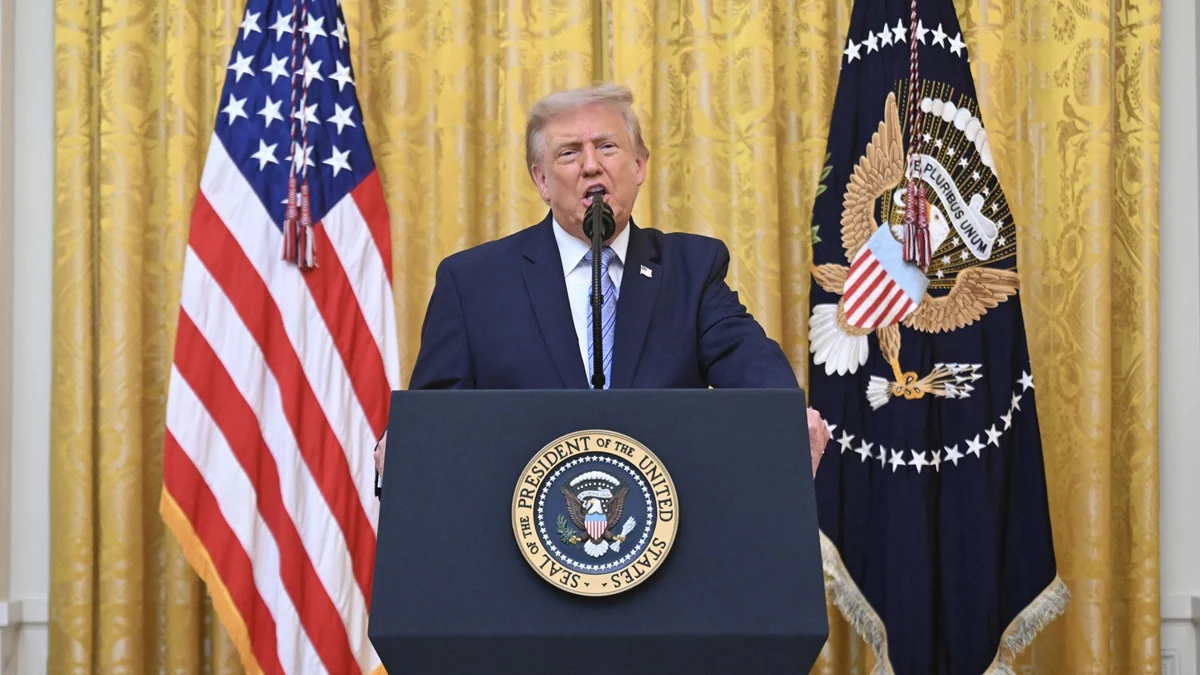
The use of over $150,000 in taxpayer funds to erect enormous banners featuring President Donald Trump’s face during the lead-up to the nation’s 250th-anniversary celebrations has ignited a significant political firestorm, drawing sharp criticism from lawmakers and raising serious questions about the legality and appropriateness of such expenditures. The substantial cost, revealed through newly unearthed contracts, has led to accusations that the Trump administration engaged in prohibited self-aggrandizement and propaganda, potentially violating federal laws.
Schiff Uncovers Extensive Presidential Portrait Contracts
Senator Adam Schiff, a Democrat from California, announced on July 13 that his office had uncovered evidence of two contracts totaling $153,020, which were issued by the Trump administration specifically for the creation and display of these prominent presidential portraits. These colossal images of President Trump adorned government buildings in Washington D.C. as part of events commemorating the upcoming America 250th anniversary.
According to Schiff’s statement, the Department of the Interior was responsible for an expenditure of $39,000, while the Federal Aviation Administration (FAA) accounted for a significantly larger sum of $114,020. These funds were allocated to facilitate the installation of the oversized posters on federal properties, ostensibly to celebrate a pivotal moment in American history.
Allegations of Propaganda and Waste of Public Funds
Senator Schiff did not mince words in his condemnation of the spending. He stated, “The Trump administration is spending hundreds of thousands of your tax dollars to glorify and pay tribute to a sitting US President and his political agenda.” Schiff, a former Assistant U.S. Attorney, emphasized that such actions appear to contravene long-standing federal prohibitions against using taxpayer money for propaganda and self-aggrandizement. He explicitly characterized the eight-story high depiction of President Trump’s face as fitting this definition.
The senator further argued that the expenditure represents a "terrible waste of Americans’ hard-earned money" and that the practice is "clearly against the law." Congress has historically maintained strict regulations to prevent the misuse of public funds for political purposes or personal glorification by elected officials. The scale and nature of these presidential portraits, critics argue, directly violate the spirit and letter of these laws.
Identification of the Contractor and Scope of Installations
The firm identified as the recipient of these substantial payments is Grafik Industries, Ltd., a Maryland-based organization. This company was responsible for the production and likely the installation of the banners.
Beyond the contracts directly highlighted by Senator Schiff, reports indicate that a wider array of banners featuring President Trump’s likeness have been displayed on numerous government buildings across Washington D.C. in recent weeks. These installations have appeared in prominent locations, including the Departments of Agriculture, Labor, Interior, and Justice. Collectively, these promotional efforts, including those detailed by Schiff, are estimated to have cost taxpayers upwards of $175,000 in federal funds.
Background and Chronology of the America 250th Celebrations
The controversy unfolds against the backdrop of preparations for the 250th anniversary of American independence, a significant milestone scheduled for 2026. The America 250 Commission, established by Congress, is responsible for planning and executing national commemorations. However, the display of these presidential portraits appears to have been initiated by the executive branch itself, rather than being a direct initiative of the commission.
While the exact timeline for the decision-making process and contract awards is still emerging, the revelations suggest that these expenditures occurred in the period leading up to or during early planning phases for the anniversary events. The timing of Senator Schiff’s announcement, on July 13, indicates a deliberate effort to bring these spending details to public attention during a period of heightened political scrutiny.
Legal Framework and Precedents
Federal law, including appropriations riders and the Hatch Act, aims to prevent the use of government resources for partisan political purposes or for the personal benefit of officials. The principle is that taxpayer money should be used for the official business of government, not for the promotion of a particular administration or leader.
The concept of “propaganda” in this context often refers to information, especially of a biased or misleading nature, used to promote or publicize a particular political cause or point of view. Critics argue that placing a sitting president’s oversized image on federal buildings, especially in connection with national celebrations, serves to boost his personal image and political standing, thereby constituting propaganda.
While there have been instances in the past of presidential imagery in official capacities, the scale and explicit focus on the president’s face, separate from broader national symbols, is what draws particular ire and raises legal questions. The intent behind the spending – whether it was genuinely for national celebration or for political self-promotion – will likely be a key point of contention in any further legal or ethical review.
Potential Implications and Reactions
The revelations have far-reaching implications, extending beyond the immediate financial cost.
Erosion of Public Trust: Such expenditures can contribute to a perception among the public that government resources are being misused for political gain, potentially eroding trust in elected officials and institutions.
Ethical Concerns: Even if not strictly illegal, the use of public funds for such displays raises significant ethical questions about the responsible stewardship of taxpayer money and the boundaries between official duties and personal political branding.
Bipartisan Scrutiny: While Senator Schiff, a Democrat, has been the primary voice in revealing these details, the use of taxpayer money for potentially partisan purposes is a concern that could resonate across the political spectrum, potentially drawing criticism from Republicans concerned about fiscal responsibility and the misuse of government funds.
Impact on America 250th Planning: This controversy could cast a shadow over the planned America 250th commemorations, potentially leading to increased scrutiny of all related expenditures and a demand for greater transparency from the commission and any involved federal agencies.
Legislative Oversight: Senator Schiff’s actions signal a commitment to robust legislative oversight. It is plausible that further investigations will be launched, potentially involving congressional committees or Inspectors General of the involved departments, to thoroughly examine the contracting process, the justification for the spending, and adherence to federal regulations.
While no direct official response from the Trump administration or the involved federal agencies has been detailed in the provided text, it is highly probable that attempts would be made to justify the spending as part of patriotic displays or to downplay the political implications. Counterarguments might focus on the celebratory nature of the event and the president’s role as the nation’s leader. However, the senator’s assertion of illegality and propaganda suggests a strong legal challenge to any such justifications.
The revelation of these substantial expenditures for presidential portraits on federal property serves as a stark reminder of the ongoing debate surrounding the appropriate use of public funds and the fine line between official duties and political campaigning, particularly as the nation approaches a significant historical anniversary. The full scope of the legal and political fallout from this incident remains to be seen, but it has undoubtedly injected a significant element of controversy into the early stages of America 250th planning.



 Yuyun Lusiyani
 Eva Lovia
 Pevita Pearce
 admin
admin
 Lina Irawan