
 Eva Lovia
October, with its characteristic tapestry of autumnal hues, has a unique resonance within the annals of British monarchy. This is the month that heralded the birth of five kings who would eventually ascend to the throne, each carving a distinct path through the complexities of royal succession and reign. From the unexpected inheritance of a crown to the fulfillment of dynastic ambitions, these monarchs, born between the 13th and 18th centuries, offer a compelling glimpse into the ebb and flow of English and British royal history. Their stories, interwoven with the political landscapes of their eras, highlight the capricious nature of destiny and the profound impact of birthright.
The Genesis of Royal Ascendancy: October Births
The tradition of royal births in October is a notable pattern that has emerged over centuries of British history. While not exhaustive, the reigns of five particular monarchs underscore this autumnal connection to the crown. These individuals, spanning a considerable historical period, each experienced unique journeys from their birth to their coronation, influenced by the political climates, familial dynamics, and societal shifts of their times.
Henry III: The Boy King and the Magna Carta Era
Henry III, born on October 1st, 1207, in Winchester, holds the distinction of being the first English king to celebrate his birthday in October. His birth was a significant event for his father, King John, a monarch often remembered for his controversial reign and the pressures he faced, including the baronial revolt that led to the sealing of Magna Carta in 1215. John’s need for a secure succession made Henry’s arrival a crucial development for the Plantagenet dynasty. His mother, Isabella of Angoulême, was approximately 19 years old at the time of his birth, a relatively young age for a queen consort.
Henry’s path to the throne was accelerated by the turbulent circumstances of his father’s death. He ascended to the throne at the tender age of nine on October 19th, 1216. His coronation followed swiftly on October 28th of the same year, firmly cementing his status as an "October King." His early reign was marked by the continued struggles of the First Barons’ War, a conflict that saw significant portions of England under rebel control. The young king, guided by regents such as William Marshal, Earl of Pembroke, navigated a perilous political landscape. His reign, which lasted for 56 years, the longest of any English monarch until that of George III, was characterized by a deep piety and a penchant for rebuilding and embellishing Westminster Abbey. However, it was also a period of considerable political instability, with recurring baronial opposition to his rule, culminating in the Second Barons’ War and the rise of Simon de Montfort. Henry’s eventual death in 1272 paved the way for his son, Edward I, to inherit the crown.
Richard III: A King Forged in Conflict
In stark contrast to Henry III, Richard III was not born with an immediate expectation of kingship. His birth on October 2nd, 1453, at Fotheringay Castle in Northamptonshire, placed him as the twelfth child of Richard, Duke of York. At the time of Richard’s birth, his father had recently been appointed Protector of England due to the incapacitating mental health episodes of King Henry VI. While the Duke of York was a powerful nobleman with a legitimate claim to the throne, young Richard was, at that moment, a member of the nobility rather than a direct heir apparent.
The tumultuous period known as the Wars of the Roses, a series of dynastic civil wars fought between the House of Lancaster and the House of York for control of the English throne, profoundly shaped Richard’s life. His father’s ambition and the ensuing conflict directly influenced Richard’s trajectory. He rose through the ranks of the Yorkist cause, serving his brother, Edward IV, with distinction. His accession to the throne in 1483, following the mysterious disappearance of his nephews, the Princes in the Tower, remains one of the most debated events in English history. Richard III’s reign was brief and ended tragically at the Battle of Bosworth Field on August 22nd, 1485, where he was killed. His death marked the end of the Plantagenet dynasty and the beginning of the Tudor era, forever altering the course of English history. The historical perception of Richard III has been heavily influenced by Tudor propaganda, casting him as a villainous usurper, though modern scholarship continues to re-examine his character and reign.

Edward VI: The Protestant Hope and a Fleeting Reign
Edward VI, born on October 12th, 1537, at Hampton Court Palace, represented the fervent hopes of his father, Henry VIII, for a male heir. Following three wives and the execution of two, the birth of Edward to his third wife, Jane Seymour, was met with immense national relief and celebration. This longed-for male succession was crucial for the Tudor dynasty’s survival and the continuation of Henry VIII’s ambitious religious reforms. Tragically, Jane Seymour died from childbed fever just days after giving birth, leaving the young prince to be raised without his mother.
Edward, like Henry III, ascended to the throne at the young age of nine upon his father’s death on January 28th, 1547. His reign was characterized by the continuation and acceleration of the English Reformation, with influential regents like Edward Seymour, Duke of Somerset, and later John Dudley, Duke of Northumberland, guiding policy. Under their influence, England moved further towards Protestantism, with the introduction of the Book of Common Prayer and the dissolution of further religious institutions. Edward VI’s reign, however, was tragically short. He died in 1553, just weeks before his sixteenth birthday, having contracted tuberculosis. His death plunged England back into a succession crisis, as his designated heir, Lady Jane Grey, was quickly deposed by Mary I, Edward’s Catholic half-sister. Edward VI’s brief reign is seen as a pivotal moment in the religious development of England, firmly establishing Protestantism as the dominant faith.
James II: A Turbulent Path to and From the Throne
James II, born on October 14th, 1633, at St. James’s Palace in London, initially had a distant claim to the throne. As the younger son of King Charles I and Henrietta Maria of France, his elder brother, Charles, was the direct heir. His mother, Henrietta Maria, a devout Catholic, struggled to gain widespread acceptance in Protestant England, despite her cultural patronage and prolific ability to fill the royal nursery.
James’s early life was deeply scarred by the turmoil of the English Civil War, which led to the execution of his father in 1649 when James was just fifteen years old. He spent his formative years in exile, serving in the French and Spanish armies. His return to England with the Restoration of the Monarchy in 1660 under his brother, Charles II, placed him in a precarious position. As the heir presumptive, his Catholicism became a growing concern for Parliament and the Protestant populace. Despite these anxieties, he succeeded his brother in 1685. His reign, however, was marked by attempts to promote Catholic rights and policies that were perceived as undermining the established Church of England and parliamentary authority. This led to widespread opposition, culminating in the Glorious Revolution of 1688. James II was deposed by his Protestant daughter, Mary II, and her husband, William of Orange, who ascended to the throne jointly. James’s reign, lasting just over three years, is a stark reminder of the fragility of power when it clashes with deeply held religious and political convictions. He died in exile in France in 1701.
George II: The Hanoverian Ascendancy
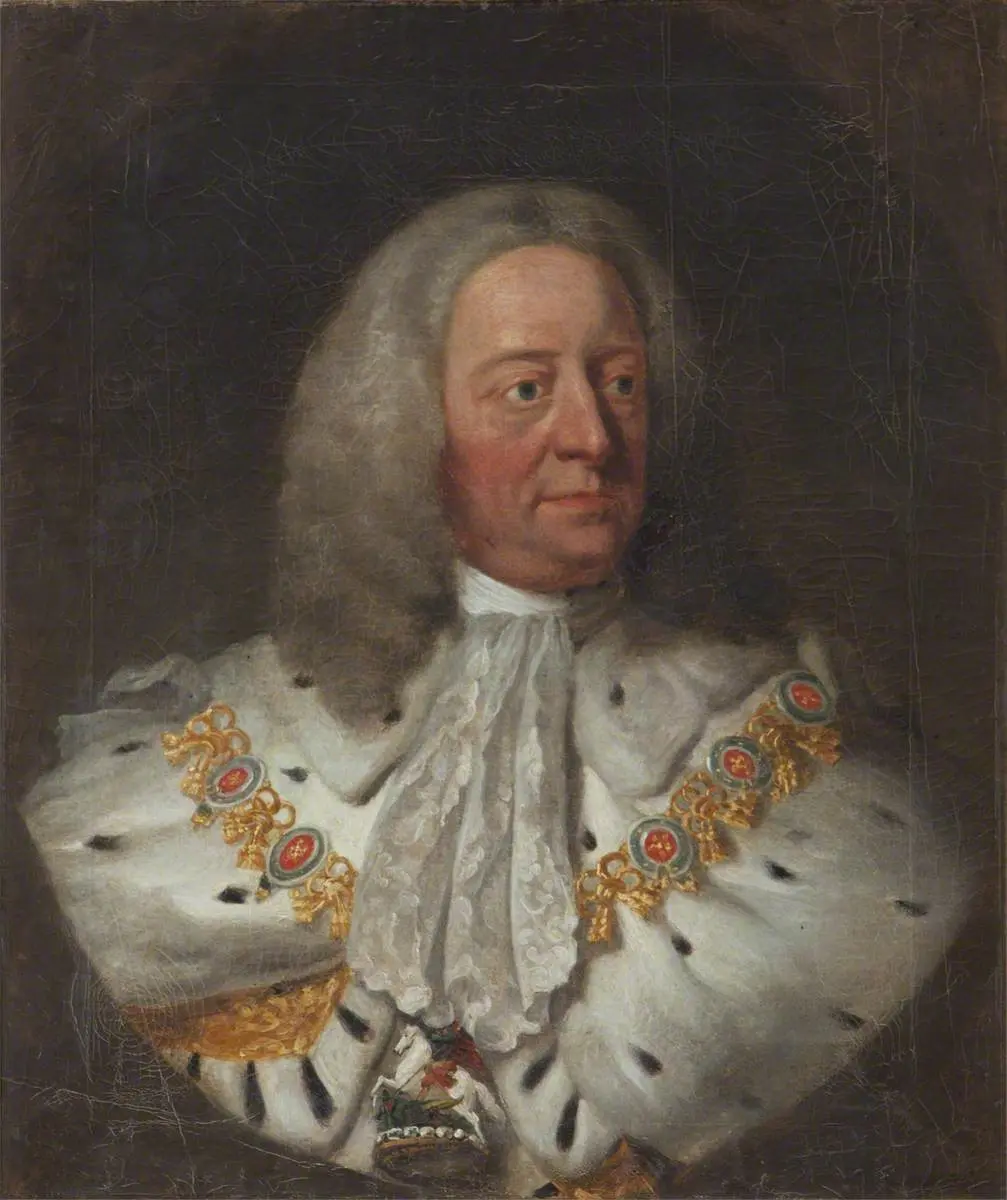
George II, born on October 30th, 1683, in Hanover, Germany, also began life with a path to kingship that was far from assured. His mother, Sophia Dorothea of Celle, gave birth to her first child, a son, who was initially heir to a dukedom within the Holy Roman Empire. However, a significant shift in the line of succession to the British throne, driven by the Act of Settlement of 1701, fundamentally altered George’s destiny. This Act stipulated that the crown would pass to Sophia of Hanover, George’s mother, and her Protestant descendants, effectively bypassing numerous Catholic claimants.
By 1706, George had become Duke of Cambridge, a title reflecting the growing proximity of the Hanoverian family to the British throne. He arrived in England in 1714 with his father, George I, who ascended the throne following the death of Queen Anne. George II became king in 1727, inheriting a throne that represented a new dynastic era for Britain. His reign, spanning 33 years, was a period of significant consolidation for the Hanoverian monarchy and the burgeoning British Empire. It was also a time of considerable political evolution, with the increasing power of Parliament and the development of the role of the Prime Minister, exemplified by Robert Walpole. George II was the last British monarch to lead his troops into battle, famously at the Battle of Dettingen in 1743 during the War of the Austrian Succession. His reign concluded with his death on October 25th, 1760, marking the end of an era and leaving him as the last British monarch to have been born in October.
A Legacy of Autumnal Reigns
The five kings born in October – Henry III, Richard III, Edward VI, James II, and George II – represent a diverse spectrum of royal experiences. Their lives, shaped by the unique political and social currents of their respective centuries, offer valuable insights into the evolution of the British monarchy. From the precognition of kingship at birth to the unexpected inheritance of the crown and the tumultuous loss of it, these October monarchs underscore the intricate tapestry of destiny, power, and circumstance that defines royal history. Their reigns, though varied in length and outcome, have left indelible marks on the nation, shaping its governance, its religious landscape, and its place in the world. The autumnal birthdates of these five kings serve as a poignant reminder of the enduring connection between the seasons and the unfolding narrative of British sovereignty.



 Yuyun Lusiyani
 Joko Widodo
 Pevita Pearce
 admin
admin
 Lina Irawan