
 Amara Maple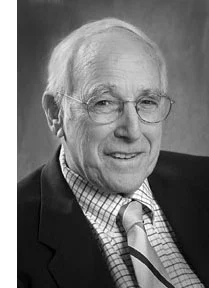
John Payne Geyman, MD, a devoted husband, father, physician, esteemed educator, adventurous pilot, and tireless advocate for single-payer national health insurance, passed away peacefully at his home in Friday Harbor, Washington, on May 28, 2026. He was 95 years old. Dr. Geyman’s passing marks the end of a remarkable life dedicated to both healing individuals and reforming the systemic inequities of the American healthcare landscape, leaving behind a profound legacy that spans clinical practice, academic leadership, and a fervent call for social justice in health.
Early Life and the Genesis of a Medical Calling
Born in Santa Barbara, California, in 1931, John Geyman came of age in a post-World War II era that was rapidly reshaping American society and its medical infrastructure. His intellectual curiosity led him to Princeton University, where he earned his undergraduate degree in 1952. Following his graduation, Geyman honorably served three years in the United States Navy, a period that undoubtedly instilled in him a sense of duty and public service that would define his later career. His medical journey began in earnest at the University of California, San Francisco School of Medicine, from which he graduated in 1960.
It was during his formative years in medicine that Geyman’s passion for community-based family medicine was ignited. A pivotal two-week preceptorship with a rural family doctor in Dunsmuir, California, offered him a firsthand glimpse into the profound impact a comprehensive primary care physician could have on an underserved community. This experience, coupled with two years of general practice residency in Santa Rosa, California, solidified his commitment to a holistic approach to patient care, moving beyond the increasingly specialized trends of the era. He recognized the critical need for physicians who could address the full spectrum of health needs within a family and community context, a philosophy that would become the cornerstone of his distinguished career.
Pioneering the Specialty of Family Medicine
In 1962, Dr. Geyman, alongside his first wife Gene and their growing family, embraced the challenges and rewards of rural general practice in Mount Shasta, California. This hands-on experience in a remote setting further deepened his understanding of the gaps in healthcare access and the vital role of a versatile family physician. The 1960s were a transformative period for American medicine, marked by a growing recognition of the decline of general practice and the urgent need to establish a new primary care specialty. Dr. Geyman was at the forefront of this movement.
In 1969, he transitioned from direct patient care in a rural setting to the academic world, where he played an instrumental role in developing family medicine as a distinct and respected medical specialty. This was a critical juncture in U.S. healthcare history, as medical educators and policymakers sought to formalize the training and professional identity of general practitioners into what would become family physicians. Dr. Geyman’s leadership was vital in shaping curricula, establishing residency programs, and advocating for the academic recognition of this essential field.
His academic leadership saw him establish a family medicine residency in Santa Rosa, California, further expanding the training opportunities for future primary care physicians. He went on to become a distinguished professor and chair of family medicine departments at several prominent institutions, including the University of Utah and the University of California, Davis. His longest and perhaps most impactful tenure in academia was as chair of the Department of Family Medicine at the University of Washington, a position he held for fourteen years. During this period, he mentored countless students and residents, published extensively on the principles and practice of family medicine, and helped solidify the specialty’s foundation in the Pacific Northwest and beyond.
Even after a distinguished academic career, Dr. Geyman’s commitment to direct patient care remained. In 1991, he returned to rural practice, serving as a family physician on San Juan Island, bringing his vast experience and compassionate approach back to the community level.
The Unwavering Advocate for Healthcare Reform
While Dr. Geyman’s contributions to clinical medicine and medical education were immense, it was his post-retirement dedication to healthcare reform that truly cemented his national profile as a leading voice for systemic change. After retiring from medical practice in 1997, he embarked on a new mission: becoming a tireless and prolific advocate for a not-for-profit national health insurance program, commonly known as single-payer healthcare.
Dr. Geyman’s advocacy was rooted in decades of observing the escalating costs, administrative complexities, and glaring inequities of the U.S. healthcare system. He authored more than 160 journal articles and numerous books, meticulously dissecting the flaws of the American model and passionately championing a single-payer solution. His works, such as How Obamacare is Unsustainable: Why We Need a Single Payer Solution for All Americans and Profiteering Corruption and Fraud in U.S. Healthcare, became essential reading for policymakers, activists, and concerned citizens alike.
In his analyses, Geyman consistently highlighted the profound disconnect between the exorbitant spending on healthcare in the United States and its often-mediocre health outcomes when compared to other industrialized nations. According to data from the Organization for Economic Cooperation and Development (OECD), the U.S. consistently spends more per capita on healthcare than any other developed country, often double or triple the average, yet lags in key metrics like life expectancy, infant mortality, and prevalence of chronic diseases. Geyman argued that this inefficiency was a direct consequence of a fragmented, profit-driven multi-payer system.
Corporate Crime Reporter, a publication known for its investigative journalism, recognized the significance of Geyman’s work, interviewing him five times over the years. His most recent interview in October 2025 focused on his final book, Growing Costs of U.S. Health Care, Corporate Power vs. Human Rights, Is Reform Finally Within Reach? In this interview, Geyman articulated the historical pattern he had observed: "My book looks back fifty or sixty years," he told Corporate Crime Reporter. "And every time this issue comes up as a national issue, the question is asked — what can we do differently? And every time, the corporate and financial interests in health care win."
A Critique of the U.S. Healthcare System and the Single-Payer Vision
Dr. Geyman’s core argument revolved around the fundamental failure of the U.S. multi-payer system to deliver equitable, efficient, and high-quality care. He frequently pointed out the stark contrast between the U.S. and other developed nations. "Compared to other countries in the world, we are not doing well in terms of health outcomes," Geyman stated. "And that is because we continue with a multi-payer system while other countries have some version of a single payer system. Every time this question comes up, the result is a continued multi-payer system that just doesn’t work. We always turn down national health insurance."
His critiques were not merely academic; they were grounded in a deep moral conviction. For Geyman, access to healthcare was a fundamental human right, not a commodity to be bought and sold. He contended that the U.S. system, with its complex web of private insurers, pharmaceutical companies, and for-profit hospital systems, prioritized profit over patient well-being, leading to administrative waste, denied claims, medical bankruptcies, and preventable suffering. He estimated that a significant portion of healthcare spending in the U.S. goes towards administrative costs — a figure often cited by advocates as upwards of 25-30% of total expenditure, compared to much lower percentages in single-payer systems.
The solution, in Geyman’s view, was clear and consistent: "But for a real fix, we need single payer national health insurance to assure access for everyone in the country to health care. It’s also a morally correct way to administer that health care." A single-payer system, such as those found in Canada or the United Kingdom, typically involves a single governmental entity funding healthcare for all citizens, while the delivery of care can remain largely private. This approach, Geyman argued, would eliminate insurance company overhead, simplify billing, enhance bargaining power for prescription drugs and medical supplies, and ultimately reallocate resources towards direct patient care.
Dr. Geyman was not merely a theoretician; he was an active and influential member of the movement for healthcare reform. He served as a past president and remained an active member of Physicians for a National Health Program (PNHP), an organization comprising over 20,000 physicians who advocate for a universal, comprehensive single-payer national health program. His intellectual rigor, deep understanding of both clinical medicine and health policy, and his ability to articulate complex issues clearly made him an invaluable asset to the PNHP and the broader single-payer movement. His passing leaves a significant void in this ongoing struggle, but his extensive body of work continues to serve as a foundational resource for future advocates.
Beyond Medicine: A Passion for Flight
While Dr. Geyman’s professional life was largely devoted to medicine and advocacy, he harbored another profound passion: aviation. An avid and adventurous pilot for over 60 years, his love for flying knew no bounds. His piloting experience was remarkably diverse, showcasing a spirit of adventure and a mastery of various aircraft. He flew conventional Cessnas, challenging taildraggers, versatile floatplanes, agile biplanes, serene sailplanes, exhilarating hang gliders, and even homebuilt and other experimental aircraft. This breadth of experience highlighted his deep technical skill and his unyielding curiosity.
His commitment to his community extended to his flying. He was an active member of the San Juan Pilots Association and the United Flying Octogenarians (UFOs), demonstrating his continued engagement with the aviation community well into his later years. Perhaps most touchingly, he flew with the Eagles, a group of local pilots in Friday Harbor who volunteer their time and aircraft to fly cancer patients from San Juan Island to Bellingham and Skagit County for treatments. This humanitarian application of his passion for flight epitomized his lifelong dedication to helping others, combining his love for the skies with his profound sense of compassion.
Personal Life and Lasting Legacy
John Geyman’s personal life was as rich and full as his professional endeavors. He was preceded in death by his first wife of 56 years, Gene Geyman, who passed away in Friday Harbor in 2012. Their enduring partnership was a cornerstone of his life, and her loss profoundly affected him. He channeled his grief into a deeply personal book, Souls on a Walk, which chronicled his experience of losing Gene to Alzheimer’s, offering a poignant reflection on love, loss, and the human condition.
He is survived by his second wife, Emily Reed Geyman, who brought companionship and joy to his later years. He also leaves behind his three sons, Matt (Amy), Cal (Lisa), and Sabin, and his four grandchildren, Ben, Emily, Will, and Laura. His family was a constant source of support and inspiration, witnessing firsthand his unwavering commitment to his ideals.
Dr. Geyman’s legacy extends far beyond his immediate family and professional circles. He shaped the very fabric of family medicine as a specialty, influencing generations of physicians. His persistent and well-reasoned advocacy for single-payer national health insurance continues to resonate in the ongoing national debate about healthcare reform. His books and articles remain powerful resources for understanding the complexities and inequities of the U.S. system, offering a clear vision for a more just and effective alternative.
"Dr. Geyman was not just a physician; he was a moral compass for the healthcare reform movement," stated a spokesperson for Physicians for a National Health Program, reflecting on his passing. "His clarity, his courage, and his relentless pursuit of a system that truly serves all people, not just profits, will continue to inspire us. We stand on the shoulders of giants like John Geyman as we continue the fight for universal healthcare."
His impact will be remembered not only in the annals of medicine and health policy but also in the skies he loved to navigate and in the lives of the patients he touched, both directly and through his advocacy. A celebration of John Payne Geyman’s extraordinary life will be held on Saturday, June 27, 2026, at 2:00 pm, at the Friday Harbor Airport, a fitting tribute to a man who lived his life with purpose, vision, and an unwavering commitment to a better world, both on the ground and in the air.



 Yuyun Lusiyani
 Joko Widodo
 Eva Lovia
 Pevita Pearce
 admin
admin
 Lina Irawan