
 Lina Irawan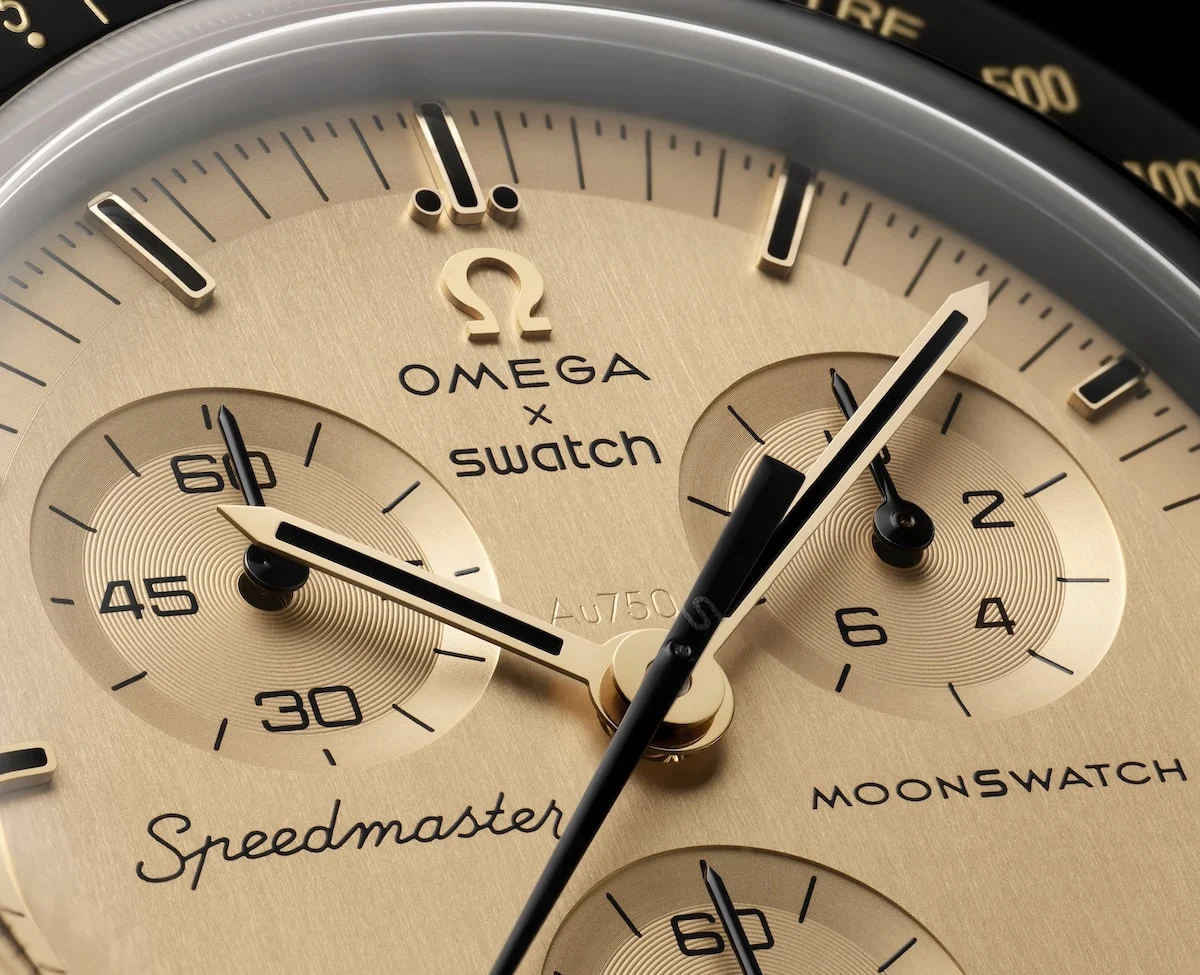
The horological world has been presented with a significant shift in the value proposition of the Swatch x OMEGA collaboration with the announcement of the MISSION TO THE MOON 1969 MoonSwatch. In a move that challenges traditional retail pricing structures, Swatch has revealed a limited-edition timepiece containing 11 grams of 18K Moonshine Gold—a proprietary alloy developed by OMEGA—at a retail price of AUD$900 (approximately CHF 500). The release serves as a direct tribute to the 1969 gold Speedmaster Professional, which was originally produced to commemorate the success of the Apollo 11 lunar mission. This new iteration distinguishes itself from previous MoonSwatch variants by incorporating a substantial amount of precious metal, the market value of which currently exceeds the watch’s list price.
To manage the anticipated global demand and ensure the pieces reach dedicated enthusiasts, Swatch has moved away from the traditional physical queue system that defined the original 2022 MoonSwatch launch. Instead, the company has implemented a rigorous digital vetting process known as the Electronic Swatch Timepiece Application (ESTA). This process requires prospective buyers to complete a 32-question examination within a strict time limit, with final buyers being selected by an internal jury. The move marks a sophisticated evolution in "hype" retail, blending historical trivia with limited-supply logistics.
Technical Specifications and Material Composition
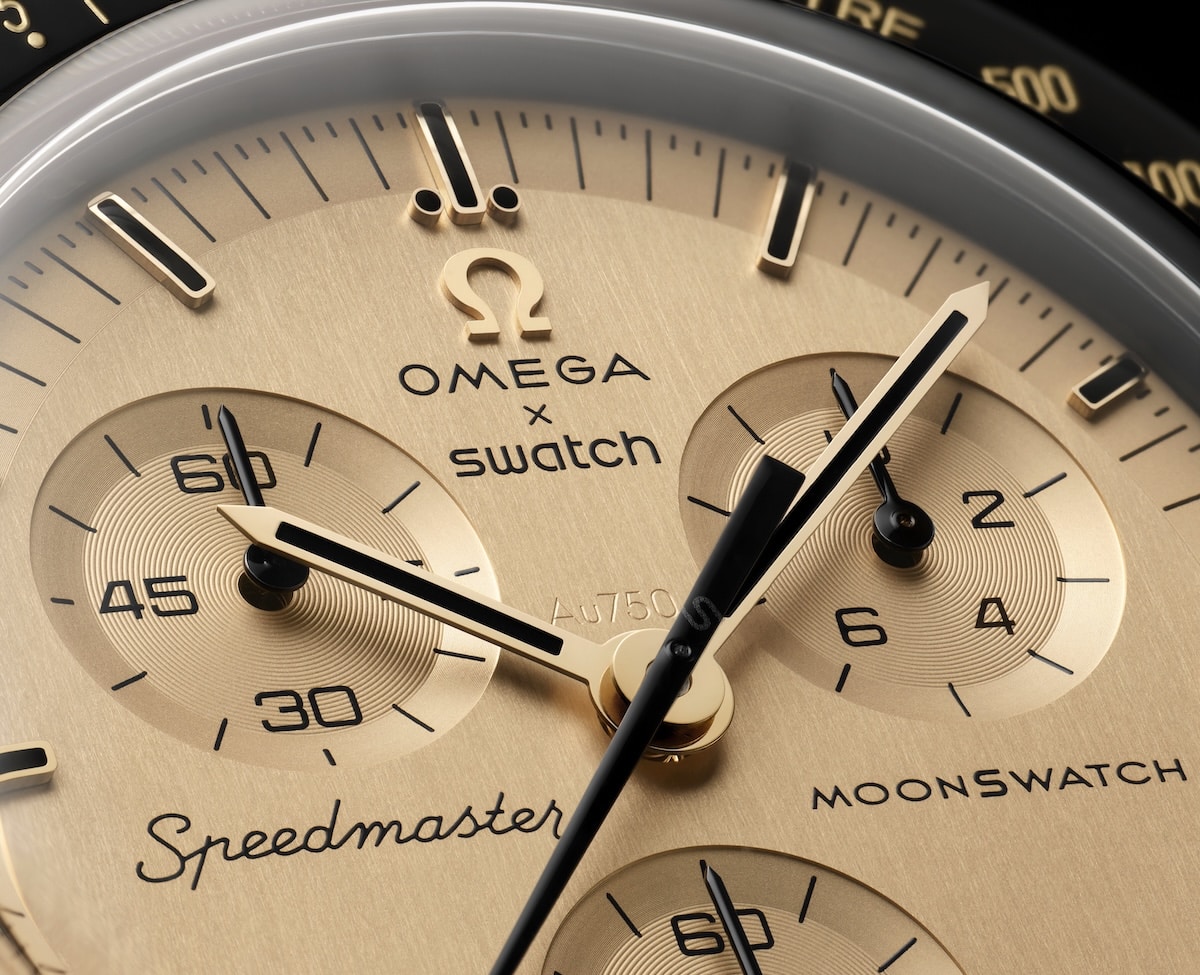
The MISSION TO THE MOON 1969 represents a departure from the standard "Mission to Moonshine Gold" models, which previously only featured a gold-plated chronograph seconds hand. In this new 1969 edition, the dial, hour and minute hands, crown, and chronograph pushers are all constructed from solid 18K Moonshine Gold. Moonshine Gold is a unique yellow gold alloy created by OMEGA in 2019; it is composed of 75% gold, 14.5% silver, approximately 9% copper, and roughly 1% palladium. This specific chemistry results in a paler hue than traditional 18K yellow gold and offers high resistance to the fading of color and luster over time.
According to technical data provided by the manufacturer, the gold utilized in these components is sourced from a historically significant origin. Swatch confirmed that the material was produced by melting down vintage OMEGA spare parts dating back to the original 1969 production era. This circular manufacturing process imbues the watch with a literal connection to the time of the moon landing.
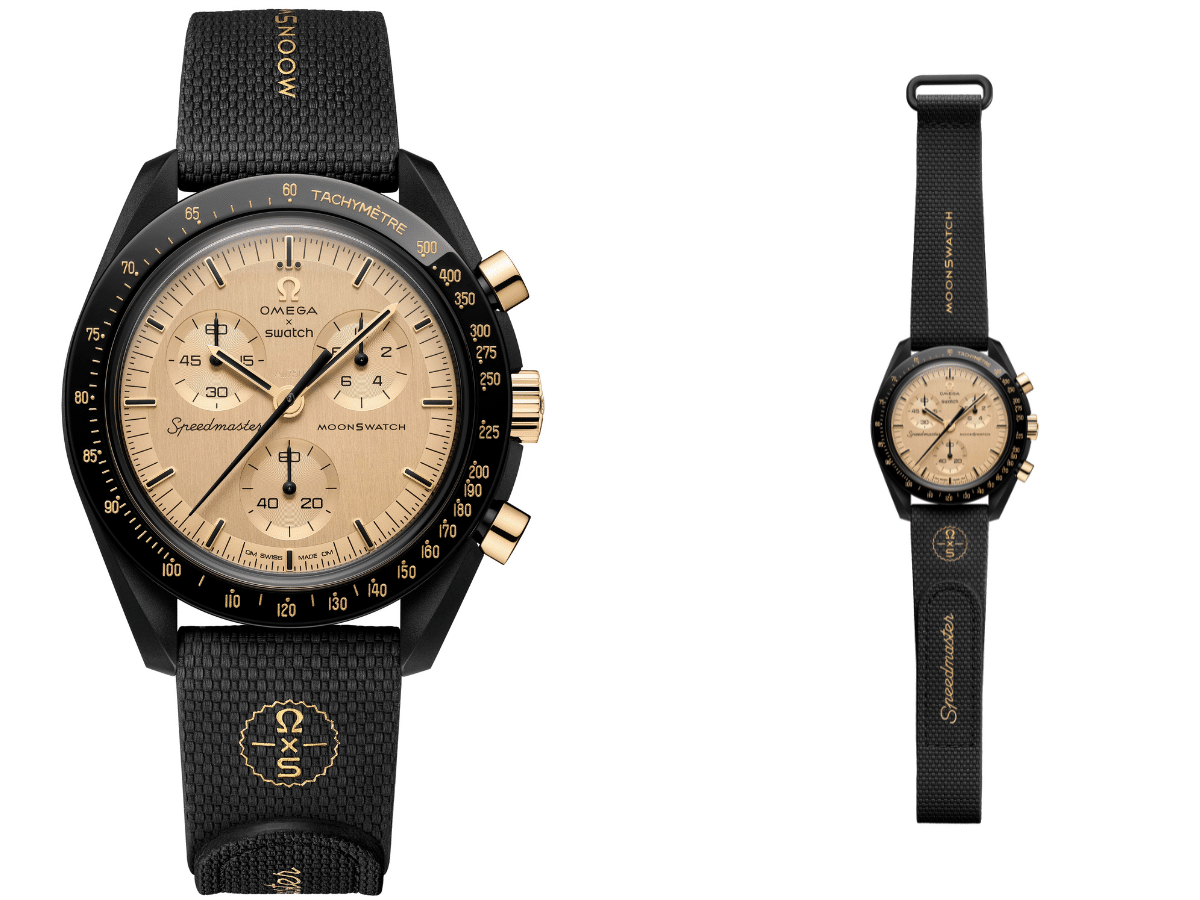
The watch body maintains the 42mm dimensions of the OMEGA Speedmaster Professional but utilizes Swatch’s signature Bioceramic material in a matte black finish. Bioceramic is a hybrid material consisting of two-thirds ceramic and one-third biosourced material derived from castor oil. The contrast between the high-tech, lightweight Bioceramic case and the dense, precious metal components creates a unique tactile experience for the wearer.

The Financial Paradox: Gold Value Versus Retail Price
One of the most discussed aspects of the MISSION TO THE MOON 1969 is its pricing strategy. The retail price of AUD$900 sits significantly below the intrinsic commodity value of the gold contained within the watch.
An analysis of the precious metal content reveals the following:
- Total Weight of Gold Components: 11 grams.
- Purity: 18K (75% pure gold).
- Pure Gold Content: 8.25 grams.
- Market Context: Based on gold prices as of mid-July 2026 (approximately AUD$5,719 per troy ounce), the 8.25 grams of pure gold holds a theoretical value of roughly AUD$1,517.
This creates a scenario where the watch is priced at approximately 40% less than its raw material value. Swatch executives have noted that the price was calculated based on the historical cost of 11 grams of 18K gold in 1969 rather than contemporary market rates. While this serves as a potent marketing narrative, industry analysts suggest that the actual recovery value for a consumer would be lower once refining costs and the loss of the watch’s structural integrity are factored in. Nevertheless, the release represents a rare instance in the luxury industry where a finished product is sold for less than the spot price of its components.
Historical Context: A Tribute to the BA145.022
The design of the MISSION TO THE MOON 1969 is a deliberate homage to the Speedmaster BA145.022. Following the successful lunar landing in July 1969, OMEGA produced a limited run of 1,014 gold Speedmasters between 1969 and 1973. The first pieces in that series were presented to NASA astronauts at a gala dinner in Houston on November 25, 1969.
The new MoonSwatch replicates several key aesthetic markers of that era:
- The Dial: A vertically satin-finished champagne dial that mirrors the original solid gold faces of the late 60s.
- The Typography: Period-accurate logos and "Speedmaster" scripts.
- The Indices: Gold beveled indexes featuring black varnished centers, a hallmark of vintage gold OMEGAs.
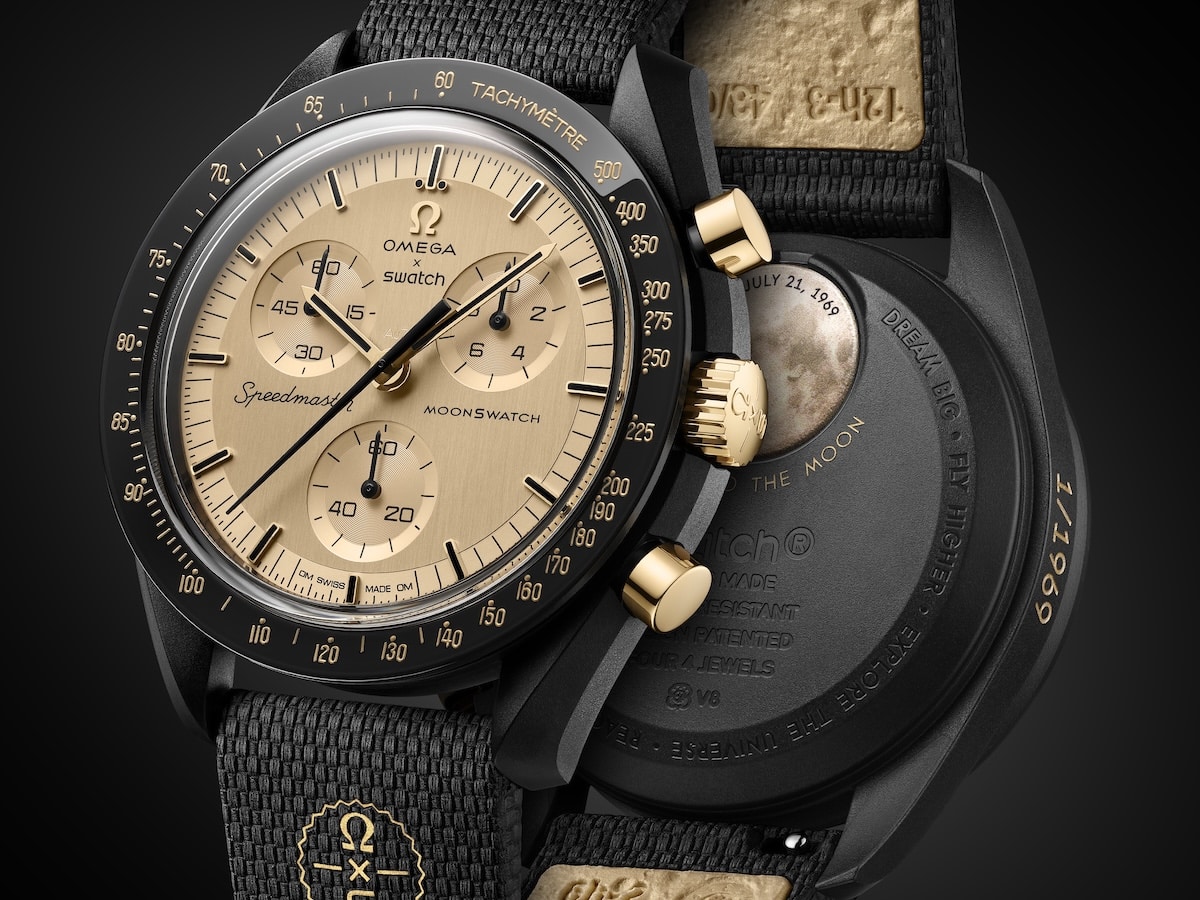
- The Case Back: The battery cover features a golden Moon design, the date of the landing (21 July 1969), and a depiction of the footprint left by Neil Armstrong at the Sea of Tranquillity.
The ESTA Application Process: A New Retail Paradigm
Access to the 1,969 individually numbered pieces is governed by the Electronic Swatch Timepiece Application (ESTA). This system is designed to reward brand knowledge and prevent automated "bot" purchases that have plagued previous high-demand releases.
The application window is narrow, closing at 11:59 pm CEST on July 21, 2026. Applicants are required to answer 32 questions related to the history of OMEGA, the Apollo 11 mission, and the technical specifications of the MoonSwatch. The time limit for the application is set at exactly two hours and 15 minutes—the precise duration that Neil Armstrong and Buzz Aldrin spent exploring the lunar surface during their first Extravehicular Activity (EVA).
Once the application window closes, an internal Swatch jury will review the correct entries and select 1,969 winners. Successful applicants are granted a 48-hour window to complete their purchase online. However, to maintain the brand’s commitment to physical retail presence, the watches must be collected in person at a nominated Swatch store. Buyers must present photo identification and a digital copy of their approved ESTA to claim their timepiece.
Chronology of the OMEGA x Swatch Collaboration
The MISSION TO THE MOON 1969 is the latest milestone in a partnership that began in early 2022 and fundamentally changed the watch industry’s approach to collaborations.

- March 2022: The original MoonSwatch collection is launched, featuring 11 models based on planetary bodies. The launch causes global chaos, with thousands queuing at stores.
- March 2023: Swatch introduces the "Mission to Moonshine Gold," featuring a gold-plated seconds hand produced during a full moon.
- 2023-2024: Various iterations of the Moonshine Gold series are released, including the "Neptune" and "Snoopy" editions.
- July 2026: The announcement of the MISSION TO THE MOON 1969, marking the first time solid gold components (rather than plating) are used in the series.
Industry Implications and Market Reaction
The introduction of the MISSION TO THE MOON 1969 has prompted a mixed but intense reaction from the horological community. Some critics argue that the "gamification" of the purchase process through the 32-question ESTA creates an unnecessary barrier for casual consumers. Conversely, collectors have praised the move as a way to ensure the watches end up in the hands of genuine enthusiasts rather than speculative flippers.
From a broader market perspective, the release reinforces the "halo effect" for OMEGA’s mainline Speedmaster. By making the aesthetics of a $50,000 vintage gold Speedmaster accessible—even in a Bioceramic format—Swatch continues to bridge the gap between entry-level fashion watches and high-end luxury horology.
Furthermore, the use of recycled 1969 gold parts serves as a significant case study in brand storytelling. While many brands utilize recycled materials for sustainability, OMEGA and Swatch are utilizing them for historical continuity. This "DNA-infused" manufacturing process adds a layer of provenance that is typically reserved for much more expensive timepieces.

As the July 21 deadline approaches, the MISSION TO THE MOON 1969 stands as a testament to the enduring power of the Apollo 11 legacy. Whether viewed as a savvy marketing maneuver or a genuine gift to the collector community, the watch has successfully reignited the fervor surrounding the MoonSwatch project, proving that four years after its debut, the collaboration still has the capacity to surprise the market.


 Jia Lissa
 Yuyun Lusiyani
 Joko Widodo
 Eva Lovia

 Pevita Pearce