
 Eva Lovia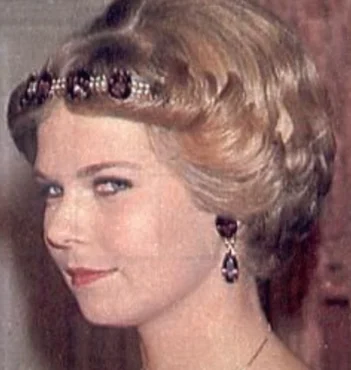
While it does not grace public appearances with predictable regularity, a singular and captivating European tiara, adorned with the striking amethyst – February’s birthstone – stands as a testament to the Luxembourgish Royal Family’s distinctive and often understated jewellery collection. This mid-century bandeau-style creation is not merely a piece of adornment; it is a tangible link to the dynasty’s history, a symbol of evolving royal fashion, and a potential harbinger of future ceremonial significance as the Grand Duchy navigates a new era under its reigning monarch. The Grand Duke and Grand Duchess of Luxembourg possess a substantial and historically rich collection of royal jewels, a trove that includes numerous significant pieces passed down through generations. Among these treasures, the amethyst bandeau tiara occupies a unique niche, its relative infrequency of display contrasting with its intrinsic beauty and historical connections.
Unveiling the Amethyst Banseau Tiara
The tiara itself is characterized by its elegant bandeau silhouette, a popular style during the mid-20th century, which hugs the hairline. Its primary embellishments are several large, oval-cut amethysts, their deep purple hues evoking the regal connotations often associated with the gemstone. These substantial amethysts are interspersed with smaller, circular white stones, meticulously set in two parallel rows. The exact nature of these secondary stones remains a subject of quiet speculation within jewellery circles; while they appear to be pearls, the Grand Ducal household has not officially confirmed their composition. This ambiguity, rather than detracting from the tiara’s allure, adds to its mystique.
The amethyst bandeau is not an isolated piece but forms part of a sophisticated demi-parure, meaning it is accompanied by complementary jewellery. The set includes a striking necklace featuring similarly cut oval amethysts, nestled amongst the same two rows of white stones, culminating in a captivating square amethyst drop. Completing the ensemble are a pair of earrings, each designed with a pearl-shaped amethyst stud. These earrings possess a unique feature: a detachable pearl-shaped amethyst drop, offering versatility in styling and a subtle nod to the enduring elegance of pearls.
A Glimpse into the Tiara’s Provenance
The provenance of the amethyst bandeau tiara is traditionally attributed to Grand Duchess Josephine. Born Princess Joséphine of Belgium, she married Grand Duke Jean of Luxembourg in 1953, becoming Grand Duchess Consort. Her tenure as Grand Duchess was marked by a distinguished public service and a keen interest in the arts and culture of Luxembourg. It is believed that during her time as Grand Duchess, she either acquired or commissioned this distinctive tiara.
The tiara’s subsequent wearer, and the individual who has brought it into more recent public consciousness, is Archduchess Marie-Astrid of Austria. As the eldest daughter of Grand Duke Jean and Grand Duchess Joséphine-Charlotte, and sister to the current Grand Duke Henri, Archduchess Marie-Astrid has been pictured wearing the amethyst bandeau on several occasions. Her use of the tiara, particularly at significant events, underscored its importance within the family’s collection and hinted at its continued relevance for future generations.
A New Era, A Resurgent Tiara
While the amethyst bandeau tiara has historically been a relatively discreet presence in the Grand Ducal jewellery repertoire, its visibility has seen a notable increase in recent years, particularly with the accession of the new Grand Duchess, Stéphanie. Since her marriage to Prince Guillaume in 2012, and more significantly following Guillaume’s ascension to Grand Duke in October 2023, Grand Duchess Stéphanie has worn this particular tiara on multiple occasions. This renewed frequency of wear suggests a potential shift in how the tiara is perceived and utilized within the Grand Ducal court.
Prince Guillaume became Grand Duke of Luxembourg on 3 October 2023, following the abdication of his father, Grand Duke Henri. This significant dynastic transition marked the beginning of a new chapter for the Grand Duchy and its royal family. As Grand Duchess, Stéphanie’s role and public engagements have naturally expanded, and her choice to prominently feature the amethyst bandeau tiara during this period of transition and renewed ceremonial focus is noteworthy. It suggests an embrace of the family’s historical jewels and a conscious decision to integrate them into her evolving public persona as the nation’s consort.
The Significance of Amethysts in Royal Jewellery
Amethysts, known for their rich purple hues, have long been associated with royalty, nobility, and spirituality. Their colour symbolism spans from deep wisdom and spiritual awareness to calm and clarity. In ancient times, amethysts were believed to possess protective qualities and were worn by royalty to ward off intoxication and promote clear thinking – a sentiment that could resonate with the responsibilities of a ruling family. Historically, amethysts were considered precious gemstones, rivaling diamonds, rubies, and sapphires in value, particularly before the discovery of large deposits in Brazil in the 19th century.
The Luxembourgish Royal Family’s collection is not solely comprised of diamonds and sapphires. The inclusion of amethysts, particularly in such prominent pieces, highlights a nuanced appreciation for gemstones that offer a different spectrum of colour and symbolic meaning. The amethyst bandeau, with its substantial stones, stands out against the more conventional diamond-heavy parures often seen in royal collections. This preference for unique and historically significant pieces underscores the Luxembourgish dynasty’s approach to its regalia – a blend of tradition, personal taste, and a deep understanding of their symbolic weight.
Supporting Data: The Grand Ducal Jewellery Collection
The Grand Ducal Family of Luxembourg possesses one of the most significant and historically rich jewellery collections among European monarchies. While much of the collection remains private, public appearances and documented historical records offer insights into its depth and breadth. Key pieces within the collection include:
- The Luxembourg Diamond Tiara: A significant piece, often worn by Grand Duchess Maria Teresa.
- The Empire Grand Ducal Tiara: A large diamond tiara with a significant historical lineage.
- The Sapphire Tiara: A striking piece often associated with Grand Duchess Charlotte.
- The Emerald Parure: A collection of emerald jewellery, including a tiara, necklace, and earrings.
The amethyst bandeau tiara, while perhaps less ostentatious than some of the larger diamond creations, holds its own distinct value due to its unique design, the quality of its amethysts, and its direct connection to past Grand Duchesses. The inclusion of amethysts in royal jewellery is not uncommon, but the scale and prominence of the amethysts in this particular tiara make it a standout piece. For instance, other European royal families, such as the Danish Royal Family with their Khedive of Egypt Tiara featuring amethysts, also showcase the gemstone’s appeal.
Broader Impact and Implications: Continuity and Modernity
The increasing visibility of the amethyst bandeau tiara under Grand Duchess Stéphanie carries several implications for the Luxembourgish monarchy. Firstly, it signifies a conscious effort to highlight and celebrate the family’s heritage. By embracing and wearing these historical pieces, the new Grand Duchess demonstrates respect for the traditions and the legacy of her predecessors. This act of continuity can foster a sense of stability and enduring connection between the past and the present reign.
Secondly, it reflects Grand Duchess Stéphanie’s personal style and her integration into the role of Grand Duchess. Her choice to wear the amethyst bandeau multiple times suggests a personal affinity for the piece and a desire to make it a recognizable element of her royal attire. This can help to forge a distinct identity for her as Grand Duchess, one that is rooted in tradition but also possesses its own modern sensibility.
Furthermore, the focus on a tiara featuring February’s birthstone can subtly connect the royal family to the broader public through the universal symbolism of birthstones. While royal jewellery often remains a symbol of the elite, the association with personal milestones like birthdays can create a more relatable, albeit indirect, link with the populace.
The amethyst bandeau tiara, with its unique blend of historical significance, distinctive design, and the symbolic richness of its primary gemstone, is poised to become an increasingly recognized and cherished element of the Luxembourgish Royal Family’s illustrious jewellery collection. Its journey from a historically attributed piece to a favoured adornment of the new Grand Duchess illustrates the dynamic nature of royal regalia and its enduring capacity to symbolize continuity, personal style, and the evolving narrative of a monarchy. As Grand Duchess Stéphanie continues to undertake her royal duties, the enigmatic amethyst bandeau is likely to remain a prominent and elegant fixture, a silent yet eloquent narrator of Luxembourg’s royal story.


 Jia Lissa
 Yuyun Lusiyani
 Joko Widodo

 Pevita Pearce