
 Pevita Pearce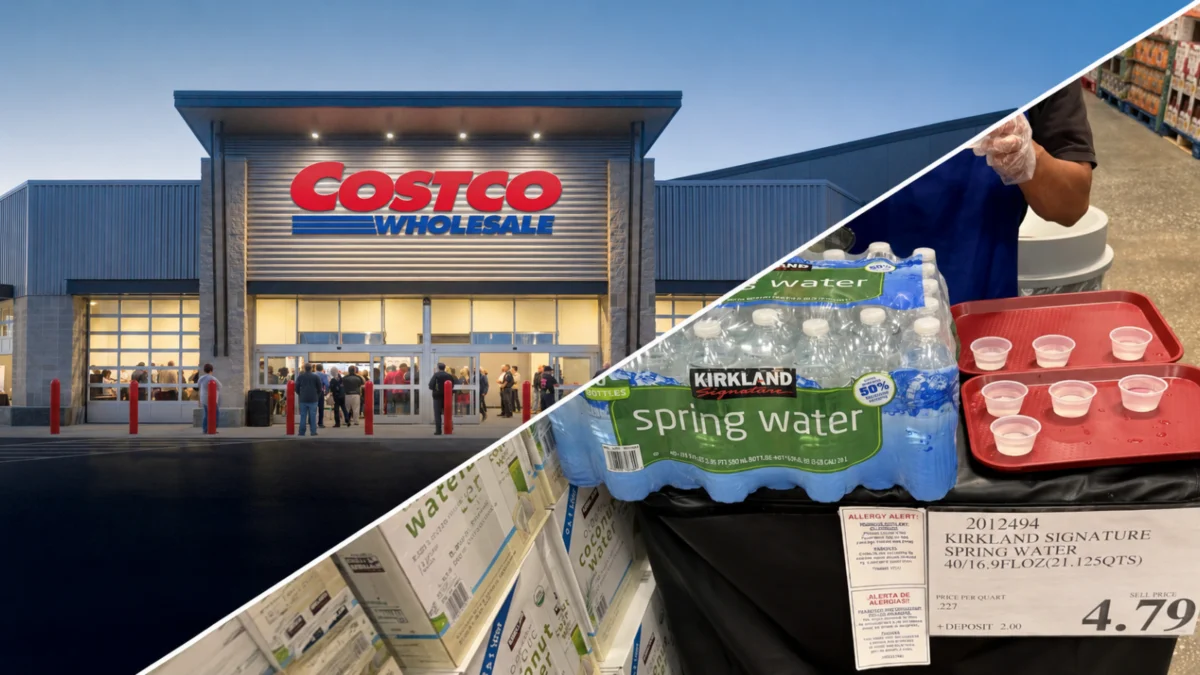
The tradition of the warehouse club "treasure hunt" has long been anchored by the presence of free samples, a marketing staple that transforms a routine grocery run into a culinary exploration for millions of members. However, a recent incident at a Canadian Costco location has sparked a wide-ranging debate regarding the utility and environmental impact of the retailer’s sampling strategies. Shoppers at a warehouse in Nova Scotia were recently met with an unexpected offering: small paper cups filled with Kirkland Signature bottled water. While the move was interpreted by some as a thoughtful gesture during a period of rising summer temperatures, it left a significant portion of the customer base questioning the logic behind sampling a commodity as basic and ubiquitous as water.
The Nova Scotia Incident and Social Media Response
The incident gained international attention after a shopper captured a photograph of a sampling station at a Costco location in the Maritimes region of Canada. The image, which quickly circulated on platforms such as Reddit and X (formerly Twitter), depicted a standard sampling tray lined with the small cups typically reserved for yogurt, snacks, or juice, but containing only clear, unflavored water. The original poster noted the absurdity of the situation, describing it as the "weirdest sample" they had ever encountered in years of shopping at the membership-only chain.
The digital reaction was swift and multifaceted. Within hours, the post became a hub for Costco enthusiasts to share their own accounts of unconventional or seemingly redundant samples. One user recalled a particularly memorable instance where a warehouse distributed individual rolls of Kirkland Signature toilet paper sealed in Ziploc bags. According to the commenter, the sampling staff explicitly instructed members to "sample at home," a directive that initially drew laughter but ultimately proved effective, as the user reported switching to the Kirkland brand following the home trial.
Other reports included the sampling of raw baby carrots—an event that reportedly led to a minor scuffle as a shopper aggressively moved to claim a single carrot—and even small cups of Kirkland Signature sea salt. In the latter case, shoppers remained divided on whether the salt was intended to be tasted in isolation or if it was a placeholder for a missing food component. These anecdotes highlight a broader trend in Costco’s operational philosophy: the belief that any product under the Kirkland Signature umbrella can benefit from direct consumer interaction, regardless of how fundamental the product may be.
The Mechanics and Purpose of the Costco Sampling Program
To understand why a retail giant would dedicate labor and resources to handing out cups of water, one must look at the logistical framework of Costco’s sampling operations. Most shoppers are unaware that these samples are rarely managed by Costco employees. Instead, the program is largely operated by Club Demonstration Services (CDS), a third-party marketing firm that has partnered with Costco for decades.
The primary objective of CDS is to drive sales through the psychological principle of reciprocity. Marketing research has consistently shown that when a consumer accepts a free gift—even something as small as a bite of a cracker or a sip of water—they feel a subconscious obligation to consider the product for purchase. In the context of Costco, where items are sold in bulk, the risk for the consumer is higher; a member is more likely to commit to a 40-pack of bottled water if they have just confirmed its taste and temperature.
Furthermore, sampling serves as a vital tool for brand reinforcement. By sampling Kirkland Signature water, the retailer is subtly communicating the quality and value of its private-label brand. In a retail environment where brand loyalty is increasingly fleeting, these micro-interactions serve to solidify the relationship between the member and the Kirkland name.
Environmental Implications and Sustainability Concerns
Despite the marketing logic, the decision to sample bottled water has drawn criticism from environmental advocates and sustainability-conscious shoppers. The use of disposable cups to distribute a product that is already packaged in single-use plastic bottles is seen by many as an unnecessary addition to the global waste stream.
Critics argue that the environmental cost of the paper or plastic cups, combined with the energy required to chill and transport the water for the sole purpose of a "sip-sized" trial, outweighs any potential marketing gain. This sentiment aligns with a growing movement among Costco members who have urged the company to reduce its plastic footprint. While Costco has made strides in recent years—such as transitioning some Kirkland products to more sustainable packaging—the sight of hundreds of tiny cups being discarded after a single swallow of water remains a point of contention for those concerned with corporate responsibility.
The Context of the Global Heatwave and Public Health
A more pragmatic interpretation of the water sampling event relates to the extreme weather conditions experienced across North America this summer. With record-breaking temperatures recorded in various regions, including parts of Canada and the United States, retail environments often serve as cooling centers for the public.
In this context, the distribution of water can be viewed as a proactive customer service measure rather than a traditional marketing ploy. Providing free hydration to shoppers navigating a massive, high-traffic warehouse is a strategy used to prevent heat-related fatigue and improve the overall shopping experience. During heatwaves, retailers often see an uptick in medical incidents related to dehydration; thus, the "sample" may function as a low-cost preventative health measure.
Supporting Data: The Power of the Costco Model
The debate over water samples occurs against the backdrop of Costco’s continued dominance in the retail sector. The company’s financial health remains robust, driven by a membership renewal rate that consistently hovers around 90% in the United States and Canada.
Recent data indicates that Costco’s food court and sampling programs are major contributors to "foot traffic," a metric that tracks how many people enter a physical store. The "Costco Effect"—where shoppers enter for a few specific items but leave with a full cart—is heavily reliant on the sensory experience of the warehouse.
- Membership Growth: As of the most recent fiscal quarter, Costco reported over 128 million cardholders globally.
- Kirkland Signature Success: The private-label brand now accounts for more than 25% of the company’s total sales, generating upwards of $50 billion annually.
- Ancillary Services: The food court, characterized by the legendary $1.50 hot dog and soda combo, acts as a "loss leader," drawing customers in who then spend hundreds of dollars on high-margin electronics, jewelry, and apparel.
The sampling of water, however "weird" it may seem to the average shopper, is a small cog in a massive machine designed to keep consumers engaged with the brand for as long as possible while they are inside the building.
Broader Retail Trends and Post-Pandemic Evolution
The landscape of in-store sampling underwent a dramatic transformation during the COVID-19 pandemic. For nearly two years, the familiar sampling stations were removed from Costco floors due to health and safety regulations. Their return in 2021 was hailed by many members as a "return to normalcy," and the company saw a measurable increase in the time spent by customers in the aisles following the reinstatement of the program.
The evolution of sampling has also seen a shift toward more diverse products. While frozen pizzas and cheeses remain staples, the introduction of non-food samples—like the aforementioned toilet paper or even laundry detergent—reflects a desire to showcase the breadth of the Kirkland Signature line. By sampling basic necessities, Costco is betting that the convenience and perceived quality of their private label will win out over name-brand competitors like Nestlé or Dasani in the water category.
Implications for Future Marketing Strategies
The social media buzz surrounding the Nova Scotia water samples serves as a reminder of the power of "oddity" in marketing. Even if the intention was purely functional, the resulting online conversation provided Costco with significant organic brand exposure.
Retail analysts suggest that as inflation continues to impact consumer habits, shoppers are becoming more discerning. They are looking for "value-added" experiences that justify the cost of a yearly membership. Whether it is a $1.50 hot dog or a free 2-ounce cup of water, these perks contribute to the perception that Costco is "on the side" of the consumer.
However, the retailer must balance these tactics with the increasing demand for environmental stewardship. Moving forward, the company may face pressure to find more sustainable ways to offer samples, perhaps through the use of compostable materials or by focusing on products that do not require additional disposable packaging.
In conclusion, while the sight of water samples may continue to perplex some and frustrate others, it remains a testament to the comprehensive and sometimes eccentric nature of the Costco shopping experience. It is a strategy rooted in the psychology of the "treasure hunt," where every corner of the warehouse offers something new to discover, even if that discovery is as simple as a cool drink of water on a hot summer afternoon.



 Yuyun Lusiyani
 Joko Widodo
 Eva Lovia
 admin
admin
 Lina Irawan