
 Joko Widodo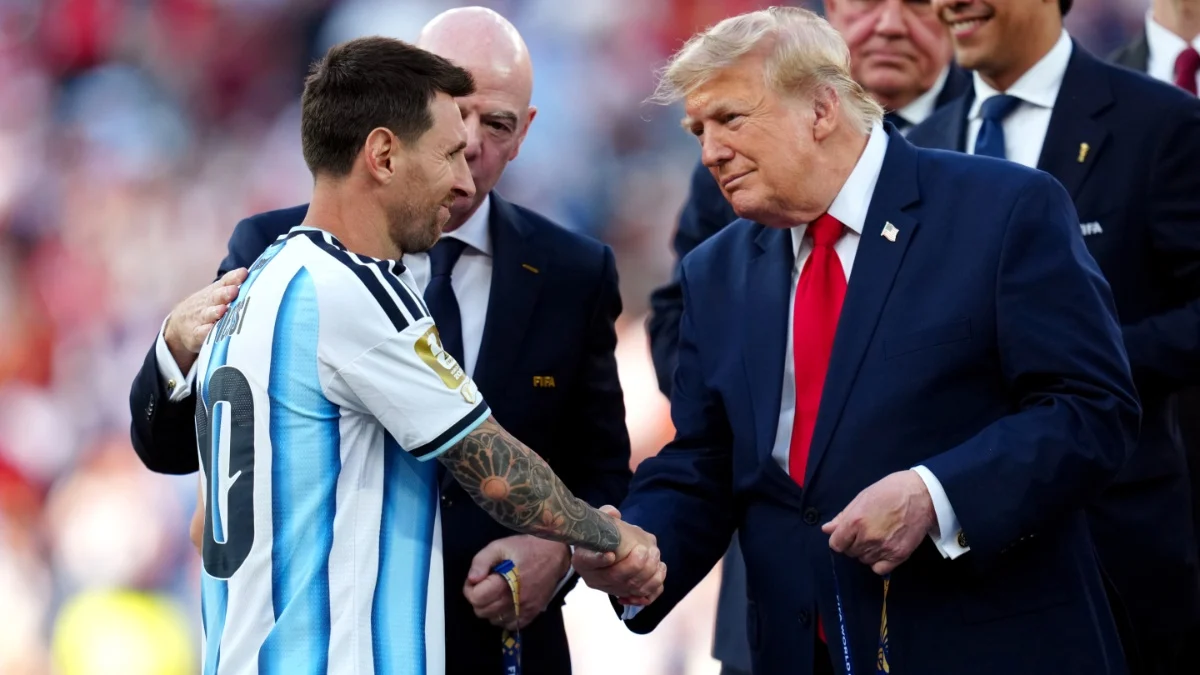
The digital sphere erupted with a familiar refrain, the "Trump Curse," as Argentina suffered a devastating defeat against Spain in the 2026 FIFA World Cup Final. The internet’s collective memory was reignited by a perceived pattern: President Donald Trump’s pre-match pronouncements, this time a seemingly supportive nod to Lionel Messi, preceded yet another significant loss for a team he appeared to endorse. This resurgence of the "Trump Curse" narrative, fueled by social media discourse and historical precedents, cast a shadow over the post-match analysis, overshadowing the athletic achievements and the sporting spectacle itself.
The Echoes of a Pattern: Trump’s Remarks and Argentina’s Downfall
The controversy ignited following a pre-recorded interview where President Trump offered complimentary remarks about the legendary Argentine forward, Lionel Messi. Speaking to Jenny Taft of Fox News ahead of the pivotal final, Trump expressed his admiration for the iconic player. "I would say that it’s hard to bet against Messi… I won’t pick sides. I just think it’s very hard to bet against Messi. He’s great," Trump stated, a sentiment that, in retrospect, appeared to carry an unintended weight.
In stark contrast to his praise for Messi, Trump’s public stance towards Spain during the same period was notably hostile. Addressing reporters at the NATO summit in Ankara, Turkey, he declared, "We don’t want to do any trade with Spain anymore. Spain is a terrible partner in NATO." This juxtaposition of supportive comments for Argentina’s star and aggressive rhetoric towards their opponent fueled the nascent "Trump Curse" narrative, suggesting an ill-timed intervention that may have inadvertently jinxed the Albiceleste.
Trump’s presence at the final was met with a palpable tension. Upon his arrival on the field, he was reportedly greeted with boos from segments of the crowd, underscoring the polarized reception he often receives in public appearances. Following the match, he participated in the trophy presentation ceremony, awarding medals to the victorious Spanish team and the runners-up from Argentina. His interaction with Messi during the silver medal ceremony was reportedly brief, a fleeting moment that quickly became fodder for online speculation.
A History of Perceived Influence: From Football Pitches to Basketball Courts
The "Trump Curse" is not a new phenomenon. It gained significant traction earlier in the 2026 World Cup, following the U.S. Men’s National Team’s decisive 4-1 loss to Belgium in the knockout stages. Prior to that match, President Trump had reportedly contacted FIFA President Gianni Infantino, urging a review of a red card issued to American forward Folarin Balogun. While FIFA did suspend Balogun’s one-game ban, allowing him to participate in the game, the U.S. team still suffered a heavy defeat. The Belgian Football Association subsequently appeared to mock the decision on social media following their dominant victory, further amplifying the narrative of external interference.
The pattern, however, extends beyond the realm of international football. Throughout Trump’s presidency, various sporting events where he was in attendance or publicly involved were followed by losses for the teams he appeared to support. The New York Knicks, a team with a fervent fanbase, experienced their sole defeat in the 2026 NBA Finals during a game attended by Trump. Following their 111-115 Game 3 loss, disgruntled Knicks fans openly accused Trump of placing a "curse" on the team. This sentiment was so prevalent that Kazeem Famuyide, a prominent sports commentator, posted a video on social media depicting fans performing a sage cleansing ritual outside Madison Square Garden in an attempt to dispel the perceived negative influence.
Another notable instance occurred at the 2025 Ryder Cup. President Trump attended the prestigious golf tournament, where the United States team ultimately lost to Europe with a score of 15-13. Even in the face of this defeat, Trump exuded confidence, telling reporters at the event, "We’re going to get it done. One way or another, we’ll get it done." His pronouncements, regardless of the outcome, often become intertwined with the narrative of his perceived influence on sporting events.
Contextualizing the 2026 World Cup Final: A Tight Contest and a Dramatic Upset
The 2026 FIFA World Cup Final was a highly anticipated clash between two footballing powerhouses. Spain, having navigated a challenging tournament, entered the final with a formidable squad, showcasing a blend of experienced veterans and rising stars. Their tactical discipline and clinical finishing had been hallmarks of their campaign. Argentina, led by the incomparable Lionel Messi, carried the hopes of a nation and a global legion of fans, seeking to cement Messi’s legacy with the ultimate prize. The match itself was a tense affair, characterized by strategic play, moments of individual brilliance, and a relentless battle for midfield supremacy.
The final scoreline of Spain’s victory over Argentina, while a testament to Spain’s prowess, represented a significant upset in the eyes of many observers and betting markets. The pre-match commentary, particularly Trump’s remarks, provided an unlikely but potent narrative thread for social media to latch onto. The "Trump Curse" hashtag, which had been dormant for periods, saw a dramatic surge in activity following the final whistle. Online discussions quickly devolved into debates about the validity of such "curses" versus statistical probabilities and the inherent unpredictability of sport.
Data and Analysis: The Statistical Improbability and the Psychological Impact
While the "Trump Curse" is largely rooted in anecdotal evidence and social media trends, it is worth examining the statistical underpinnings of such patterns. Professional sports are inherently complex, influenced by a myriad of factors including player form, team chemistry, coaching strategies, refereeing decisions, and sheer luck. Attributing losses solely to the presence or commentary of a public figure, however prominent, overlooks these crucial elements.
However, the psychological impact of external commentary, especially from a figure with the global profile of a former U.S. President, cannot be entirely dismissed. While direct causality is impossible to prove, the heightened scrutiny and potential distraction that accompany such attention could, in theory, subtly affect player performance or team morale. This is particularly true in high-stakes environments like a World Cup Final, where every element can be amplified. The media coverage surrounding Trump’s attendance and remarks before the final undoubtedly added another layer of pressure and narrative to an already intensely scrutinized event.
Official Responses and Broader Implications
As of the reporting of this article, there have been no official statements from the White House or the Trump campaign directly addressing the resurgence of the "Trump Curse" trend following the World Cup Final. Given the nature of the phenomenon, it is unlikely that an official response would be forthcoming, as the narrative is largely driven by public opinion and social media discourse.
The persistent association of Donald Trump with sporting misfortunes, however unsubstantiated, highlights a broader trend of public figures becoming intertwined with the outcomes of major events. In the age of social media, where narratives can spread and evolve with unprecedented speed, the "Trump Curse" serves as a contemporary example of how cultural commentary and political figures can shape the perception of sporting results.
The implications of this trend are multifaceted. For fans, it provides a simplified, albeit often superstitious, explanation for disappointing outcomes. For media outlets, it presents a readily available narrative to engage audiences, particularly those interested in political commentary and sports. For athletes and sports organizations, it underscores the complex interplay between athletic performance, public perception, and the ever-present influence of external narratives in the digital age. While the scientific validity of the "Trump Curse" remains firmly in the realm of conjecture, its persistence in online discourse after Argentina’s World Cup Final loss demonstrates its enduring, albeit unusual, place in the contemporary cultural landscape. The narrative, born from a combination of pre-match comments and a historical pattern of perceived association, will likely continue to be debated and discussed as long as such events unfold.




 Yuyun Lusiyani
 Eva Lovia
 Pevita Pearce
 admin
admin
 Lina Irawan