Nila Kartika Wati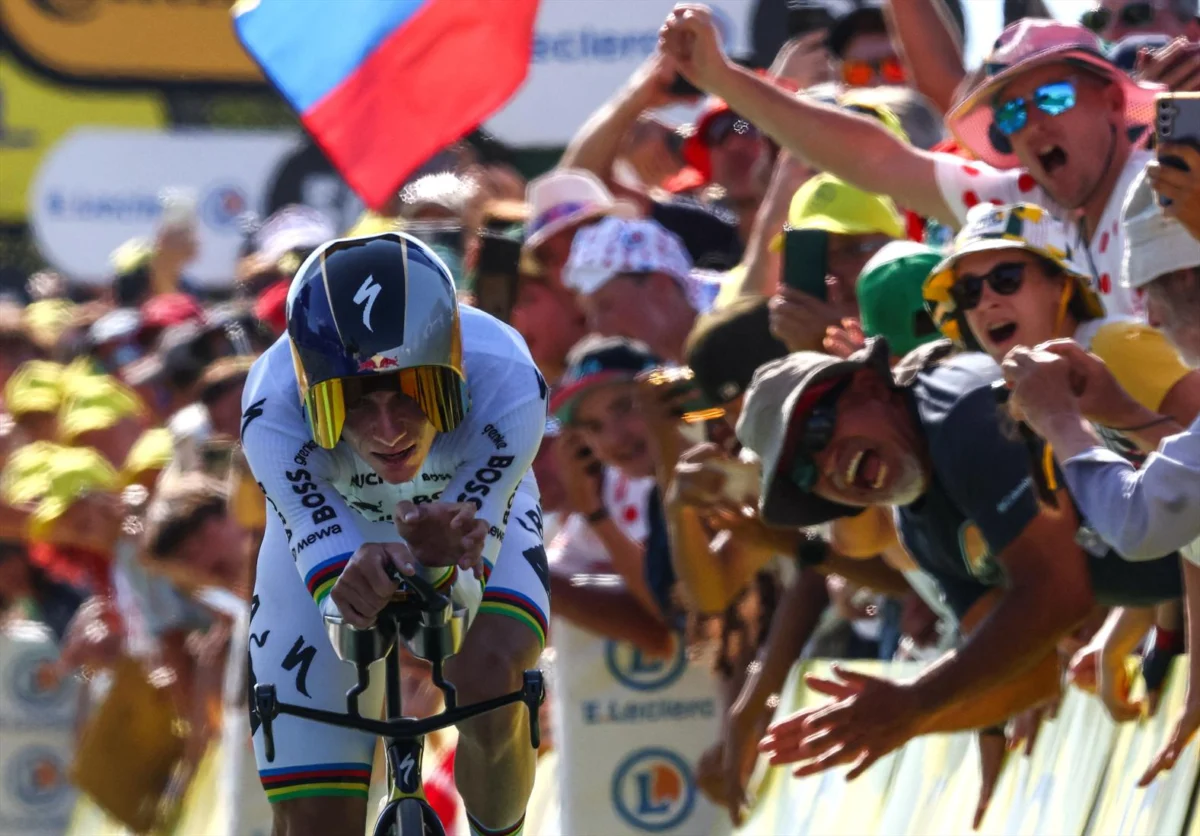
The brutal rhythm of the Tour de France’s third and final week commenced with a dramatic individual time trial, where Belgian sensation Remco Evenepoel of Red Bull – BORA – hansgrohe delivered a masterclass performance on Stage 16. Covering the challenging 26.1-kilometer course around Thonon-les-Bains, France, in an blistering 32 minutes and 19 seconds, Evenepoel not only claimed a decisive victory but also significantly bolstered his position in the general classification, solidifying his hold on second place. This performance underscores his formidable talent in the discipline, a reputation forged through multiple world championship titles and Olympic gold medals.
A Display of Time Trial Prowess
Evenepoel’s victory was not merely a matter of seconds but a commanding display of dominance. He finished a full minute ahead of his closest rivals, a testament to his exceptional power output and tactical execution on the demanding course. This triumph marks his second consecutive stage win, following his hard-fought victory on Stage 15, where he out-climbed Tadej Pogačar in a thrilling mountain finish. The Belgian’s current form suggests a cyclist at the peak of his abilities, eager to leave an indelible mark on this edition of cycling’s most prestigious Grand Tour.
The technical nature of the Stage 16 time trial, with its winding roads and potential for aerodynamic gains and losses, provided a unique battleground. Evenepoel, a three-time world champion in this discipline, navigated the course with precision and raw power. His performance was a stark reminder of his pedigree, having also swept both cycling events at the 2024 Paris Olympics, cementing his status as a generational talent. The course, designed to test both endurance and technical skill, saw riders pushing their limits against the clock, with every second meticulously counted.
Pogačar Maintains Yellow Jersey Despite Evenepoel’s Surge
While Evenepoel celebrated a personal triumph, the overall leader’s yellow jersey remains firmly on the shoulders of Slovenia’s Tadej Pogačar. Pogačar, who finished second on the stage, just under a minute behind Evenepoel, crossed the line in 32 minutes and 47 seconds. Despite Evenepoel’s relentless pursuit and closing of the time gap, Pogačar has managed to maintain a significant lead in the general classification. As it stands, Evenepoel trails Pogačar by 4 minutes and 32 seconds, a substantial but not insurmountable margin as the race heads into its final, decisive stages. The close finish between the two pre-race favorites on this stage suggests a captivating duel in the remaining mountain stages, should Pogačar’s lead continue to be tested.
Pogačar’s resilience was evident as he narrowly avoided a crash on a treacherous corner, the same section that tragically ended the Tour for his teammate. This near-miss highlights the inherent risks associated with high-speed time trials and the mental fortitude required to navigate them. His ability to maintain composure under pressure, even after such a scare, speaks volumes about his championship caliber.
A Shadow Over the Victory: Lipowitz’s Abandonment
The jubilant atmosphere surrounding Evenepoel’s victory was somberingly overcast by the news of his Red Bull – BORA – hansgrohe teammate, Florian Lipowitz, being forced to abandon the Tour de France. The young German rider, who had entered the time trial in fifth place overall and was a strong contender for a high general classification finish after securing third place overall in the previous year’s race, crashed heavily on the time trial course. Initial reports indicate an apparent right shoulder injury sustained after Lipowitz slid into a curb. His withdrawal represents a significant blow to the Red Bull – BORA – hansgrohe team’s ambitions and a premature end to what was shaping up to be a promising Tour for the 23-year-old.
Lipowitz’s absence leaves a void in the team’s strategy and removes a key rider from the fight for the podium. His strong performance in the early stages of the Tour had positioned him as one to watch, and his exit underscores the unforgiving nature of professional cycling, where a single incident can drastically alter a rider’s fortunes.
Shifting Dynamics in the General Classification
Beyond the leading duo, the general classification has seen subtle but significant shifts. Mexico’s Isaac del Toro, a rising star in the cycling world, maintained his third position overall after finishing fifth in the individual time trial. The 19-year-old Paul Seixas of France, demonstrating remarkable maturity for his age, sits in fourth place overall, having secured a solid fourth-place finish on the stage. His performance on this challenging course suggests a bright future in Grand Tour racing.
Spain’s Juan Ayuso occupies fifth place in the overall standings, a testament to his consistent performances throughout the race. He is closely followed by Denmark’s Mattias Skjelmose, who completed the podium on Stage 16, finishing in third place. Skjelmose’s strong time trial performance indicates he is in good form as the race progresses towards its conclusion.
The Road Ahead: Stages 17 and Beyond
As the riders recover from the intense effort of Stage 16, the Tour de France now pivots towards its remaining mountainous terrain and a final sprint into Paris. Wednesday’s Stage 17 presents a relatively flat 174.7-kilometer route from Chambery to Voiron. While not expected to cause major shifts in the general classification, this stage could offer opportunities for sprinters to claim a victory and for breakaway riders to contest the day’s honors. However, an early climb on the route could still pose a challenge and test the riders’ legs after the demanding time trial.
The upcoming stages will likely be characterized by fierce battles in the mountains, where Pogačar and Evenepoel are expected to go head-to-head once more. The time gap between them, though significant, is not insurmountable, and any lapse in concentration or a tactical misstep could prove costly for Pogačar. The final time trial on Stage 20 in Nice, though shorter than the one in Thonon-les-Bains, could also prove decisive if the general classification remains tightly contested. The ultimate climax will be the ceremonial ride into Paris on Sunday, where the victor will be crowned on the Champs-Élysées.
Historical Context and Data
The Tour de France, first held in 1903, is one of the oldest and most prestigious cycling races in the world. It consists of 21 stages over 23 days, covering approximately 3,500 kilometers. The individual time trial, a staple of the modern Tour, tests a rider’s ability to perform at their absolute peak against the clock, often proving pivotal in determining the overall winner. Remco Evenepoel’s performance today is statistically significant; winning a time trial by a margin of one minute is a rare feat in the modern era of professional cycling, where margins are often measured in mere seconds. His average speed on the course was approximately 48.7 kilometers per hour, highlighting the incredible pace he maintained.
The 2026 edition of the Tour de France has already witnessed several dramatic moments, from challenging mountain ascents to tactical team performances. The battle for the yellow jersey between Pogačar and Evenepoel has been a narrative thread woven throughout the race, with each rider trading blows in various terrains. The inclusion of a challenging 26.1-kilometer time trial in the latter stages of the race was designed to create significant opportunities for GC contenders to gain or lose time, and Stage 16 has certainly delivered on that promise.
The Red Bull – BORA – hansgrohe team, now with Evenepoel as their primary GC hope, will need to rally around their star rider. The loss of Lipowitz, a rider with proven Grand Tour capabilities, is a setback, but the team’s depth and Evenepoel’s current form offer a strong platform for continued success. The strategic decisions made in the coming days, particularly in the remaining mountain stages, will be crucial in determining the final outcome of this fiercely contested Tour de France. The race continues to captivate audiences worldwide, showcasing the extraordinary athleticism, resilience, and tactical acumen of the world’s best cyclists.


 Yuyun Lusiyani
 Joko Widodo
 Jia Lissa
 Pevita Pearce
 admin
admin