
 Nila Kartika Wati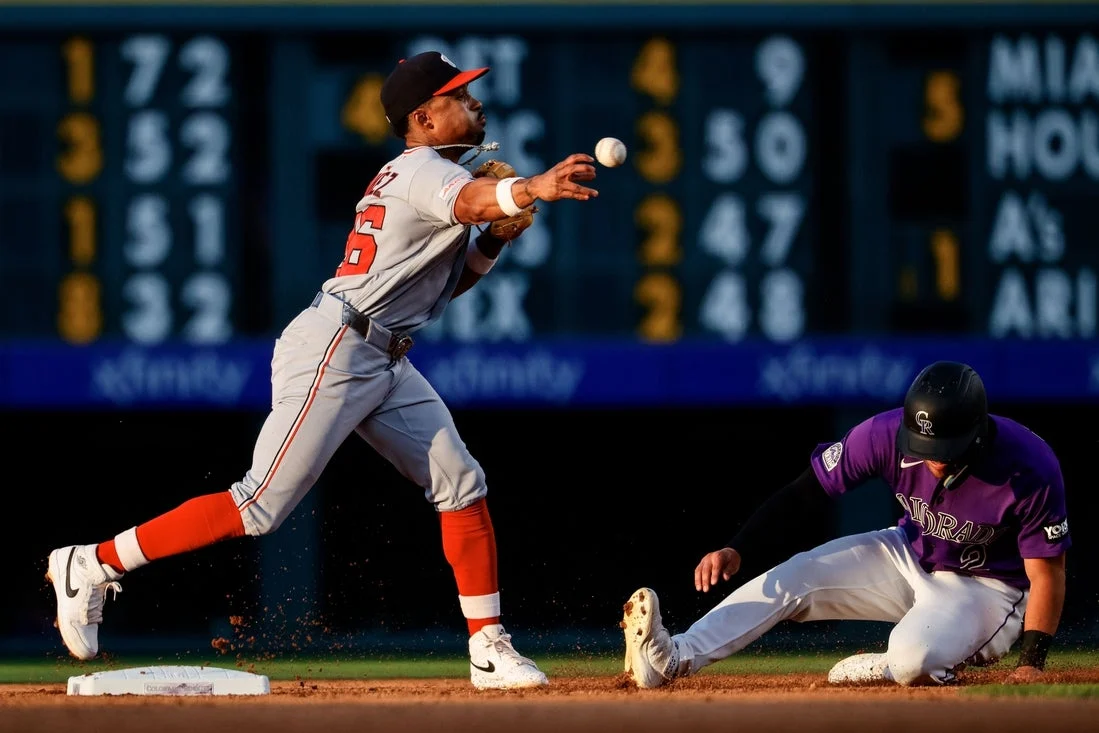
The Washington Nationals continued their impressive offensive display, powered by a three-homer performance, to secure a 7-3 victory over the Colorado Rockies on Monday night at Coors Field. CJ Abrams ignited the Nationals’ offense with his second consecutive game featuring a home run, contributing to a potent attack that saw Washington extend its lead in the majors in long balls. The win marks the Nationals’ second in a row and underscores their status as a formidable offensive force in Major League Baseball.
Nationals’ Offensive Might on Full Display
The Nationals’ potent lineup demonstrated why they lead the majors in home runs, now boasting a season total of 147. Beyond Abrams’ crucial blast, Jacob Young also left the yard and contributed three hits to the winning effort. Curtis Mead further bolstered the offense with his own three-hit performance, while Andres Chaparro added his fourth home run of the season. This offensive firepower proved to be the difference-maker against a Rockies team struggling to find consistent footing.
The game’s narrative began to solidify in the first inning when the Nationals immediately put pressure on Colorado starter Kyle Freeland. James Wood drew a leadoff walk, setting the stage for Mead’s single to center. Andres Chaparro then made immediate impact, launching the first pitch he saw from Freeland over the left-center field fence for a three-run advantage. This early surge highlighted the Nationals’ aggressive approach and their ability to capitalize on early opportunities. Washington threatened to extend their lead further in the first inning after Dylan Crews drew a walk and Young singled with one out, but Freeland managed to retire the next two batters, limiting the damage.
The momentum shifted in the third inning when the Rockies managed to claw their way back into the game. Colorado loaded the bases against Nationals starter Andrew Alvarez through a combination of two singles and a walk. With two outs, Elias Castro delivered a clutch two-out double to center field, clearing the bases and tying the game at 3-3. This response from the Rockies underscored their ability to fight back, even when facing a deficit.
Key Moments and Turning Points
The tie, however, was short-lived as the Nationals offense once again found its rhythm. In the sixth inning, Jacob Young broke the deadlock with his ninth home run of the season, a leadoff blast off Freeland. This crucial hit swung the momentum back in Washington’s favor and set the stage for further offensive contributions. The lead was then extended in the seventh inning when CJ Abrams launched a two-run shot off reliever Antonio Senzatela, his 22nd home run of the season, providing a comfortable cushion for the Nationals.
The Nationals added an insurance run in the ninth inning via a two-out RBI triple by Daylen Lile, further solidifying their victory and demonstrating their sustained offensive pressure throughout the game.
Pitching Performances and Relief Efforts
While the Nationals’ offense garnered significant attention, their pitching and relief efforts were instrumental in securing the win. Andrew Alvarez, the Nationals’ starter, allowed three runs on six hits over 4 1/3 innings. He demonstrated resilience in navigating through tough situations, including the bases-loaded jam in the third inning.
The Nationals’ bullpen provided crucial support. Riley Cornelio (1-1) emerged as a key contributor, tossing 1 2/3 innings of scoreless relief, effectively shutting down the Rockies’ offense during a critical juncture. Tom Cosgrove then closed out the game, securing the final six outs for his first save of the season. Cosgrove’s performance showcased his ability to handle high-pressure situations and preserve the lead.
For the Rockies, starter Kyle Freeland (2-9) endured a challenging outing, surrendering four runs on seven hits over six innings. Despite the offensive struggles of his team, Freeland battled through the game, but ultimately could not contain the Nationals’ potent lineup. Antonio Senzatela also pitched in relief, giving up Abrams’ significant two-run homer.
Rockies’ Struggles Continue
The Colorado Rockies, playing at their hitter-friendly home ballpark, have been unable to translate their home-field advantage into consistent wins. The team has now dropped three of their first four games out of the All-Star break, solidifying their position as having the worst record in the National League. Jake McCarthy was a bright spot for the Rockies, collecting a pair of hits, but it wasn’t enough to overcome the Nationals’ offensive onslaught. The team’s overall performance continues to be a cause for concern for their fanbase and management.
Incidents and Ejections
A moment of tension arose in the fifth inning when Andres Chaparro flew out to right field. On his return to the dugout, Chaparro inadvertently ran over part of the pitcher’s mound, drawing the attention and apparent displeasure of Rockies starter Kyle Freeland. This incident led to benches and bullpens clearing, a common occurrence in baseball when perceived disrespect or intentional contact occurs. However, the situation did not escalate into further confrontation, and no ejections were issued by the umpires. The incident underscored the competitive nature of the game and the heightened emotions that can arise during matchups between opposing teams.
Statistical Highlights and Context
The Nationals’ 147 home runs as a team lead Major League Baseball, a testament to their consistent power-hitting throughout the season. This offensive prowess has been a significant factor in their ability to compete and win games. CJ Abrams’ home run on Monday marked his 22nd of the season, placing him among the league leaders. Jacob Young’s three-hit game was also a significant contribution, raising his batting average and showcasing his offensive capabilities.
The Rockies’ struggles are reflected in their National League worst record. Their inability to consistently generate runs and their pitching staff’s performance have been key challenges. Elias Castro’s bases-clearing double provided a brief spark, but the team was unable to build upon it.
Broader Implications and Future Outlook
The Washington Nationals’ victory over the Colorado Rockies reinforces their position as a team to watch in the National League. Their potent offense, coupled with improving pitching and relief, suggests they are poised for a strong second half of the season. The team’s ability to win on the road, even in a challenging environment like Coors Field, speaks to their resilience and growing confidence.
For the Colorado Rockies, the loss further deepens their season-long struggles. The team faces significant challenges in turning their season around, and their current trajectory suggests a rebuilding phase may be on the horizon. The performance of their pitching staff and the ability to develop consistent offensive threats will be critical factors in their future success. The ongoing season provides opportunities for player development and evaluation, but the immediate outlook for the Rockies remains a difficult one. The Nationals, on the other hand, are building momentum and looking to solidify their standing as a playoff contender.
The mid-summer series between these two clubs highlights the contrasting fortunes of teams in Major League Baseball, with one team showcasing its offensive dominance and the other grappling with persistent challenges. The Nationals’ ability to consistently hit for power and score runs continues to be a defining characteristic of their season, while the Rockies are still seeking answers to their offensive and pitching woes. As the season progresses, the Nationals will aim to maintain their offensive surge, while the Rockies will be looking for significant improvements to avoid a prolonged period of struggle.


 Yuyun Lusiyani
 Joko Widodo
 Jia Lissa
 Pevita Pearce
 admin
admin
