
 Eva Lovia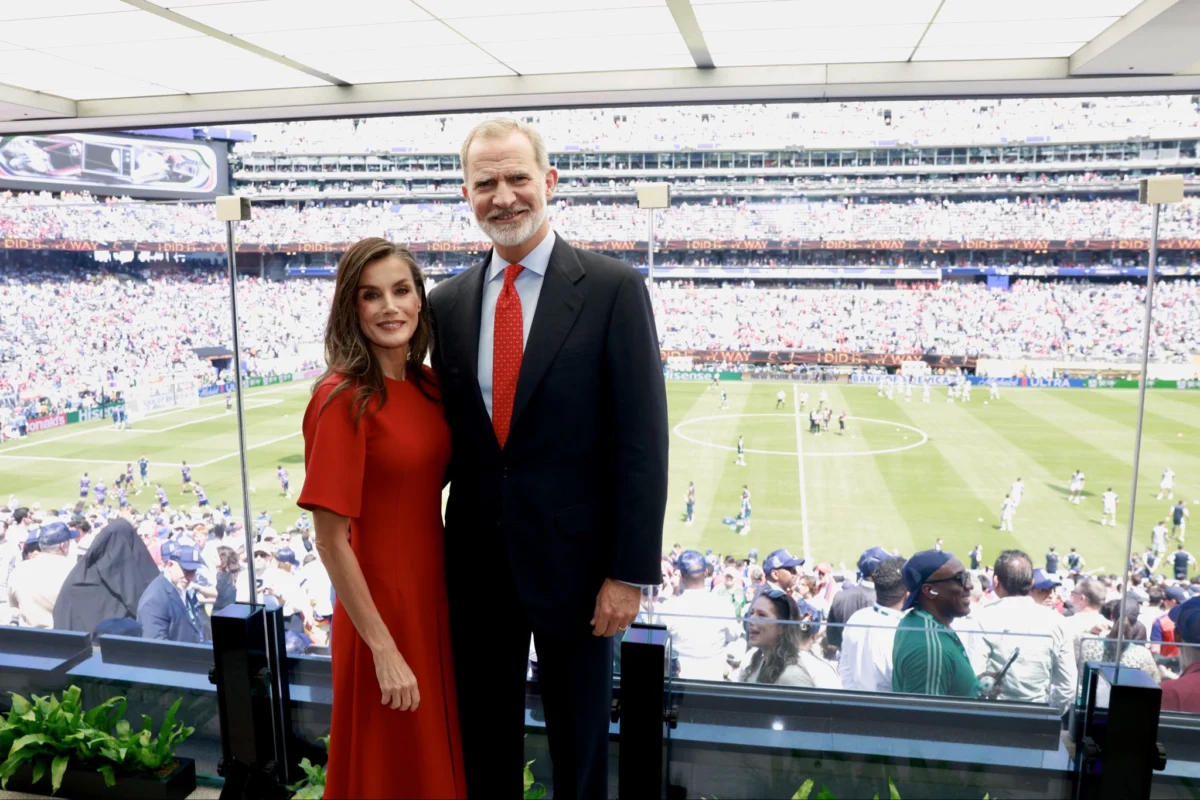
Spain etched its name in football history on Sunday evening, clinching a dramatic 1-0 victory over Argentina in the FIFA World Cup final, a triumph that ends a 16-year wait for the coveted trophy. The exhilarating win unfolded in the presence of Spain’s most devoted football enthusiasts: the Royal Family. Notably, Infanta Sofía, often seen as a good luck charm for Spanish national teams, was in attendance, marking another significant moment in her burgeoning public life.
The second in line to the Spanish throne was joined in the stadium by her parents, King Felipe VI and Queen Letizia, and her elder sister, Princess Leonor. While the entire family shared in the jubilation, Infanta Sofía holds a unique distinction. She is the sole member of her immediate family to have witnessed Spain secure victories in major international football tournaments. Her presence has become synonymous with success, having cheered on Spain to victory at the 2023 Women’s World Cup and the 2024 Euros.
A Royal Tradition of Sporting Support
The recent World Cup final in New Jersey was not Infanta Sofía’s first foray into supporting her nation’s sporting heroes on the global stage. In 2023, both Queen Letizia and Infanta Sofía were present to celebrate the historic win of the Spanish women’s national team at the Women’s World Cup. Their participation extended beyond mere observation; they joined the jubilant players in their victory scrum, sharing in the unbridled joy of that momentous achievement. This year, in 2024, Infanta Sofía and King Felipe were once again on hand to celebrate Spain’s triumph at the Euro final, held in Berlin. This occasion also saw them share the royal box with another prominent football-loving royal, Prince William of Wales.
As previously reported by Royal Central in 2025, Infanta Sofía’s passion for football, particularly the women’s game, has been interpreted as a reflection of evolving societal dynamics within Spain. In a nation where football was historically perceived as a male-dominated sport, the burgeoning visibility and prestige of women’s football have opened new avenues of identification for younger generations, such as Infanta Sofía. Her evident enthusiasm for the national women’s team and Liga F, Spain’s professional women’s football league, which is still in its developmental stages but already producing international stars, underscores this shift. This connection to the women’s game highlights a growing appreciation for athletic achievement irrespective of gender.
The entire Spanish Royal Family’s presence in New Jersey for the World Cup final was a significant event. It marked the first time King Felipe, Queen Letizia, Princess Leonor, and Infanta Sofia had undertaken an official trip together outside of Spain for such a high-profile sporting occasion. This collective appearance underscored the family’s unity and their shared support for national endeavors.
Pre-Match Anticipation and Royal Confidence
In a pre-game interview with TVE, King Felipe VI conveyed the palpable mix of nerves and confidence felt by the Spanish contingent. "We’re nervous, but we’re also confident because this team is captivating us again, just like previous teams did in 2010," he stated. "I think we’re going to see a spectacular final between two sister nations, two incredible teams. It will be a great spectacle."
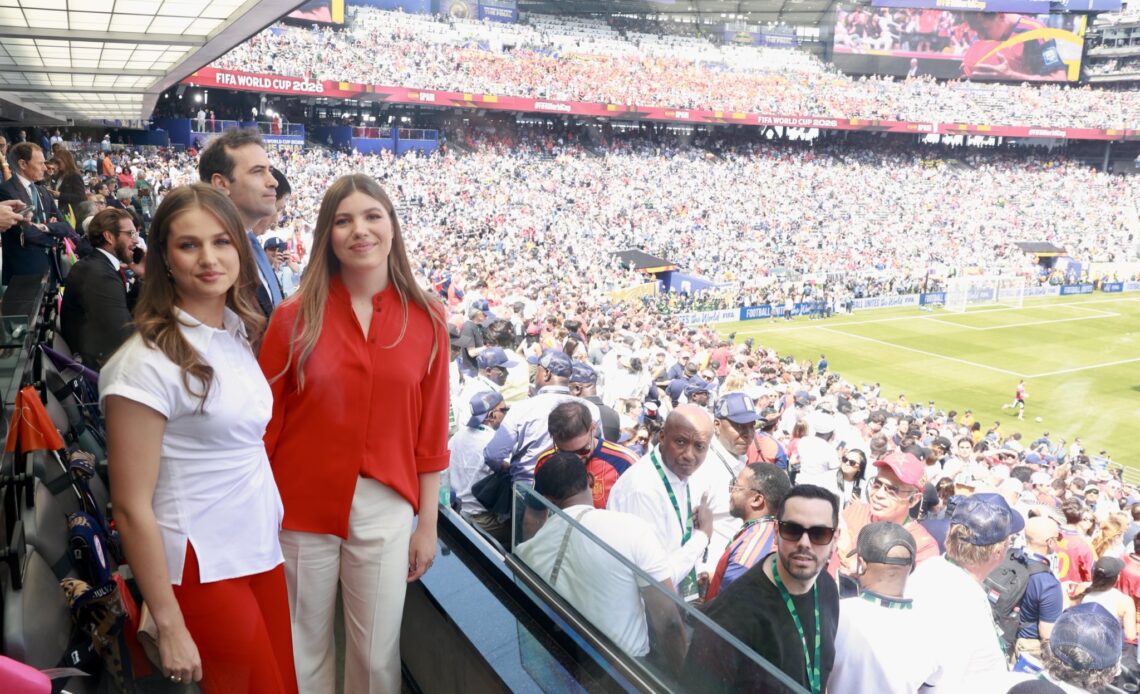
These words proved remarkably prescient. King Felipe’s commitment to supporting the team was evident from the outset of the tournament. He attended Spain’s opening match against Uruguay on June 27th. Following that game, he visited the team in their locker room, offering words of encouragement and making a bold prediction: "I hope to return, because if I do, it will be because you are in the final." His return to the stadium for the final was a testament to his faith in the squad.
A Legacy Rekindled: The Road to Victory
Spain’s journey to this World Cup title is a narrative of resilience and determination, echoing their historic victory in 2010. This latest triumph not only adds another prestigious trophy to their cabinet but also solidifies their status as a global football powerhouse. The 2010 World Cup victory, also achieved by the men’s national team, was a watershed moment for Spanish football, bringing the nation to a standstill in celebration. This new chapter, achieved by the current iteration of the national team, carries immense significance, particularly following a 16-year drought.
The implications of this victory extend beyond the immediate elation. For the Spanish national team, it represents the culmination of years of dedicated training, strategic planning, and unwavering team spirit. It validates the development programs and the investment in talent that have been a hallmark of Spanish football. For the nation, it serves as a unifying force, bringing people together under a shared banner of pride and achievement.
The current success also sets the stage for future endeavors. With the FIFA Women’s World Cup set to be hosted by Brazil next year, the Spanish women’s national team will embark on their campaign to defend their champion title. This continuity of success across both men’s and women’s football highlights the depth and strength of talent within Spain.
Official Commendation and National Pride
Following the momentous victory, the Spanish Royal Court shared a heartfelt message from King Felipe VI via their official social media channels, celebrating the team’s extraordinary achievement. The message read: "This star is the reward for a path as long as it has been demanding, traveled with effort, sacrifice, perseverance, and exemplary commitment in every match. You have faced each challenge with the conviction of a great team and have carried the name of Spain to the very top."
He continued, extending his congratulations to all involved: "Congratulations to the players, the coaching staff, and all the fans. Today we celebrate a title; tomorrow we will remember a legend." This sentiment encapsulates the enduring impact of the team’s performance, recognizing not only the immediate triumph but also the lasting legacy they have forged.
The World Cup final in New Jersey was more than just a football match; it was a convergence of national pride, royal tradition, and sporting excellence. The presence of the Spanish Royal Family, particularly Infanta Sofía’s consistent support for national teams, added a unique dimension to the event, highlighting the intertwined relationship between monarchy and national identity in Spain. As the nation basks in the glory of their World Cup victory, the memories created in New Jersey will undoubtedly resonate for years to come, inspiring future generations of athletes and football enthusiasts. The journey from 2010 to the present day is a testament to Spain’s enduring passion for the beautiful game and its capacity for achieving the highest echelons of international sport.



 Yuyun Lusiyani
 Joko Widodo
 Pevita Pearce
 admin
admin
 Lina Irawan