
 admin
admin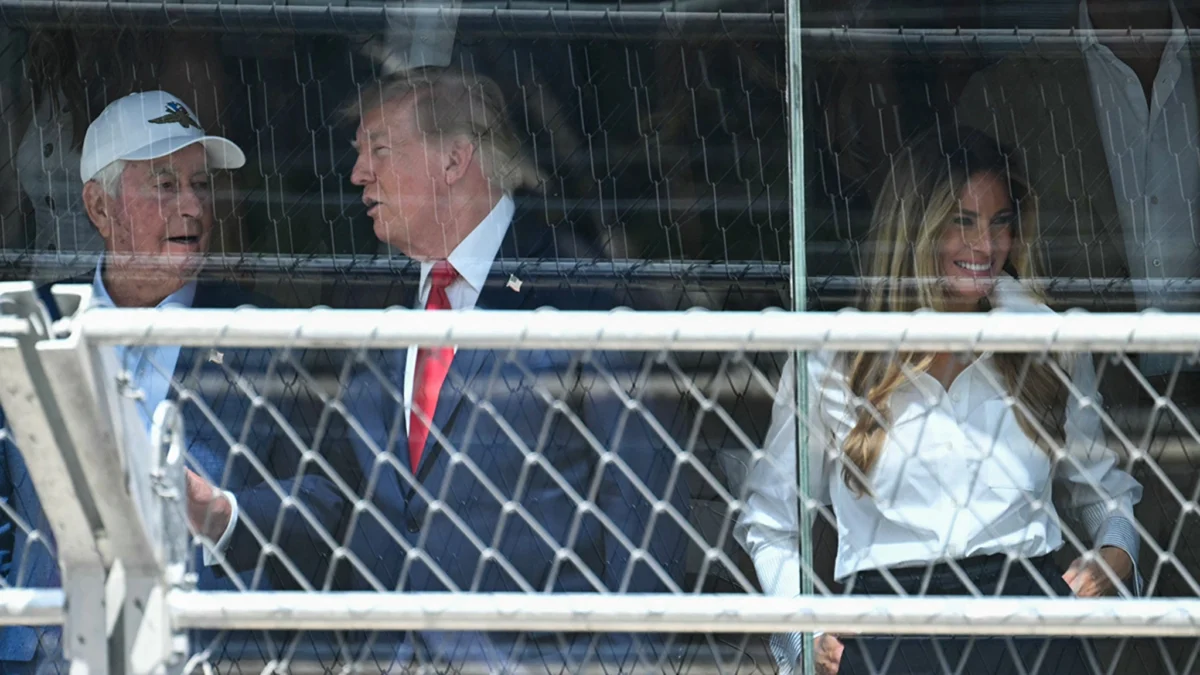
On August 23, 2026, President Donald Trump made a notable appearance at the inaugural Freedom 250 Grand Prix in Washington D.C., an IndyCar race that marked a significant milestone for both the sport and the nation’s capital. During his remarks to FOX Sports at the event, President Trump claimed personal credit for expediting the race’s approval, asserting that a process stalled for two decades was finalized in "about 15 minutes" once he became involved. This bold claim underscored the political and logistical complexities of bringing a major motorsports event to such a prominent urban center, while also highlighting the President’s characteristic self-promotion.
The Long Road to the Capital: Genesis of the Freedom 250 Grand Prix
The idea of hosting a major open-wheel racing event in Washington D.C. was not new; it had been a recurring ambition for motorsports enthusiasts and promoters for well over two decades. The District of Columbia, with its iconic landmarks and global visibility, presented an irresistible backdrop for a street circuit race, offering unparalleled marketing and branding opportunities for a series like IndyCar. However, the logistical, political, and financial hurdles proved consistently insurmountable for previous attempts.
Sources familiar with the protracted negotiations, which stretched back to the early 2000s, indicate that various proposals faced a gauntlet of challenges. These included securing necessary permits from multiple federal and local agencies (such as the National Park Service, the Department of Transportation, the Secret Service, and the D.C. Mayor’s Office), addressing concerns from resident groups about noise pollution, traffic disruption, and access restrictions, and navigating the intricate security requirements inherent to the capital city. The sheer scale of transforming public streets into a high-speed racing circuit, complete with temporary grandstands, safety barriers, and pit lane facilities, required immense coordination and significant financial backing, often estimated in the tens of millions of dollars.
Roger Penske, the esteemed owner of IndyCar and a titan in the motorsports world, was reportedly a driving force behind the renewed push to bring a race to D.C. His organization, Penske Entertainment, had invested considerable resources and made numerous trips to Washington over many years, attempting to broker a deal. The vision was clear: to showcase IndyCar’s thrilling competition against the backdrop of American democracy, attracting a new generation of fans and leveraging the city’s unique appeal. Despite Penske’s formidable reputation and experience, the D.C. project remained stubbornly in "neutral," as President Trump metaphorically put it, until what he described as his decisive intervention.
Presidential Intervention: A "15-Minute" Catalyst?
According to President Trump, the decades-long stalemate ended abruptly after a meeting with Roger Penske. "When he came to see Trump, it got done in about 15 minutes," the President stated, drawing a direct line between his involvement and the race’s ultimate approval. While the precise details of this specific meeting and the nature of the "15-minute" resolution remain largely within the realm of presidential anecdote, such an intervention, if accurately described in its effect, would signify a powerful deployment of executive influence.
In the complex bureaucratic landscape of Washington D.C., a presidential endorsement can indeed act as a significant catalyst. While local permits and community approvals are essential, the involvement of federal agencies—particularly those responsible for security, transportation, and federal lands (many of D.C.’s iconic areas fall under federal jurisdiction)—is often critical for events of this magnitude. A direct directive or strong signal of support from the White House could streamline inter-agency coordination, accelerate reviews, and potentially overcome lingering departmental hesitations that had previously stymied progress.
For instance, the Secret Service would be heavily involved in security planning for an event attracting hundreds of thousands, especially with presidential attendance. The Department of Transportation would be crucial for approving road closures and managing traffic flow. The National Park Service oversees many of the public spaces that would form part of a street circuit. With a presidential mandate, these agencies might prioritize the project, dedicating resources and expertise to rapidly resolve outstanding issues.

Officials from the D.C. Mayor’s office, while publicly welcoming the race and the federal cooperation, often emphasize the extensive groundwork laid by local teams and community engagement efforts that precede any final approval. While they might acknowledge the "expedited" nature of the final stages, they would likely point to years of foundational work as indispensable. Representatives for IndyCar and Penske Entertainment have consistently lauded the collaborative efforts of all stakeholders, including federal and local governments, without specifically endorsing the "15-minute" timeline, instead focusing on the successful outcome.
The Freedom 250 Grand Prix: A Spectacle in the Capital
The inaugural Freedom 250 Grand Prix was designed to be a landmark event, transforming parts of downtown Washington D.C. into a high-octane racing arena. While the exact circuit layout was kept under wraps until closer to the event for security and logistical reasons, speculation suggested a route that would wind past iconic landmarks such as the Capitol Building, the National Mall, and various Smithsonian museums, offering breathtaking visuals for spectators and television audiences worldwide. The 250-mile race distance typically translates to a demanding, multi-hour competition, challenging drivers on a temporary, unforgiving street course.
The logistics of staging such an event in the heart of the capital were monumental. Months of planning preceded the race weekend, involving the installation of thousands of concrete barriers, kilometers of catch fencing, temporary grandstands, hospitality suites, and complex communication and timing systems. Road closures, implemented days in advance, significantly impacted daily commutes and local businesses, necessitating extensive public awareness campaigns and alternative transportation plans.
President Trump’s claims regarding attendance were particularly striking. He stated that "300,000 to 350,000 people wanted to come and bridges had to be closed because of the turnout." While official attendance figures from the D.C. Metropolitan Police Department and event organizers were still being compiled, the visual evidence from aerial footage and ground reports suggested a massive crowd. For comparison, major D.C. events like the annual July Fourth celebration on the National Mall can attract hundreds of thousands, demonstrating the city’s capacity for large gatherings, albeit with significant logistical strain. The closure of major bridges, if indeed necessary due to pedestrian or vehicle overflow, would underscore the unprecedented scale of public interest in the event.
The atmosphere at the Freedom 250 Grand Prix was electric. The roar of IndyCars echoing between neoclassical buildings, the vibrant colors of sponsor liveries against the solemnity of national monuments, and the sheer energy of thousands of spectators created a unique blend of American heritage and cutting-edge sport. This blend was precisely what organizers and the President had hoped to achieve: a powerful symbol of American ingenuity and a celebration of speed in a city often associated with deliberation and governance.
Presidential Presence and First Lady’s Initiative
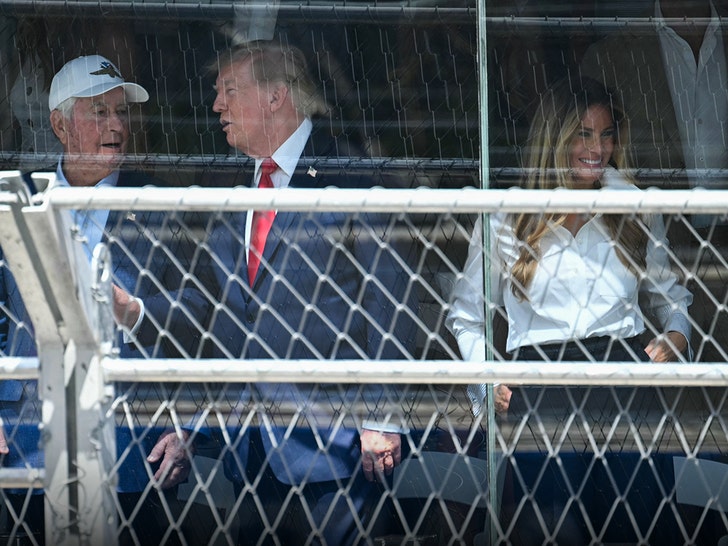
President Trump’s presence at the Grand Prix was central to the day’s narrative. He engaged with FOX Sports commentators, offering his perspective on the race’s realization and his role. Before the race, he met with a contingent of IndyCar drivers and team owners, offering words of encouragement. In a characteristic lighthearted moment, he initially began to tell them to "be safe," before stopping himself and joking that such advice might not be conducive to winning in the high-stakes world of professional racing. This interaction provided a glimpse into the President’s informal engagement style, resonating with the competitive spirit of the sport.
The President’s ceremonial duties included the highly anticipated waving of the green flag, signaling the start of the race. Prior to this, he took a ceremonial lap around the course in "The Beast," the highly armored presidential limousine. He humorously contrasted his secure, albeit "slightly slower," vehicle with the sleek, powerful IndyCars, further endearing himself to the racing community. This symbolic gesture, a head of state leading a parade lap in a vehicle synonymous with power and security, underscored the magnitude of the event and the President’s personal investment in its success.
First Lady Melania Trump was also a prominent figure at the Grand Prix, leveraging the high-profile event to advance her "Fostering the Future" initiative. This program, a collaboration with FOX Sports and IndyCar, aimed to support foster children transitioning out of the system, providing them with resources and opportunities for education and vocational training. The First Lady emphasized the long-term vision of her initiative, describing it as "more than an educational initiative" but rather a "generational investment in America’s talent pipeline." The partnership with a major sports broadcaster and a national racing series provided a significant platform for the initiative, reaching a broad audience and potentially securing new partnerships and funding. This integration of a social cause into a major sporting event highlighted a growing trend of corporate and philanthropic alignment.
Economic and Political Implications
The economic impact of the Freedom 250 Grand Prix on Washington D.C. was a key consideration for its approval. While precise post-event data requires thorough analysis, similar major urban street races globally have demonstrated substantial economic benefits. Economic impact studies for events of this scale often project tens of millions of dollars in direct and indirect spending. This includes revenue generated from hotel bookings, restaurant patronage, retail sales, transportation services, and local employment (both temporary and permanent) associated with event setup, operations, and visitor services. For D.C., a city heavily reliant on tourism and federal activity, such a large-scale private sector event offered a welcome diversification of revenue streams and a boost to the local economy.
Politically, the successful staging of the Freedom 250 Grand Prix provided President Trump with a significant talking point. His claim of expediting the project reinforced his self-portrayal as a decisive leader and a master dealmaker capable of cutting through bureaucratic red tape. Associating himself with a popular, high-energy event in the nation’s capital allowed him to project an image of effectiveness and engagement with diverse segments of the American public, particularly those who follow motorsports. This political optics would likely be leveraged in future public addresses and campaign narratives, showcasing his ability to deliver tangible results.
The success of the D.C. Grand Prix also carried broader implications for the future of major events in the capital. The demonstration that such a complex event could be executed with high attendance and, by most accounts, without major incident, could pave the way for other large-scale sporting or cultural events that had previously been deemed too challenging. It established a precedent for federal and local cooperation on projects of significant logistical and security demands.
However, the event was not without its potential criticisms. Concerns over traffic disruption, noise levels, environmental impact, and the substantial security costs (which, while often covered by event organizers, can still strain public resources) are common for urban races. While these were largely overshadowed by the initial excitement and perceived success, they would likely be part of the ongoing dialogue as D.C. evaluates the long-term viability and impact of such events.
IndyCar’s Strategic Expansion and Future Outlook
For IndyCar, the Freedom 250 Grand Prix represented a strategic triumph in its ongoing efforts to expand its reach and appeal. The series has consistently sought to balance its traditional oval racing heritage with the growing popularity of street and road courses, aiming to attract new audiences and corporate sponsors. Securing a foothold in Washington D.C., a major media market and a global capital, was a significant victory in this strategy. It offered an unparalleled platform for showcasing the sport’s speed, skill, and excitement to a politically influential and internationally diverse audience.
The successful D.C. race solidified IndyCar’s position in the broader trend of motorsports embracing urban circuits. From Formula 1 races in Monaco and Singapore to Formula E events in various global cities, street circuits provide a unique fan experience, bringing the action directly to urban populations and creating dramatic backdrops for television broadcasts. The Freedom 250 Grand Prix now joins this prestigious list, potentially becoming a perennial fixture on the IndyCar calendar.
In conclusion, the Freedom 250 Grand Prix in Washington D.C. on August 23, 2026, was more than just a race; it was a testament to complex negotiations, high-stakes political maneuvering, and monumental logistical efforts. President Trump’s claim of a "15-minute" resolution, while a characteristic exaggeration, underscored the decisive federal role in bringing the event to fruition after decades of stalled attempts. The successful execution of the race, coupled with the First Lady’s philanthropic initiative, cemented its place as a high-profile convergence of sport, politics, and national prestige, leaving a lasting impact on both the motorsports landscape and the nation’s capital. From decades of planning to a few hours of high-speed competition, the event underscored the rapid pace of change and the enduring allure of the fast lane in American culture and politics.


 Yuyun Lusiyani
 Joko Widodo
 Eva Lovia
 Pevita Pearce

 Lina Irawan