
 Pevita Pearce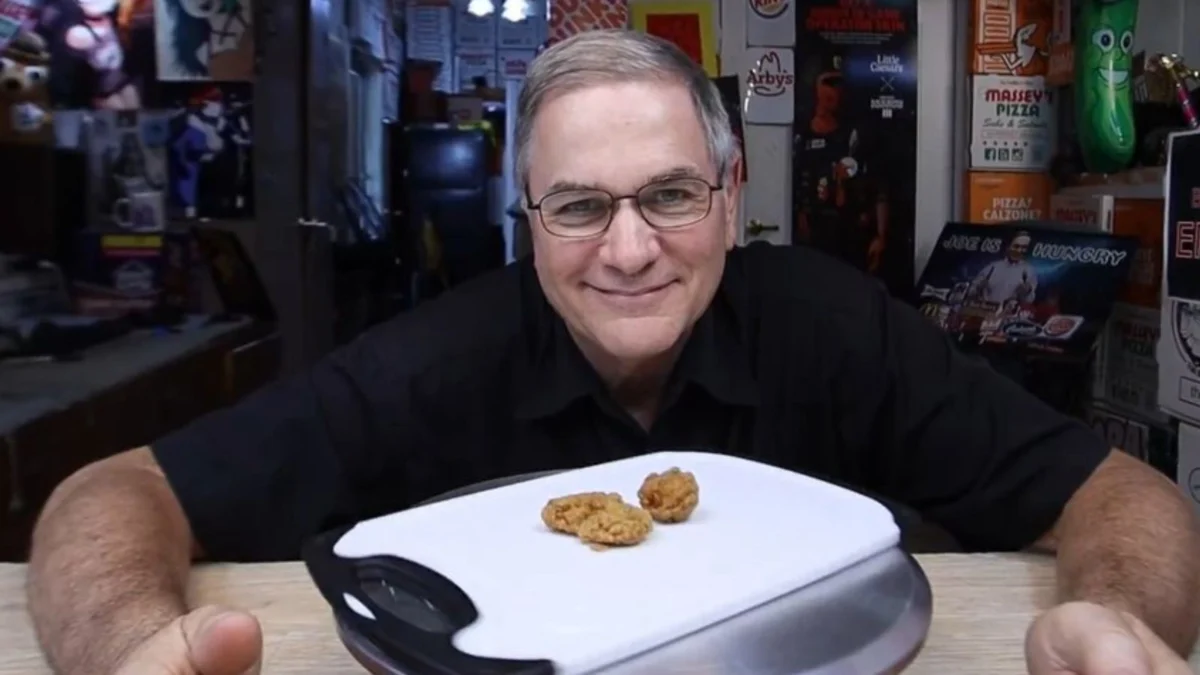
The digital landscape of food criticism has undergone a significant transformation over the last decade, transitioning from long-form blog posts and television segments to high-octane, short-form video content. At the forefront of this evolution is Joe Desaavedra, the creator behind the popular "Joe Is Hungry" brand. Recently, Desaavedra found himself at the center of a massive viral moment following his review of KFC’s reintroduced Popcorn Chicken. Despite his established presence across platforms like YouTube, TikTok, Instagram, and X (formerly Twitter), the creator admitted in a recent interview that the explosive success of this specific video caught him entirely off guard.
The video in question, which features Desaavedra’s signature high-production style and unique camera angles, has amassed nearly 20 million views across various social media platforms. The review focused on a product that has long been a subject of nostalgia for fast-food enthusiasts: KFC’s Popcorn Chicken. After a prolonged absence from the menu, the item’s return sparked significant online chatter, providing the perfect backdrop for a viral hit. However, for Desaavedra, the metrics achieved by the video exceeded even his most optimistic projections.
The Genesis of the Viral Review
The path to 20 million views began with a routine trip to KFC. For Joe Is Hungry, the process of reviewing food is less about the meal itself and more about the technical execution of the content. Speaking to TMZ, Desaavedra revealed that he initially viewed the KFC Popcorn Chicken review as a standard piece of content, describing his initial reaction to the finished product as "whatever." He noted that after uploading the video, he went to bed without expecting it to perform any differently than his previous work.
The reality he woke up to was a stark contrast to his expectations. Within hours, the video had eclipsed the five-million-view mark on X, a platform where algorithmic success can often be more elusive and unpredictable than on TikTok or Instagram. Desaavedra expressed a sense of bewilderment at the scale of the engagement, questioning the specific mechanics of the platform’s distribution. "I checked it when I went to bed and was ‘you know, whatever,’ and I looked at it in the morning, you know, five, six million, is that an M?" he remarked during his interview.
This surprise underscores a broader reality for modern content creators: the unpredictability of the viral cycle. Despite years of experience and a deep understanding of audience preferences, even top-tier influencers find themselves unable to fully predict which pieces of content will resonate on a global scale.
A Unique Aesthetic in a Crowded Market
One of the primary reasons for the success of Joe Is Hungry is the creator’s commitment to a specific, difficult-to-replicate visual style. While many food reviewers rely on a "car-mukbang" format—sitting in a vehicle and filming with a handheld smartphone—Desaavedra utilizes a more complex setup involving spinning tables and dynamic camera movements.
This technical complexity serves as a barrier to entry for would-be imitators. Desaavedra noted that his setup is a source of significant "trouble," stating that "nobody in their right mind" would attempt to copy it. This proprietary aesthetic has allowed him to carve out a niche in a crowded market that includes heavyweights such as Keith Lee and SamsPOV.
However, the very elements that make his videos visually stunning also present unique challenges. In the case of the KFC Popcorn Chicken, the small size of the product proved difficult to manage. Desaavedra admitted that he generally "hates" reviewing smaller items like nuggets or popcorn chicken because of the physical difficulty of securing them to his spinning equipment. The fact that his most difficult shoot resulted in his most successful video is a testament to the irony often found in digital media production.
The Return of KFC Popcorn Chicken: Context and Consumer Demand
To understand why the review resonated so deeply, one must look at the product itself. KFC’s Popcorn Chicken has a storied history within the fast-food industry. Originally introduced as a bite-sized alternative to traditional bone-in fried chicken, it became a staple of the 1990s and early 2000s fast-food culture. Its removal from the menu several years ago was met with significant backlash from a dedicated fanbase, leading to years of social media campaigns and petitions demanding its return.
KFC’s decision to bring the item back was a calculated move into the "nostalgia marketing" space, a strategy that has proven highly effective for brands like McDonald’s and Taco Bell. By reintroducing a beloved legacy product, KFC tapped into a pre-existing emotional connection with consumers. When Joe Is Hungry released his review, he wasn’t just reviewing a snack; he was providing a verdict on a piece of culinary nostalgia.
The intersection of a high-demand product and a high-quality reviewer created a "perfect storm" for the X and TikTok algorithms. Data suggests that food-related content performs exceptionally well when it involves "limited-time offers" or "returning favorites," as viewers use these reviews to decide whether the product lives up to their memories before spending their own money.
The Role of the Algorithm and Content Iteration
Desaavedra’s success is not merely a product of luck; it is the result of rigorous trial and error. In his discussion regarding the KFC video, he touched upon the intensive research he conducted on TikTok’s internal mechanics. He described a process of "hundreds of trial videos" where he would post content, observe its failure, delete it, and try again with a different approach.
This "fail and delete" methodology highlights the high-stakes nature of the attention economy. For a video to go viral, the first few seconds—often referred to as the "hook"—must be flawless. Desaavedra emphasized that "it’s all where you start," suggesting that the opening frames of his KFC review were likely the key to its massive distribution.
The discrepancy between platforms also remains a point of interest for digital analysts. While TikTok is built on an interest-based graph that can catapult unknown creators to fame overnight, X has recently pivoted toward a video-centric model under its new leadership. The fact that a food review could garner 20 million views on a platform traditionally associated with news and political discourse indicates a shifting user demographic and a growing appetite for lifestyle content on X.
Broader Implications for the Fast-Food Industry
The "Joe Is Hungry" effect is part of a larger trend where individual creators hold more sway over consumer behavior than traditional multi-million dollar advertising campaigns. In the past, a brand like KFC would rely on television commercials and billboards to announce a product return. Today, a single 60-second clip from a trusted reviewer can generate more organic reach and "social proof" than any traditional ad.
Industry analysts point to the "Keith Lee Effect"—where a positive review can lead to a restaurant being overwhelmed with customers—as the blueprint for this new era. While KFC is a global corporation and not a small local business, the principle remains the same. Viral reviews drive foot traffic. When 20 million people see a high-definition, slow-motion shot of crispy popcorn chicken, the psychological "nudge" toward the nearest KFC is significant.
Furthermore, this phenomenon highlights the importance of "authenticity" in marketing. Desaavedra’s admission that he found the filming process troublesome and his initial reaction to the video was "whatever" adds a layer of relatability that polished corporate marketing lacks. Consumers are increasingly skeptical of paid advertisements but remain highly receptive to the opinions of creators who appear to be giving an honest, unfiltered assessment.
Conclusion: The Future of Joe Is Hungry
As Joe Desaavedra continues to navigate his newfound level of fame, the success of the KFC Popcorn Chicken review serves as both a milestone and a case study. It proves that even in a saturated market, unique production values and a commitment to the craft can yield extraordinary results.
The creator’s surprise at his own success suggests a level of humility that is often missing in the influencer sphere. By focusing on the "trouble" of the setup and the technical hurdles of the job, Desaavedra maintains a focus on the work itself rather than the metrics. However, with 20 million views and a growing audience across all major social platforms, the "Joe Is Hungry" brand is no longer just a hobby or a niche channel; it is a significant force in the world of digital food media.
Moving forward, the industry will likely see more brands attempting to court creators with similar high-production styles. As the line between entertainment and advertisement continues to blur, the creators who can master the technical aspects of filmmaking while maintaining an authentic connection with their audience will be the ones who define the next decade of consumer culture. For now, Joe Desaavedra remains focused on the next meal, the next spin of the table, and the next unpredictable turn of the social media algorithm.



 Yuyun Lusiyani
 Joko Widodo
 Eva Lovia
 admin
admin
 Lina Irawan