
 Jia Lissa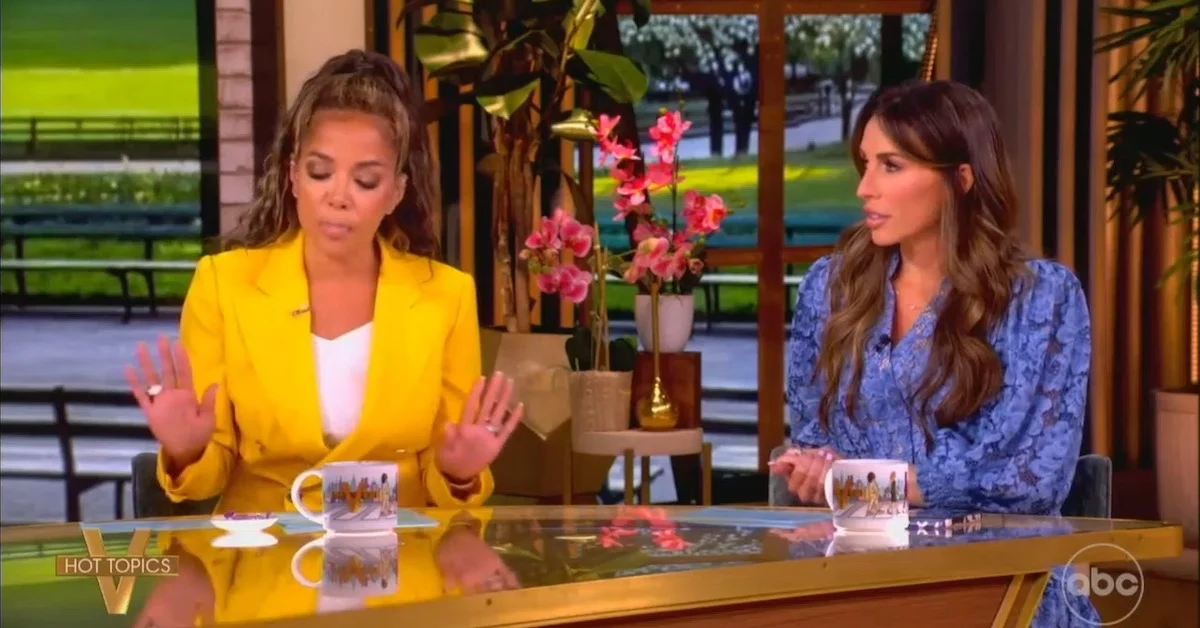
The daytime talk show "The View" became a flashpoint for the national debate over election integrity and voting access on Friday, as co-host Sunny Hostin broke sharply from her colleagues regarding the necessity and historical implications of voter identification requirements. The discussion centered on the "Safeguard American Voter Eligibility" (SAVE) Act, a piece of legislation championed by former President Donald Trump and House Republicans, which seeks to mandate proof of citizenship for federal elections. While the panel reached a consensus in their criticism of the specific bill, a deep ideological rift emerged concerning the broader concept of requiring identification at the polls, with Hostin labeling such measures a "slippery slope" toward systemic disenfranchisement.
The Legislative Context of the SAVE America Act
The debate on "The View" mirrors a broader legislative battle occurring in Washington, D.C. The SAVE Act, formally known as H.R. 8281, was introduced by Representative Chip Roy (R-TX) and passed the House of Representatives in July 2024. The bill proposes to amend the National Voter Registration Act of 1993 to require individuals to provide documentary proof of U.S. citizenship when registering to vote in federal elections.
Under the proposed law, acceptable forms of identification would include a passport, a birth certificate, or a specialized government-issued photo ID that indicates citizenship. Proponents of the bill argue that it is a necessary safeguard to prevent non-citizens from participating in U.S. elections, asserting that current loopholes undermine public confidence in the democratic process. Conversely, opponents argue that non-citizen voting is already illegal under federal law and is exceedingly rare, suggesting the bill serves primarily to create administrative hurdles for legitimate voters.
A Division of Perspectives on the Panel
The conversation began with co-hosts Alyssa Farah Griffin and Ana Navarro expressing their opposition to the SAVE Act, though both maintained that basic voter ID requirements are a reasonable and widely accepted standard. Navarro, a resident of Florida, noted that her state already requires identification to vote, describing the practice as a "non-issue" for the vast majority of the electorate.
The dialogue took a sharp turn when Hostin questioned the prevalence of such laws across the United States. Hostin initially suggested that only five states required voter ID, a figure that was immediately corrected by Griffin and Navarro, who clarified that 36 states currently have some form of voter identification requirement in place.
Hostin remained steadfast in her opposition, drawing a direct line between modern ID requirements and the discriminatory "Jim Crow" era tactics used to prevent African Americans from exercising their right to vote. She specifically referenced the "jelly bean" tests—a practice where Black citizens were forced to guess the number of jelly beans in a jar to qualify for registration—as a historical precursor to what she views as contemporary voter suppression.
"I believe that it will disproportionately affect African American voters," Hostin stated during the broadcast. "I believe that in my soul, and African Americans fought and died for the right to vote in this country. It reminds me of having to answer citizenship questions for Black people to vote, and I am just not—I won’t support it."
Historical Context: From Reconstruction to the Present
To understand Hostin’s perspective, it is necessary to examine the history of voting rights in the United States. Following the Civil War and the passage of the 15th Amendment, which prohibited the denial of the right to vote based on race, many Southern states implemented "Black Codes" and later Jim Crow laws. These included poll taxes, literacy tests, and grandfather clauses designed to bypass federal protections.
The "jelly bean" jar analogy Hostin cited refers to the arbitrary and impossible tasks set by white registrars to disqualify Black voters. These practices were largely dismantled by the Voting Rights Act of 1965, which granted the federal government oversight of elections in jurisdictions with a history of discrimination. However, the 2013 Supreme Court decision in Shelby County v. Holder struck down the formula used to determine which jurisdictions required federal "preclearance" for changing election laws, leading to a surge in new state-level voting regulations, including stricter ID requirements.
Data and Statistics on Voter ID Laws
The disagreement on "The View" highlights a complex statistical landscape regarding voter identification. According to the National Conference of State Legislatures (NCSL), as of 2024, 36 states have laws requesting or requiring voters to show some form of identification at the polls. These laws are generally categorized into two types:
- Strict Photo ID Laws: In these states (such as Georgia, Indiana, and Mississippi), voters without a valid photo ID must typically vote on a provisional ballot and return to an election office within a few days to show ID for their vote to count.
- Non-Strict ID Laws: In states like West Virginia or Florida, voters without ID may be able to cast a regular ballot if they sign an affidavit of identity or if poll workers can vouch for them.
Research from the Brennan Center for Justice indicates that millions of Americans—approximately 11% of the voting-age population—do not possess a current, government-issued photo ID. The center’s data suggests that these individuals are disproportionately low-income, racial and ethnic minorities, and elderly citizens. For these populations, the "indirect costs" of obtaining an ID—such as paying for a birth certificate, traveling to a DMV, and taking time off work—can function as a modern-day poll tax.
However, other studies, including a 2019 paper from the National Bureau of Economic Research, found that voter ID laws have had a "negligible" impact on overall voter turnout and do not significantly alter the composition of the electorate. This conflicting data provides the basis for the differing opinions held by the co-hosts.
The "Rural Voter" and "MAGA" Intersection
During the segment, Alyssa Farah Griffin argued that the SAVE Act might actually backfire on the Republican base. She posited that the bill’s stringent requirements for proof of citizenship, such as a passport or birth certificate, could pose a significant challenge for rural voters who may not have these documents readily available.
"I don’t believe this is something—honestly, I think it would be rural Americans who don’t have, you know, passports," Griffin noted. This sentiment was echoed by Joy Behar, who pointed out that many of these individuals are supporters of the "Make America Great Again" (MAGA) movement. Griffin concluded that the SAVE Act was "bizarre" because it could potentially disenfranchise the very demographic it seeks to empower.
Political Reactions and Implications for 2024
The SAVE Act has become a central talking point in the lead-up to the 2024 general election. Former President Donald Trump has frequently linked the bill to his claims regarding the 2020 election, asserting that without such measures, the upcoming vote will be subject to widespread fraud. In a post on his social media platform, Truth Social, Trump urged Republicans to "pass the SAVE Act, or go home and close your eyes."
On the other side of the aisle, the Biden-Harris administration and congressional Democrats have condemned the bill. In a Statement of Administration Policy, the White House argued that the legislation would "do nothing to safeguard our elections" and would instead "make it much harder for all eligible Americans to register to vote and increase the risk that eligible voters will be purged from the voter rolls."
The debate on "The View" reflects this national polarization. While Ana Navarro and Sara Haines attempted to differentiate between "common sense" state-level ID requirements and the "overreach" of the SAVE Act, Hostin’s refusal to concede on the broader issue of voter ID highlights the deep-seated distrust many advocates feel toward any legislation that adds a layer of bureaucracy to the ballot box.
Analysis of Broader Impacts
The clash between Hostin and her co-hosts underscores the difficulty of finding a middle ground in the "election integrity versus voting access" debate. From a legal standpoint, the SAVE Act faces a difficult path in the Democrat-controlled Senate, making its passage unlikely in the current session. However, the rhetoric surrounding the bill serves a potent political purpose, mobilizing voters on both sides of the issue.
For proponents, the push for the SAVE Act is about maintaining the sanctity of the "one person, one vote" principle. For opponents like Hostin, it is an echo of a dark chapter in American history, where "integrity" was often a euphemism for exclusion. As the 2024 election approaches, the arguments presented on "The View" will likely continue to resonate in courtrooms, legislative chambers, and living rooms across the country, as the nation grapples with how to secure its elections without compromising the rights of its citizens.
The segment concluded without a resolution, as Hostin maintained her stance that any move toward more restrictive ID laws constitutes a "slippery slope." The exchange remains a notable example of how historical memory and contemporary policy intersect in the modern American media landscape.

 Yuyun Lusiyani
 Joko Widodo
 Pevita Pearce
 admin
admin
