
 Amara Maple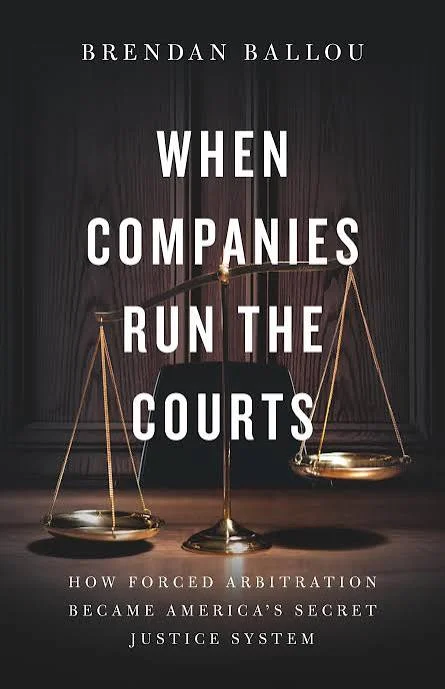
America operates a parallel justice system, largely hidden from public view, where fundamental rights to a fair trial are often circumvented. This clandestine mechanism, known as forced arbitration, is increasingly dictating the outcomes of disputes between powerful corporations and ordinary citizens. At its core, this system operates in secrecy, with arbitrators frequently compensated by the very companies being sued, leading to outcomes that overwhelmingly favor corporate interests.
Workers and consumers, ensnared by clauses often buried deep within terms of service agreements or employment contracts, find themselves trapped. When they lose before these private arbitration panels, there is typically no recourse, no appeal, and no access to the traditional public court system. This opaque process, through its inherent secrecy and potential for bias, enables companies to evade accountability, allowing banks to deceive customers and predators to act with alarming impunity. If corporations often appear to operate beyond the reach of the law, it is precisely because, in many instances, forced arbitration ensures they are.
Brendan Ballou, a former federal prosecutor and CEO of the Public Integrity Project, has meticulously documented this systemic issue in his new exposé, When Companies Run the Courts: How Forced Arbitration Became America’s Secret Justice System (PublicAffairs, 2026). Ballou’s work sheds critical light on how this hidden system undermines the principles of justice and tilts the scales profoundly in favor of the powerful.
The Genesis of a Hidden System
Ballou, in a recent interview with Corporate Crime Reporter, explained his motivation for writing the book: "I wanted to explain how our legal system favors big companies over regular people. I wanted to tell that story through this specific issue of forced arbitration." His goal was to illustrate "how the legal system can bend toward the very powerful."
The proliferation of forced arbitration clauses is staggering. Ballou noted that, "At least in some years, there are more arbitration cases filed before large arbitration providers than there are civil cases in the entire civil court system." He added, "By some measures, it’s eclipsing the federal court system." This statistic, however, only scratches the surface of the problem. According to Ballou, the true issue is not merely the redirection of cases, but that "forced arbitration kills cases entirely. People who should be bringing cases in one venue or another are unable to do so entirely because forced arbitration makes it fundamentally unfair and fundamentally unaffordable."
This widespread adoption of arbitration clauses has a relatively recent history, primarily taking root in the 1980s. This era was characterized by a prevailing narrative of a "litigation explosion" in the United States—a perceived deluge of frivolous lawsuits supposedly bankrupting businesses. However, Ballou challenges this premise, stating, "The evidence doesn’t match the story. And it’s not clear if that litigation explosion even happened." He further elaborates, "Litigation in the United States is pretty much in line with litigation in most other countries."
Despite the dubious factual basis of the "litigation explosion" narrative, it was powerfully advanced by influential interests. This led to a concerted effort, particularly by conservative judges, to push consumers and employees out of the traditional court system. Forced arbitration emerged as the primary vehicle for achieving this.
A Chronology of Legal Erosion: The Supreme Court’s Role
The legal foundation for the current pervasive use of forced arbitration lies in the Federal Arbitration Act (FAA) of 1925. Originally intended to enforce arbitration agreements in commercial disputes between sophisticated business entities, its scope was dramatically expanded by the U.S. Supreme Court through a series of landmark rulings.
- Early Interpretations (1980s-1990s): The Supreme Court began to interpret the FAA broadly, asserting that it preempted state laws that sought to limit arbitration. Key decisions during this period established that arbitration agreements were to be treated like any other contract and rigorously enforced, even in contexts far removed from the commercial disputes the FAA was originally designed to address. This effectively allowed companies to insert arbitration clauses into employment and consumer contracts.
- The Rise of "Contracts of Adhesion": A critical development was the Court’s acceptance of "contracts of adhesion" – the ubiquitous "click to accept" or "sign-on-the-dotted-line" agreements that consumers and employees encounter daily. These contracts are typically non-negotiable, presented on a take-it-or-leave-it basis. The Court ruled that these, too, were binding for forced arbitration, even when individuals were unaware of the arbitration clause.
- Banning Class Actions (AT&T Mobility v. Concepcion, 2011): This decision marked a watershed moment. The Supreme Court ruled that companies could use arbitration clauses to prevent consumers from joining class-action lawsuits, even if state law permitted such actions. This decision, as Ballou notes, meant that "people who would normally join a class action where companies were stealing tens or hundreds or a few thousand dollars for lots of people, each person would now have to bring those cases individually." The practical implication was that many small-value claims, which would be economically viable only as part of a class action, effectively became unpursuable. The cost of individual arbitration often far outweighs the potential recovery for such claims, rendering justice economically prohibitive for all but the most severe harms.
- Further Reinforcement (American Express Co. v. Italian Colors Restaurant, 2013): The Court further solidified its stance, ruling that arbitration agreements prohibiting class actions were enforceable even when the cost of individual arbitration exceeded the potential recovery. This reinforced the notion that the FAA prioritized the enforcement of arbitration agreements above all else, even if it effectively denied a party an effective means of redress.
Ballou concludes that "what we have is a Supreme Court that has reinterpreted the law to make arbitration pervasive in a way that was never intended to be." This judicial activism, primarily driven by conservative justices, has fundamentally reshaped the landscape of civil justice in America.
The Mechanics of a Secretive and Biased System
The characteristics of forced arbitration fundamentally differentiate it from traditional public courts:
- Secrecy: Unlike public court proceedings, which are generally open to scrutiny, arbitration is overwhelmingly clandestine. "The proceedings are secret. You can’t walk in or dial into an arbitration proceeding. The written decisions are not published. Typically, you can’t see what the judge ruled or why. And often, you can’t talk about the result of the arbitration," Ballou explains. This veil of secrecy prevents public oversight, inhibits the development of consistent legal precedent, and makes it impossible to track patterns of corporate misconduct.
- Corporate-Funded Judges: A core criticism is that the arbitrators, who act as judges, are paid by the corporations involved in the dispute. This creates a powerful incentive for arbitrators to rule in favor of the "repeat player"—the corporation—to secure future business. While arbitration providers assert their neutrality, critics argue that the financial structure inherently biases the system. This stands in stark contrast to public courts, where judges are publicly funded and ostensibly independent.
- Lack of Appeal: One of the most critical aspects is the near-total absence of an appeals process. Once an arbitrator makes a decision, it is generally final and binding, even if there are errors of law or fact. This means that individuals have one chance to present their case, with virtually no opportunity to challenge an unfavorable outcome, no matter how unjust it may seem.
- Geographic Disadvantage and Cost Barriers: Forced arbitration clauses often allow corporations to dictate the location of the arbitration, which can be thousands of miles from the claimant’s home, imposing immense travel and logistical costs. Ballou cites a Supreme Court case from the 1990s involving a Subway shop dispute in Montana, where arbitration was compelled in Connecticut. He also highlights the distressing case of a cruise ship worker, Jane Doe, who was allegedly raped by a co-worker and forced to arbitrate her sexual assault case in the Philippines, a location far from her residence and the incident’s origin. "Having arrangements that require a huge cost for just participating is certainly a strategy and one that the Supreme Court found to be permissible," Ballou notes. These tactics effectively price out many legitimate claims.
Devastating Personal Impacts: Cases from the Book
Ballou’s book provides harrowing examples of how forced arbitration impacts real people:
- The Jeffrey Piccolo Case: This profoundly disturbing case illustrates the absurd reach of forced arbitration. Jeffrey Piccolo’s wife died from an allergic reaction after receiving assurances from a Disney World restaurant that a meal was safe. When Piccolo sought to sue Disney for wrongful death, the company attempted to compel him into arbitration. Their argument? Piccolo had signed an arbitration agreement years earlier when subscribing to Disney Plus, their streaming service. Ballou calls it "remarkable that somebody can be compelled into arbitration simply because they had signed up for a streaming service." Disney eventually relented and allowed the case to proceed in public court due to "overwhelmingly bad publicity nationally," a rare victory against the system.
- The Jane Doe Case: This case, which begins Ballou’s book, describes a cruise ship worker, Jane Doe, who was allegedly raped by a co-worker. She was forced into arbitration to pursue her sexual assault claim, with the proceedings mandated to take place in the Philippines. The outcome of her case remains unknown, a testament to the system’s inherent secrecy.
These individual stories underscore the systemic problem. Data suggests a significant disparity in outcomes: in small claims courts, consumers win up to 90 percent of the time, whereas in corporate-mandated arbitration, the success rate for consumers drops dramatically to between 20 percent and 30 percent. This stark difference is largely attributed to the inherent power imbalance: "The basic challenge that you have is one side is paying for the services and is appearing before these firms more than the other side," Ballou explains, highlighting the "repeat player" effect.
Constitutional Rights and Unsuccessful Challenges
Critics often raise concerns about forced arbitration’s impact on the constitutional right to a jury trial, a cornerstone of American justice. However, these constitutional challenges have largely been unsuccessful. The Supreme Court has consistently held that individuals can contract away their right to a jury trial. Ballou states, "I don’t necessarily agree with that decision. The Supreme Court says that arbitration agreements, no matter how unfair, even if they are unconscionable, will be enforced according to their terms." The conservative bloc on the Supreme Court has been "absolutely adamant that forced arbitration is enforceable," cementing its legal standing despite its profound implications for access to justice.
Broader Implications and Calls for Reform
The pervasive nature of forced arbitration has far-reaching consequences:
- Erosion of Corporate Accountability: By privatizing disputes and shrouding them in secrecy, forced arbitration significantly reduces corporate accountability. Companies face less public scrutiny for harmful practices, whether it’s wage theft, discrimination, product defects, or environmental damage. Without public court records, patterns of misconduct are harder to detect, and corporate behavior remains largely unchecked.
- Diminished Access to Justice: For many, particularly those with smaller claims or limited resources, forced arbitration effectively eliminates their ability to seek redress. The high costs, inconvenient venues, and lack of transparency make it an insurmountable barrier, particularly for vulnerable populations.
- Weakening of Public Law: The shift from public courts to private arbitration diminishes the role of the judiciary in interpreting and shaping public law. Court decisions create precedents that apply broadly, guiding future conduct and clarifying legal standards. Arbitration decisions, being secret and non-precedential, do not contribute to this public body of law, leading to a fragmented and less transparent legal landscape.
- Impact on Labor Rights: Forced arbitration clauses in employment contracts often prevent workers from collectively bargaining or joining class actions against employers for issues like wage violations or discrimination. This significantly weakens worker power and undermines labor protections.
Responses and the Path Forward
Consumer advocacy groups, labor unions, and civil rights organizations have consistently opposed forced arbitration, citing its inherent unfairness and its role in shielding corporations from accountability. They argue that it creates a two-tiered justice system, where the powerful operate under a different set of rules than ordinary citizens.
Legislative efforts, such as the proposed Arbitration Fairness Act, have sought to limit or ban forced arbitration in consumer and employment contracts at the federal level, but have yet to gain sufficient traction. Some specific carve-outs have been achieved, such as the Ending Forced Arbitration of Sexual Assault and Sexual Harassment Act of 2021, which allows survivors to choose public litigation instead of arbitration. However, these are incremental changes, and the broader system remains firmly in place.
Brendan Ballou’s book, When Companies Run the Courts, serves as a crucial wake-up call, exposing the mechanics and devastating impacts of this hidden justice system. By bringing these issues into the public discourse, Ballou aims to foster a greater understanding of how the legal system has been "bent toward the very powerful" and to catalyze a broader movement towards reform. The fight for equitable access to justice, and against the pervasive influence of forced arbitration, remains an ongoing and critical battle for the integrity of America’s legal system. The continued public and legislative engagement will be essential to ensure that justice remains accessible and transparent for all, not just for the powerful.


 Jia Lissa
 Yuyun Lusiyani
 Joko Widodo
 Eva Lovia

 Pevita Pearce