
 Lina Irawan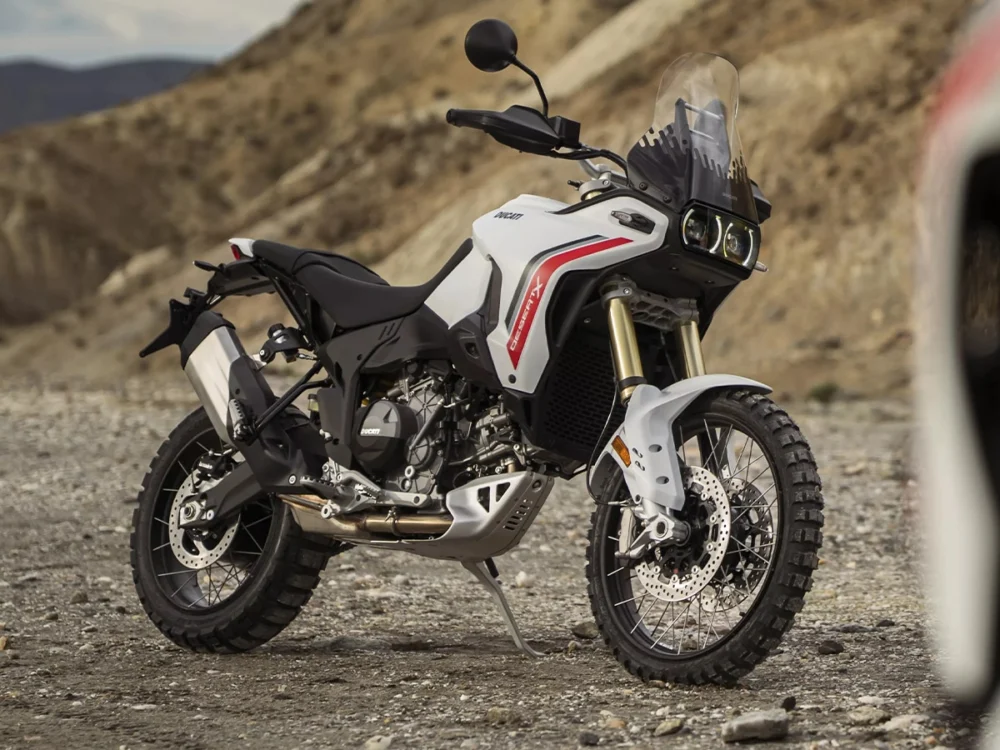
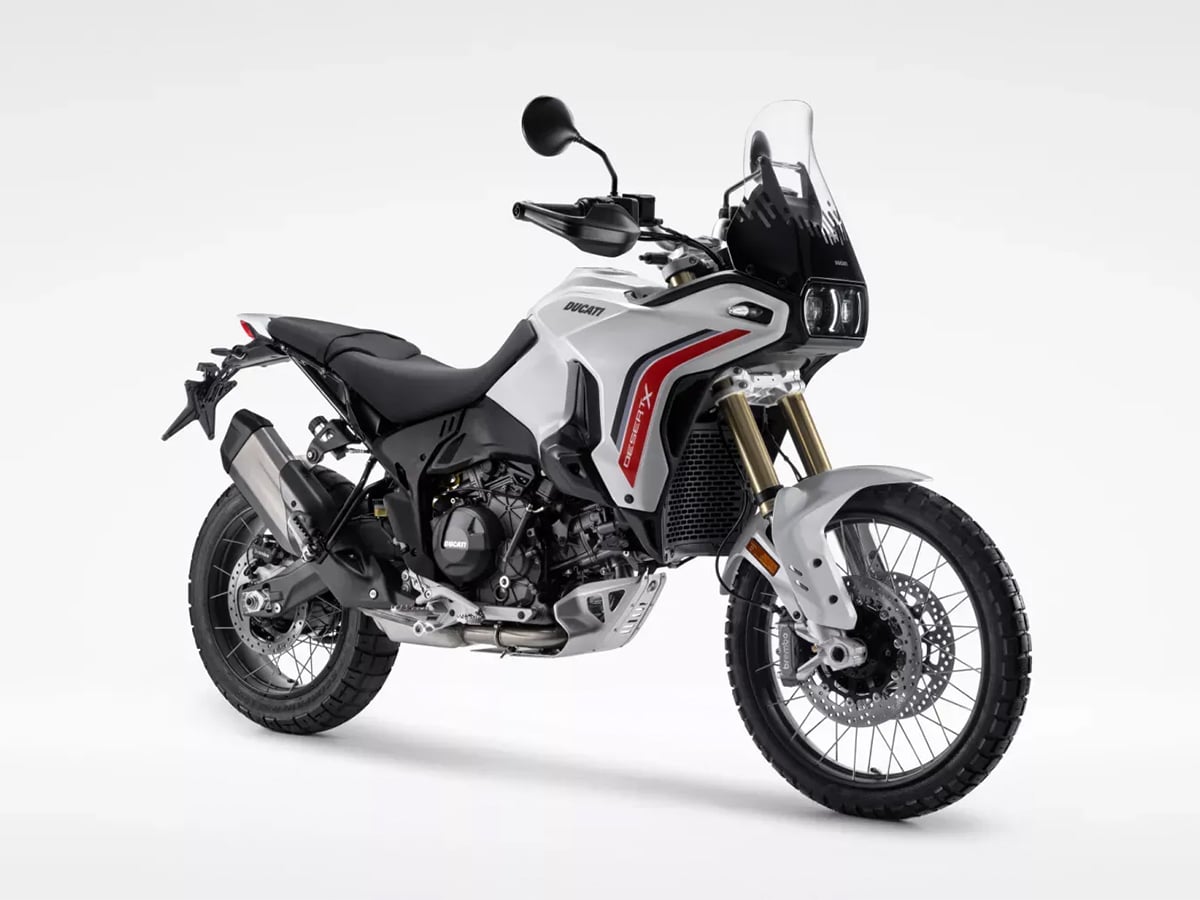
Ducati has officially unveiled the 2026 DesertX V2, marking a significant milestone in the Italian manufacturer’s aggressive expansion into the global off-road and adventure touring markets. With a starting price of AUD$28,100 (NZD$30,693), the DesertX V2 represents a technical evolution of the platform that first debuted in 2022, signaling Ducati’s intent to compete directly with established mid-weight adventure leaders. The new model joins the Desmo450 MX motocross bike and the Multistrada V4 Rally in a diversifying portfolio designed to capture a broader demographic of riders who demand both high-performance asphalt dynamics and genuine "go-anywhere" capability.
The 2026 iteration is not merely a cosmetic update; it introduces a comprehensive suite of mechanical and electronic overhauls. Central to these updates is the implementation of a new 890 cc Ducati V2 engine, which the Borgo Panigale-based firm identifies as the lightest four-valve twin-cylinder engine in its history. This weight reduction is paired with a sophisticated 6-axis Inertial Measurement Unit (IMU), a piece of technology more commonly associated with high-end supercars and liter-class superbikes, now tuned specifically for the unpredictable rigors of off-road navigation.
The Heart of the Machine: The 890 cc V2 Powerplant
The transition to the new 890 cc V2 engine is the defining characteristic of the 2026 DesertX. While the previous generation utilized the 937 cc Testastretta 11°, the new 890 cc unit focuses on mass centralization and weight optimization. Producing 110 horsepower at 9,000 rpm and 92 Nm of maximum torque at 7,000 rpm, the engine provides a power-to-weight ratio that places it at the top of the middleweight adventure segment.
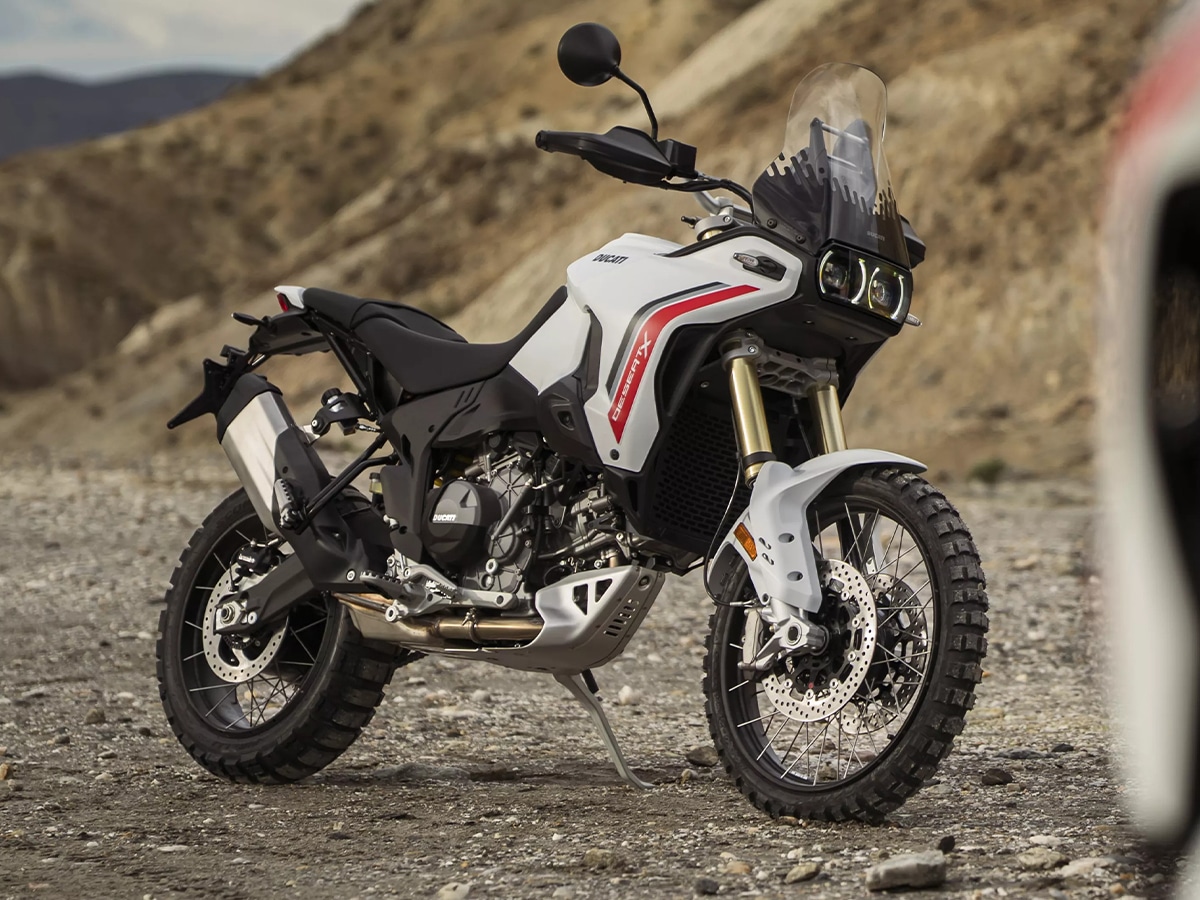
The engine’s design philosophy emphasizes low-end tractability, which is essential for technical climbs and loose terrain, while maintaining the high-revving character expected of a Ducati. By reducing the overall weight of the engine, Ducati engineers have been able to lower the bike’s center of gravity, significantly improving low-speed maneuverability. Furthermore, the engine serves as a structural element of the chassis, a design choice that eliminates the need for a traditional full-length frame and further sheds unnecessary kilograms.
Complementing the new engine is the Ducati Quick Shift (DQS) 2.0. Unlike previous iterations, this version is sensorless, making it more resilient to the environmental hazards of off-road riding, such as mud, dust, and direct impacts. This system allows for clutchless upshifts and downshifts, enabling the rider to maintain focus on the terrain without the distraction of manual clutch modulation during rapid gear transitions.
Chassis Engineering and Suspension Dynamics
The 2026 DesertX V2 utilizes a unique monocoque frame architecture. In this setup, the engine acts as a stressed member, connected to a sturdy rear trellis frame. This hybrid approach is designed to provide the rigidity necessary for high-speed road touring while offering the flexibility required to absorb the shocks of off-road jumps and rock gardens. A notable practical update is the redesigned access to the air filter; riders can now reach and clean the filter with minimal tools, a critical feature for long-distance rally raids where dust ingestion is a constant threat.
The suspension package continues Ducati’s partnership with KYB (Kayaba). At the front, the bike features a 46 mm upside-down fork with 230 mm of travel. These forks are fully adjustable, with independent compression and rebound circuits on each leg, allowing for granular tuning based on rider weight and luggage load. The rear is managed by an aluminum double-sided swingarm paired with a fully adjustable KYB monoshock via a full-floater progressive linkage, offering 220 mm of travel.

While the 220 mm of rear travel is slightly less than the 240 mm found on the KTM 890 Adventure R, it matches the Yamaha Ténéré 700 World Raid. This positioning suggests that Ducati is aiming for a balanced "all-rounder" profile—capable enough for the Erzbergrodeo but refined enough for cross-continental highway stints.
Electronic Sophistication: The 6-Axis IMU Integration
The most significant technological leap in the 2026 model is the integration of a 6-axis Inertial Measurement Unit (6D IMU). This system measures the bike’s position in space across six dimensions: roll, pitch, and yaw, as well as the rate of change for each. This real-time data stream allows the bike’s onboard computers to make micro-adjustments to the safety systems instantaneously.
The IMU governs several key features:
- Four-Level Cornering ABS: This system adjusts braking pressure based on the lean angle of the bike, preventing low-side slides during mid-corner braking. For off-road use, the ABS can be restricted to the front wheel only or disabled entirely.
- Ducati Traction Control (DTC): Optimized for varying levels of grip, from wet tarmac to deep sand.
- Ducati Wheelie Control (DWC): Prevents the front wheel from lifting excessively under hard acceleration, a common occurrence given the V2’s 110 HP output.
- Engine Brake Control (EBC): Allows riders to customize the level of deceleration when the throttle is closed, aiding in stability during aggressive corner entries.
Riders can toggle between six distinct Riding Modes: Sport, Touring, Urban, Wet, Enduro, and Rally. Each mode pre-configures the engine maps and electronic interventions to suit the environment. The "Rally" mode, in particular, is designed for experienced off-roaders, providing full engine power with minimal electronic intrusion.
Ergonomics and Rally-Ready Utility
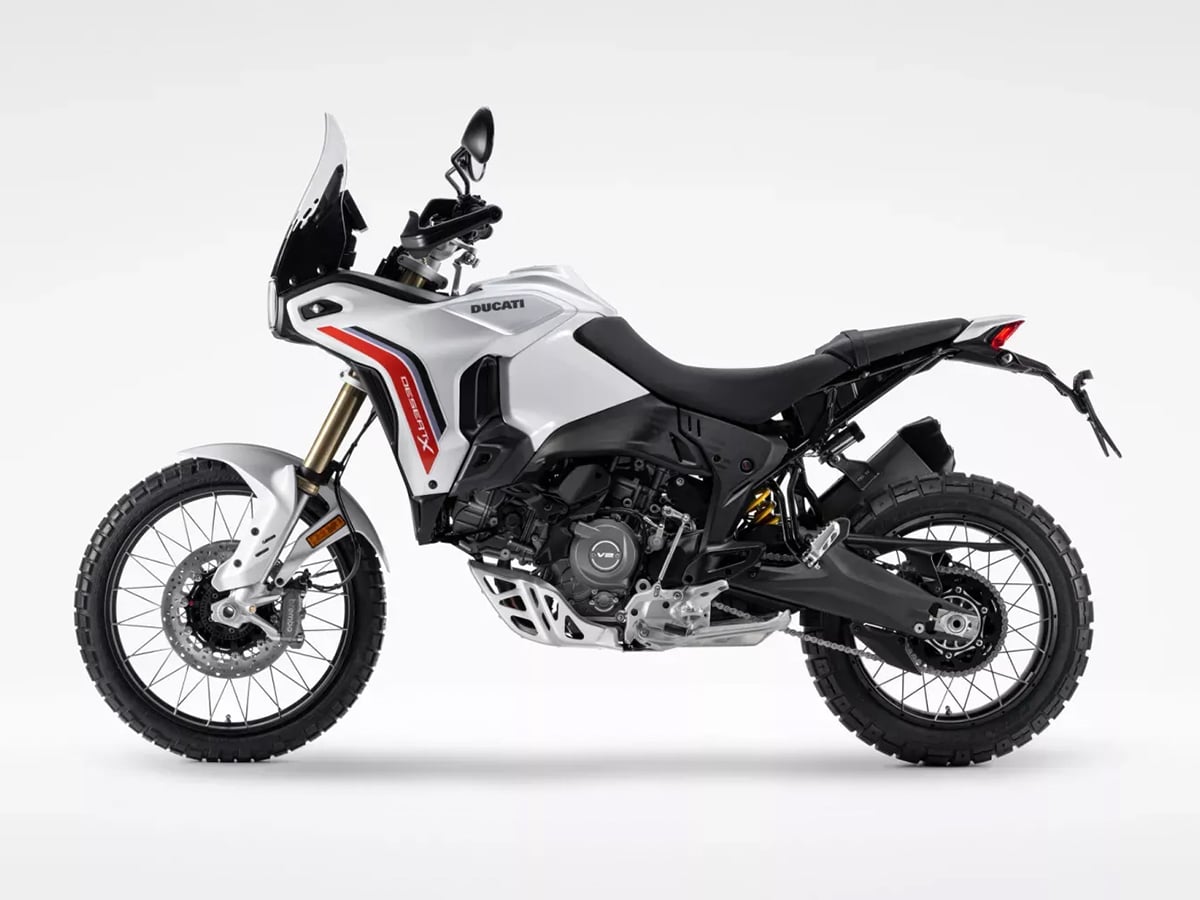
Recognizing that adventure riding often involves long hours in the saddle and frequent transitions between sitting and standing, Ducati has revised the ergonomics of the DesertX V2. The footpegs have been moved slightly rearward, while the handlebars and seat have been shifted forward. This creates a more aggressive, "attack" posture that improves front-end feel.
The fuel tank has also undergone a redesign. The new 18-liter polymer tank is slimmer between the rider’s knees, making it easier to grip the bike during technical maneuvers. For those planning long-distance expeditions, Ducati offers an 8-liter rear auxiliary tank. This secondary reservoir mounts to the rear subframe and can be activated via the dashboard once the main tank reaches a certain level, extending the bike’s range to nearly 600 kilometers under optimal conditions.
Additional ruggedized features include:
- Textured side panels: Enhanced grip for boots and knees when standing.
- Standard seat height of 880 mm: High enough for ground clearance but manageable for most riders. An optional lowering kit reduces this to 840 mm.
- Reinforced hand guards and bull bar: Standard equipment to protect levers and engine casings from falls.
- 5-inch TFT Dashboard: A high-resolution display with Bluetooth connectivity and turn-by-turn navigation. The "Rally" display mode mimics the look of a professional rally roadbook.
Historical Context and Competitive Landscape
The DesertX platform was originally inspired by the Cagiva Elefant of the 1990s, a bike that won the Paris-Dakar Rally powered by a Ducati engine. Since its official launch in 2022, the DesertX has proven its mettle in some of the world’s most grueling off-road competitions. Ducati’s factory and privateer teams have campaigned the bike in the Erzbergrodeo, the Rally of Albania, the Transanatolia, and the NORRA Mexican 1000 Rally.
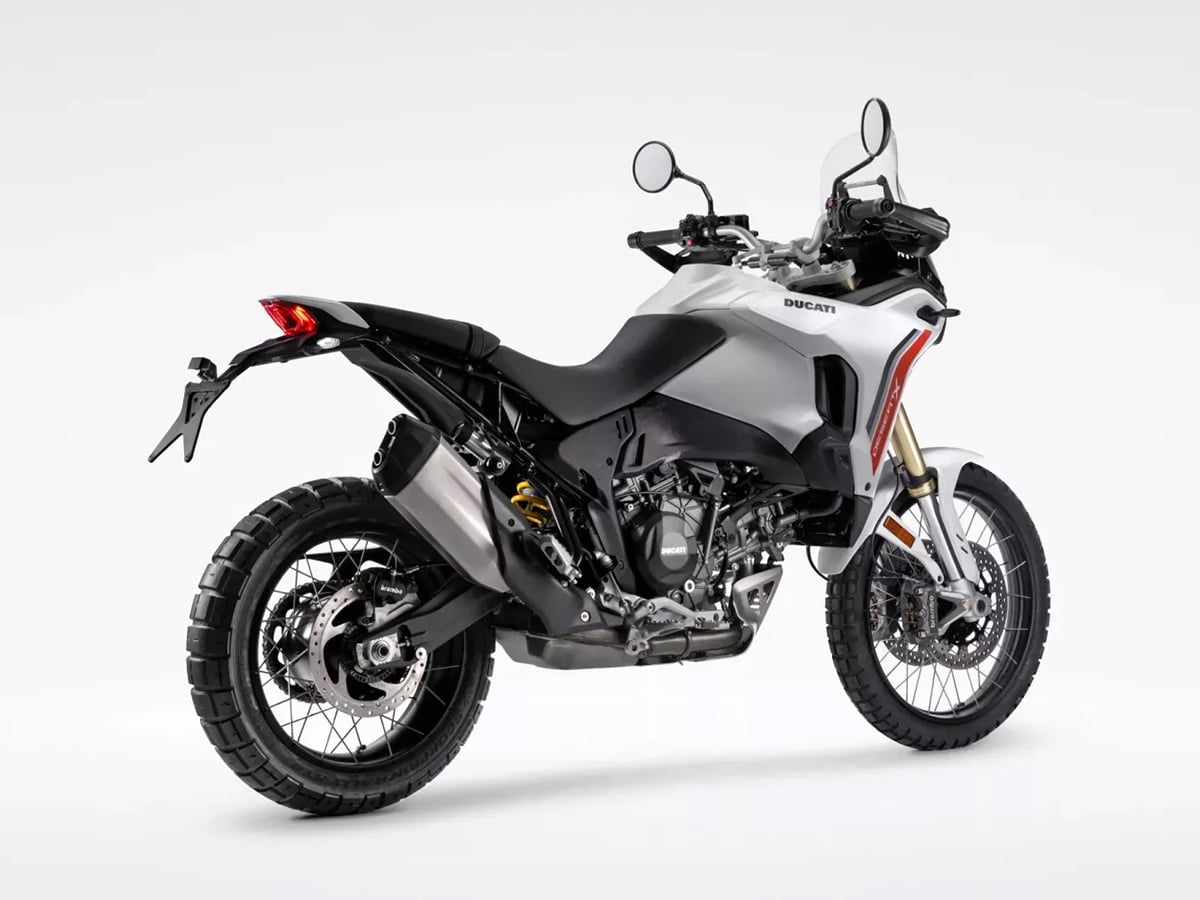
The 2026 V2 model is the result of data gathered from these competitive outings. By moving to a lighter engine and more sophisticated electronics, Ducati is addressing the primary criticisms of the original model: weight and electronic complexity.
In the current market, the DesertX V2 faces stiff competition. The KTM 890 Adventure R remains the benchmark for pure off-road performance, weighing in at approximately 200 kg (dry). The DesertX V2, at 209 kg (without fuel), is now within striking distance of the KTM’s agility while offering the premium fit, finish, and road manners for which Ducati is famous. Other competitors, such as the Triumph Tiger 900 Rally Pro and the Honda Africa Twin, offer more comfort-oriented features but lack the rally-bred focus of the DesertX.
Market Availability and Global Pricing
The rollout of the 2026 Ducati DesertX V2 will follow a staggered global schedule. European enthusiasts will be the first to receive the bike, with deliveries expected in April 2026. This will be followed by the North American market.
For the Asia-Pacific region, Ducati has confirmed that the bike will arrive in Japan and Australia starting in June 2026.
- Australia: Starting from AUD$28,100
- New Zealand: Starting from NZD$30,693
Ducati is also offering an extensive catalog of accessories at launch. This includes aluminum panniers developed for heavy-duty use and a "frameless" soft bag kit designed in collaboration with Mosko Moto, catering to the "light and fast" adventure crowd.
Fact-Based Analysis of Implications
The release of the DesertX V2 signifies a broader shift in Ducati’s corporate strategy. For decades, the brand was synonymous with the "Red" of the racetrack—asphalt, speed, and MotoGP dominance. However, the global surge in adventure motorcycling has made the off-road segment too lucrative to ignore.
By investing heavily in the V2 engine and IMU technology for the DesertX, Ducati is signaling that it no longer views off-road bikes as a niche side-project. Instead, the DesertX is becoming a core pillar of the brand’s identity. The use of the "V2" moniker also helps streamline Ducati’s naming conventions, aligning the adventure bike with the Panigale V2 and Streetfighter V2, thereby creating a cohesive brand hierarchy based on engine architecture.
Industry analysts suggest that this move will likely pressure other European manufacturers to accelerate their electronic development. The inclusion of a 6-axis IMU in a mid-weight adventure bike sets a new standard for the segment, forcing competitors to choose between lower price points or matching Ducati’s technological sophistication. As the 2026 model year approaches, the DesertX V2 stands as a testament to Ducati’s ability to blend its racing heritage with the rugged demands of the modern adventurer.


 Jia Lissa
 Yuyun Lusiyani
 Joko Widodo
 Eva Lovia

 Pevita Pearce