
 Joko Widodo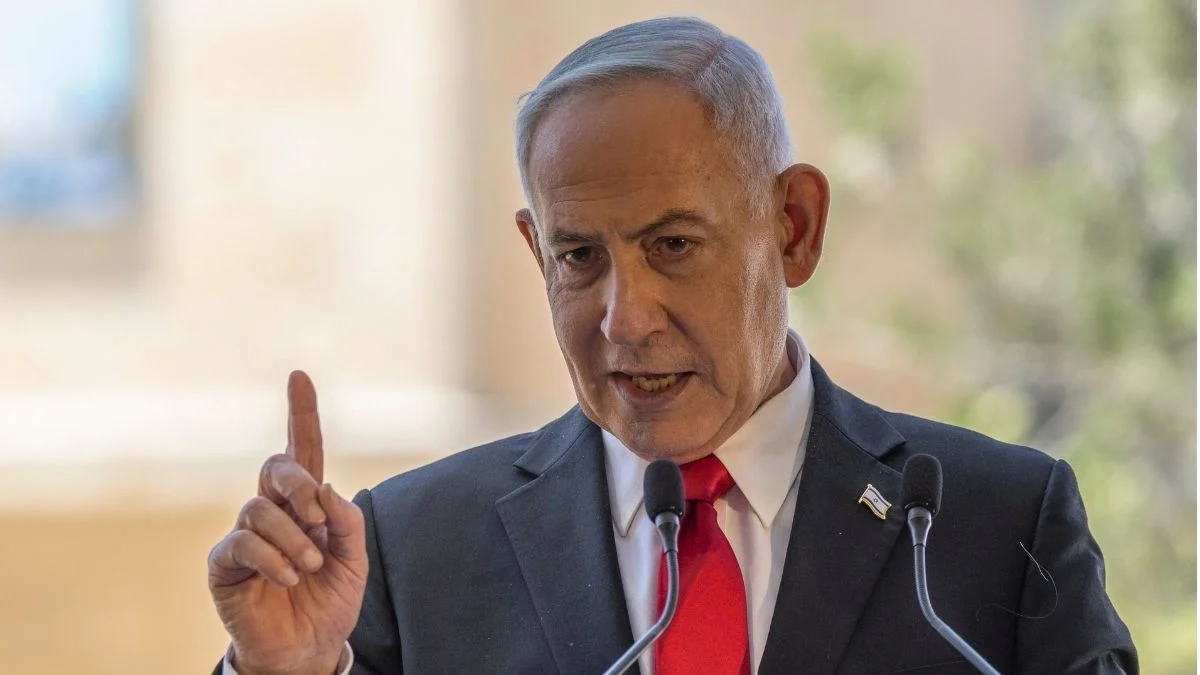
Israeli Prime Minister Benjamin Netanyahu has vehemently accused New York City Mayor Zohran Mamdani of "fomenting hate" in response to the mayor’s call for federal authorities to enforce an International Criminal Court (ICC) arrest warrant against the Israeli leader. This sharp exchange escalates tensions ahead of a critical diplomatic period, with world leaders slated to convene in New York for the United Nations General Assembly in September. The controversy highlights the complex intersection of international law, political rhetoric, and diplomatic immunity, particularly as Israel remains engaged in protracted conflicts on multiple fronts.
The confrontation was ignited last week when Mayor Mamdani publicly declared that Prime Minister Netanyahu would not be a welcome figure in New York City. Mamdani characterized Netanyahu as a "war criminal" and asserted that he should face arrest should he attend the upcoming UNGA session. While acknowledging that the City of New York itself does not possess the independent authority to execute an ICC warrant, Mamdani explicitly urged the federal government of the United States to take action. "I want to be equally clear, Benjamin Netanyahu is not welcome in New York City, nor is any other war criminal at large," Mamdani stated, emphasizing that his remarks were not directed at any specific religious or ethnic group, but rather at individuals facing such serious international accusations.
Prime Minister Netanyahu, in a notable appearance on Fox News Channel’s "Sunday Morning Futures," unequivocally rejected Mamdani’s framing of the situation. Netanyahu argued that a mayor’s role should be to represent all constituents, irrespective of their background. "He’s supposed to be the mayor of all New Yorkers – Jews, Christians, Muslims, everyone," Netanyahu stated. "But he’s trying to turn one group against the other." The Israeli Prime Minister confirmed his unwavering intention to travel to New York in September for the UNGA, underscoring that the mayor’s stance would not deter his participation.
The ICC’s decision to seek arrest warrants for Netanyahu, along with other Israeli and Hamas officials, stems from allegations of war crimes and crimes against humanity committed during the ongoing conflict in Gaza. The court’s prosecutor, Karim Khan, announced in May that there were reasonable grounds to believe that Netanyahu and Israeli Defense Minister Yoav Gallant bore criminal responsibility for starvation of civilians, willful killing, and intentionally directing attacks against a civilian population in Gaza. The warrant request for Hamas leaders focused on similar allegations, including murder, hostage-taking, and sexual violence.
Netanyahu has consistently dismissed the ICC’s war crimes charges as baseless. Adding another layer to the controversy, Netanyahu pointed to recent allegations of sexual misconduct against the ICC’s chief prosecutor, Karim Khan, who was reportedly removed from his position on Friday. Netanyahu suggested that the warrant request was an attempt to divert attention from this internal scandal within the ICC. The Israeli Prime Minister’s position is bolstered by strong support from within the United States. Former President Donald Trump, via a post on his Truth Social platform, assured Netanyahu that he "will not be arrested, in any way, shape, or form, while in the United States of America." This statement from a prominent political figure indicates a potential divergence between the U.S. federal government’s stance and the diplomatic pressure exerted by international bodies and some local officials.
The current geopolitical climate surrounding Israel is exceptionally charged. The nation remains deeply entrenched in a multifront conflict that began with the Hamas attacks on October 7, 2023. In response to these attacks, Israel launched extensive military operations in Gaza. The conflict has also spilled over into regional tensions. On February 28, Israel joined U.S.-led strikes against Iran, escalating a long-standing shadow war between the two nations. More recently, following sustained Hezbollah attacks from Lebanon, Israel initiated ground operations in southern Lebanon, further widening the scope of regional instability.
Background and Chronology of the Dispute
The exchange between Prime Minister Netanyahu and Mayor Mamdani is part of a larger and ongoing international debate regarding accountability for actions taken during armed conflicts. The ICC, established by the Rome Statute in 2002, has jurisdiction over genocide, crimes against humanity, war crimes, and the crime of aggression. While many nations are signatories to the Rome Statute, the United States, Israel, and several other countries are not, creating complex legal and political challenges when the court seeks to investigate or prosecute individuals from these non-member states.
October 7, 2023: Hamas launches a large-scale, unprecedented attack on Israel, killing approximately 1,200 people and taking around 240 hostages. This event marks the beginning of the current phase of the Israel-Hamas conflict.
Late 2023 – Early 2024: The ICC prosecutor’s office initiates preliminary examinations into alleged crimes committed by all parties in the Israeli-Palestinian conflict. This process involves gathering evidence and assessing whether there is a reasonable basis to believe that crimes within the ICC’s jurisdiction have been committed.
May 2024: ICC Prosecutor Karim Khan announces he is seeking arrest warrants for Prime Minister Benjamin Netanyahu, Defense Minister Yoav Gallant, and three senior Hamas leaders – Yahya Sinwar, Mohammed Deif, and Ismail Haniyeh – for alleged war crimes and crimes against humanity. The prosecutor’s office states that "the crimes against humanity alleged to have been committed include… murder, extermination, enslavement, deportation or forcible transfer of population, imprisonment or other severe deprivation of physical liberty, torture, rape and other forms of sexual violence… and persecution."
June 2024 (Specific Dates Unclear in Original Report): Mayor Zohran Mamdani of New York City publicly states that Prime Minister Netanyahu is not welcome in the city and calls for federal enforcement of the ICC warrant.
June 2024 (Specific Dates Unclear in Original Report): Prime Minister Benjamin Netanyahu responds to Mayor Mamdani’s remarks during an interview on Fox News, accusing the mayor of "fomenting hate" and reaffirming his intention to visit New York in September.
Recent Weeks (Leading up to the original report): Reports emerge of alleged sexual misconduct allegations against ICC Prosecutor Karim Khan, with some outlets reporting his removal from a specific position on Friday prior to Netanyahu’s interview.
Broader Implications and Analysis
The verbal sparring between Prime Minister Netanyahu and Mayor Mamdani underscores a significant diplomatic challenge for the United States, which hosts the United Nations headquarters. While U.S. law generally grants foreign heads of state immunity from prosecution while in the country, the ICC operates under a different legal framework. The U.S. position on the ICC’s jurisdiction is complex; while not a member state, it cooperates with the court in certain circumstances. The federal government’s stance, as suggested by former President Trump’s statement, appears to prioritize diplomatic relations and the protection of visiting heads of state over immediate enforcement of ICC warrants.
Mayor Mamdani’s call for federal action, while perhaps symbolically potent, highlights the limitations of municipal authority in international legal matters. However, it also serves to amplify public discourse and pressure on the federal government to take a more definitive position on the ICC’s actions and the allegations against Netanyahu. This could create a divide between local political sentiment and federal foreign policy.
The timing of this dispute is particularly sensitive. The UN General Assembly in September is a crucial forum for international diplomacy, where world leaders engage in high-level discussions on global challenges. Any controversy surrounding the presence of a head of state facing international arrest warrant demands can detract from the summit’s agenda and create diplomatic friction among member states.
Furthermore, the allegations against Netanyahu and other officials are part of a wider international effort to hold individuals accountable for actions during conflicts. While Israel views the ICC’s actions as politically motivated and an infringement on its sovereignty, international human rights organizations and many countries see it as a necessary step towards ensuring justice for victims of alleged war crimes. The outcome of the ICC’s warrant requests and any potential legal proceedings will have long-term implications for international law, accountability mechanisms, and the ongoing efforts to achieve peace and stability in the Middle East.
The Israeli Prime Minister’s defense strategy, which includes dismissing the charges as "bogus" and questioning the credibility of the ICC prosecutor, reflects a broader pattern of challenging the legitimacy of international legal bodies when their actions are perceived as detrimental to national interests. This approach is not unique to Israel and is often employed by states facing international scrutiny.
The ongoing conflicts in which Israel is involved – particularly the war in Gaza and the escalating tensions with Hezbollah on the Lebanese border – create a backdrop of persistent humanitarian concern and international attention. The rhetoric surrounding the ICC warrant request is intrinsically linked to these ongoing events, amplifying the stakes for all parties involved and shaping global perceptions of the conflict and the pursuit of justice.
The original reporting by Devanshi Basu for Mandatory provides a concise overview of the immediate exchange. However, the deeper context of the ICC’s role, the history of U.S. engagement with international tribunals, and the complex geopolitical landscape in which these events unfold are essential for a comprehensive understanding of this significant diplomatic development. The situation remains fluid, with potential ramifications for international relations, human rights law, and the pursuit of accountability for alleged atrocities.



 Jia Lissa
 Yuyun Lusiyani
 Eva Lovia

 Pevita Pearce