
 Jia Lissa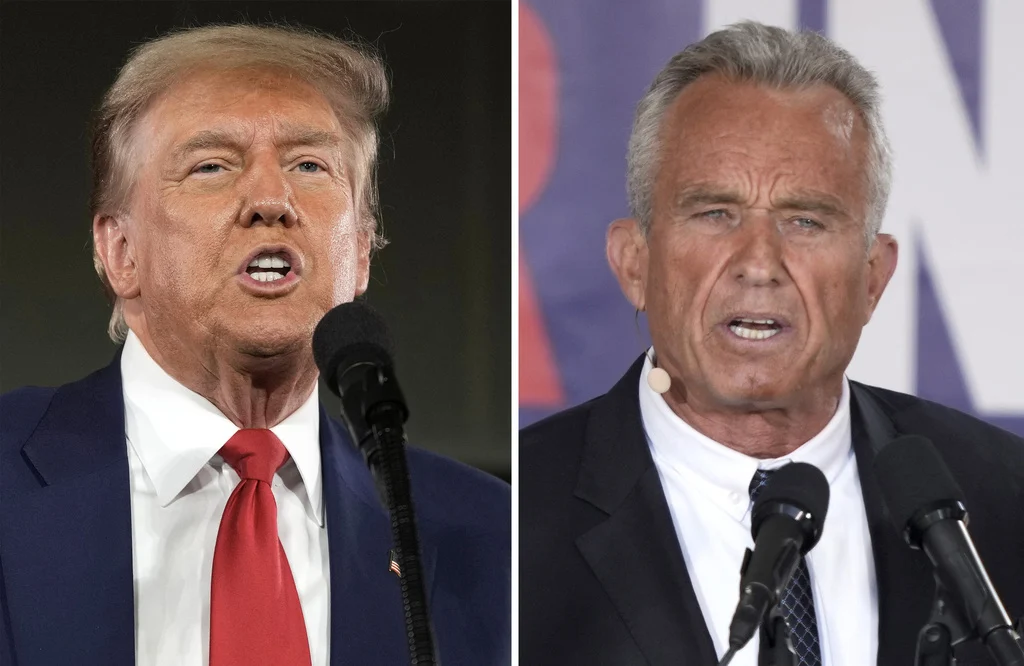
Internal tensions within the Trump administration have reportedly reached a boiling point as President Donald Trump expresses growing dissatisfaction with Department of Health and Human Services (HHS) Secretary Robert F. Kennedy Jr. According to a detailed report from the Wall Street Journal, the friction centers on the pace and scale of Kennedy’s efforts to overhaul federal vaccine policy. Despite Kennedy’s long-standing reputation as a vocal skeptic of the current childhood immunization schedule, the President reportedly believes his health secretary has been too slow to challenge the established medical consensus regarding the safety and necessity of pediatric vaccines.
The discord highlights a significant rift between the President’s personal health agenda and the strategic caution advised by senior White House aides. While Trump has reportedly pushed for an aggressive dismantling of the Centers for Disease Control and Prevention’s (CDC) recommended vaccine schedule, political advisors have cautioned against radical shifts that could alienate mainstream voters ahead of the 2026 midterm elections. This internal tug-of-war has left Kennedy in a precarious position, caught between the demands of his commander-in-chief and the logistical and political realities of federal health administration.
Escalating Tensions in the Oval Office
The frustration reportedly manifested in a series of tense encounters throughout the spring and summer of 2026. According to reporting by Liz Essley Whyte, President Trump confronted Kennedy in May regarding his perceived lack of progress in investigating the alleged, though scientifically debunked, link between vaccines and autism. Sources familiar with the exchange noted that Kennedy appeared "taken aback" by the President’s bluntness. At the time, Kennedy had been operating under directives from White House Chief of Staff and other senior aides to moderate his public rhetoric on vaccines to avoid unnecessary controversy during an election year.
The situation worsened during a mid-June meeting in the Oval Office. During this session, the President is said to have "vented" his frustrations directly to Kennedy, asserting that the health secretary had been given sufficient time—nearly 18 months—to produce tangible results. Trump’s primary objective, according to sources, is a significant reduction in the number of vaccines required or recommended for children, under the belief that such a move would lead to a measurable decline in neurodevelopmental disorders.
The President’s dissatisfaction stems from a perception that Kennedy has become bogged down in the bureaucracy of HHS, rather than acting as the "disruptor" he was hired to be. While Kennedy has initiated reviews of several agency processes and appointed skeptics to various advisory boards, the core of the CDC’s childhood immunization schedule remains largely intact—a fact that has reportedly exhausted the President’s patience.
A Timeline of the Trump-Kennedy Alliance
The relationship between Donald Trump and Robert F. Kennedy Jr. has been characterized by mutual convenience and shared skepticism of federal institutions. Understanding the current friction requires a look at the trajectory of their collaboration:
- August 2024: Following the suspension of his independent presidential campaign, Robert F. Kennedy Jr. endorsed Donald Trump. The endorsement was predicated on the "Make America Healthy Again" (MAHA) platform, which promised Kennedy a significant role in health policy.
- November 2024: After his electoral victory, Trump announced his intention to nominate Kennedy as the Secretary of Health and Human Services. The announcement sent shockwaves through the public health community.
- January 2025: Kennedy was confirmed by the Senate, despite intense opposition from medical associations and public health advocates. He took office with a mandate to address chronic disease and "clean up" the FDA, CDC, and NIH.
- Late 2025: Kennedy began staffing HHS with individuals aligned with the MAHA movement. However, White House political strategists began urging Kennedy to focus on "food safety" and "metabolic health" rather than vaccines, fearing a backlash from suburban parents.
- May–June 2026: Trump’s personal impatience with the lack of progress on the vaccine front led to the reported confrontations in the Oval Office.
The Rise of Dr. Mehmet Oz as "Heir Apparent"
As Kennedy’s standing with the President wavers, another high-profile figure in the administration is reportedly gaining influence. Dr. Mehmet Oz, the current Administrator for the Centers for Medicare and Medicaid Services (CMS), has emerged as a favorite of both the President and the White House staff.
The Wall Street Journal and Bloomberg have identified Oz as the "heir apparent" to the HHS secretary position should Kennedy be removed or resign. Unlike Kennedy, who has occasionally clashed with staff over policy specifics, Oz is described as an "adept surrogate" who is highly responsive to the President’s directives.

Oz has reportedly expanded his portfolio far beyond the traditional boundaries of CMS. He has advised the President on a wide range of health issues, including the December 2025 executive order to loosen federal restrictions on marijuana. Sources suggest that the President frequently calls or texts Oz for counsel on health policy matters, appreciating Oz’s ability to translate complex issues into media-friendly talking points. Oz’s background as a television personality and his willingness to "ensure the president gets what he wants" have solidified his position as a reliable lieutenant in the administration’s health hierarchy.
The Scientific and Regulatory Landscape
The President’s demand to "cut" childhood vaccinations faces significant hurdles, both scientifically and legally. The CDC’s current Recommended Child and Adolescent Immunization Schedule is the product of decades of peer-reviewed research and is designed to protect children from 17 potentially life-threatening diseases, including measles, mumps, rubella, polio, and pertussis.
Supporting data from the CDC indicates that for children born between 1994 and 2023, routine vaccinations will prevent an estimated 508 million illnesses, 32 million hospitalizations, and 1,129,000 deaths over their lifetimes. Despite these figures, the Trump administration has sought to elevate voices that question the cumulative effect of the "schedule."
The legal mechanism for changing these recommendations is complex. While the HHS Secretary oversees the CDC, the immunization schedule is technically determined by the Advisory Committee on Immunization Practices (ACIP), a group of independent medical and public health experts. To bypass or override these recommendations, the administration would likely need to appoint a new slate of committee members or issue direct secretarial orders—moves that would almost certainly face immediate legal challenges from medical advocacy groups and state health departments.
Broader Impact and Public Health Implications
The reported tension between Trump and Kennedy has sparked concern among public health experts regarding the stability of the nation’s health infrastructure. If the President moves to replace Kennedy with a more compliant figure like Dr. Oz, or if Kennedy yields to the President’s pressure to drastically reduce vaccine recommendations, the consequences could be far-reaching.
- Resurgence of Preventable Diseases: Epidemiologists warn that even a minor dip in vaccination rates can erode herd immunity. For example, the measles virus requires a 95% vaccination rate to prevent community spread. A federal retreat from vaccine promotion could lead to localized outbreaks in high-risk areas.
- Erosion of Institutional Trust: The ongoing public dispute between the President and his top health official may further undermine public confidence in the CDC and FDA. If vaccine policy is perceived as being driven by political whim rather than clinical data, parents may become increasingly hesitant to follow any federal health guidance.
- State-Level Conflicts: Vaccination requirements for school entry are largely determined at the state level. If the federal government reduces its recommended schedule, it could create a patchwork of conflicting rules across the country, leading to legal battles between the federal government and states that wish to maintain rigorous immunization standards.
- Economic Consequences: The long-term cost of managing outbreaks of preventable diseases could place a significant burden on the healthcare system. A 2021 study estimated that every dollar spent on the childhood immunization program saves $10.90 in direct costs and $52.00 in total societal costs.
Official Responses and Political Outlook
The White House has not officially commented on the reports of the President’s frustration with Secretary Kennedy. However, spokespersons for the administration have frequently reiterated the President’s commitment to "transparency" and "choice" in healthcare.
For his part, Robert F. Kennedy Jr. has maintained a busy public schedule, continuing to advocate for the MAHA agenda while avoiding direct public confrontation with the President. Analysts suggest that Kennedy is attempting a delicate balancing act: satisfying his core base of supporters who expect radical change, while trying to navigate the administrative constraints of a sprawling federal agency.
As the 2026 midterms approach, the "vaccine issue" remains a volatile element of the political landscape. While a segment of the President’s base is highly motivated by the anti-vaccine movement, a broader segment of the electorate remains supportive of traditional public health measures. The President’s reported dissatisfaction suggests that he is willing to gamble on the former, even at the risk of internal instability or public health repercussions.
The potential elevation of Dr. Mehmet Oz to the head of HHS would signal a shift toward a more media-centric and politically aligned health policy. Whether Kennedy can regain the President’s trust by accelerating his efforts to "probe" vaccines remains to be seen, but the current state of affairs indicates that the "Make America Healthy Again" movement is entering its most turbulent phase yet.


 Yuyun Lusiyani
 Joko Widodo
 Pevita Pearce
 admin
admin
