
 Pevita Pearce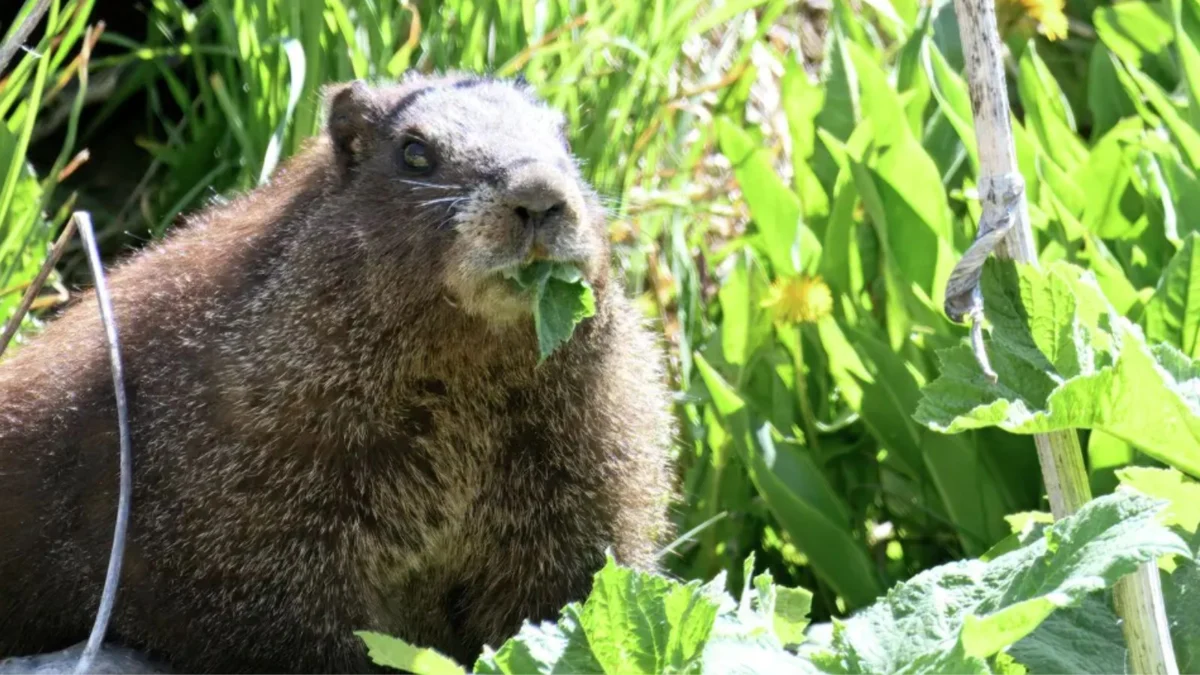
In an unprecedented move that highlights the growing desperation within the scientific community over dwindling federal grants, a team of researchers at the Rocky Mountain Biological Laboratory (RMBL) has launched an OnlyFans account dedicated to the yellow-bellied marmot. Known as "OnlyMarms," the page serves as a creative, if unconventional, crowdfunding effort to sustain one of the longest-running wildlife studies in North America. For over six decades, scientists have tracked these cat-sized rodents in the high-altitude meadows of Colorado, but as traditional funding sources dry up, the project’s future now rests on the willingness of the public to provide "tips" in exchange for "unfiltered" footage of marmot behavior.
The initiative is led by Daniel Blumstein, a professor of ecology and evolutionary biology at the University of California, Los Angeles (UCLA), who has spent decades overseeing the study of yellow-bellied marmots (Marmota flaviventer) at a field station near Crested Butte, Colorado. The decision to utilize a platform typically associated with adult entertainment was born out of a mix of frustration and necessity. While the account offers a tongue-in-cheek nod to the platform’s reputation, the content remains strictly educational and wholesome, featuring the animals engaging in natural behaviors such as foraging, social grooming, and burrowing.
A Legacy of High-Altitude Science: The History of the Marmot Project
The yellow-bellied marmot study at the Rocky Mountain Biological Laboratory is not merely a hobbyist endeavor; it is a cornerstone of modern ecological research. Established in 1962, the project has provided sixty-two years of continuous data, making it one of the most comprehensive longitudinal studies of a wild mammal in existence. The research was pioneered by Kenneth Armitage, who sought to understand the social structures and population dynamics of these resilient mountain dwellers.
Located at approximately 9,500 feet above sea level, the RMBL provides a unique natural laboratory. Over the decades, the study has expanded its scope from basic behavioral observations to complex analyses of how environmental stressors—specifically climate change—impact survival and reproduction. Because marmots are highly sensitive to snowmelt patterns and vegetation availability, they serve as "sentinels" for the health of alpine ecosystems. The data collected by Blumstein’s team has been instrumental in hundreds of peer-reviewed publications, contributing significantly to our understanding of social evolution, hibernation physiology, and the biological clocks of mammals.
The Financial Crisis Facing Long-Term Ecological Research
The pivot to OnlyFans is a direct response to a tightening fiscal environment for scientific research in the United States. Traditionally, long-term projects like the marmot study rely on grants from federal agencies, most notably the National Science Foundation (NSF). However, the "funding cliff" has become a recurring nightmare for principal investigators.
In recent years, the NSF has faced significant budgetary constraints. While the CHIPS and Science Act of 2022 authorized billions of dollars for scientific advancement, the actual appropriations—the money delivered by Congress—have often fallen short of those targets. In 2024, the NSF experienced a budget cut of approximately 8%, the largest in the agency’s history, forcing program managers to make difficult decisions. Long-term projects are often the most vulnerable during these cycles; while they provide invaluable longitudinal data, they lack the "novelty" factor that often attracts one-off, high-impact grants for emerging technologies or immediate medical breakthroughs.
Professor Blumstein noted that the idea for "OnlyMarms" occurred to him during a quiet morning in the field. After decades of navigating the rigorous and often demoralizing grant-application process, the prospect of a direct-to-consumer model for science funding offered a glimmer of hope. The team decided to offer subscriptions for free, choosing instead to rely on the "tip" function, allowing supporters to contribute what they can to keep the research assistants in the field and the monitoring equipment operational.
OnlyMarms: Content and Strategy
The OnlyFans page, titled "OnlyMarms," promises "unfiltered yellow-bellied marmot content from the Rockies." While the name is a play on the platform’s standard usage, the team has been clear about the nature of the media. The content is primarily G-rated, showcasing the daily lives of the marmots. Subscribed users can watch high-definition clips of marmots "whistling" (their alarm call), pups emerging from burrows for the first time, and the occasional "PG-rated" scuffle between males defending their territory.
The strategy aims to bridge the gap between academia and the general public. By humanizing the research process and showing the charismatic nature of the subjects, the researchers hope to build a community of "citizen patrons." This model bypasses the bureaucratic overhead of university administration and federal oversight, allowing funds to go directly toward field expenses such as ear tags for tracking, batteries for remote cameras, and modest stipends for graduate students who spend their summers living in remote cabins to collect data.
The Biological Significance of the Yellow-Bellied Marmot
To understand why this research is worth saving, one must look at the biological importance of the species. The yellow-bellied marmot is one of 15 species of marmots (which include groundhogs) found across the Northern Hemisphere. They are true hibernators, spending up to eight months of the year in a state of torpor deep underground.
This extreme physiology makes them a focal point for medical and climate research. Scientists study their ability to survive with minimal oxygen and a significantly lowered heart rate to find clues for human medicine, particularly in the fields of organ preservation and space travel. Furthermore, the marmot’s life cycle is intricately tied to the seasons. As winters in the Rockies become shorter and spring arrives earlier due to global warming, marmots are emerging from hibernation sooner. While this gives them more time to eat and grow, it also exposes them to "false springs" where early snowmelt is followed by late-season freezes that kill off their food supply. Without the continuous monitoring provided by the RMBL team, these subtle but catastrophic shifts in the ecosystem would go unnoticed.
Expert Reactions and the Ethics of Scientific Crowdfunding
The launch of OnlyMarms has sparked a conversation within the scientific community regarding the ethics and sustainability of crowdfunding. While many colleagues have lauded Blumstein for his creativity, others see it as a somber reflection of the state of American science.
"It’s a brilliant marketing move, but it’s also a tragedy," says one anonymous researcher from a peer institution. "We shouldn’t have to rely on ‘likes’ and ‘tips’ to fund the data that helps us understand if our planet is becoming uninhabitable. It sets a precedent where only ‘cute’ or ‘charismatic’ megafauna get funded, while the less attractive but equally important species—like insects or soil bacteria—are left in the dark."
However, proponents of the move argue that science communication has always been a part of the job. By meeting the public on a platform like OnlyFans, the researchers are breaking down the "ivory tower" walls. They are making science accessible, entertaining, and participatory. The team has promised that the funds will be used transparently, with regular updates provided to "subscribers" about how their contributions are helping the marmots of the Rocky Mountains.
Broader Implications for the Future of Research
The OnlyMarms experiment could pave the way for a new era of "niche" science funding. As traditional platforms like X (formerly Twitter) become more volatile and Facebook’s reach for organic content declines, researchers are looking toward subscription-based models like Patreon, Substack, and now OnlyFans to secure their financial futures.
This shift suggests a move toward a "gig economy" version of scientific research. While this provides autonomy, it also introduces instability. A "bad month" for content could mean a lack of funding for essential equipment. It also places an additional burden on scientists to become content creators, editors, and social media managers—roles they were never trained for and which take time away from actual data analysis.
For the marmots of Crested Butte, however, the stakes are immediate. The project requires a consistent budget to maintain its historical integrity. If the study were to skip even a single year of data collection, the 60-year chain would be broken, significantly devaluing the longitudinal power of the dataset.
Conclusion: A New Frontier for Science
As the first "marmot pup" videos begin to populate the OnlyMarms feed, the scientific world is watching closely. The success or failure of this initiative may determine how other long-term ecological projects handle future budget shortfalls. While the researchers at the Rocky Mountain Biological Laboratory would undoubtedly prefer the stability of a multi-year federal grant, they have proven that they are willing to adapt to the digital age to protect their life’s work.
For now, the yellow-bellied marmots continue their routine: foraging in the sun, avoiding golden eagles, and preparing for the long winter ahead. Whether their antics will be enough to sustain the researchers who study them remains to be seen, but OnlyMarms has successfully highlighted a critical issue: in the modern era, the survival of science may depend as much on its ability to go viral as its ability to be peer-reviewed.




 Yuyun Lusiyani
 Joko Widodo
 Eva Lovia
 admin
admin
 Lina Irawan