
 Lina Irawan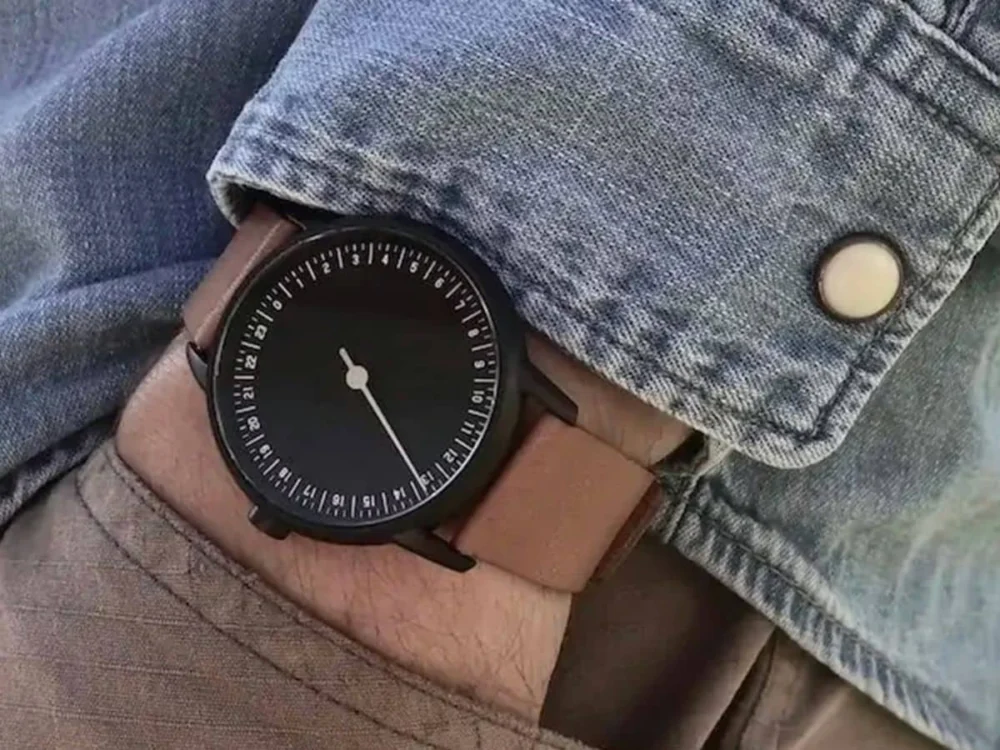
The global horological landscape is currently undergoing a transformative shift as a new generation of designers and engineers re-evaluates the fundamental purpose of the personal timepiece. While the primary function of a watch has historically been the precise measurement of hours, minutes, and seconds, the modern era has seen the emergence of "alternative horology." This movement prioritizes philosophical engagement, tactile accessibility, and cognitive focus over traditional utilitarianism. This transition marks a significant departure from the conventions established over four millennia of timekeeping history, moving away from the rigid duodecimal systems of the ancient world toward a more subjective and human-centric experience of time.
The Historical Foundations of Chronometry
To understand the current disruption in watchmaking, one must look at the 4,000-year trajectory of the industry. The foundations of modern timekeeping were laid by the ancient Egyptians and Babylonians circa 2,000 BC. These civilizations developed the duodecimal (base-12) and sexagesimal (base-60) systems that still dictate the 12-hour clock and the 60-minute hour. The evolution from sun-dials and water clocks to the weight-driven mechanical clocks of 13th-century Italy and Germany represented the first great leap in precision.
By the 16th century, the "Nuremberg Eggs" paved the way for portable timepieces, eventually leading to the supremacy of Swiss watchmaking. The long winters in the Jura Mountains fostered a culture of meticulous craftsmanship, resulting in haute horlogerie—the high art of watchmaking. This era introduced "grand complications," including perpetual calendars, minute repeaters, and tourbillons, perfected by legendary houses such as Breguet, Patek Philippe, and Vacheron Constantin. However, these innovations were largely focused on increasing the density of information or the precision of the mechanical movement. The current wave of "disruptor" brands is less concerned with adding more data and more focused on changing how the wearer perceives the data they already have.
1. Slow Jo by SLOW: The 24-Hour Continuum
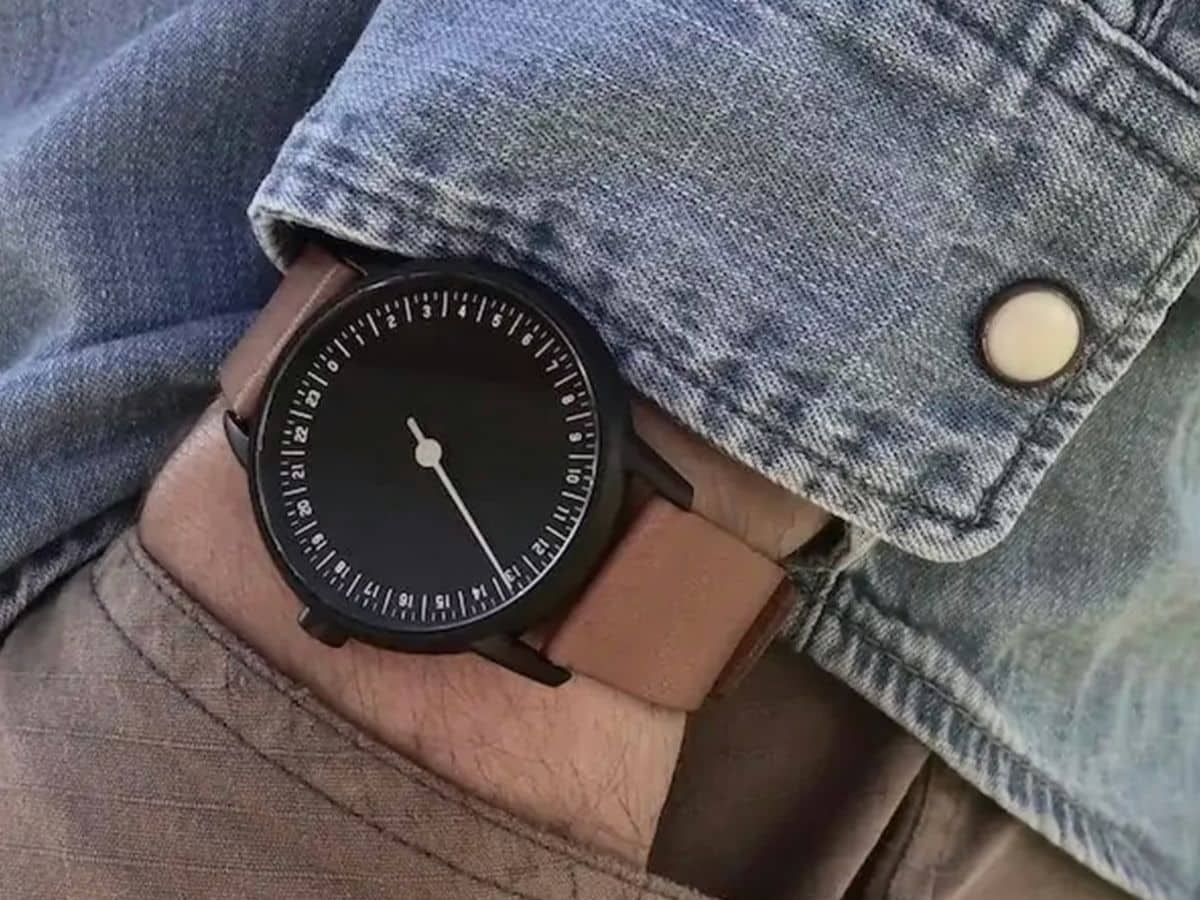
Founded in 2012 by a group of four friends in Hamburg, Germany, the SLOW brand was established to challenge the "minute-by-minute" anxiety of modern life. Their flagship model, the Slow Jo, utilizes a Swiss-made Ronda 505.24 GMT movement. In a traditional GMT watch, this movement would power four hands and a date window; however, SLOW intentionally removed three of the hands, leaving only a single pointer that completes one full rotation every 24 hours.
The technical implication of this design is a dial that represents the entire day as a single, uninterrupted flow. The space between each marker represents fifteen minutes, forcing the wearer to estimate time rather than pinpointing it to the second. Market analysis suggests that this "slow movement" in horology appeals to the "Zen Minimalist" demographic—consumers who are increasingly seeking "digital detox" solutions and products that promote psychological well-being. By reframing the day as a continuum rather than a series of deadlines, the Slow Jo serves as a wearable reminder of the "mindset over speed" philosophy.

2. STUND Naerwear: Productivity through Pomodoro
Emerging from the design hub of Copenhagen, the STUND by Naerwear represents the intersection of Danish minimalism and cognitive science. Copenhagen has long been recognized for its "Hygge" philosophy—prioritizing comfort and presence—and the STUND applies this to productivity. Unlike traditional watches, the STUND is built around the Pomodoro Technique, a time-management method developed by Francesco Cirillo in the late 1980s.
The device functions by breaking work into intervals, traditionally 25 minutes in length, separated by short breaks. By eliminating digital screens and notifications, the STUND aims to reduce "cognitive switching penalty"—the time lost when a person is distracted by a smartphone or smartwatch alert. In an era where the average office worker is interrupted every 11 minutes, the STUND acts as a haptic wearable that uses vibration and tactile feedback to signal interval changes. This approach shifts the timepiece from a passive observer of time to an active participant in the wearer’s focus and deep-work cycles.
3. Urwerk x Ulysse Nardin UR-FREAK: The Avant-Garde Collaboration
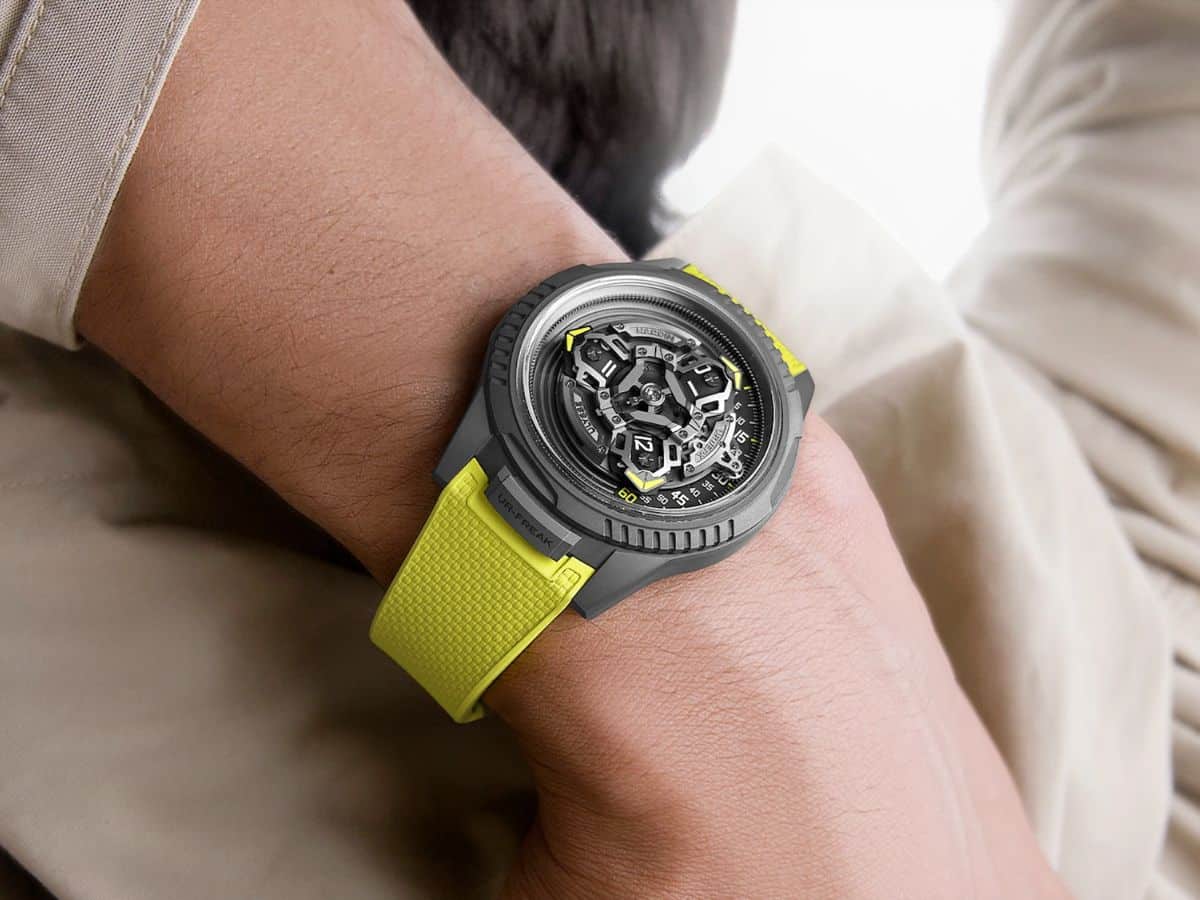
In the upper echelons of luxury watchmaking, the collaboration between Urwerk and Ulysse Nardin, dubbed the UR-FREAK, represents a radical departure from traditional dial architecture. This piece combines the "wandering hours" complication—a system invented in the 17th century for a clock presented to Pope Alexander VII—with the "Freak" carousel movement pioneered by Ulysse Nardin in 2001.
The UR-FREAK utilizes a satellite display where the hour markers themselves move across a minute scale arranged in an arc. Felix Baumgartner, the record-breaking skydiver and co-founder of Urwerk, has positioned the brand as a laboratory for "space-age engineering." The technical complexity of the UR-FREAK is immense; it requires a massive amount of energy to move the rotating satellites, necessitating the use of high-tech materials like silicon and titanium to reduce friction and weight. This timepiece is aimed at the avant-garde collector, serving as a piece of kinetic sculpture that challenges the very notion of how a mechanical movement should transmit information.
4. Bradley Timepiece by EONE: Universal Design and Tactile Haptics
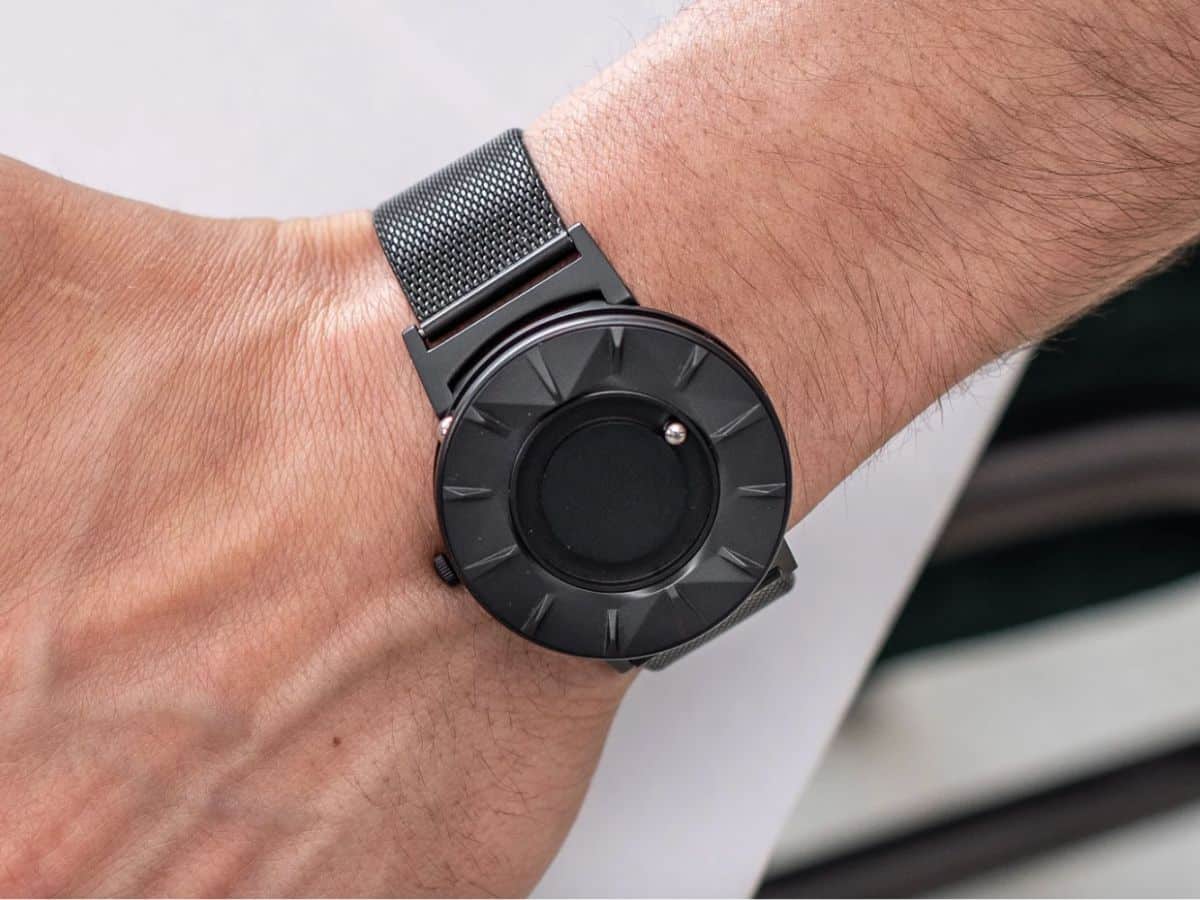
The Bradley Timepiece, produced by EONE, is perhaps the most socially significant disruption in the industry. The watch was conceived by Hyungsoo Kim, an MIT graduate student, after he realized that his blind classmate had no discreet way to check the time during lectures. Named after Bradley Snyder, a naval officer who lost his sight in Afghanistan and went on to win gold medals as a Paralympic swimmer, the watch is a triumph of "Universal Design."
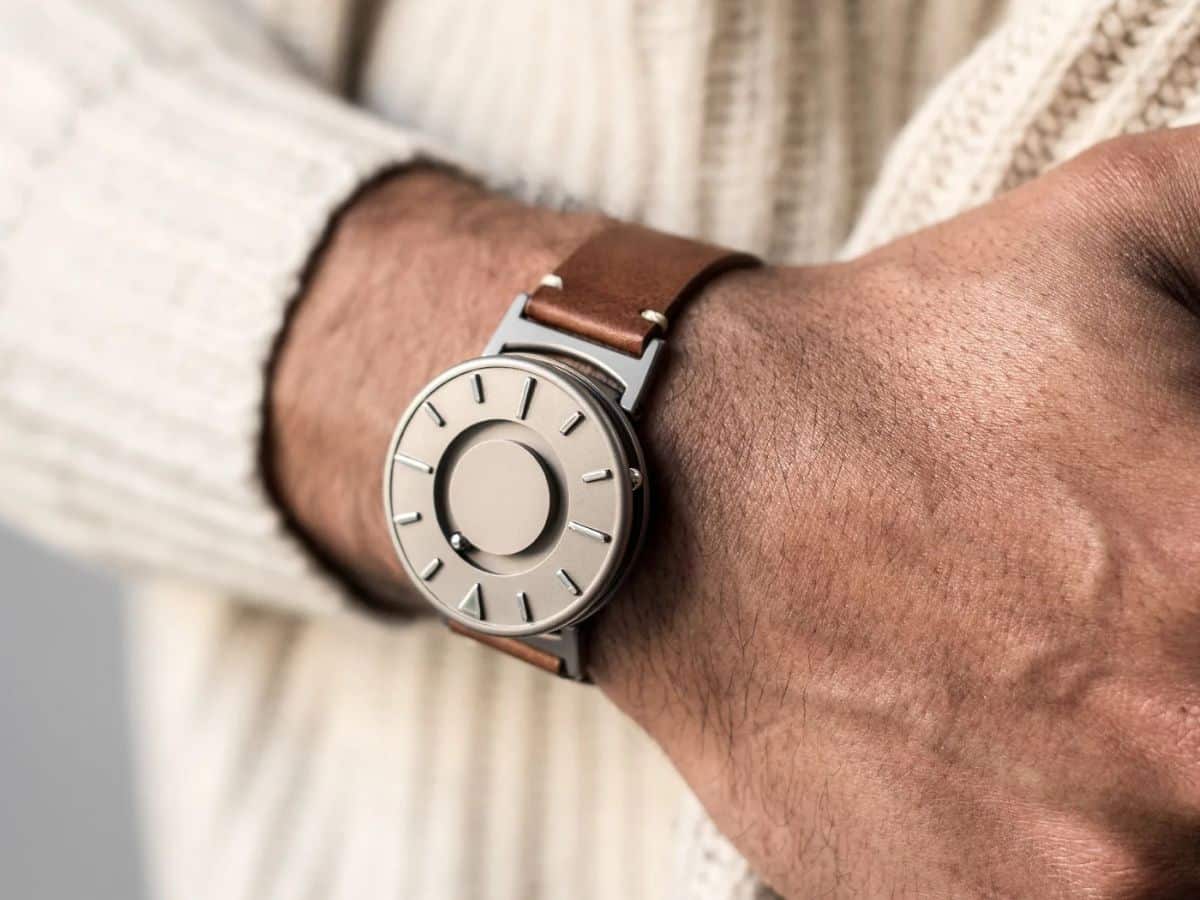
Technically, the Bradley replaces traditional hands with two magnetized ball bearings. One ball, located on the face, indicates the minutes, while another, recessed in a track around the side of the case, indicates the hours. If the wearer touches the balls and accidentally moves them, a simple flick of the wrist allows the magnets to snap the bearings back to the correct position. While originally designed for the visually impaired, the Bradley has found a massive following among sighted consumers who appreciate its sleek, industrial aesthetic and the ability to "feel" the time in dark environments or social situations where looking at a watch would be considered rude.
5. Ressence Type 1: The Orbital Convex System (ROCS)
The Belgian brand Ressence, founded by industrial designer Benoît Mintiens, has reinvented the mechanical interface through its proprietary Ressence Orbital Convex System (ROCS). Traditional watches use a central pinion to stack hands on top of each other. Ressence, however, uses a series of discs that orbit each other like planets in a solar system.
The Type 1 features a dial that is constantly changing its composition. The hours, seconds, and days of the week are displayed on sub-dials that rotate around the main minute disc. Furthermore, Ressence is known for its "oil-filled" technology in higher-end models, which eliminates light refraction and makes the dial appear two-dimensional, as if the numbers are projected directly onto the sapphire crystal. The Type 1 is frequently cited by design purists as the most significant ergonomic advancement in 21st-century horology, as it removes the visual "clutter" of overlapping hands and replaces it with a fluid, liquid-like display.
6. The Last Laugh by Mr Jones Watches: Memento Mori and Satire
While some brands focus on productivity or engineering, London-based Mr Jones Watches focuses on the philosophical and the satirical. "The Last Laugh" is a contemporary interpretation of the memento mori—a medieval theory of reflection on mortality. Instead of a traditional dial, the watch features a skull. The upper teeth of the skull represent the hours, while the lower teeth represent the minutes.
This timepiece serves as a direct descendant of the "Tikker" watch, a short-lived project that attempted to calculate a wearer’s remaining lifespan based on health data. By turning timekeeping into a literal "grin" from the Grim Reaper, Mr Jones Watches challenges the wearer to reconsider the value of their time. If the ultimate destination is certain, the brand argues, then the frantic obsession with being "on time" for trivial appointments becomes an object of satire.
Technical Analysis and Market Implications
The emergence of these six timepieces reflects a broader trend in the global watch market, which was valued at approximately USD 75 billion in 2023 and is projected to grow at a CAGR of 5% through 2030. As smartwatches like the Apple Watch have commoditized "perfect" timekeeping, traditional and boutique watchmakers have been forced to pivot toward "emotional and intellectual value."
Data indicates that the luxury segment is increasingly driven by "independent horology." Consumers are moving away from mass-produced luxury brands in favor of "micro-brands" that offer unique storytelling and unconventional movements. This shift is supported by the "Quartz Crisis" of the 1970s, which nearly destroyed the Swiss industry by making cheap, accurate watches available to everyone. The industry survived by rebranding the mechanical watch as an "art piece" rather than a tool. The current "alternative" movement is the second stage of that evolution—rebranding the very concept of time as a personal experience.
Serviceability and Long-term Durability
A common concern regarding alternative timepieces is their maintenance. Standard mechanical watches can be serviced by most competent watchmakers. However, pieces like the Ressence and Urwerk require specialized facilities. Ressence watches, particularly those with oil-filled chambers, must be sent back to their headquarters in Belgium to ensure the vacuum seal is maintained and the proprietary ROCS system is calibrated.
In contrast, brands like SLOW and EONE utilize modified Swiss Quartz movements (such as the Ronda 505.24 and ISA 1198.103). These are designed for "real-world" durability. The Bradley Timepiece, for example, is constructed from Grade 5 Titanium, ensuring it can withstand the tactile friction of daily use. This bifurcation in the market—between "high-engineering art" and "functional philosophical tools"—allows the alternative horology movement to capture both the ultra-wealthy collector and the design-conscious everyday consumer.
Conclusion: The Future of Time
As the boundary between technology and art continues to blur, the definition of a "watch" will likely continue to expand. The success of these six timepieces suggests that the modern consumer no longer needs a watch to tell them what time it is—their smartphone does that with atomic precision. Instead, they seek a timepiece to tell them how time should be spent. Whether through the 24-hour flow of the Slow Jo, the tactile inclusivity of the Bradley, or the orbital mechanics of the Ressence, these disruptors have proven that the most valuable complication in modern watchmaking is not a calendar or a chronograph, but a new perspective on existence itself.



 Yuyun Lusiyani
 Joko Widodo
 Eva Lovia
 Pevita Pearce
 admin
admin