
 Jia Lissa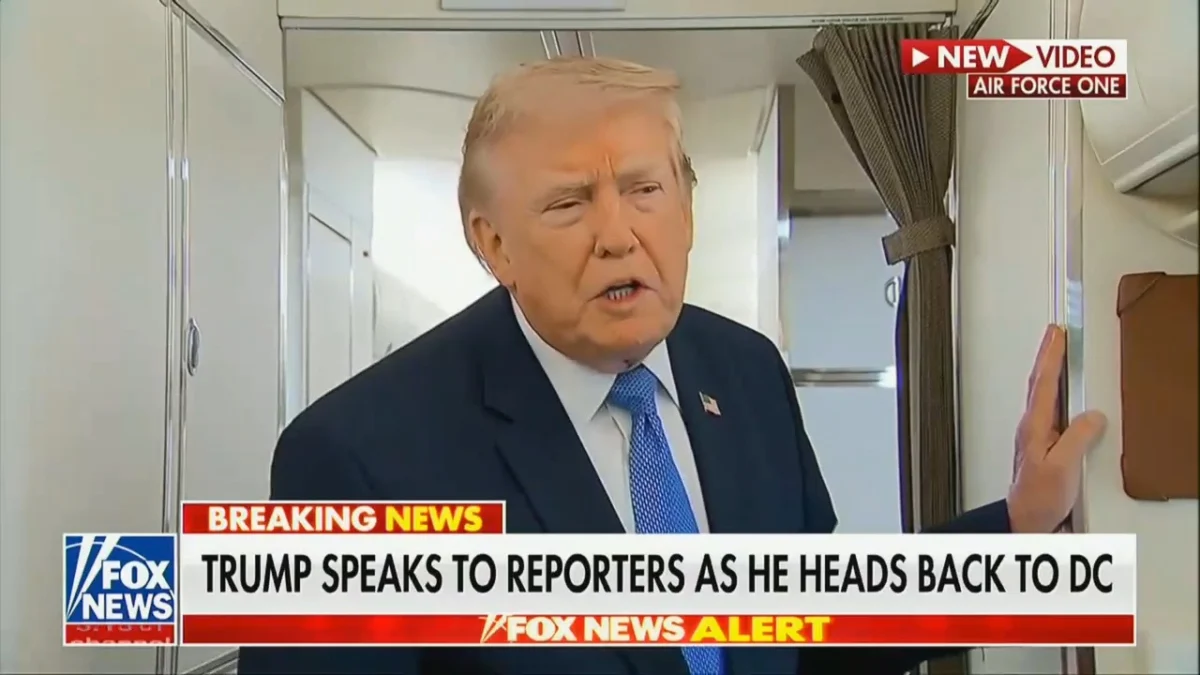
During a flight aboard Air Force One on Sunday, President Donald Trump reaffirmed his intention to move forward with a controversial $1.8 billion "anti-weaponization fund," linking the proposal directly to the stalled confirmation process of his Attorney General nominee, Todd Blanche. Speaking with reporters following a day at his Bedminster golf club, the President suggested that the fund—intended to provide financial redress to individuals he claims were unfairly targeted by the Department of Justice—remains a central pillar of his administration’s agenda, particularly if Senate Republicans continue to block his Cabinet choices.
The exchange occurred during an informal press gaggle where the President also took the opportunity to criticize ABC News, expressing a preference for the British Broadcasting Corporation (BBC) over the American network. When asked about the status of the fund, Trump clarified that its implementation is currently tied to the political maneuvering surrounding Blanche’s nomination. "If they don’t approve Todd, I’ll put it back on the table," Trump stated, emphasizing that the fund has significant support among his base and is viewed as a necessary correction for what he describes as unprecedented legal persecution.
The Standoff Over the $1.8 Billion Redress Fund
The "anti-weaponization fund" has become a flashpoint in the early days of the new administration’s relationship with the legislative branch. The proposed $1.8 billion pool of capital is designed to "reimburse" individuals who, according to the President, have suffered "pain" and "destruction" due to federal investigations and prosecutions. While the President did not provide a comprehensive list of eligible recipients, he specifically highlighted the plight of those involved in the events of January 6, 2021.
Trump alleged that the legal pressure faced by these individuals has led to tragic outcomes, claiming there have been "twenty-two suicides" among those targeted by the Department of Justice. "Their families were destroyed for doing things that, honestly, there’s never been an attack on any group of people in this country, in my opinion," Trump told reporters. He argued that the fund would serve as a form of restitution for what he characterized as a "violent and vicious" assault on a specific group of American citizens.
The proposal has met with significant resistance from both sides of the aisle. Critics argue that using federal funds to compensate individuals convicted of crimes, particularly those related to the breach of the U.S. Capitol, undermines the rule of law and the independence of the judiciary. Furthermore, constitutional scholars have raised questions regarding the executive branch’s authority to unilaterally establish and distribute such a large sum of money without specific congressional appropriation and oversight.
The Nomination of Todd Blanche and Senate Resistance
At the heart of the current legislative logjam is Todd Blanche, the President’s pick to lead the Department of Justice. Blanche, a former federal prosecutor who rose to prominence as Trump’s lead defense attorney in several high-profile criminal cases, is viewed by the administration as an "outstanding" candidate capable of reforming the DOJ. Trump praised Blanche’s character and professional standing, asserting that "you’re not gonna find a better person."
However, Blanche’s path to confirmation has been obstructed by a small but influential group of Senate Republicans. Senators John Cornyn of Texas, Thom Tillis of North Carolina, and Bill Cassidy of Louisiana have signaled their refusal to support Blanche unless the administration provides written guarantees that the $1.8 billion fund is permanently discarded. These senators, often described as part of the party’s traditionalist wing, have expressed concern that the fund resembles a "slush fund" and could set a dangerous precedent for the use of taxpayer dollars.
The friction between the President and Senator Cornyn appears particularly acute. Trump suggested that the opposition from the Texas senator is rooted in political retribution. "It’s because I backed Cornyn’s opponent and his opponent won in a landslide," Trump remarked, suggesting that personal grievances rather than policy concerns are driving the confirmation delays.
Congressional Reactions and the "Math" of Confirmation
The opposition to Blanche is not limited to the Republican holdouts. Senator John Fetterman, a Democrat from Pennsylvania, recently told CNN that the "math’s just not there" for Blanche’s confirmation. Fetterman, who has emerged as a vocal critic of the administration’s legal proposals, described the $1.8 billion fund as "unconstitutional" and noted that he has not encountered a single Republican colleague who supports the creation of such a fund.
The Senate’s current composition makes every vote critical. With a slim Republican majority, the defection of even three or four GOP senators—combined with unified Democratic opposition—is sufficient to sink a nomination. The refusal of Cornyn, Tillis, and Cassidy to move forward without concessions creates a significant hurdle for the White House.
Key Figures in the Confirmation Standoff:
- Todd Blanche: AG Nominee and former defense attorney for Donald Trump.
- Sen. John Cornyn (R-TX): Leading critic of the fund; demands written assurances for its termination.
- Sen. Thom Tillis (R-NC): Republican holdout focusing on fiscal and constitutional implications.
- Sen. Bill Cassidy (R-LA): Republican holdout concerned with the rule of law and DOJ independence.
- Sen. John Fetterman (D-PA): Vocal Democratic opponent citing constitutional concerns.
A Chronology of the Anti-Weaponization Proposal
The concept of an "anti-weaponization" initiative has evolved over the past several months, transitioning from a campaign talking point to a formal administration priority.
- Campaign Trail Rhetoric: During the 2024 election cycle, then-candidate Trump frequently promised to "overhaul" the DOJ and provide relief to those he claimed were victims of "lawfare."
- Formal Proposal: Following the inauguration, the administration floated the idea of a $1.8 billion fund specifically earmarked for the legal defense and "reimbursement" of individuals targeted by federal agencies.
- Blanche Nomination: Todd Blanche was officially nominated for Attorney General, with the administration signaling that his primary mission would be to address "government weaponization."
- Senate Pushback: In early February, Republican senators began voicing public concerns about the fund, citing it as the primary reason for withholding support for Blanche.
- The Air Force One Ultimatum: On Sunday, President Trump explicitly linked the fate of the fund to Blanche’s confirmation, using it as a bargaining chip to pressure Senate leadership.
Supporting Data: The Scope of January 6 Prosecutions
The President’s focus on the "pain" suffered by individuals prosecuted by the DOJ refers largely to the massive legal undertaking following the January 6 Capitol riot. According to Department of Justice data, more than 1,200 individuals have been charged with federal crimes in connection with the events of that day. These charges range from entering a restricted building to seditious conspiracy and assaulting law enforcement officers.
Of those charged, over 700 have pleaded guilty to various federal charges, and approximately 170 have been convicted at trial. The administration’s proposal to "reimburse" these individuals would represent a significant shift in federal policy, effectively using government resources to mitigate the financial and legal consequences of criminal convictions obtained by that same government.
The President’s claim of 22 suicides among this group has been a point of contention. While several high-profile instances of defendants taking their own lives have been documented, non-partisan fact-checkers and mental health advocates have noted that attributing these tragedies solely to DOJ "weaponization" is a complex and highly debated assertion.
Implications for the Department of Justice
The ongoing dispute over the anti-weaponization fund and the Blanche nomination has broader implications for the future of federal law enforcement. If the fund is established, it could fundamentally alter the relationship between the executive branch and the career prosecutors within the DOJ.
Legal analysts suggest that a fund designed to reimburse defendants could serve as a deterrent to federal prosecutors, who might fear that their work will be undone by executive action. Conversely, supporters of the President argue that the DOJ has long operated with a political bias and that an external check—in the form of financial redress—is the only way to ensure accountability and fairness.
The standoff also highlights the increasing tension within the Republican Party between its populist wing, led by the President, and its institutionalist wing, represented by senators like Cornyn and Tillis. The outcome of this battle will likely determine the direction of the Department of Justice for the remainder of the administration’s term.
Future Outlook: The Path Forward for the Administration
As the Senate prepares for the next round of confirmation hearings, the White House remains defiant. By putting the anti-weaponization fund "back on the table," President Trump is signaling a willingness to bypass traditional legislative norms to achieve his objectives.
If the Senate continues to block Blanche, the administration may explore alternative routes, such as a recess appointment or the installation of an "Acting" Attorney General who shares the President’s vision for the fund. However, such moves would likely trigger a flurry of legal challenges and further strain the relationship between the White House and Capitol Hill.
For now, the $1.8 billion fund remains a potent symbol of the President’s broader effort to reshape the federal government’s legal apparatus. Whether it serves as a successful leverage tool or a permanent barrier to his Cabinet’s confirmation remains to be seen. The political "math," as Senator Fetterman noted, continues to be the primary obstacle for an administration determined to deliver on its promise of "anti-weaponization."

 Yuyun Lusiyani
 Joko Widodo
 Pevita Pearce
 admin
admin
