
 Jia Lissa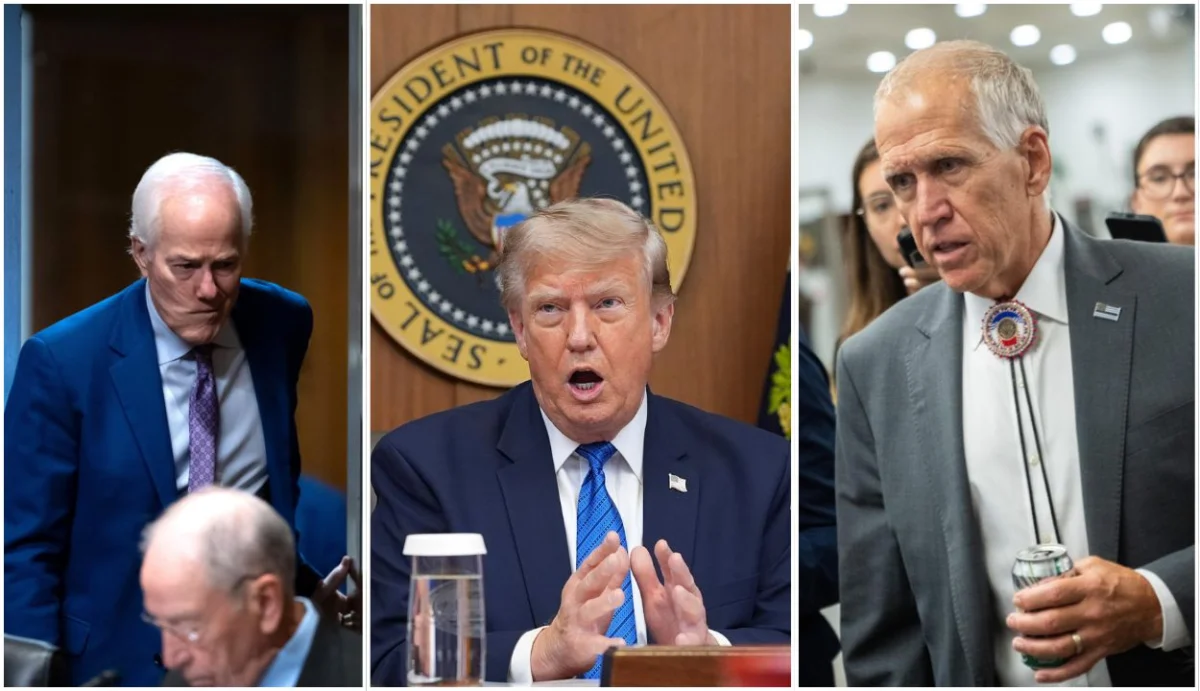
President Donald Trump has abruptly reversed his position on a controversial $1.8 billion "anti-weaponization" fund, vowing to secure its passage just one day after signaling the initiative was effectively "dead." The sudden pivot, announced via a series of social media communications on Saturday, has intensified an already fractious confirmation battle in the United States Senate regarding Todd Blanche, the President’s nominee for Attorney General. The escalating conflict centers on a standoff between the White House and two prominent Republican senators, John Cornyn of Texas and Thom Tillis of North Carolina, who have demanded the total abandonment of the fund as a prerequisite for confirming the President’s top legal appointment.
The "anti-weaponization" fund, which carries a proposed price tag of $1.8 billion, was designed by the administration to provide financial restitution and legal support to individuals who claim they were unfairly targeted or "victimized" by the Department of Justice and the Internal Revenue Service during the Biden and Obama administrations. While the White House frames the fund as a necessary corrective measure to restore faith in federal institutions, critics from both parties have characterized it as a "taxpayer-funded slush fund" intended to reward political allies and undermine the rule of law.
The Camp David Reversal and the Saturday Pivot
The timeline of the current controversy began on Friday during a high-level Cabinet meeting held at Camp David. When questioned by reporters regarding the status of the fund—following reports that the Justice Department had moved to drop the initiative amid bipartisan congressional pressure—President Trump appeared to concede defeat. "Well, it is dead, but, you know, I wish it weren’t, to be honest with you," the President stated. This admission was initially seen by Capitol Hill observers as a strategic retreat intended to clear the path for Todd Blanche’s confirmation.
However, by Saturday morning, the President’s tone shifted dramatically. In a fiery post on Truth Social, he reasserted his commitment to the fund and issued a direct challenge to Senators Cornyn and Tillis. The President suggested that if the Senate refused to confirm Blanche, he would utilize the Federal Vacancies Reform Act to install Blanche as "Acting Attorney General" indefinitely, while simultaneously doubling down on the legislative push for the $1.8 billion fund.
"If Senators Cornyn and Tillis… aren’t going to approve Todd Blanche, one of the most respected professionals, according to everybody, in the Country, to be the United States Attorney General, then I will keep Todd as Acting A.G., and push hard to get the Anti-Weaponization Bill… PASSED," the President wrote. He further asserted that the bill is essential to address those "badly treated" by previous administrations, explicitly mentioning the "Crooked Joe Biden (and Obuma!) Administration."
The Senate Standoff: Cornyn, Tillis, and the Power of the Gavel
The primary obstacle to the President’s agenda remains the Senate Judiciary Committee and the broader Republican caucus, where Senators Cornyn and Tillis have emerged as the most vocal opponents of the fund. Both senators have tied their support for Todd Blanche—a former federal prosecutor who served as the President’s lead defense attorney in several high-profile criminal cases—directly to the termination of the anti-weaponization initiative.
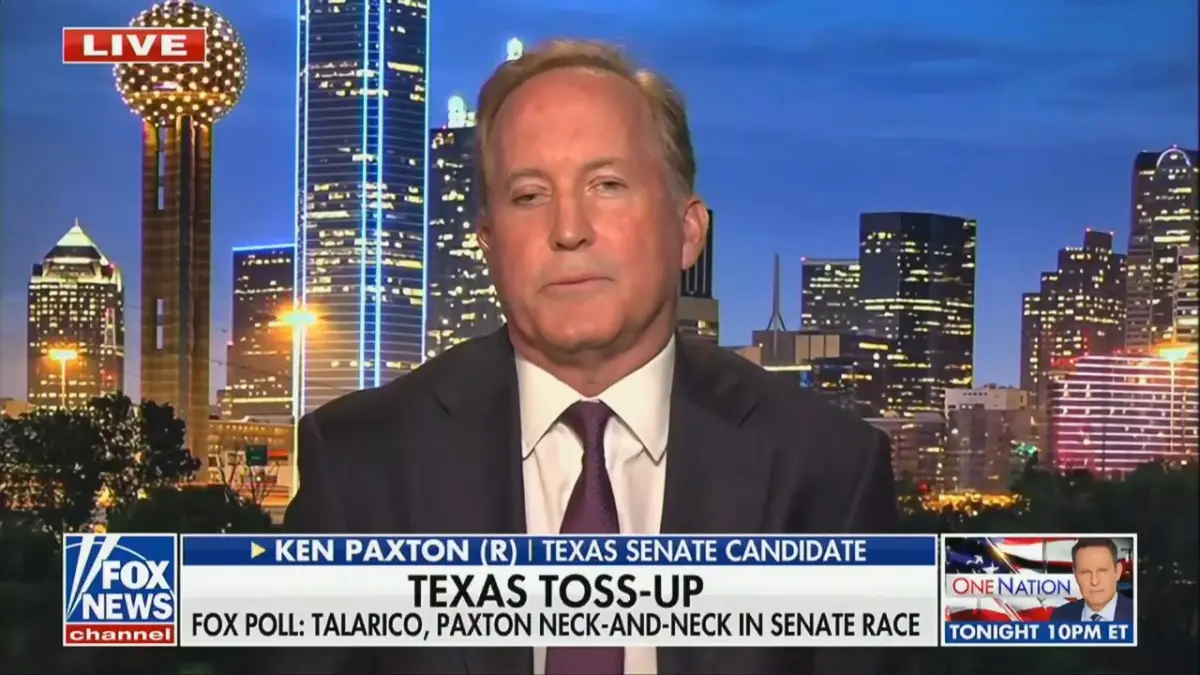
Senator Thom Tillis, who is not seeking re-election, has been particularly blunt in his assessment, vowing to block the fund regardless of executive pressure. Sources close to the Senator indicate that he views the fund as a dangerous precedent that would politicize the federal budget in a manner that could be weaponized by future administrations of either party. Senator John Cornyn, who recently lost a primary challenge to Texas Attorney General Ken Paxton—a race in which President Trump endorsed Paxton—has similarly demanded a "written guarantee" from the White House that the fund will not be pursued.
The tension between Cornyn and the White House is compounded by the recent primary results. Trump’s endorsement of Paxton over Cornyn has created a palpable rift, with the President frequently citing Cornyn’s primary loss as evidence of his waning influence. Conversely, Cornyn’s supporters argue that his resistance to the fund is a matter of constitutional principle rather than political retribution.

Fiscal Scope and Legislative Background of the Fund
The proposed $1.8 billion figure for the anti-weaponization fund is significant when compared to existing Department of Justice (DOJ) expenditures. To provide context, the total annual budget for the DOJ’s Civil Rights Division typically fluctuates between $150 million and $190 million. The proposed fund would represent nearly ten times the annual budget of the division responsible for protecting the civil rights of all Americans.
The legislative origins of the fund are rooted in the "Anti-Weaponization of the Federal Government Act," a bill introduced by House allies of the President. The bill seeks to establish a commission to review past DOJ and IRS investigations, with the authority to issue "restitution payments" to individuals whose cases are deemed to have been politically motivated.
The fund’s viability was recently called into question by a federal court ruling that nullified a controversial IRS settlement involving Trump-aligned organizations. That settlement was seen as a pilot program for the broader anti-weaponization fund. The judge’s decision to strike down the settlement emboldened Senate critics, who argued that the executive branch lacked the statutory authority to distribute taxpayer funds in such a manner without explicit congressional appropriation.
Todd Blanche and the "Acting A.G." Strategy
The nomination of Todd Blanche is central to the President’s legal and political strategy. As a former Assistant U.S. Attorney in the Southern District of New York, Blanche possesses the traditional credentials for the role of Attorney General. However, his recent history as the President’s personal defense attorney has raised concerns among lawmakers regarding his impartiality and his ability to lead a department that may be tasked with investigating the President’s political opponents or defending the very "anti-weaponization" fund currently in dispute.
The President’s threat to keep Blanche as an "Acting" official highlights a recurring theme of his administration’s approach to executive appointments. The Federal Vacancies Reform Act of 1998 allows a President to fill a vacancy temporarily, but the duration of such appointments is generally limited to 210 days, with certain extensions possible during a transition or while a nomination is pending. By threatening to bypass the Senate’s "advice and consent" role, the President is signaling a willingness to test the limits of executive power to ensure his chosen loyalists remain in control of the nation’s top law enforcement agency.
Timeline of Key Events
- June 2024: House Republicans introduce the initial framework for the $1.8 billion Anti-Weaponization Bill.
- July 2024: The DOJ announces a controversial settlement with several conservative non-profits, which critics label a precursor to the anti-weaponization fund.
- Late July 2024: A federal judge nullifies the IRS/DOJ settlement, citing a lack of legal authority.
- August 1, 2024: Senators Cornyn and Tillis publicly state they will not vote for Todd Blanche without a written guarantee that the fund is dead.
- Friday, August 2, 2024: During a Cabinet meeting at Camp David, President Trump tells reporters the fund is "dead," though he expresses regret over the situation.
- Saturday, August 3, 2024: President Trump posts on Truth Social, reversing his stance and vowing to get the bill "PASSED," while attacking Cornyn and Tillis.
Broader Implications for Governance and the Rule of Law
The resurrection of the anti-weaponization fund and the subsequent standoff with the Senate have profound implications for the stability of the Department of Justice and the relationship between the executive and legislative branches. Legal scholars suggest that the establishment of a fund specifically designed to compensate political allies for "mistreatment" by previous administrations could fundamentally alter the nature of federal law enforcement.
"The danger here is the institutionalization of grievance," says Alan Dershowitz, a constitutional law expert. "If every new administration creates a multi-billion dollar fund to reward those who were investigated by the previous administration, the Department of Justice ceases to be an instrument of law and becomes an instrument of partisan reparations."
Furthermore, the conflict highlights the "lame duck" dynamics of the current Senate. With Senator Tillis retiring and Senator Cornyn having lost his primary, both men are less susceptible to traditional political pressure from the White House. This independence has allowed them to act as a significant check on the President’s agenda, even as the President attempts to use his social media platform to mobilize his base against them.
As the Senate prepares to reconvene, the fate of both the $1.8 billion fund and Todd Blanche’s nomination remains uncertain. The White House has yet to provide the "written guarantee" demanded by Cornyn and Tillis, and the President’s Saturday morning statements suggest that such a guarantee is unlikely to be forthcoming. The result is a high-stakes game of political chicken that could leave the Department of Justice without a confirmed leader for the foreseeable future, further deepening the divide within the Republican party and the nation at large.

 Yuyun Lusiyani
 Joko Widodo
 Pevita Pearce
 admin
admin
