
 Nana Wu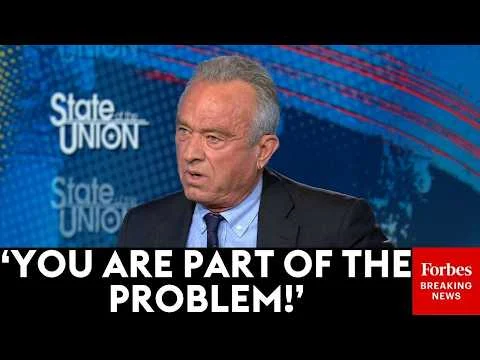
Robert F. Kennedy Jr.’s recent appearance on CNN for an interview with Dana Bash has ignited a significant controversy, characterized by heated exchanges and a stark divergence on critical public health issues, particularly vaccine efficacy and pandemic response strategies. The interview, which lasted over 15 minutes, saw Kennedy repeatedly clashing with Bash as she pressed him on his past statements regarding vaccines and his proposed approaches to future public health crises. The exchange has drawn widespread attention, raising concerns among public health experts and medical organizations about the potential impact of Kennedy’s rhetoric on vaccine hesitancy and public trust in scientific consensus.
The Interview Unfolds: A Contentious Exchange
The core of the interview revolved around Kennedy’s controversial views on vaccines and his critique of the COVID-19 pandemic response. From the outset, Kennedy adopted an aggressive stance, frequently interrupting and deflecting Bash’s questions. He accused the media, and specifically Bash, of being "part of the problem" and engaging in "press malpractice" by not exhibiting "fierce skepticism toward authority" and by allegedly "beating up the people who were dissenting." This broad accusation appeared to be directed at the mainstream media’s coverage of the pandemic and vaccine development.
Bash attempted to steer the conversation toward concrete policy proposals for future pandemic preparedness, asking Kennedy what steps he believed were necessary to improve public health responses. Kennedy, however, consistently pivoted to a defense of constitutional rights, arguing that these rights were "dismantled" during the COVID-19 lockdowns, with a particular focus on the actions of Dr. Anthony Fauci. He notably downplayed the role of the Trump administration in the pandemic response, a point that drew further scrutiny.
A significant portion of the interview focused on vaccine safety and efficacy. When pressed by Bash on whether he believed people should receive the measles, mumps, and rubella (MMR) vaccine, Kennedy initially affirmed that they should. However, this affirmation was immediately followed by a lengthy disquisition on his well-documented skepticism regarding vaccine safety, suggesting that parents should not "necessarily" vaccinate their children and that vaccines had not been "proven to be safe." This dual messaging—acknowledging the necessity of a specific vaccine while simultaneously sowing doubt about the broader safety of vaccination—has been a recurring pattern in Kennedy’s public statements and a source of considerable concern for public health officials.
The exchange grew increasingly acrimonious. When Bash reiterated the scientific consensus on vaccine safety, citing "study after study after study," Kennedy responded by calling her a "parrot" and claiming he had "actually read the science." This remark underscored his assertion that he alone possesses a superior understanding of scientific evidence, a claim that has been widely contested by the broader scientific community. Bash, visibly frustrated, ultimately stated, "I’m not debating nonsense," signaling an impasse in the conversation.
Underlying Themes and Criticisms
Several key themes emerged from the interview, each contributing to the overall contentious nature of the exchange:
- Lack of Accountability: A central criticism leveled against Kennedy was his apparent refusal to accept responsibility for his past actions and statements regarding public health. Instead, he consistently deflected blame and focused on perceived injustices against himself and those who questioned public health mandates.
- Attacks on Media and Authority: Kennedy’s repeated accusations against Bash and the media highlighted a deep-seated distrust of established institutions. His framing of the media as complicit in a flawed public health response suggested a belief in a widespread conspiracy or coordinated misinformation campaign.
- Selective Interpretation of Science: Kennedy’s insistence on being the sole arbiter of scientific truth, while dismissing established research and expert consensus, raised significant concerns. His arguments often relied on anecdotal evidence, unverified claims, and interpretations of scientific literature that deviate sharply from mainstream understanding.
- Misrepresentation of "Frontline Doctors": In discussing pandemic preparedness, Kennedy invoked the need to listen to "frontline doctors." However, analysis of his past statements and affiliations indicates that he often refers to groups like "America’s Frontline Doctors," an organization that has been widely criticized for promoting misinformation and unproven treatments for COVID-19. The founder of this group has also faced legal repercussions for her involvement in the January 6th insurrection. This deliberate choice of reference suggests a strategic alignment with fringe medical opinions rather than a genuine engagement with the broader medical community.
Broader Context and Historical Precedent
The interview with Dana Bash is not an isolated incident but rather a continuation of a long-standing pattern of public engagement by Robert F. Kennedy Jr. His career has been marked by a persistent questioning of scientific consensus on issues ranging from vaccines to environmental policy. His father, Robert F. Kennedy Sr., and his uncle, President John F. Kennedy, were prominent figures in American politics, and the family name carries significant weight. However, Robert F. Kennedy Jr.’s public health advocacy has often placed him at odds with established scientific and medical authorities, including his own family members, some of whom have publicly distanced themselves from his views on vaccination.
The COVID-19 pandemic, in particular, served as a focal point for these debates. Throughout the crisis, Kennedy became a prominent voice questioning the efficacy of vaccines, the necessity of public health measures like mask mandates and lockdowns, and the role of pharmaceutical companies and government health agencies. His claims have been widely fact-checked and debunked by numerous reputable sources, yet they continue to resonate with a segment of the population skeptical of mainstream institutions.
Reactions from Medical and Public Health Communities
The implications of Kennedy’s rhetoric extend far beyond the confines of a single interview. Medical organizations and public health experts have consistently voiced concerns about the potential for his statements to undermine public trust in vaccines and to exacerbate vaccine hesitancy.
In September 2023, a coalition of medical groups, including the American Medical Association, the American Academy of Pediatrics, and the American Academy of Family Physicians, issued a joint statement calling for Kennedy to resign from his position as nominee for Health and Human Services Secretary. The statement explicitly cited his history of spreading misinformation about vaccines and his role in promoting conspiracy theories. The groups emphasized the critical importance of evidence-based public health policies and the need for leaders to uphold scientific integrity.
Data on vaccine uptake and public perception further underscores the gravity of the situation. Declines in childhood vaccination rates have been observed in recent years in various regions, contributing to resurgences of preventable diseases like measles. Public health officials attribute a portion of this decline to the spread of misinformation, with prominent anti-vaccine voices playing a significant role in influencing parental decisions. The Centers for Disease Control and Prevention (CDC) has reported a steady increase in measles cases in recent years, with outbreaks often linked to communities with lower vaccination coverage.
Analysis and Implications
The interview highlights a critical disconnect between Robert F. Kennedy Jr.’s public health pronouncements and the overwhelming scientific consensus. His approach to public discourse, characterized by aggressive confrontation and accusations of conspiracy, appears designed to appeal to those already distrustful of established institutions.
The implications of this communication style are significant:
- Erosion of Public Trust: Repeatedly challenging scientific consensus and attacking reputable news organizations can further erode public trust in both science and the media, making it harder to disseminate accurate health information during future crises.
- Impact on Public Health Outcomes: Kennedy’s persistent questioning of vaccine safety, despite scientific evidence to the contrary, directly contributes to vaccine hesitancy. This can lead to lower vaccination rates, increased susceptibility to preventable diseases, and greater strain on public health systems.
- Political Polarization of Science: The debate surrounding Kennedy’s views underscores the increasing politicization of scientific issues in the United States. Public health becomes a partisan battleground, hindering evidence-based policymaking and collective action.
- Role of "Frontline Doctors" Narrative: Kennedy’s reliance on the "America’s Frontline Doctors" narrative exemplifies a tactic of selectively amplifying voices that align with a predetermined agenda, even when those voices lack broad scientific or medical endorsement. This can create a false impression of widespread dissent within the medical community.
The interview serves as a stark reminder of the challenges facing public health communication in an era of widespread misinformation and deep societal divisions. While Kennedy maintains he is speaking truth to power and advocating for a more nuanced understanding of science, his critics argue that his rhetoric actively undermines the very public health infrastructure he seeks to lead, potentially jeopardizing the well-being of millions. The persistent nature of these debates suggests that the tension between scientific authority and individual skepticism, amplified by political discourse, will continue to be a defining feature of public health discussions for the foreseeable future.


 Yuyun Lusiyani
 Joko Widodo
 Jia Lissa
 Pevita Pearce
 admin
admin
