
 Nana Wu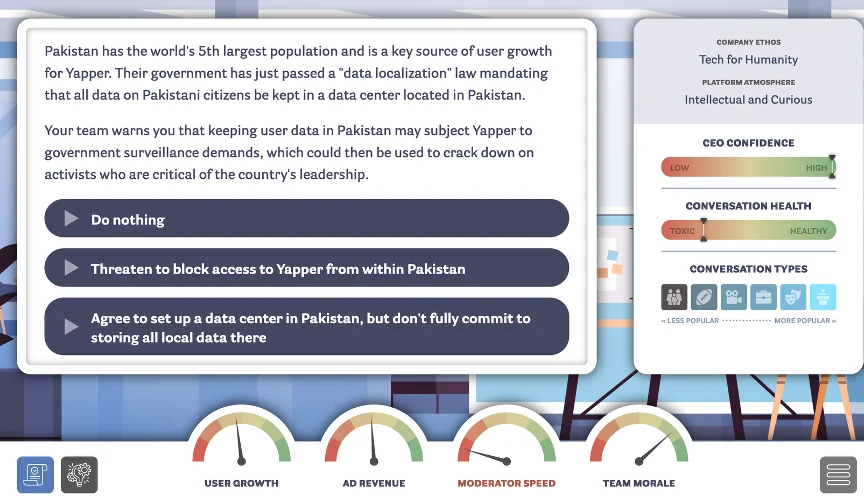
The complex and ever-evolving landscape of media law and ethics is increasingly being navigated through innovative pedagogical tools, with a notable example being the integration of an online simulation game, "Trust & Safety Tycoon," into university curricula. This approach, pioneered by Professor Chip Stewart at Texas Christian University, aims to bridge the gap between theoretical legal concepts and the practical, high-stakes decisions faced by professionals in the digital communication sphere. The game, launched in 2023 and developed by the Copia Gaming initiative, places students in the role of a trust and safety team lead for a burgeoning social media startup, challenging them to grapple with a spectrum of ethical dilemmas and legal exigencies.
The Genesis of an Innovative Teaching Tool
Professor Stewart’s media law and ethics course, typically held around the fourth week of the semester, shifts its focus from abstract ethical principles to the concrete legal frameworks governing communication. Having already explored the intricacies of social media platform terms of service and their implications for users, students are primed for a more interactive and applied learning experience. Traditional assignments, such as case briefs, have become less engaging for students, particularly with the increasing accessibility of generative AI tools that can automate essay writing. In response, Professor Stewart sought a method that would foster critical thinking and active problem-solving, leading to the adoption of "Trust & Safety Tycoon."
The game simulates the growth of a social media platform, "Yapper," akin to a hybrid of Facebook and Twitter/X. As the platform gains users and popularity, players are confronted with increasingly complex scenarios that mirror real-world challenges in content moderation. These include managing user-generated content that violates intellectual property rights, such as pirated video streams from services like Netflix, and handling parody accounts of public figures. The core gameplay involves making strategic decisions about resource allocation, investing in moderation tools like verified user programs, blocklists, encryption, and copyright scanning, all while balancing the competing demands of user growth, platform viability, and a healthy conversational environment.
A Spectrum of Real-World Challenges Simulated

"Trust & Safety Tycoon" immerses students in a simulated timeline of approximately five years, during which the challenges escalate dramatically. Initial scenarios might involve responding to user complaints about offensive content or managing minor copyright infringements. However, as the platform matures, players encounter more severe and politically charged situations. These can range from moderating graphic violence posted by international terrorist organizations to cooperating with law enforcement requests for user data, including during active shooter events.
A significant portion of the game’s complexity arises from the interplay between domestic and international legal and governmental pressures. Students must navigate demands from Congress regarding election misinformation, requests from foreign leaders concerning dissidents, and legal battles with powerful entertainment entities over parody content. The game also incorporates emerging regulatory trends, such as age verification laws, and the ethical quandaries of complying with foreign privacy statutes, which may require either costly adaptations or outright resistance. The ultimate challenge often culminates in a demand to testify before legislative bodies considering platform regulation, forcing players to articulate their moderation policies and their impact on free speech.
Professor Stewart’s approach emphasizes that many of these simulated scenarios are derived from actual events that have shaped the digital landscape, often predating students’ direct experience as social media users but profoundly influencing the current online environment and governmental oversight.
The Assignment: Experiential Learning Through Play
The assignment requires students to play the game at least twice. The first playthrough serves as an orientation, allowing students to familiarize themselves with the game’s mechanics and decision-making processes. The second playthrough is intended as a more focused effort to achieve a satisfactory outcome, whether that be maximizing a score or achieving specific moderation goals. To ensure authenticity and prevent easy duplication, students are instructed to take a selfie with the end-game screen, rather than a screenshot, and upload it to the course management system. This personal touch adds an element of engagement, with some students reportedly sharing their results on their personal social media platforms, sparking further discussion.
The game itself is designed to be completed within approximately 20 to 30 minutes per playthrough, making it a manageable yet impactful assignment. Students are given a 48-hour window to complete the game after receiving the link via email, and they are expected to come to the next class prepared to discuss the decisions they made and the reasoning behind them.

Student Learning Outcomes: Beyond the Game Board
Professor Stewart has articulated four key learning outcomes for this assignment:
- Introduction to Media Law and Ethics: The game provides a practical context for understanding various areas of media law, including copyright, free speech, defamation, and privacy. Students learn to identify these legal issues within specific scenarios and understand which body of law applies.
- Global Media Regulation: By presenting scenarios involving foreign governments and international privacy laws, the game highlights the differences between U.S. free speech standards and those in other countries, fostering an understanding of global media regulation.
- Connection Between Law, Policy, and Media Outcomes: The assignment demonstrates how governmental actions, whether through coercion, regulation, or litigation, directly influence the content users see and hear on online platforms.
- State Actors vs. Private Companies: Students explore the distinct roles of government entities and private companies in shaping online speech, considering the balance between First Amendment protections and the responsibilities of platform operators.
Measuring Impact and Student Reception
The assignment’s success is measured not through a complex grading rubric, but through a simple 0-2 scale (2 points for on-time submission, 1 for late/incomplete, 0 for no submission). The true indicator of its effectiveness, according to Professor Stewart, lies in the "quality of discussion and recall of in-game examples" during subsequent class sessions.
Student participation in discussions following the game has consistently been robust. The memorable scenarios from "Trust & Safety Tycoon" often serve as touchstones for later discussions on topics such as Section 230 of the Communications Decency Act, intellectual property rights, and privacy regulations. Feedback from student evaluations at the end of the semester has been overwhelmingly positive, underscoring the assignment’s perceived value in making complex legal and ethical concepts relatable and engaging.
Broader Implications for the Field

The integration of "Trust & Safety Tycoon" into media law and ethics education represents a significant step forward in pedagogical innovation. In an era where digital platforms are central to communication, commerce, and civic discourse, understanding the complexities of their governance is paramount. The game offers a dynamic and interactive environment that allows students to experience the pressures and trade-offs inherent in content moderation, fostering a deeper and more intuitive grasp of legal principles than traditional textbook learning might provide.
The increasing scrutiny of social media platforms by governments worldwide, as evidenced by congressional hearings and legislative proposals for content regulation, makes this type of practical education even more critical. The scenarios presented in "Trust & Safety Tycoon"—ranging from demands for user data during national security events to legislative inquiries about misinformation—are not hypothetical but reflect ongoing policy debates. By engaging with these issues in a simulated environment, students are better prepared to become informed citizens and future professionals capable of navigating these challenges responsibly.
Professor Stewart’s work, which he presented at the AEJMC Law & Policy preconference session in New Orleans and which garnered first place in the Teaching Ideas contest, highlights a growing trend towards experiential learning in higher education. As the digital world continues to evolve, so too must the methods used to educate the next generation of communicators and policymakers about its intricate legal and ethical frameworks. The success of "Trust & Safety Tycoon" suggests that gamification holds considerable promise for demystifying these complex subjects and empowering students with practical insights that extend far beyond the classroom. The game’s ability to spark lively debate and foster long-term recall of key concepts positions it as a valuable tool in the ongoing effort to cultivate a more informed and responsible digital society.




 Yuyun Lusiyani
 Joko Widodo
 Jia Lissa
 Pevita Pearce
 admin
admin
