
 Yuyun Lusiyani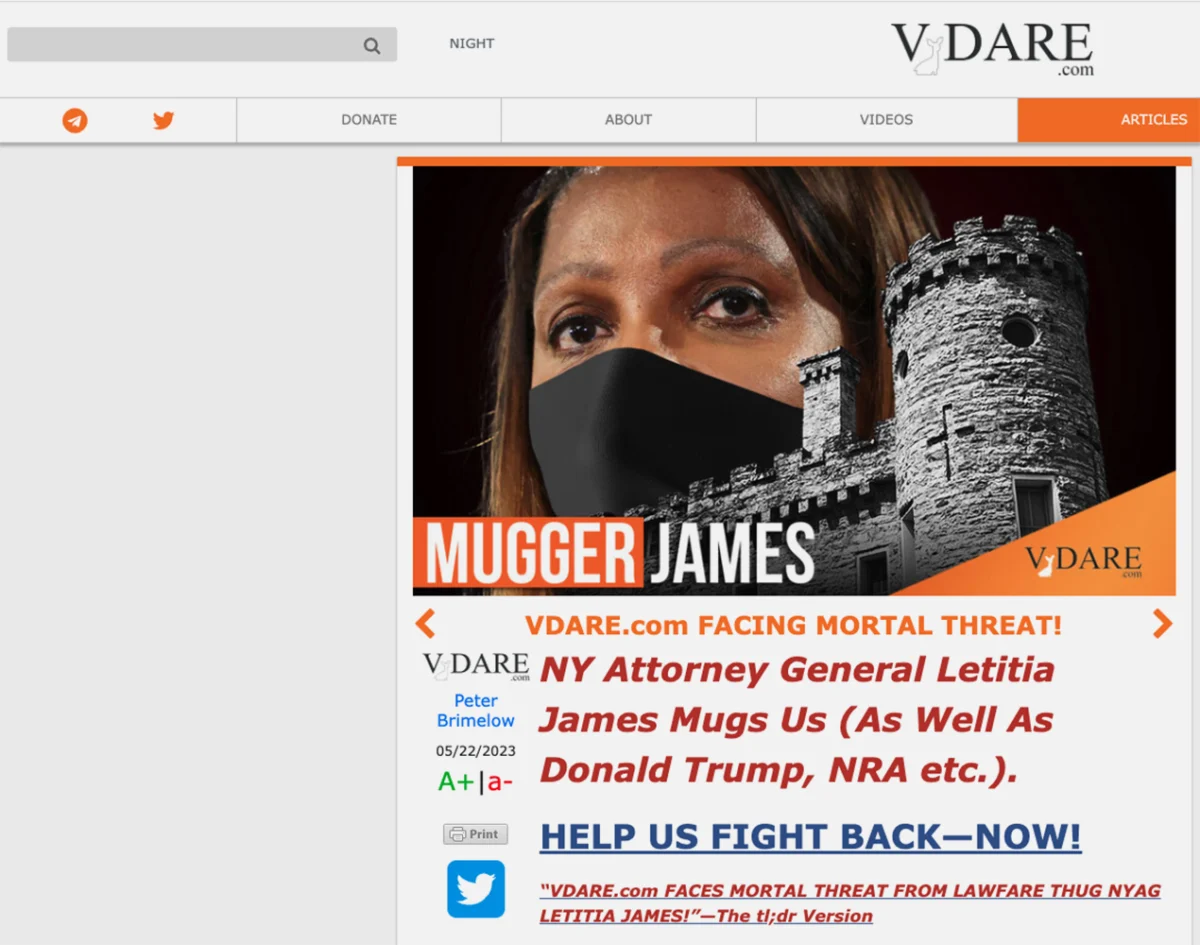
When the Justice Department indicted the Southern Poverty Law Center (SPLC) in April on controversial fraud charges, the venerable civil rights organization faced an existential threat not from a court conviction or IRS action, but from an unexpected quarter: three Wall Street-affiliated grantmaking giants. Vanguard Charitable, Fidelity Charitable, and Charles Schwab’s DAFgiving360, prominent sponsors of donor-advised funds (DAFs), each made an independent decision to prevent donors from using their platforms to contribute to the embattled nonprofit. This move, unexplained and seemingly arbitrary to many, triggered a critical examination by ProPublica into the increasingly powerful and often opaque role these DAF sponsors play as the new gatekeepers of American philanthropy. The investigation revealed troubling inconsistencies in how some DAF sponsors applied their policies, routinely leaving both donors and affected charities in the dark about high-stakes decisions that can significantly impact their financial viability and mission.
The Ascendance of Donor-Advised Funds: A Shifting Landscape in Philanthropy
Donor-advised funds have transformed the landscape of charitable giving in the United States, evolving from a niche financial product into a dominant force. These platforms allow account holders to make an immediate tax-deductible contribution to the DAF sponsor, which is a public charity, and then recommend grants to other charities over time. While donors advise on the grants, the DAF sponsor retains legal control over the charitable assets, giving them ultimate discretion over where the funds are disbursed.
The growth of DAFs has been exponential. As of 2024, DAF sponsors controlled more than $327 billion in assets, a staggering tenfold increase over the past two decades. They now serve as the conduit for approximately a quarter of all individual giving in the U.S., making their operational policies and decision-making processes profoundly impactful. The three major sponsors—Vanguard Charitable, Fidelity Charitable, and Charles Schwab’s DAFgiving360—are nonprofits themselves, typically spun off from major brokerages and primarily utilized by high-income earners. They charge administrative fees, further cementing their financial influence within the philanthropic ecosystem. ProPublica itself has received donations through each of these groups, highlighting their pervasive reach.
The SPLC Indictment and the Immediate Financial Freeze
The Justice Department’s indictment of the SPLC in April on charges related to alleged controversial fraud, specifically concerning its practice of paying confidential "field sources" to monitor extremist groups like the Ku Klux Klan, marked a significant legal challenge. Prosecutors alleged that this practice constituted a fraudulent diversion of donor funds. The SPLC pleaded not guilty to 11 counts, including wire fraud, giving false statements to a federally insured bank, and conspiracy to commit money laundering. Legal experts, including former federal prosecutors, quickly questioned the strength of the indictment, describing it as "stretched" and "not valid." Whistleblower reports to Democratic lawmakers further suggested the prosecution was rushed despite weak evidence.
Despite the SPLC’s vehement denial and legal community skepticism, the DAF sponsors acted swiftly. Vanguard Charitable, whose policy dictates a pause on payments when an organization faces formal charges, halted donations. Fidelity Charitable and DAFgiving360, which state they "may" or "might" stop donations if organizations come under investigation by government or law enforcement agencies, also ceased facilitating grants to the SPLC. This immediate financial freeze had significant consequences for the SPLC, which had received $20 million through these three DAF sponsors in the preceding three years, with roughly 7% of its 2025 contributions originating from these now-closed channels.
A spokesperson for the SPLC articulated the gravity of the situation: "When investment firms block donor-advised funds to nonprofits based on allegations and speculation, it not only impedes critical charitable work; it also sets a dangerous precedent that stifles the rights of donors and chills the rights of the organizations they seek to support." Months after being deemed ineligible, the SPLC reportedly remains in the dark about the precise reasons for the action or any potential path to reinstatement, according to a source familiar with the matter. The legal pressure on the SPLC continues, with a former employee, Heidi Beirich, indicted in August on charges connected to facilitating secret payments to informants inside extremist groups, a charge her attorney denies as "without merit."
Inconsistent Application: A Pattern of Opaque and Uneven Decisions
ProPublica’s investigation, which involved reviewing DAF sponsors’ policies, giving records, and government actions against dozens of charities, uncovered a troubling pattern of inconsistencies in how Fidelity Charitable and DAFgiving360 applied their stated guidelines. While they froze donations to the SPLC based on an investigation and indictment, these same sponsors continued to allow numerous other groups to receive money despite facing significant government investigations, lawsuits, and even large fines. The affected organizations spanned a wide spectrum, including hospitals, universities, charter schools, and even a white nationalist organization.
-
Providence Health and Services: In February 2022, then-Washington Attorney General Bob Ferguson sued Providence Health and Services, a nonprofit Catholic healthcare system, alleging illegal billing and aggressive collection practices against low-income patients. This case received extensive regional media coverage, with the Attorney General emphasizing that Providence’s conduct persisted despite an ongoing investigation. Yet, both Fidelity Charitable and DAFgiving360 continued to facilitate donations to Providence throughout the legal battle. Providence ultimately agreed to a $150 million settlement in refunds and debt relief, the largest resolution of its kind nationally, though it admitted no wrongdoing.
-
Grand Canyon University: The Christian university faced a lawsuit and a $38 million fine following federal investigations that found it deceptively advertised the cost and course requirements of its doctoral programs and made illegal calls to consumers. Despite these serious allegations, which the university denied as "unsubstantiated," records show Grand Canyon University continued to draw donations from both Fidelity Charitable and DAFgiving360 throughout the two-year dispute. The Department of Education rescinded the fine in May 2025, and the Federal Trade Commission dismissed its remaining case months later.
-
IDEA Public Schools: Texas’s largest charter school network, IDEA Public Schools, was investigated from 2021 to 2024 by the state’s chief charter school regulator amid allegations of lavish spending on private jets and excessive "parachute payments" to leaders. Fidelity Charitable kept the donations flowing throughout this period. The network was eventually placed in a conservatorship by the state and compelled to repay $28.7 million to the U.S. Department of Education, acknowledging that it had not properly ensured funds were administered lawfully.
-
VDARE Foundation: Perhaps the most striking inconsistency involved the VDARE Foundation, which operated an influential far-right, white nationalist website. In 2022, New York Attorney General Letitia James launched an investigation into the organization for alleged misuse of millions in charitable assets. VDARE actively solicited donations to "help us fight back" against the subpoenas, prominently displaying its investigative status on its homepage. Despite its policy that it "may" stop donations under government investigation, DAFgiving360 (formerly Schwab Charitable) continued to process donations to VDARE. James subsequently sued the organization in 2025, and the case remains open. While VDARE is no longer listed as an option for current DAFgiving360 customers, the sponsor would not specify when the charity was removed, stating only that it conducts a "thorough assessment" and "applies its policies consistently across all charitable organizations, regardless of their political viewpoint or orientation."
The DAF sponsors also demonstrated discretion in allowing donations to continue to major universities facing formal government investigations concerning their handling of campus protests and alleged antisemitism linked to the crisis in Palestine and Israel, as well as over allegations related to diversity, equity, and inclusion initiatives. At least 20 such universities remain listed as options for donation recommendations on Fidelity Charitable’s and DAFgiving360’s websites.
The Political Undercurrent: Scrutiny and Weaponization of Charitable Giving

The inconsistencies observed by ProPublica are particularly problematic within the broader political climate. Experts, like Joe Goldman, president of Democracy Fund, suggest that DAF sponsors "are applying old rules to new circumstances without recognizing that the circumstances have changed." This sentiment resonates strongly with the actions of the Trump administration, which has placed nonprofits under an intense spotlight, alleging that many "undermine the security, prosperity, and safety of the American people." The administration has explicitly directed federal agencies to align funding decisions with its priorities, signaling a potential for politically motivated targeting.
Since 2025, members of Congress, predominantly Republicans, have initiated over 135 investigations into nonprofits. These investigations often claim charities are operating with foreign influence, supporting terrorism, or promoting diversity, equity, and inclusion initiatives—themes frequently echoed by the Trump administration. For instance, Republican lawmakers sent letters to the IRS accusing several organizations supporting pro-Palestine efforts of funding terrorism and requesting investigations. ProPublica found that one of these charities, though uncharged in court and without revoked IRS status, no longer appears on Fidelity Charitable’s donation portal. Fidelity declined to comment on whether these letters influenced its decision. Samuel Brunson, a Loyola University Chicago School of Law professor specializing in nonprofits, warned, "This is potentially a way that a hostile legislator could harm tax-exempt organizations without having to prove anything. Even if these letters are completely legitimate, you can take that same set of tools and use them illegitimately."
The SPLC itself has long been a target of conservative critics. Its "Hate Map," which tracks extremist groups, has been widely cited by journalists and academics and was utilized by the FBI until recently. However, under the Trump administration, the map drew intense scrutiny from supporters of right-leaning groups labeled as extremist by the SPLC. A letter addressed to top White House aide Stephen Miller by several such groups last year, calling the map a "smear tactic," notably contained language that later appeared in an FBI incident report justifying an investigation into the SPLC. This chronological link underscores concerns about the politicization of government actions against nonprofits.
Donor and Public Backlash: Calls for Transparency and Accountability
The opaque decision-making by DAF sponsors has not gone unnoticed by their own constituents or by state regulators. Dawn Piccolo, a retired Fidelity Investments senior vice president and a long-time DAF account holder, expressed her dismay. She wrote to Fidelity Charitable, pointing out its inconsistency in allowing another charity under similar fire to continue receiving gifts, while cutting off the SPLC, which "has not been found guilty of anything." Piccolo, who has since stopped funding her Fidelity Charitable account and plans to move her existing balance, noted, "This action feels out of band for me. The case appears weak and politically motivated." Despite her inquiries, she received only rote responses and no thorough explanation.
Further amplifying these concerns, 16 state attorneys general, all Democrats and many serving as chief regulators of nonprofits in their states, registered their objections in a strongly worded letter to the DAF sponsors. They expressed "serious concerns that you are allowing the DOJ’s selective political targeting of a charity to impact your donor-advised giving decisions." They highlighted that such actions could enable "weak or politically motivated investigations to suppress, chill, or dismantle organizations" doing vital work. Their concerns were magnified by the sponsors’ refusal to disclose other charities whose donations they had paused. The attorneys general, representing public and donor intent, have yet to receive a response from the DAF sponsors.
DAF Sponsors’ Defenses: Brand Protection and Objective Criteria
The DAF sponsors largely declined to be interviewed or answer detailed questions from ProPublica. Fidelity Charitable maintained its policy of not commenting on decisions involving individual charities. DAFgiving360, in a statement, affirmed that it "communicates directly with donors when a grant recommendation is impacted by an eligibility determination" and provides alternative options. It stressed that it does "not take charity eligibility decisions lightly."
Vanguard Charitable, in its statement, characterized its action as a "procedural pause," emphasizing that it is "not a value judgment; it is the application of objective criteria and reflects Vanguard Charitable’s responsibility, as the legal owner and steward of the charitable assets, to review and approve the grants made in its name." A spokesperson added that Vanguard denies fewer than half a percent of donor recommendations annually and that "independent oversight is central to the value of donor-advised fund structure."
Deone Powell, a former general counsel for Vanguard Charitable who now advises nonprofits, offered an insight into the sponsors’ internal logic. He suggested that DAF sponsors view these moves less as "moral policing" and more as a means of protecting their own brands. "All of these really speak to reputational risks for the sponsoring organizations," Powell said. He also noted the weight of these decisions, given their potential to set precedents: "A single decision often establishes a precedent that’s going to affect thousands of other future recommendations."
The Quest for Clearer Guidelines and Accountability
Given the increasing power of DAFs and the demonstrated inconsistencies in their policy application, legal experts are advocating for clearer, more transparent, and less arbitrary decision-making frameworks. Lloyd Mayer, a professor at the University of Notre Dame Law School specializing in nonprofits, suggests that DAF sponsors should "probably to rely on the IRS list" of eligible charities. He argues that cutting off organizations deemed eligible by the IRS risks appearing inconsistent or partisan. Mayer highlighted the ambiguity inherent in current DAF policies: "An investigation by who? An indictment at what level? Is it only federal government indictments? Is it also state indictments? What about the local county prosecutor? Of the thousands of counties in the United States, if any one of them brings an indictment, you’re gonna stop? Where do you start drawing the lines?"
The current system, where DAF sponsors deny grants to organizations like Nonviolence International—a group founded by a Palestinian activist that supports nonviolent campaigns worldwide—because their activities are not deemed "humanitarian" by the sponsor, highlights the subjective nature of these decisions. Co-director Michael Beer stated that "substantial funds have been paused by Fidelity DAF that were earmarked for our projects. If funding is not resumed, nonviolence training, education, and intervention programs for marginalized communities will be slashed." These examples underscore the profound impact of DAF sponsors’ discretionary power on the operational capacity and mission fulfillment of various nonprofits.
Broader Implications for American Philanthropy
The ProPublica investigation into DAF sponsors’ actions against the SPLC and other nonprofits reveals a critical juncture for American philanthropy. The exponential growth of DAFs has placed immense power in the hands of a few financial institutions, transforming them into de facto gatekeepers of charitable giving. This power, when exercised with opacity and apparent inconsistency, poses several significant implications:
- Chilling Effect on Advocacy and Controversial Causes: The fear of being cut off by major DAF platforms could pressure nonprofits working on politically sensitive or controversial issues to self-censor or scale back their advocacy, thereby stifling vital democratic discourse and social change efforts.
- Erosion of Donor Intent: When DAF sponsors unilaterally block donations to charities chosen by donors, it undermines the very principle of donor intent, eroding trust in the DAF model. Donors are effectively ceding control over their charitable dollars to entities whose internal policies remain largely unexplained and inconsistently applied.
- Vulnerability to Political Pressure: The current environment, marked by heightened political scrutiny of nonprofits, makes DAFs susceptible to becoming tools for political targeting. Without robust, transparent, and consistently applied criteria, DAFs risk being perceived as enabling politically motivated attacks on charitable organizations.
- Lack of Accountability: Unlike the IRS, which has established procedures for investigating and revoking tax-exempt status, DAF sponsors operate with far less public accountability for their grantmaking decisions. The refusal to engage with inquiries from donors, affected charities, or even state attorneys general highlights a concerning lack of transparency.
- Impact on Small and Emerging Nonprofits: While the SPLC has resources to navigate such challenges, smaller or emerging nonprofits, especially those working on cutting-edge or socially challenging issues, could be devastated by a sudden halt in DAF funding without clear recourse.
The former Vanguard Charitable attorney, Deone Powell, believes that while public blowback might not drive immediate change given the risk-averse nature of these financial institutions, future change will likely be "driven by donors who are asking questions about how their philanthropy is defending democracy." As DAFs continue to grow in influence, the demand for greater transparency, consistency, and a clear articulation of their decision-making processes will undoubtedly intensify, shaping the future of charitable giving in the United States.


 Joko Widodo
 Jia Lissa
 Pevita Pearce
 admin
admin