
 Joko Widodo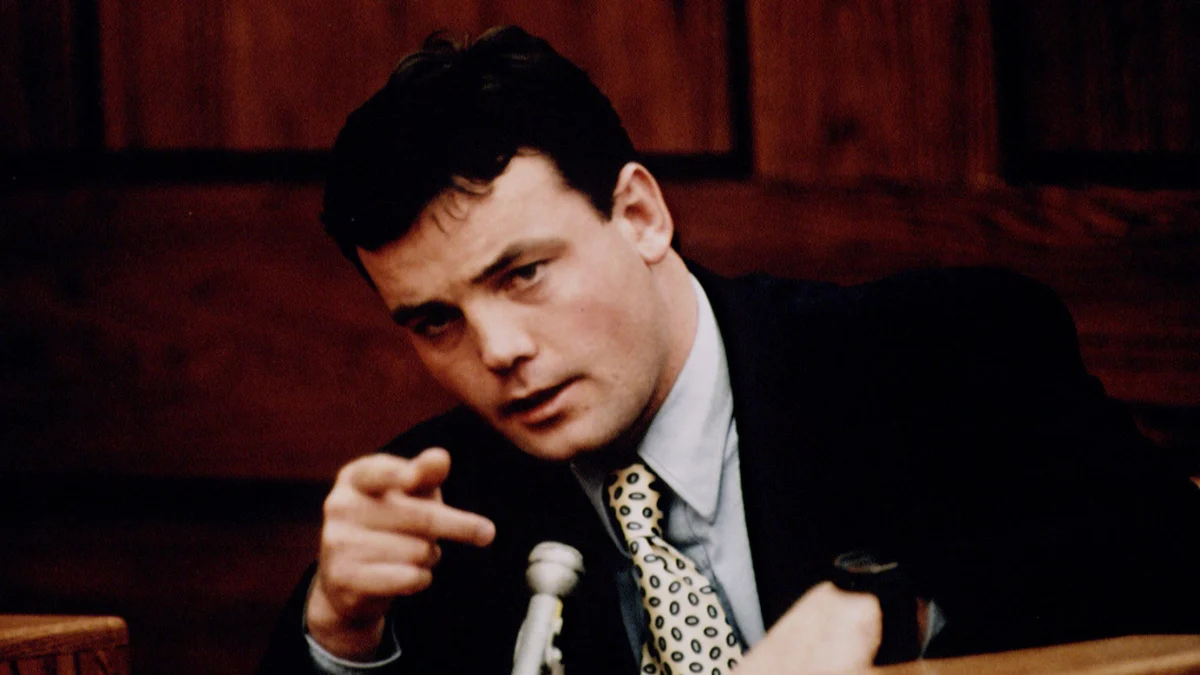
More than three decades after the sensational 1993 Bobbitt case captivated and shocked the world, John Wayne Bobbitt is voicing his perspective, asserting that his side of the story has been largely overlooked. With Hulu announcing a new anthology series, Good American Family, that will dedicate its second season to the events involving him and his then-wife, Lorena Bobbitt, John Wayne Bobbitt poses a pointed question: why has he not been approached to share his account?
Hulu’s decision to revisit the infamous incident, a staple of true crime discourse for decades, has reignited discussions surrounding the complexities of the case. The network’s anthology series, Good American Family, will delve into the Bobbitt saga, promising to explore the events that led to Lorena Bobbitt’s infamous act of violence and the subsequent legal battles. However, from John Wayne Bobbitt’s standpoint, the upcoming series risks perpetuating a narrative that does not fully encompass the truth, particularly concerning his experiences and claims of being the victim of abuse.
Speaking to TMZ, John Wayne Bobbitt expressed his disappointment that Hulu had not reached out to him for an interview or consultation regarding the new season. He stated his willingness to engage with the producers, offering to provide his detailed account of the relationship and the events of that night. Bobbitt believes that a comprehensive portrayal of the case necessitates including his testimony, alongside official documentation such as police reports and court records, to ensure a balanced and factual representation.
Bobbitt voiced concerns that the Hulu series might lean too heavily on Lorena Bobbitt’s narrative, potentially neglecting crucial evidence and legal findings that support his claims. He articulated this worry by stating, "a curated story rather than the full truth." This sentiment underscores his belief that the public perception of the case has been shaped by a singular, often sensationalized, perspective, and he seeks an opportunity to present a counter-narrative supported by evidence.
The 1993 incident, which unfolded on June 23rd, became an international headline when Lorena Bobbitt severed her husband’s penis with a kitchen knife while he slept. The subsequent events, including her flight from the scene and the recovery of the severed appendage, which was later surgically reattached, added further layers of sensationalism to an already shocking crime. The trial that followed focused on Lorena’s defense of temporary insanity, stemming from allegations of marital abuse.
John Wayne Bobbitt was ultimately acquitted of marital sexual assault charges leveled against him by Lorena. Despite this legal victory, he contends that he has spent over three decades navigating what he describes as a different, more damaging verdict in the court of public opinion. This persistent public perception, he argues, has overshadowed his legal exoneration and the counter-allegations he has made.
Bobbitt vehemently denies Lorena Bobbitt’s allegations of abuse, asserting instead that he was the victim of her abusive behavior. He stated to TMZ, “She was the abuser. There’s a lot of proof that she’s an abuser. Why is this false narrative consistently perpetuated?” This direct refutation of his ex-wife’s claims highlights the ongoing dispute over the dynamics of their relationship and the true nature of the alleged abuse.
According to Bobbitt, his desire to leave the marriage was met with retaliatory actions from Lorena, who he believes then constructed a narrative of him as an abuser after he initiated divorce proceedings. This perspective suggests a calculated move on Lorena’s part to gain leverage or control in the separation, painting him in a negative light to justify her actions.
His repeated plea, "Why doesn’t anyone just ask me what happened? I will tell them based on all the facts, details, court records, and the police report," underscores his frustration with what he perceives as a one-sided media portrayal. He emphasizes his readiness to provide a factual account, grounded in verifiable evidence, to correct what he sees as a historical misrepresentation.
In an effort to reclaim his narrative and present his version of events, John Wayne Bobbitt is reportedly working on his own manuscript. This personal project offers him a platform to detail his experiences and present his perspective directly to the public, bypassing what he views as biased media filters.
The reporting by TMZ indicates that attempts were made to solicit comments from both Hulu and Lorena Bobbitt regarding John Wayne Bobbitt’s statements. As of the time of reporting, neither party had responded, leaving their positions on the matter unconfirmed. This silence, while not indicative of guilt or innocence, leaves the public waiting for their input on the ongoing debate surrounding the representation of the case.
Historical Context and the Bobbitt Phenomenon
The 1993 case of John and Lorena Bobbitt was more than just a domestic dispute; it became a cultural phenomenon, dissecting issues of domestic violence, gender roles, and marital discord under the harsh glare of global media attention. The sheer audacity of Lorena Bobbitt’s act, coupled with the subsequent legal proceedings and the deeply personal nature of the allegations, propelled the story into a constant news cycle.
In the early 1990s, discussions around domestic abuse were gaining traction, but often within a framework that predominantly focused on male perpetrators and female victims. The Bobbitt case challenged these conventional narratives. Lorena Bobbitt’s defense strategy centered on her experience of enduring years of alleged physical and sexual abuse at the hands of her husband, culminating in her violent act as a desperate response to her suffering. This narrative resonated with many who felt that the legal system and societal attitudes had historically failed to adequately protect victims of domestic violence.
Conversely, John Wayne Bobbitt’s consistent denial of abuse and his counter-accusations of being the victim introduced a complex layer to the discourse. His legal acquittal on sexual assault charges further complicated the public’s understanding, suggesting that the narrative of a solely abusive male perpetrator might not tell the whole story. The media, in its pursuit of sensationalism and a clear-cut narrative, often struggled to reconcile these conflicting accounts, leading to a fragmented and often polarized public perception.
The recovery and reattachment of John Wayne Bobbitt’s penis added a visceral and unprecedented element to the story, dominating headlines and public fascination. This aspect, while gruesome, also became a focal point in discussions about the severity of Lorena’s actions and the potential motives behind them.
Chronology of Key Events
June 23, 1993: Lorena Bobbitt cuts off her husband John Wayne Bobbitt’s penis with a kitchen knife while he is asleep. She then flees the scene, throwing the severed organ from her car. Authorities later recover it, and surgeons are able to surgically reattach it.
Post-Incident: John Wayne Bobbitt is treated and recovers from the surgery. Lorena Bobbitt is arrested and charged.
Early 1994: The legal proceedings commence. Lorena Bobbitt’s defense focuses on allegations of marital abuse, claiming her actions were a result of sustained physical, emotional, and sexual abuse. John Wayne Bobbitt denies these allegations and claims he was the victim of abuse.
January 1994: John Wayne Bobbitt is acquitted of marital sexual assault charges. This verdict is crucial as it legally validates his claim of not being guilty of the specific charges brought against him, though it does not definitively settle the broader allegations of abuse.
July 1994: Lorena Bobbitt is found not guilty of malicious wounding by reason of temporary insanity. She is ordered to undergo psychiatric evaluation, and upon release, her case becomes a symbol for discussions on domestic violence and self-defense.
Over the next three decades: Both John Wayne Bobbitt and Lorena Bobbitt engage with the public on their experiences through interviews, appearances, and media projects. John Wayne Bobbitt consistently maintains his innocence regarding abuse and asserts he was the victim. Lorena Bobbitt continues to advocate for victims of domestic violence, often referencing her experiences as the catalyst for her actions.
August 2026 (announced): Hulu announces its anthology series Good American Family, with its second season dedicated to the Bobbitt case.
August 2026 (reported): John Wayne Bobbitt expresses his concern over the Hulu series, stating he was not contacted and that his perspective is being overlooked. He voices his intent to share his side of the story through his own manuscript.
Supporting Data and Legal Outcomes
The legal outcomes of the Bobbitt case offer concrete data points in understanding the events. John Wayne Bobbitt’s acquittal on marital sexual assault charges signifies that the prosecution failed to prove his guilt beyond a reasonable doubt on those specific counts. This verdict is distinct from the broader allegations of abuse, which remained a subject of intense public debate and conflicting testimonies.
Lorena Bobbitt’s acquittal by reason of temporary insanity is also a critical piece of evidence. This verdict implies that the jury believed she was suffering from a mental state at the time of the incident that prevented her from understanding the nature or wrongfulness of her actions. This defense strategy inherently relies on establishing a history of severe trauma or distress, which in her case, was presented as a consequence of alleged abuse.
The medical recovery of John Wayne Bobbitt’s penis, while a sensational aspect, also involved significant medical intervention. The success of the surgical reattachment, reported by medical professionals at the time, highlighted advancements in reconstructive surgery but also underscored the severity of the initial injury.
The sheer volume of media coverage generated by the case is itself a form of supporting data. Hundreds of news articles, television segments, and public discussions were dedicated to the Bobbitt saga, demonstrating its profound impact on public consciousness. This extensive coverage, however, also raises questions about journalistic ethics and the potential for sensationalism to overshadow factual reporting.
Broader Impact and Implications
The Bobbitt case transcended a singular criminal trial to become a significant cultural touchstone, influencing public discourse on domestic violence, gender dynamics, and the media’s role in shaping narratives.
Domestic Violence Discourse
The case brought the issue of domestic violence into mainstream conversation with unprecedented intensity. Lorena Bobbitt’s claims of abuse, regardless of the legal findings on temporary insanity, forced many to confront the realities faced by victims who might resort to extreme measures. Her subsequent advocacy work has been credited with raising awareness and encouraging victims to seek help. However, the case also highlighted the complexities of proving abuse and the challenges victims face in being believed and protected by the legal system.
Gender Roles and Power Dynamics
The Bobbitt saga challenged traditional gender roles and power dynamics. Lorena Bobbitt, a woman who committed a violent act against her husband, became a figure of both controversy and, for some, empowerment. Conversely, John Wayne Bobbitt, a man who was physically violated and publicly humiliated, also occupied a complex position. The case sparked debates about male victimhood, the nature of power in relationships, and the societal expectations placed upon men and women in marital disputes.
Media Ethics and Sensationalism
The intense media focus on the Bobbitt case raised questions about journalistic responsibility and the ethics of sensationalizing personal tragedies. The constant coverage, often graphic and speculative, contributed to a public frenzy that may have overshadowed a nuanced understanding of the legal proceedings and the human suffering involved. The demand for details, no matter how lurid, pushed the boundaries of what was considered appropriate public consumption of private trauma.
The Perpetuation of Narratives
John Wayne Bobbitt’s current stance highlights a persistent challenge in cases that become deeply ingrained in public memory: the struggle to alter or supplement established narratives. Decades later, the initial, often sensationalized, accounts continue to hold sway, making it difficult for individuals to present alternative perspectives backed by evidence. The reluctance of media outlets to proactively seek out all parties involved, as evidenced by Bobbitt’s claims regarding Hulu, can contribute to the solidification of these entrenched narratives.
The upcoming Hulu series, therefore, carries a significant responsibility. While it has the potential to introduce a new generation to the story and explore its complexities, it also risks either reinforcing existing perceptions or creating new ones based on incomplete information. The demand from John Wayne Bobbitt for his voice to be heard underscores the ongoing debate about who controls the narrative and how historical events are ultimately remembered and interpreted. His manuscript represents a direct effort to challenge the prevailing story, offering a stark reminder that even the most widely known cases can have layers of untold or under-told truths.




 Yuyun Lusiyani
 Eva Lovia
 Pevita Pearce
 admin
admin
 Lina Irawan